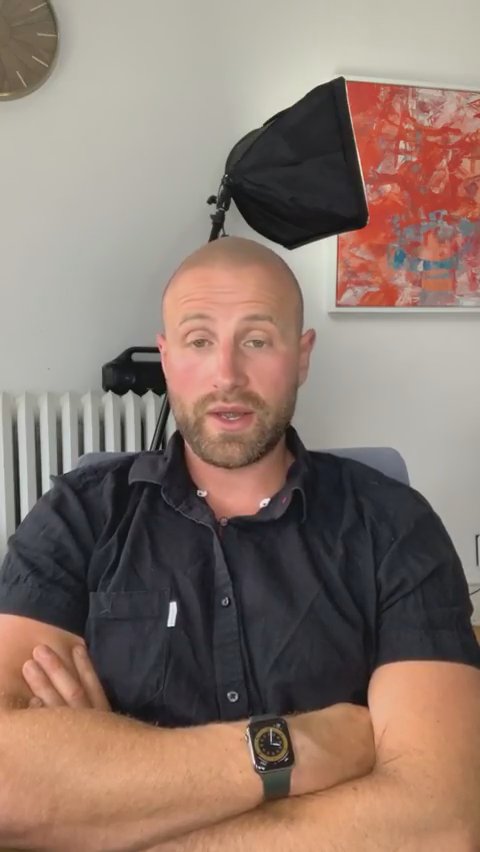
In this Livestream I am excited to cover a topic I get so many questions about, and that is whether many of the things most of use daily qualify as addictions. I find most people assume they are, but as an addiction counselor, I am going to put these things to the test based on how we diagnose addictions. So come join the conversation and give your experience and opinion.
The host opens the live, introduces the Mental Health Matters series, and sets up the conversation about whether common things like sugar, caffeine, and sex can be considered addictive. There’s light informal banter (including a dog cameo) to orient viewers.
The host explains that 'addiction' is a colloquial term and introduces the clinical framework of substance use disorders as the best standard. He walks through the recurring symptoms and consequences—loss of control, tolerance, withdrawal, risky use, and impacts on work, relationships, and health.
The host reviews how caffeine can produce tolerance and withdrawal but usually causes physical dependence rather than a full-blown addiction. He discusses its lower dopaminergic effect, the relative rarity of severe life impacts, and how diagnostic labels for caffeine are limited.
This section covers the debate between viewing problematic sexual behavior as a compulsion versus an addiction, describing the 'love cocktail' of dopamine, oxytocin, and serotonin. The host gives examples—porn, hookup culture, affairs, and drug-associated sexual behavior—and explains that severe cases can meet addiction-like criteria.
The host explains that concentrated sugar releases dopamine and can cause withdrawal or dependence, but tolerance and addiction are less clear for most people. He highlights binge eating disorder and cases where sugar-driven eating produces severe health consequences (obesity, diabetes), arguing that only those extreme cases clearly resemble an addiction.
The host reiterates nuanced views—some behaviors can be addictive in severe cases—teases an upcoming addiction video series, invites viewer comments, and ends the session.
What's up cadre fam? Evan here, your resident mental health and addiction therapist. We are live. This is another health of another health, another episode of Mental Health Matters because mental health is important and we're going to be discussing matters around mental health and addiction. So looks like the beacon hopefully has gone out on the live. There we go. And hopefully we'll have some folks joining us soon to join this conversation. Oh, we have our first guest. Bella, come, come here. This is my dog, Bella.
There she is. The American Staffordshire Pitbull. Hey. So she's joining our live, probably gonna leave soon. Unlike some of you all, hopefully you don't leave soon. She'll just hang on the couch. But anyways, this is going to be a fun topic, whether you're going to be joining live or watching this later. And this is something I get a quote. I get. What up, Bella? Bella says hi back. This is something I get questions about quite a bit. Oh no. Now she sees a dog across there. Hey, come here. Good.
Not good. Hold on. Hey, come here. You gotta go. man. She lost her life privileges. It's going so well. Yeah, so this is a topic I get quite a bit of questions about. So sometimes I do posts about certain substance withdrawals, addictions, and sometimes that's about substances that you wouldn't necessarily think is addictive. So sometimes I'll do posts about something that causes withdrawals. It may be certain antidepressants or other types of medication, prednisone, even behaviors like gambling, all these things that you can actually have physical withdrawals from that maybe aren't acknowledged to the same degree like you would think of for like alcohol or heroin.
So when I do that, I get so many people who comment on my posts that say, sugar, what about sugar, sugar, sugar, sugar? all the time. So I thought that could be something we talk about, but not just sugar, about some of these other things that are maybe controversial, more behaviors, things that we do, maybe not just things that we ingest per se, although we ingest sugar, right? So I thought we could talk about three different areas, three different topics, and that would be sugar, caffeine, and sex.
So the question is, are these things addictions per se? Do they really meet the criteria for something that would be considered an addiction? Now, before we start, let's talk about what an addiction is. Now, from a clinical sense, there's no word. The word addiction does not show up. So it's more of a colloquial term that we use. We all have a kind of general sense of what an addiction is. And I mean, and it is used among professionals all the time. However, just from a clinical diagnostic standpoint, it's not in the diagnostic manual.
So there's no addiction disorder, you know, or like alcohol addiction disorder. But what we do have is substance use disorders. And that's the best framework we have for what an addiction is or a use disorder. And so when we're testing, when we're putting something to the test like sugar, alcohol, sex, that's probably the best way to do it is putting it to that same set of standards as you would for cannabis addiction, heroin addiction, alcohol addiction, essentially any substance use disorder because all of those have the same set of criteria.
So now that we got that covered, let's talk about what an addiction really is as far as like a diagnostic standard. I think this is pretty right on. So there's 11 symptoms. Will I be able to list all of them off the top of my head? Probably not, but I'll give you like a general idea. So right all of these things are recurring. So just not not just once essentially. So these are reoccurring things and essentially it just boils down to consequences. So you are having consequences from this action yet you continue to do it and these consequences have a severe impact on your day-to-day life, functioning, emotional health.
So professionally, are you able to fulfill your professional obligations? Is it affecting that part of your life? Are your connections, your relationships? Are you giving up like things you do in your free time, hobbies, activities that you once enjoyed, somewhere like you would see with depression, but giving those things up. So also an increasing amount of time, energy, and effort spent towards using the drug, being high off the drug, trying to get the drug. So it's basically how much time and energy goes into your addiction.
You also have things like Having difficulty controlling your use, using more than you had intended. Having trouble quitting. So having multiple attempts to quit, but those are not successful. Attempts to cut back or quit. So again, those kind of having trouble with control is what those boil down to. Let's see if I can get a few more before I get into two of the bigger physical ones. So we said recreational, professional life. Oh, how it impacts your emotional health. So basically you keep doing it even though you're having like psychological, emotional, negative impacts by it.
And the other one is physical health. So, you know, despite a doctor or someone telling you that you probably shouldn't be using, you do it anyway. So having a negative impact on your physical health, yet you continue to do it. Right, a known impact. Oh, I think I'm gonna get all of them. Then the next one is putting yourself in risky situations. Like if you're continuing to drink and drive, that would be one example. So yeah, putting yourself in risky or hazardous situations, which brings us to the last two.
Oh my God, I'm gonna get all 11. Pat myself in the back. Tolerance, so needing the same amount to get the same effect. So I'm drinking three drinks a day, then it turns to five, then the ten because I'm trying to get a certain effect. And then withdrawal. That's when we talked about a little bit, so when I stop using the substance I have a negative physical impact. Well, it feels as such. going into alcohol withdrawal, you could have seizures, you just feel uncomfortable, similar with an opiate withdrawal.
Or if it's a stimulant withdrawal, you're tired, you're super hungry. So it's kind of like what goes up must come down and what goes down must come up. And it doesn't go to the same level, it goes higher or lower than before, that is withdrawal. So the question is when we have sex, sugar, and caffeine, Do those meet the criteria? Now you're probably sitting there thinking, well, maybe, but let's go through, we'll go through the arguments for and against. I think we'll end with sugar because that's the one people seem most interested in.
So we'll string you along a little so we get there. Our little content trick now. Number one, let's go with caffeine. Now caffeine, a lot of people will build a tolerance. Hey, our guy, junk food junkie, #1. So with caffeine, is that an addiction? So people, you could build a tolerance. Most people who drink caffeine regularly will have withdrawal when they stop. So they could have two, they could have tolerance, they could have withdrawal. Now the question though is, does it really have a negative impact on your life?
Now a lot of people, it has kind of a positive impact. Does it really, someone mentioned in a comment, oh, we could have issues with your health, but It's not all that obvious because you could actually have positive impacts from, let's say, coffee, which has caffeine in it. But let's say you overdo it. Yeah, maybe, you know, I guess it happens to some people. I haven't heard too many cases of someone like really having their health impacted by it. You know, but caffeine is a stimulant similar to cocaine.
But that doesn't necessarily mean that it is per se an addiction. So for most people, I would say for most people who are regular users of this substance, it doesn't have all that much a negative impact. Now it could impact their sleep as well. But the question is, does that continue to happen? Do they continue? Do they drink more and more coffee, Red Bulls, you know, whatever that is? And do they continue even though it affects their sleep and like really has a net negative on their life? I would say that's actually pretty rare.
Now that happens quite a bit with people and they're trying to manage their caffeine use and they're physically dependent on it. But I would say caffeine is more of something that's more of a physical dependence than it is an addiction. It's not something that you really do. Let's say you're like, oh, I'm having a bad day. I'm feeling emotionally triggered. I'm going to drink caffeine. Most people don't. But again, you can get addicted to anything, right? And caffeine but caffeine doesn't hit that dopamine reward pathway like other substances do.
You may feel a little bit better, but it doesn't, not in that same way. It doesn't like have a huge impact and that's really associated with addiction as a substance or behavior that releases a high level of dopamine. So I think it comes close and I'm sure you could find some people where you can make that argument in that case. I've never had anyone come to me for therapy or people, anyone who's ever gone to, I'm sure it's happened, but I've never heard of a case of anyone going to retreatment, whether it's even therapy to quit their caffeine addiction.
Now I'm sure it's probably happened. I'm sure, you know, some people take it too far. And maybe you could make that, okay, they're having withdrawal, it's having a negative impact here, here, here. I can say they have a mild use disorder. But there is no caffeine use disorder. In the diagnostic manual, you have things like caffeine intoxication. Someone could be admitted. to treatment or billed for intoxication. And then there's like kind of this like unspecified. So I guess like I could give someone a diagnosis of like an unspecified caffeine related disorder if I really thought they met the criteria, they're coming to my office.
I can't stop drinking caffeine even though it's like having a horrible impact on my life. I have horrible withdrawal when I stop. I've built up a huge tolerance. I drink two pots of coffee a day. I can't sleep, but I do it anyway. I can't stop, won't stop. Okay, maybe I would do that, but I would say that in general, it doesn't really meet the criteria in the same way. Now when it comes to sex, that one's a little more controversial. This one's a little bit more tricky. Because there's two camps here.
There's the camp that believes it is more of a, certainly a compulsion, right? It's A compulsive behavior. It's something that you feel compelled to do that if you don't do it, you feel a sense of dysphoria or have anxiety. It's like a coping mechanism. So they wouldn't argue that and they would say some people have severe compulsive sexual behaviors, but they don't really like using the term sex addiction and they don't like people necessarily relating it to a substance use disorder and looking at it in the same way because they view sex as a very normal part of the human experience and it's a need.
So you don't need caffeine, but I mean, Do you really need to have sex? No, but I mean it is a physical drive built into us and very high within that hierarchy or low, a base need within the hierarchy of needs, I believe, at Maslow's first level, I'm pretty sure. So you get all this stuff tied into it, sex, love. And so people engage with it in a different way and have trouble with compulsive behaviors. Sometimes it's around sex. Sometimes it's about love and romance and going from one partner to another, constantly seeking that new relationship energy.
What's the other word for it? I'll have to think about that. The what stage? Anyway, yeah, that kind of amorous stage, you know, the excitement. So with sex, there's, so what we can say for sure is that you do get some neurons that feel pretty damn good. So with sex itself, you get dopamine. With love, you get oxytocin, which is like the connection chemical. But also you get serotonin, which is this, you may have heard of from SSRIs for antidepressants. So you get this, it's called like the love cocktail.
And that could be highly reinforcing, rewarding. Now, some would say, hey, even if someone has some of these compulsive behaviors, that's actually pretty normal because that's kind of built into us. However, when we compare it to, let's say, substances where we have those 11 symptoms, well, you can pretty much say that there are people who have severe consequences and they could probably fit each and every one of those symptoms, even tolerance, even having some withdrawal if they're changing their sexual behavior.
Maybe not as much as heroin, but people do have withdrawal, you know, just like someone could have all that for gambling as well, right? So just because sex is something that is normal and something we need to have, there are people who can take it too far, where it can have a negative impact on their life in a chronic, consistent, recurring way. And no one would really deny that. I mean, it could ruin people's lives, their marriages. I mean, you see it on celebrities and public figures who have struggled with it and get embarrassed in the public eye because of some of their behaviors.
So when it comes to sex, I think it could, you could definitely qualify as an addiction, but I think that you have to define it for yourself, whether you want to think of it more as a compulsive behavior or an addiction. But I think like at its highest levels, I think it's safe to say that it's very much an addiction, but however you want, you could call it whatever you want. But it is a behavior that creates severe negative consequences. And not just from the way society views it, because that's another argument of like, we as a society deem what's normal.
And that just because we say that's not normal behavior, because we do have a history of that because something like homosexuality was a diagnosable disorder because that was outside of the norm. Right now we look back and we're like, that wasn't good at all. Maybe that is a natural occurring phenomenon. So therefore, not a disorder. So it gets a little tricky. But I mean, there are people who get addicted to something like porn. That's probably the biggest, the biggest ones you'll see in a sexual compulsivity standpoint really kind of boils down to three kind of areas, which is folks who come in because, often folks in the gay male community whose sexual behavior gets tied in with methamphetamine use.
And so that brings a lot of people into sexual compulsivity treatment, seeking services. It's extremely common. Another one is kind of your typical guy, usually guy. Women could have it too. I've seen that, but kind of this is just what's most typical is you have your guys who are kind of chronically cheating on their spouses, whether that be through affairs or seeing sex workers. And then you kind of have your kind of single guys or single people who are often putting themselves in risky situations.
They're kind of addicted to hookup culture, that kind of thing. But then the other big one is, the first one I said was porn. That's the other big one people seek treatment for. maybe 4 categories, but basically the three. So that's sex. So here we go. This is perfect. The biggest issue with caffeine, it's just not in coffees, but soda, tea, chocolate, associated with soda and chocolate. There's an addiction, sugar, sweeteners, hence the same chocolateholic, sodaholic. It's a double win for addiction for some.
Yeah, exactly. But let's put that to the test. Is it an addiction? So we talked about caffeine and how I feel like in 90 something percent of cases it's more of a dependence. It doesn't have that same dopaminergic effect. It doesn't release that same amount of dopamine as you would see for most substances. Now with sugar, there is definitely a dopamine release with like highly concentrated sugar levels. So there is a dopamine effect. So it kind of fits the bill, but then doesn't meet the consequences, right?
Do you have really a tolerance for it? Do you need more and more sugar to get the desired effect? I would argue not really. You know, like if you eat a piece of cake, it's gonna pretty much give you the same feeling every time you do it if you're hungry. So I don't know, I really don't think there's much of A tolerance effect. Now, is there a withdrawal effect? Yeah, you'll probably feel some if you just stop eating sugar, but it'll probably go away pretty quickly and that kind of have different things like carbs.
You go into like a state of ketosis, but again, we need food to survive and we need sugar to survive. So it's essential we can't just fully avoid it. It's in fruit. I mean, there's pretty high levels in fruit. Now some of it's because like we genetically modified it and fruit probably like 200,000 years ago was not the same level of sugar, although we're probably modifying stuff then too. Anyways, it's natural. We need sugars to survive. So the question is, can a good thing be taken too far? It's the dose that makes the poison.
So I would say that most people think they're addicted to sugar, but you need it. And you're always going to get a dopamine effect from it no matter who you are. It's built into us. And the reason that is because there's a high concentration of calories. And because of that, it can create some of the negative health consequences, but that's why it's associated with survival. Because calories equal survival. Back way in the day, you never know when you're going to get your next meal. So actually trying to store fat was a good thing, but we were much more active back then typically.
So let's say there's someone who just loves sugar, they love cake candy, they eat a ton of it, but they counteract that with a lot of exercise. Like I have a friend who could eat insane amounts of sugar, yet he doesn't really gain much weight or anything like that, doesn't really have a negative impact. Now for some people, it could, right? For a lot of people, for like 30, 40% of Americans eating too much refined sugar, but does that mean 20 to 40% of people are necessarily addicted to it? That's tough.
I think that's a tough question. I think there's a dependence often, but does it meet the criteria for addiction? Because in that case, it's mostly gonna be having a negative impact on your health. And it's not always obvious of what that is. You could say, okay, I'm struggling with obesity, but is that necessarily from sugar? Is it all from sugar? That's maybe from high fat concentrations, anything highly caloric. And that may not just be sugar, that just may be part of it. So I think you get into a little bit of tricky territory when it comes to sugar.
However, I'm going to give you one exception where I think it's pretty obvious because even though it's not necessarily considered an addiction, you do have something you could diagnose called a binge eating disorder. So you used to really just have anorexia, bulimia. Now with anorexia, there is typically no binging involved, but there could be purging where bulimia is typically a binge and or a purge. You usually have to have the binge in there. But then I don't know, I think it's actually a little bit newer that we had just the pure binge eating disorder.
So there we have people who are using it for an emotional reason. They really seek a sugar as their essentially their substance of choice that creates an addictive cycle. There's something called Overeaters Anonymous that's actually pretty popular that a lot of people go to. So for them, Food is their comfort. Food is their compulsion. So they must be having some negative health consequences from it, whether it's type 2 diabetes or just straight up obesity or just something that they feel out of control or they feel like they have no control over it.
And yeah, so I mean, you see people with like severe obesity, you know, so that's a very severe negative health impact creating a disease. In certain cases, obesity and diabetes, I mean, these are diseases, right? So I think that my opinion would be, yes, in certain cases, sugar could be an addiction, but it has to be part of that binge eating disorder cycle that has to be their kind of food of choice. Because usually it's like, you know, it's like kind of fat, savory or it's going to be sweets.
They kind of just different tastes like gambling, maybe play slot machines or poker. It's all gambling, but you just have a preference. So I think in those cases, it'd be safe to call it an addiction, but I would be hesitant to do it unless it was pretty severe and extreme. Because a lot of people would like to eat less sugar. We'd like to have better bodies, quote unquote. We'd rather like to have a lower body fat percentage or whatever your goal is. So if you like pulled, if you pulled like everyone, I could pull like everyone in here and be like, hey, would you wish you'd eat less sugar?
Yeah, I do. Okay. Would it be really hard for you to do that? Yeah. It's very hard. Yeah, I'm dependent on it. Well, that would be just about everybody. So I don't think that and most 99% of the cases I would call it an addiction where it's absolutely having a ruinous effect on your life that it's meeting many of those 11 criteria I talked at the beginning of a use disorder which is the best way we can conceptualize a behavioral addiction or process addiction. So I'm going to be having very soon I'm working on uploading some of these videos on an addiction series that I'm doing.
It will be 22 videos talking about everything related to addiction, every topic I could think about in one of those will be on process addictions. So keep an eye out for that at some point. Hello. I always forget who's behind Cadre. Not Alec, is it Ethan, Erx, Luke, one of the three. But anyway, light ball, you guys. But hope you got something out of that live. It's a fun topic for me. Hopefully it's a fun topic for you. But maybe you disagree with me and that's okay. I'd love to hear if you disagree or what your experience is.
So feel free to comment, put it in the community feed. And until next time, folks, you have a good day. See you.
Reactions and comments are for members. Joining is free and takes a minute.