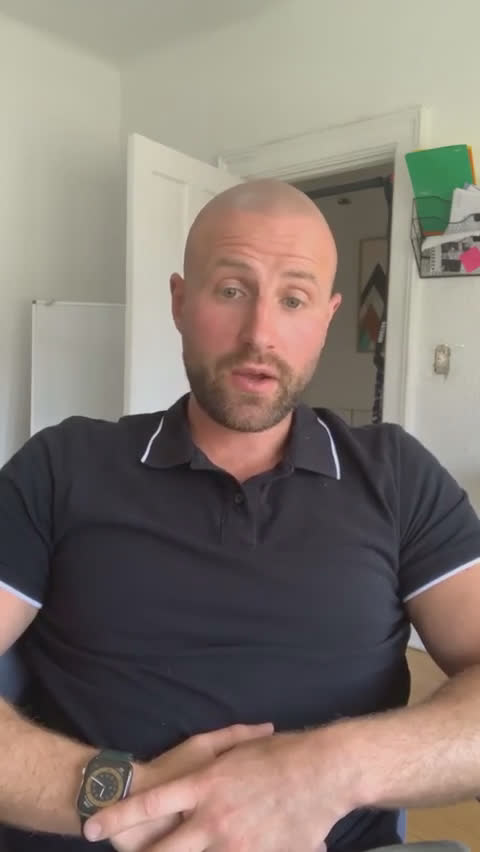
Today we are doing another episode of Mental Health Matters, except you bring the topics for me to answer. This usually makes for a lively and fun conversation, so come join and contribute your questions or experiences. Feel free to put any questions in advance on the community feed and tag me whether you are joining live or watching later.
Mental Health Matters airs every other week. Here we discuss matters regarding mental health and addiction. Feel free to ask questions. I have three main ones. Do treatment orientation matter? Do therapists like working with BPD?
There's a bunch of different treatment orientations. The most common ones are cognitive behavioral tHerapy, acceptance and commitment therapy, trauma therapies like emdr. They all view the problem in a different way and have unique solutions. Most of these that are well established show positive benefits.
What's really important in general is the relationship you have with your therapist, almost more so than the orientation. There's no one size fits all tool, it's really just what is best for the client and what vibes most with you.
Borderline personality disorder is a trauma reaction. It's characterized by difficulty in relationships, difficulty with emotional control. Historically, BPD has been viewed as difficult to work with. The most important thing with them is maintaining a good relationship.
Confidentiality is extremely important with therapy. A client has to be able to trust that you're not going to say anything to anyone. There are some limits to that. One is a danger of harm to self or others.
Suicide ideation is common, but that doesn't necessarily mean you're going to act on it. There are ways that I assess risk. For adolescents, it's really tricky. There's a difference between being a 15 year old and a 17 year old being a 16 year old.
Hello, folks. Welcome back to another episode of Mental Health Matters. My name is Evan. I'm your resident mental health and addiction therapist, and here we discuss matters regarding mental health and addiction. And because mental health is important, so let's see if the beacon goes out, we can get people coming into the live stream and participating, asking questions, and just know that at any point, whether it's in the community feed or college, commenting on one of my videos, I can answer some of your questions.
So we do this every other week. Every other week. Then I bring a topic, so topic and then q and a. So I was gathering some questions for today. I have three main ones, but feel free to ask, and there's no reason why I can't answer those as well. So the three topics I brought today. Number one, does treatment orientation matter? Does the type of therapy that you do, whether it's cognitive behavioral therapy or otherwise, is that important or how important is that when deciding on therapist and what kind of therapy you do?
The second one is about borderline personality disorder. That is a very common topic. So does borderline personality disorder, do therapists like working with folks? Absolutely. BPD. Because there's a lot of stigma around BPD, and there's a commonly held belief that therapists do not like working people with BPD. So I'm going to break that down with my opinion. And the last one is, what do therapists have to report? Do therapists have to report what you tell them, depending if it's, you know, whether it's suicidal harm to self or others.
So I'm going to break that down a little further and tell you some of the lines there, either just for you to know. And sometimes it's just interesting. And I think it is important to know if you're doing therapy, what those lines of confidentiality are. So I'll break those down as well. So without further ado, let's go ahead and get started with treatment orientation. What does that mean? That is a modality. It is a type of therapy. I'm trying to think of an equivalent example. It's like if you did different types of yoga or hatha yoga, or I'm forgetting all I've done in yoga in a little bit, but like yoga flows or yoga sculpt, all these different types.
I MEAN, it's all a form of yoga, but there are different orientations. And these teachers would get different types of trainings, just like you would a massage therapist doing different types of massage. Massage. And so how much does that maTter? Well, there's a bunch of different treatment orientations. PRobablY the most common ones you may hear is something like cognitive behavioral tHerapy, acceptance and commitment therapy, trauma therapies like emdr. So maybe you've heard just some letters basically, and they all come from a different approach.
So they may VieW therapy, mental health maybe from a different lens, from one another, diagnose the problem differently and therefore a different solution. For example, cognitive behavioral therapy is about the relationships between our thoughts, behaviors and emotions. So basically, how do our thinking patterns affect how we feel and then behave in a cycle? So looking at where you could break those thought patterns that are negative and skewed so you feel better, that's just a different way, right?
Or EMDR, using certain eye movements to expose yourself to past traumatic experiences that still affect you until the point where you're desensitized to them and it no longer has that impact. So those are just a couple of examples. So if you do training for any theoretical orientation, of course they're going to have a bias towards their own. Now there's a lot of research on there, and most of these that are well established show positive benefits. So may all of them say, well, they show great benefits, so you should do the one that I do.
And, you know, so I think all of them have merit. I've been trained in a lot of them. They all view the problem in a different, unique way and have unique solutions and that could be helpful. Now the question is in my mind, versus like which one is the best is, you know, which one vibes with you as a therapist and then as a client, or knowing under what circumstance would a client be more appropriate for one or the other the other. So I guess just from your perspective, if you're someone who's looking into doing therapy, taking a look at like learning about them, looking up some of the different ones, seeing what vibes best with you.
I think a lot of it with therapy is a vibe you could only, you're not going to know if it's going to be a good therapeutic relationship until you start seeing someone and trying it out. But you just can do your best to see what is their treatment orientation. So let's say you go on a, looking for a therapist. You go on a site like psychology today, which is a therapist search tool that has a ton of therapists and their listings on it. And what's really important in general is the relationship you have with your therapist, almost more so than the orientation.
So making sure that you have someone that you click with. Now, a lot of times clients who choose me they look at my bio and they see what I wrote. Usually I have a passage written, an introduction, and sometimes that gives you an idea, a feel for the person and how they view therapy, how they approach it. So looking at that and seeing what clicks with you, looking at their orientation. So that's just. So, I guess the treatment modality is just one, that is just one variable in case, considering which therapist you're going to see and how you approach it.
There's no one size fits all tool, as much as people like to think that it is and that their modality is best, it's really just what is best for the client and what vibes most with you. No two styles will meet the same. Two individuals may have the exact same needs and style that would be best for them. So that. Let's go with that. And the next question. Borderline personality disorder and therapist, the relationship there. So just the. If you haven't watched any of my videos before, borderline personality disorder is a trauma reaction, and it's characterized by difficulty in relationships, difficulty with emotional control, difficulty with attachment to others, having a fearful attachment, this constant push and pull in relationships, which could create a lot of volatility.
Also with that difficulty of emotional regulation, feeling feelings, probably more than your average person, that often leads to negative coping and impulsivity, such as substance use, acting out sexually or spending, just, you know, some of those really short term coping behaviors that can have consequences. So when you hear all these things, these folks really struggle and can have very dysfunctional lives and therefore, historically are viewed as difficult to work with. Right. Because a lot of times, too, with that attachment.
When you're working in a therapy setting, they may idealize you, then devalue you and get upset. And so it creates like an interesting dynamic, especially with therapy, given the unique nature of that relationship. So, you know, I think there's an old school way of thinking about it. Or, you know, people used to say things like, oh, they're just a borderline. Right. They would label people. And so the kind of a balanced view on that is, yes, folks working with folks who have BPD can be very difficult to spell, especially in a residential type setting.
Like if you're managing a group home or you're a residential treatment, that could be difficult because you have folks living together, maybe multiple folks with BPD, and it could create some drama and that kind of thing. And so, yeah, and then you have that dynamic of the push and pull, power struggles, that kind of thing. Right. So that's kind of like the negative side of it. But I think people are starting to become more empathetic about it, seeing it more as that trauma response and not just a personality defect.
I mean, it's called in that category called a personality disorder. So it's easy to see why it would be viewed that way. Now the good side is that folks who have BPD are often very good about engaging in therapy. They get a lot out of it. They do often at the attached to the therapist, and that could be end a good thing. They could form that relationship and you have to be careful with that. But they'll often be receptive if you have that good relationship. So the most important thing with them is maintaining a good relationship that they trust you, having that basis, that anchor and trust, because that is often a difficult thing for them.
And if you can do that, then they can do very well. And there's some very established, we're talking about treatment orientations or some established treatment orientations like dialectical behavioral therapy, DBT that really laser focuses on those issues that folks with BPD have. And if they are able to stick with that and really commit to therapy, they do well. I find that they're very good about showing up. They like therapy, they get a lot out of it. So they show up and they're really engaged.
So I just think you just have to know how to work with them as a therapist and maybe adjust your approach a little bit and try to be a little bit more flexible and focus on some different things. So that is question number two. Question number three, what do therapists have to report? So let's pretend you're a new client of mine. Confidentiality is extremely important with therapy. A client has to be able to trust that you're not going to say anything to anyone. They're going to be divulging some of their deepest, darkest secrets, theoretically, or things that they would never tell anyone, things that they're going to expose themselves in a way emotionally, that is very vulnerable.
So they need to, in order to do that, they have to have that trust that this is staying between you two now. And that's really important in therapy. And there is this element of kind of confidentiality, more so than almost any other medical discipline for that reason. Therapy notes, the notes that I write with clients are the most protected of any other. In fact, I don't even have to share them with the client if I don't, if I think it's not in their best interest as far as the notes are concerned.
So I tell a client everything we talk about is confidential. However, there are some limits to that. One is a danger of harm to self or others. So that's to be an imminent threat. So basically, if you said, I really have a strong desire to harm this specific person, I have what's called a duty to warn. I have to warn that person or warn the authorities that that person could be in danger. But it's not just if they're like, God, I really want to punch my boss in the face. Or even they said, I really want to kill my boss.
And I say, okay, are you serious? No, I'm not serious. I'm obviously not going to do that. But God, I just hate them so much. Right. If that's the case, I don't have to go reporting it to their boss. You know, I just have to use my discretion, you know, but I feel like, yeah, I want to really kill my boss. And I know where they live and I've seen where they sleep and I have, you know, I've been stocking their place and I have, you know, then, you know, that's a line that's crossed. Now, the same kind of goes with harm to self.
And I tell clients, look, it is, you know, we want to demystify, you know, suicidal ideation, because for folks who have depression, other mental health disorders, that's common. But that doesn't necessarily mean you're going to act on it, so it's okay to talk about it. I say, look, if you talk about some of these things, I don't have a button under my desk that I'm going to push into. Big guys are going to to come from each side and carry you off to the hospital. But I do encourage you that if that is a thing, that's something that we could talk about, work with and make a safety plan for, if that's something you're really feeling that you are a harm to yourself.
Otherwise, people have a lot of passive suicidal thoughts, or maybe they're more than passive. However, they'll tell me that we have a good enough relationship. They'll tell me that if it really is a risk or not. So there are ways that I assess risk. One of the things I do personally, I just say, like, what are the odds? Right? Like, what are the odds that you're actually going to do this? And usually they'll say, look, it's not, it's probably not going to happen. I'm having these thoughts, but I have ways and means of coping and people I could reach out to.
So if it is something where the person maybe gives me a number and says, you know, there's a chance, then we really do our best to mitigate that and come up with a detailed safety plan, knowing that they could reach out to me or others in their life, if that really does come down to it. And sometimes it does, and sometimes, you know, it can be serious. And I've had to send folks to the hospital, although, you know, I try to do it in the most, the most gentle and compassionate and collaborative way possible, not just hitting the metaphorical button, but sometimes it could be very serious.
So that would be a limitation as well. Also abuse reporting, you know, them reporting abuse of a vulnerable population. So that would be a child or elderly person. Right. So if I know that they're siphoning money from their grandma with dementia or they're abusing them or they're, you know, they've crossed the line. Abuse of a child. I've had to do that many times where, you know, I have to file, like, a CPS report, either because a child has told me. Right. And so it's a little bit different with a kid, too.
That's a whole other thing, is, where's that limit of confidentiality with a minor, which I could talk about if you're interested in that, probably parents are for sure. So. Yeah, so if a parent says, you know, I hit my kid the other day, I have to report that. And so I like to make sure that these expectations are very clear at the beginning. And the people I supervise, I really promote that with them as well, to be sure that they're clear with them, because the worst thing you want to have happen is them say something and say, oh, by the way, I have to report that.
Once I hear it, you can't take it back. It's called a mandated reporter for a reason. I'm mandated to do this. And then what else do we have? For adolescents, it's really tricky. There's a difference between being a 15 year old and a 17 year old being a 16 year old. It gets a little wishy wash, where there's often not really firm, exact rules that apply to every single thing. But there are some general, like, if you are a minor, you know, I would have to disclose a diagnosis to a parent. You'd be able to probably see in the billing for insurance.
Right? So I'd have to disclose a diagnosis. But also, yeah, if there was, in those same situations, a threat of harm to self or others or if there was something I was really worried about that I really believe the parents should know, because with teens, it is probably even more important that they have the confidence that I'm going to have confidentiality, that they could tell me anything, that I'm not going to go telling their parents stuff. There have been a couple times where I had a minor client who was dating an older person or they were considering dating this older person, so I had to maybe talk to the mom about that.
The kid wasn't happy, but, you know, we had to have that conversation of, look, here are the things we need to talk. I would have to report, and, you know, I encourage you to still be open. And it's just difficult. It's a really difficult tightrope to walk. But I don't always have to report drug use unless it's something that's dangerous, per se. So there's different situations, and not everything is black and white, but certain things are. There are certain things that do cross a line. And sometimes therapists, there's sometimes things that are just riding that line, though, and it's hard to say, and you don't want to break their confidence.
You don't want to have to report. It's not fun. Therapists don't like to do that and they don't want to jeopardize that relationship whatsoever. But sometimes you just have to do it. And the rules are there for a reason, and we're mandated for a reason, so you're not sitting there having to make these judgments on your own. So anyway, I hope you found those things interesting again. Feel free to comment in the community feed. Comment, ask questions, and I will answer them next time in a couple weeks.
So the community feed or comment on one of my videos. And with that, I'll bid you all ado. Take care.
Reactions and comments are for members. Joining is free and takes a minute.