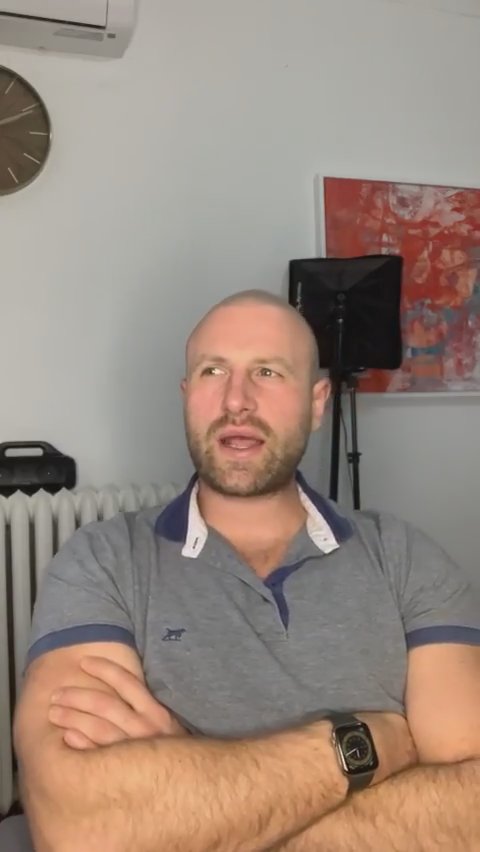
Today we are doing another episode of Mental Health Matters, except you bring the topics for me to answer. This usually makes for a lively and fun conversation, so come join and contribute your questions or experiences. Feel free to put any questions in advance on the community feed and tag me whether you are joining live or watching later.
This week's Mental Health Matters is an AMA episode. Ask me anything about mental health and addiction. You can comment on any of my videos or go on the community feed and tag me. Or you can just join the live and ask me questions.
Chris: Can you switch from a chemical dependency outpatient to a mental health outpatient and remain in the house because of the support or help available? Chris: It is like individual on a case by case basis. The community can wrap around and help support that person, because not everyone's struggling on the same day.
Are personality quizzes legit? Or even horoscopes? Jarrett Bellini gives his opinion on each one. For the Myers Briggs, there's really no scientific validity behind them. But there is some validity to the Enneagram.
There are five different ways people can give or receive love. Not everybody is the same. People sometimes get confused in relationships. If you have any more questions, comment on any of my videos, ask them, put them in the community feed, tag me, and we'll answer them.
What up, folks? Welcome back to another episode of Mental Health Matters. I'm Evan. We're here to talk about addiction, mental health issues. I'm a licensed therapist, and we're doing mental health matters. Because mental health is important. We're going to be discussing matters around this topic. Anyways, today, like I do pretty much every other week, is an AMA episode. Ask me anything so I could hear what questions you have about mental health and addiction and answer them directly for you. So in the future, if you're watching the re recording of this, you could comment on any of my videos or go on the community feed and tag me and ask me any questions, and I will most likely answer them here.
So I should be able to see those and get your question answered. Or you can just join the live and ask me questions. So if anyone is going to end up coming in today and ask me questions, I will go ahead and answer them in the time we have. So I prepared a few questions that I got from others in the Cadre community, some elsewhere, just random questions. So we'll start with one. This is from one of our Cadre team members. So let's say. So someone asked if you're in a sober living, right, like a recovery residence for people with addiction and your mental health struggles are more evident or more apparent than, let's say, your cravings or desire to use drugs or alcohol, how does the house and its members support you so you can stay in that supportive environment?
For example, can you switch from a chemical dependency outpatient to a mental health outpatient and remain in the house because of the support or help available? And that's a good question, because when it comes to addiction and mental health, luckily, I think we're becoming more aware of just how connected they are. And then most of the services out there are combining the two. So most of the treatments, let's say someone is in now. So someone in a sober house, right? They may be fresh there. They may still be in an outpatient treatment, too.
So they go maybe 9 hours a week, 12 hours a week, whatever, or they may be further along, like a year. They may not be in treatment anymore. So everyone's situation's different. If someone is in a treatment, there's a good chance that they would have mental health staff there. So with some of my homes, we're always sure to have good coordination with their counselors so they know what's going on at the house, and then we know what's going on there. To just have more coordination and be able to give a different perspective.
So, being sure that there's that connection going on, because they may have mental health care staff that could help or even refer them, like you said, to another program. Because even if it is like a dual diagnosis, mental health, addiction, sometimes there are certain mental health disorders that require more of like a specialized and direct focus. Maybe something like a severe eating disorder, schizophrenia, psychosis type symptoms, bipolar, borderline personality disorder, things that are a little bit more severe.
So, could that person stay in the house? Sure. We've had folks at our houses with all of those issues, all of those diagnoses, whatever you want to call it, and we've been able to help direct them to the props. So as long as they're getting the proper resources. Right. Now, if somebody is, you know, the way a recovery home works, right, is it's a creation of a therapeutic environment with support and accountability. And if somebody's actions, behaviors are threatening, that their. Their actions are like, let's say, harming themselves, other people in the community, the community as a whole, right.
They may not be appropriate to be there. So it is like individual on a case by case basis. And the person really, I think it's important that they show that willingness to, you know, seek and receive any help or support that you offer, anyone else offers if they're struggling. And that's the whole point of the community, too, is that, like, everybody there is going to struggle at some. We all struggle at some point, but especially if you're in early recovery. Recovery and living in a recovery home, in treatment, like, your emotions are going to be up, down, it's going to be a little bit more volatile.
And that's where the opportunity comes in for the community to wrap around and to help support that person, because not everyone's struggling on the same day. And that's how recovery works. Little old adage like, well, you know the reason aa or twelve step meetings work because we're all not sick on the same day, right? So we could always help and provide support for others, lend a hand when we're feeling in a stronger place. So that's my take. Oh, there's Chris. I'm glad you're in here for that.
Yes, I think that covers that. If you have any follow up questions or whatever, feel free to ask. So here's a fun one. I love talking about this. So someone asked, like, are personality quizzes legit? Right? So talking about, like, the Myers Briggs, talking about the Enneagram, talking about, I don't know, what are some of the other ones, the houses of Hogwarts, the love languages. So here's the thing. Or even horoscopes. So I'll give you my opinion kind of on each one. So let's start with the Myers bricks.
This one's really controversial because there's, like, a lot to it. There's, like, 16 personalities. There's a quiz you could take. The problem with it is it's not. It's really difficult to get reliable results. So, like, someone could take it and very often get it, maybe something different than they did, you know? And then to say that, okay, people are distinct in this personality or this one, but also, it's. It's four measures, right? So introversion, extroversion, like intuitiveness versus a sensing mind, thinking versus feeling and decision making, and more of a perceiving or prospecting mind versus a judgmental mind or a judging mind.
Not necessarily judgmental. Right. So it's just whatever, it doesn't matter. There's four variables, and it's binary. Yes, no, yes, no, yes, no, one or the other one, or the other one. And so that could be an issue because maybe one day you're a little more here, a little more there, and they'll even tell you in some of the quizzes are you're like 60 40, or let's say you're 51 49 on one. What does that mean? Versus being extreme on the other. So then, no matter what, you're getting placed into one of these 16 categories.
So, like, the reliability may not always be there. So, like, kind of from a very harsh scientific perspective, they would say it doesn't have validity. I think there is something to it, though, from my experience, maybe just because when I do it, it, like, nails me right between the eyes. So, like, for any of these, let's just compare them to horoscopes. Right. Now, for horoscopes, there is. I don't know. I'm gonna get yelled at. There's really no scientific validity behind them, right. So for this, there is data that goes into it.
There are some websites that really aggregate a lot of data and look for patterns with people with these 16. So there's a lot of different ways you could look at personality divided up in every which way, which all these do. So for the Myers Briggs one thing I do when I have people take it just to kind of test it, and especially for those who've never done it before, I'll have them take the test but not look at the results. I'll take a look at which personality they are. I'll take the description for that personality, set it aside.
And then I'll pick three others and random, like, literally, I'll random pick three other personalities and I'll read each to the person. I'll take away the identifying info of introvert, extrovert, whatever, and just say which one of these applies to you most. And I'll just say, hey, rank it on a level of like one to ten. How much does this summarize you? And almost always it's interesting, like, they will pick the one that they actually got and they'll rank it higher, right? So, like. But they'll also, like, let's say there's a similar one, right?
So let's say, like, you match on all four letters, right? That's yours. But let's say there's one that's like three letters. Like you're an entp, but you get. But then you read the description for ENFP, you'll be able to relate to that more. So the closer it is to you, probably the more you'll be able to relate. So to me, that means there is some validity to it and maybe there is a way to make it more scientific. Now, you have others, like, let's say the big five personality, and that's the one that's more.
Has more scientific research and backing behind it. However, it does like a similar binary thing. So I don't, I don't know. But that one's about, like, you know, your levels of, like, neurotic. So I think it does look at the levels of each of where you're at of, like, neuroticism or levels of. I'll have to think of, like, what those. I don't know. I'm like, put myself on the spot here. I can't remember what all those variables are. They'll probably come to me. Yeah. Anyway, so that one has a little more validity.
The big five, there's another name for it, but the big five personality, you could take that quiz and get some, like, pretty good insights. There's like deep psychological testing like the MCMI or Milan that you would do with a psychologist. And of course, that has a ton of, like, the MMPI, the Minnesota multifaceted personality inventory. So it's just like one of the gold standards of it, right, which has, like, all science. And I think there's pros and cons to that as well. I mean, there's, again, when we're trying to encapsulate someone's personality, we're all so complex, there's no perfect way of doing it.
And some of those take more of a clinical standpoint as well, some of the psychological deeper testing. Then you have my, the houses of Hogwarts. Now, could this possibly have any scientific validity to it? Yes and no. Now, here's the thing. Something created by just a children's book author, right? The funny thing is that most people could identify, right? They, like, you could take a test online, they will put you in a category. And the thing is, sometimes you can make predictions about somebody based on.
So basically, whichever one you identify with, eventually you could categorize people in every which way. And, like, there will be some patterns that emerge. And they've done some like, you know, there have been some studies on this where they have found some differences, some, like reliable differences. Now, again, these are just. These are fun. I mean, a lot of these are fun to do. Maybe you gain some insight from doing them. Maybe they give you some sense of meaning. So I don't know. I think they're fun to do.
And some people are more. Are going to be much more critical than I am of them. But I do think that there's something more to them than when you get to, like, the cold, hard scientists. But maybe I'm wrong anyway. Yeah, I guess you also have ones like the enneagram. And I put, like the enneagram maybe in a similar category of, like, the MMPI. I'm not sure exactly where that one came from exactly or what like, the basis of that one is. It takes a little bit more of a clinical approach, too, of like any.
You know, it's like you have like one of nine personalities with a wing to it. I don't even know what that means. But that one, I like that one, too. I read of me and I like, I could relate with it when I do the test. And it gives me. And I mean, I could definitely relate with it probably more than the others. And you have the love languages. Now, I don't think there's much scientific about the love languages. Right. It's just like something this author came up with for couples. But I think, like, people really relate with this one.
And I think it's just really practical in a way because it's saying like, hey, all right, here are five different ways people can give or receive love. Not everybody is the same, right? So that makes sense that, you know, like, whether it's spending quality time with someone, giving gifts. What is it? Quality time giving, you know, gift giving, physical touch, you know? So there's like five. There's like, yeah, five of them. And depending on which one. And that's where people sometimes get confused in relationships because maybe they are trying to spend more quality time or give gifts, but that doesn't mean as much to the other person.
Sometimes it's just a good thing to know about someone else. Like, hey, this person really values gift giving where I don't really care as much about it. But, hey, it gives me insight into how I can show love and appreciation for this person and it'd be better received. So it's really just a basic here's what I like, here's what I want, here's what I need. Right. And it divides that up where maybe there wasn't language behind that before or there wasn't as much awareness of it. So then there's just a lot of.
Right. The love languages. Right. There's just the. The translation between couples is not. Is getting lost. Some of the messages are getting lost in translation there. But anyway, um, yeah, so we just went down a wormhole of personality quizzes, but maybe we'll just leave it there for those two. The sober living personality quizzes. But anyway, if you have any more questions, comment on any of my videos, ask them, put them in the community feed, tag me, and I'll take a look at them. We'll answer them for next time.
And with that, folks, it's been real. Take care.
Reactions and comments are for members. Joining is free and takes a minute.