Today we are doing another episode of Mental Health Matters, except you bring the topics for me to answer. This usually makes for a lively and fun conversation, so come join and contribute your questions or experiences. Feel free to put any questions in advance on the community feed and tag me whether you are joining live or watching later.
Today is every other week I do the AMA, the ask me anything episode. If you have any questions mental health related, throw them out there. Remember, all you got to do is put it in the community feed and tag me.
When you're on opioids, they cause severe constipation patient to a point where it could be dangerous. And then when you go into withdrawal effect, the withdrawal is what goes up, what must come down. So it's really careful to be mindful of that.
The next one is someone's asking about the validity of personality quizzes. Like, the houses of Hogwarts or the Myers Briggs. There's things like the love languages, which are not scientifically backed. It's sometimes fun, sometimes it can provide insights.
Bipolar disorder is one of the most misdiagnosed disorders. One of the biggest reasons is because of substance use. If you have any questions that you want answered here, put them on the community feed.
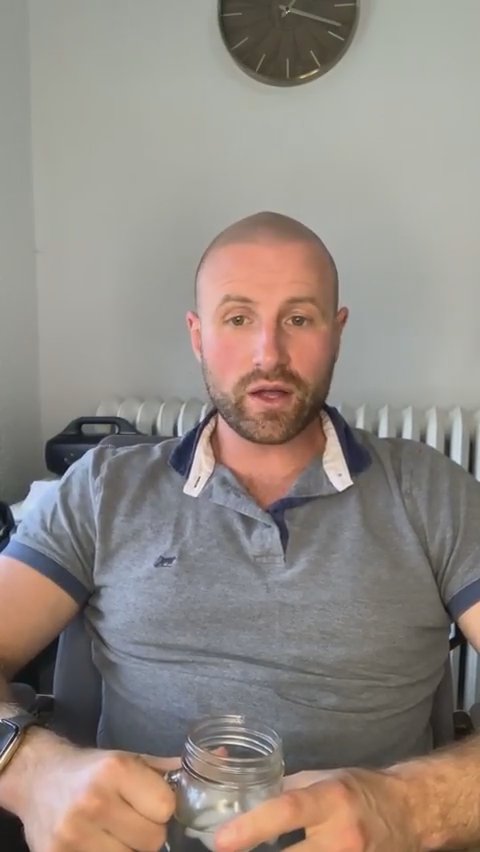
What's up, folks? Welcome to mental health matters. I'm Evan, your resident mental health and addiction therapist. And here we're going to be talking about some mental health matters, some topics, and because mental health is important, you see the double entendre. Now, today is every other week I do the AMA, the ask me anything episode. So I found a few questions from different Cadre users, other social media users, people who have some questions. So I picked a few of those for today, but hopefully some folks are going to come in the live and we could have an awesome discussion and see where it goes from there.
So I saw the notification went out. Hopefully people are going to hop on. And remember, if you want your question answered, all you got to do is put it in the community feed and tag me or just comment in one of my videos. And in that case, I will likely see it. So let's have a little bit of fun. I brought a couple fun topics, shake things up a bit. What's up, Katie? How's it going? It's a beautiful day here in Minneapolis. How is it in Michigan? You guys also having some crazy good weather and. Yeah.
Katie, if you have any questions mental health related, throw them out there. Alright, let's start with this one. Okay, let's get right into it. So a while back, I did a video about opioid constipation and it got a lot of comments from that. Anything has to do with like, withdrawal or medication effects, drug effects. People love it. I'm glad. It's gorgeous there. So I want to talk just a little bit about that. No, it's not going to apply to everyone, but maybe you'll find this interesting. But one of the things to understand is that people, when you're on opioids, they cause such severe constipation patient to a point where it could be dangerous.
It just slows down your metabolism and a whole bunch of other things. And so, yeah, just something that people need to be cautious of. But also, like when you're getting done with the surgery, you know, because typically, depending on what it is, there's going to be some opioids involved. And so it's really careful to be mindful of that. Now, I've been on a couple forums, like when I got a spine surgery, a big one, I was on forums of people who'd also been on there. And I swear to God, one of the number one things people posted is what do you do about this constipation issue?
Right now I have my tips and tricks, but I think just something that's important to be mindful of and just. That is interesting to know that folks who are addicted to opioids can go insane times that you never even thought possible. Like a month or more. More. And that's actually very common. And then when you go into withdrawal effect, the withdrawal is what goes up, what must come down, but to an extreme. So when someone goes into withdrawal, I'll let you use your imagination, it gets ugly. So whatever you're going to get from that, maybe it's just entertaining.
But that is something to note. The next one is someone's asking about, like, the validity of personality quizzes. So, like, the houses of Hogwarts or the Myers Briggs. There's things like the love languages. Now, these are, like, very controversial, because most of them are not, like, scientifically, rigorously backed. And that is important, right. For that to be the case. Now, at the same time, in my opinion, I feel like there's something to it, right? So something that's been around for a while.
The Myers Briggs. I think every personality inventory is going to have limitations, right? You can't, like, box people exactly into different categories and think that they're going to fit perfectly. So, the Myers Briggs. There's four letters that you could be, and each is one of two. So it's binary. So now that there's going to be a problem in that, because you could be 49, 51% to one letter or the other, but you're just going to be that one. So it kind of lacks a nuance in there. However, I find that it is fairly accurate.
There's some things that you could draw from that. Now, let's say you're three out of four letters. You're probably more able to relate to the descriptions that they propose than other ones. So I've tried this with people where, if they've never done the Myers Briggs before, I do a little experiment. I say, all right, take the test, and then I'm going to read you the descriptions of three random ones. One of them is going to be yours. So pick which one most closely relates, or I'll say, rated out of one to ten.
So one that's theirs and two random ones. And even if you do one random one that's close, very often, I find just my personal take is that they can really relate with the one that they are closest to. There's a lot of explanations. There's probably a lot of eggheads out there. But sometimes, you know, in the research community, you gotta take some things with a grain of salt, because unless it's, let's just say they're very slow to accept things that are outside of their norm, which could be a problem now.
But again, I think all those things could be taken with a grain of salt. And, you know, it's like, what are you using it for? Where it's fun. Like, I love the house. As a Hogwarts, I can make certain predictions based on someone's house or guess their house, you know, and it does sometimes tell you something about it. There are some studies that show that there are, you know, quantifiable differences with people who identify with certain houses. Right. So I just think it's fun. Like, with the love languages, is that scientifically backed?
Not really, but, you know, based on whichever one you choose. Right. You just choose your own? Yes. I like to receive love in this way. Well, you can't tell someone. That's not the case. And so if I'm someone's partner, it would be good for me to know. Let's say this person really likes receiving gifts. Well, it's a good thing to know, right. Because I may receive it differently. So I think there's something to that and why a lot of these things are popular. And then let's just throw another one out, like attachment theory.
Now, this is something that's more rigorously backed, that's been around for a very long time, you know, based on someone's attachment style and relationships, whether romantic or otherwise. So I've done some videos on this as well. I do believe, if not, I should do some other ones. But, yeah, so this is something that maybe has a little bit more validity, that has had a little bit more resource, but it's something that could be interesting and something to draw insights for. So, you know, it just depends on what you use them for.
It's sometimes fun, sometimes it can provide insights. But, you know, there are some personality measures, like the MMPI, Minnesota multifaceted personality inventory, the Milan. So, like the big five, those are ones that are kind of similar, that has more validity and more research behind it. But, yeah, it's all fun and games. Now, let's see, we have the last one, which is about bipolar diagnosis, where I did a video about how I viewed bipolar to be one of the most misdiagnosed. And there is some research behind this that bipolar disorder is one of the most misdiagnosed disorders, and that could be both ways.
It could be missed. Someone has it and it's not diagnosed. Or more often, someone has the diagnosis but doesn't really meet the criteria. One of the biggest reasons I find that is because of substance use. So many people who struggle with substance use disorders, addictions have traits of bipolar because it throws their moods into depressions and that could go up. And it's really, you're really not able to technically diagnose it, you know, is it like just official disorder that doesn't have a provisional or rule out or whatever, unless that person's been free of substance for a significant amount of time, let's say six months, a year, right.
If they're still having elevated episodes. So bipolar, you really have to have an elevated episode of mania or lesser hypomania. And so there's certain things I could bring that on, different medications, different life circumstances, stressors. So I think that's one of the ones that we as clinicians need to be more cautious of. And I don't know why, you know, sometimes it's so obvious, like, yeah, they were using, but maybe they weren't upfront with their provider about their use. Yeah. Or maybe just the provider just thought it was so blatant, even though their substance user just kind of overlooked it.
So I just wanted to be careful when that person asks, well, how do I get, you know, a better diagnosis? Well, you know, I don't know. I think it's just important maybe to know, know some of those things that when you go to a provider, you know, being sure that you inform them of any substance use at the time, give them a really detailed history. How often have these elevated episodes happen? Just try to find someone reputable, you know, even going up the line to a. To a psychologist who does diagnostics.
But we therapists here too can do that as well. So, yeah, those were the three topics, opioid constipation, personality quizzes, and bipolar diagnosis. So anyway, I hope you got something out of that again, if you have any questions that you want answered here, put them on the community feed. Comment on one of my videos, tag me, I'll find it and I will add it. I believe I'm doing another one of these in two weeks, if not three weeks. I had a couple of other topics come up. Anyways, let's see. Maybe I could tell you real quick.
So the next ask me anything will be on the 24th, so you got some time to shoot some questions over. Anyways, it's been real, folks, take care of yourselves.
Reactions and comments are for members. Joining is free and takes a minute.