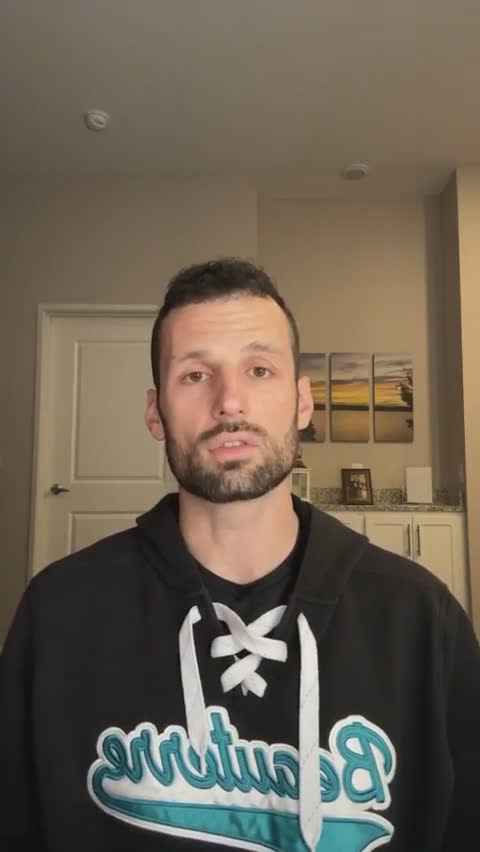
Join me every Sunday evening to set the tone for the upcoming week, with stories that bring out the serenity inside all of us!
Jason Lennox is your resident recovery champion. He shares with you what he calls Sunday, serenity. Serenity is such a key component to recovery. Hopefully get some people joining in, whether you're here now or tomorrow, along for the ride.
Jason: A colleague asked me, what's your definition of success? And I said something like being able to achieve a measurable, an acceptable amount of goals. And then I followed up and said, but maybe more concisely put, going to sleep with a clear conscience. And I've been thinking today about it.
Lukewarm talk about having a clear conscience. Also about doing the things that might contribute to the betterment of other people's lives. Four of the top five things that people regretted as they were dying had to do with the things they did that they didn't.
Luke: Think about those things that maybe could be doing, could be contributing to for the lives of others and for the betterment of our world. He asks you to think about creating the list of the things to make right. Have a great week, everyone.
Happy Sunday evening, Cadre crew. I am happy to be here with you again this time. If you remember last week, if you watched last week, I was at the top of a mountain in a much darker atmosphere. So happy to be back here live with you this Sunday evening. My name is Jason Lennox. I am your resident recovery champion, champion for everything, recovery, in recovery, about recovery, with recovery here, sharing with you what I call Sunday, serenity. And really what that is, is serenity to me. And I actually pull this from different stories and things that I experience throughout the week.
Serenity is such a key component to recovery, and I want to talk more about that and how that relates. But again, I'm happy to be here with you. Hopefully get some people joining in, whether you're here now or tomorrow, along for the ride. And I want to back to actually a message I got Friday night. It was from a colleague, and she was on PTO, but she was preparing an essay that she had to complete by the end of the day. And so she asked me, Jason, what's your definition of success? How would you define that?
I'm doing a paper on success. Tell me the first thing that comes to mind. You don't have to think too hard about it. Just give me what comes to mind. And I said something like being able to achieve a measurable, an acceptable amount of goals that are developed with social, moral and ethical consideration. And then I followed up and said, but maybe more concisely put and less measurably put, being able to go to sleep at night with a clear conscience. Okay. And she kind of laughed at that one. And actually, I think, preferred that one a little more.
And so it made me think about that whole clear conscience. And I've been thinking today about it. And so I want to touch a little bit on that because I think what's so easy for most of us is to think about our conscience and really having a clear conscience, being not doing things that I'll regret or not doing things I shouldn't have done or maybe didn't want to do. And I'm going to touch on that. But there's a second component of having a clear conscience that really struck me today, and that was doing the things that I actually could do that might contribute to the betterment of other people's lives or this world in general.
And so I want to touch on both of those again. And I'll start with the things that I wish that I hadn't done. And it's funny, there is actually a book, Bronnie Ware, wrote, I think in 2011, I did a little bit of research on this, maybe a year ago, but she interviewed a bunch of people that were dying, and she did a study on regret. And of the top five things that people regretted as they were leaving this world, four of them had to do with the things they wish they did do that they didn't. So, not as much about the negative, but what they didn't do that they thought they could have.
But again, I'll start with what we think we shouldn't do, that we end up doing, because we know that can really drive us to a bad place. And I know that I had to learn that the hard way. The really hard way. When I was in treatment in 2010, and I got a visit from my mom and my uncle, and they told me my grandma had passed away. And this was a grandma who I grew up with. She took care of me. She was just an angel of a woman. And the last time I had seen her prior to that was at an intervention at her place.
And it was not. It didn't turn out well that day for me. I planted a seed. But that day did not go well. And when I left my grandma's place that day, she was in. In tears, bawling. I wrote about this. I dedicated my book to this when I released it. But she was doing everything she could to stage that intervention, to have me there and to get me to go to treatment. She was emotional. She was the last one who took her turn trying to get me to go. And when I walked out that day, I didn't go to treatment.
I started walking down the gravel roads. But as I left, I said words to her that I would never repeat to another human. And that was my last memory and interaction with my grandma. And so it crushed me. And thank goodness I was in treatment, and I was on a furlough, because I really. Good evening, Luke. Glad to see you here. I was on a furlough, and I knew that if I left treatment because I wanted to, I wanted to go do what I was used to doing, which is drinking or finding drugs and substances, I didn't.
So, thankfully, I stayed there. And the pain that I felt, I just can never quite explain or really convey that in words. It crushed me, destroyed me. That was one of the closest people in my life I was never going to get a chance to repair with. That actually served as a really good motivator for me to continue on and try to live a good life and live in her name and make sure that I didn't let somebody leave the world, or I didn't let myself leave the world without complete relationships. And it showed up when my second grandma was passing away, actually six years later.
And we knew that she wasn't doing well. So she was in the hospital. And you better believe the last two weeks of her life there. I sat in the hospital, I worked in the hospital, I slept in the hospital, I combed her hair, I held her up, I talked to her when she wasn't making sense. I did all those things because I knew that I couldn't let another person go without that completion. And so that was a redemption of sorts. So that was the lesson I had to learn about the things that I need to clean up, that I don't want to go to bed at night thinking about that I shouldn't have done.
Now, again, sometimes, more importantly to me, are the things that I wish that I did do or the things that I could do to contribute to the world and other people's lives. And I'll just give a few quick examples of that. In the last couple weeks, I flew out to Massachusetts. I told you I was going live from there last week, and I spent a week between a couple different aunts places. And because of just the nature of their living situations, I was sleeping on couches, not getting the greatest sleep, not getting enough sleep.
But I was doing that because I wanted to spend time with them. They're both sick and not doing well, and so I'm going to make sure, and even if they weren't, I would make sure that I get to spend time with them, that I get back from that on Friday, late Friday, try to catch up from work, wake up Saturday morning, try to catch up from being gone for a week, and then 12 hours of going to another family function where we got to have some food and there's a lot of fun. But the funny part about it was there's a four wheeler, and all the kids wanted to ride the four wheeler.
So here I am, as it's getting dark, it's freezing, I got a t shirt on, cruising into the wind, one kid after another. You know, these kids are relentless. They will never let you forget that you said yes. And so here I am for hours, probably just driving one kid after another on the four wheeler. And anyway, point in that is there I was again doing the things that I could do. And then I get home late last night. m. Basketball game for my 15 year old cousin Sophie because I just love being part of her life and being there to support her.
I remember what it was like playing sports, watching for the people in the crowds, and knowing how much that meant. So my point in those three examples, just in a week and a half, spending a week sleeping on couches, eating food that I probably not accustomed to eating, and then going crazy yesterday, running around and driving these kids in the freezing cold, and then this morning, getting up early and running around and watching a couple basketball games, which, by the way, you know, freshmen basketball games are just, there's not much that would excite me about them other than being there for my, for my little cousin.
So those are the examples of things that, that I do in my life that really help create a clear conscience and that allow me the talent. Truly, I feel like it's a talent sometimes that when I hit my pillow, I'm sleeping within 30 seconds, maybe 60, maybe 90. But inevitably, the greatest benefit, I say this often when I'm speaking, the greatest benefit to my own recovery and really well being in general, is the ability to lay my head on the pillow at night, knowing that, dang it, I gave it my best shot.
And hi, Rachel. I didn't leave anything on the table. I know that I didn't do any harm. And if I do, then I have to work on fixing those things right away. But most of the time, I know that I hadn't. And then, more importantly, what did I do to pack into the stream of life that I took from for so long and when I can do those things again, that's the greatest gift that I've ever received. And, you know, I was thinking about this earlier today. Does that mean sometimes, am I possibly trading off a couple years at the end of my life because I'm not sleeping in my own bed every night, because I'm not eating the greatest food all the time when I'm with certain parts of my family because I'm running around like crazy?
Maybe not getting enough rest all the time? I get pretty good rest. What, am I taking off a couple years of my life? Maybe. But is that trade off worth it for regularly falling asleep at night, knowing that I gave it my all and I did what I could and I didn't do maybe what I shouldn't be doing. I would take that every day. Because as Luke, who's commenting here, talked about in his live on Thursday, we could be the middle of our forties and get a terminal diagnosis. That means we have a year to live.
And then what do those couple years matter anyway? So I hope, and I would urge you to consider how you might think about the things that you maybe don't want to be doing, don't feel good about. And I do this annually, at least annually. I create a list of the people, the things that I've done that I don't feel the greatest about, and I'm going to go and do my best to clean those up. And most of the time those might be perceived wrongs. People say there's nothing to even talk about here, but that's the activity that I do.
At least once a year, I make that list of things that maybe I think I need to clean up, and I try to do that regularly for the smaller things. So I urge you to consider doing that. And then secondly, thinking about the things that could be doing this one's a little harder because we have to balance this idea of caring for self and contributing to the world and to our people. Because if we don't do the first, the second becomes harder. But I found ways to balance that and I'll talk more about that upcoming.
But think about those things that maybe could be doing, could be contributing to for the lives of others and for the betterment of our world. And I promise, I don't promise a lot of things, but I promise that putting those two things together, cleaning up the things that I maybe don't feel good about and then packing in a little extra in the places that I can where maybe others wouldn't, when I combine those two things, I fall asleep at night in peace and life is so serene and beautiful and one of the key things in recovery.
But I think in any of our lives because again, having that peace of mind, I know that when I go to my grave, at least if it happened today, if I always say if my life ended today, I know dang well that I gave it everything I had in the time that I had up until this point. I don't know about tomorrow, but today I can say that. And I ask you to think about creating the list of the things to make right and the things that we could be adding in your own lives and maybe you can share in some of that experience.
So again, grateful to be here, grateful for Luke. Rachel dropping in, dropping comments. Look forward to seeing you all. I hope you have a wonderful week as you think about maybe ways to clean up and just free up some of that internal stuff through clearing up the perceived maybe wrongs and then adding value to the lives of people. So look forward to seeing you next week. Have a great week, everyone.
Reactions and comments are for members. Joining is free and takes a minute.