If you’re someone who has struggled with depression, suicidal thoughts, low self-worth, or simply feel like you don’t belong, my hope is that this series will provide you with the wisdom of knowing why we stay alive, the compassion to understand our struggles and the tools to radically be yourself.
Rachel Havocost is bringing you a new series called the Courage to live. The series aims to help those who have struggled with depression, low self worth, suicidal thoughts, or simply feel like you don't belong. This is going to be a two part series with four videos in each series.
In this video, I'm going to be briefly describing belongingness, what it is, and what it has to do with our well being. It's embedded in our DNA to want to belong, especially to a group. True belonging, when we experience it, helps us stay alive.
What is belonging? And what does it have to do with our well being? Hi, Cadre Fam, I'm Rachel Havocost and I'm really excited to be bringing you this series called the Courage to live. If you are someone who has struggled with depression, low self worth, suicidal thoughts, or simply feel like you don't belong, my hope is that this series will provide you with the wisdom of knowing why we stay alive, compassion to understand why we struggle, and the tools to radically be yourself. This is going to be a two part series with four videos in each series, this being the first video of part one.
Let's dive in to video one. So in this video, I'm going to be briefly describing belongingness, what it is, and what it has to do with our well being. I want you to briefly think back to, and I know this might be painful for some, but I want you to briefly think back to middle school, and I want you to think about what felt like the most important thing to you at that time. Was it fitting in? Was it making friends? Was it being popular? Was it comparing yourself to other students to see where you fit in in the social hierarchy?
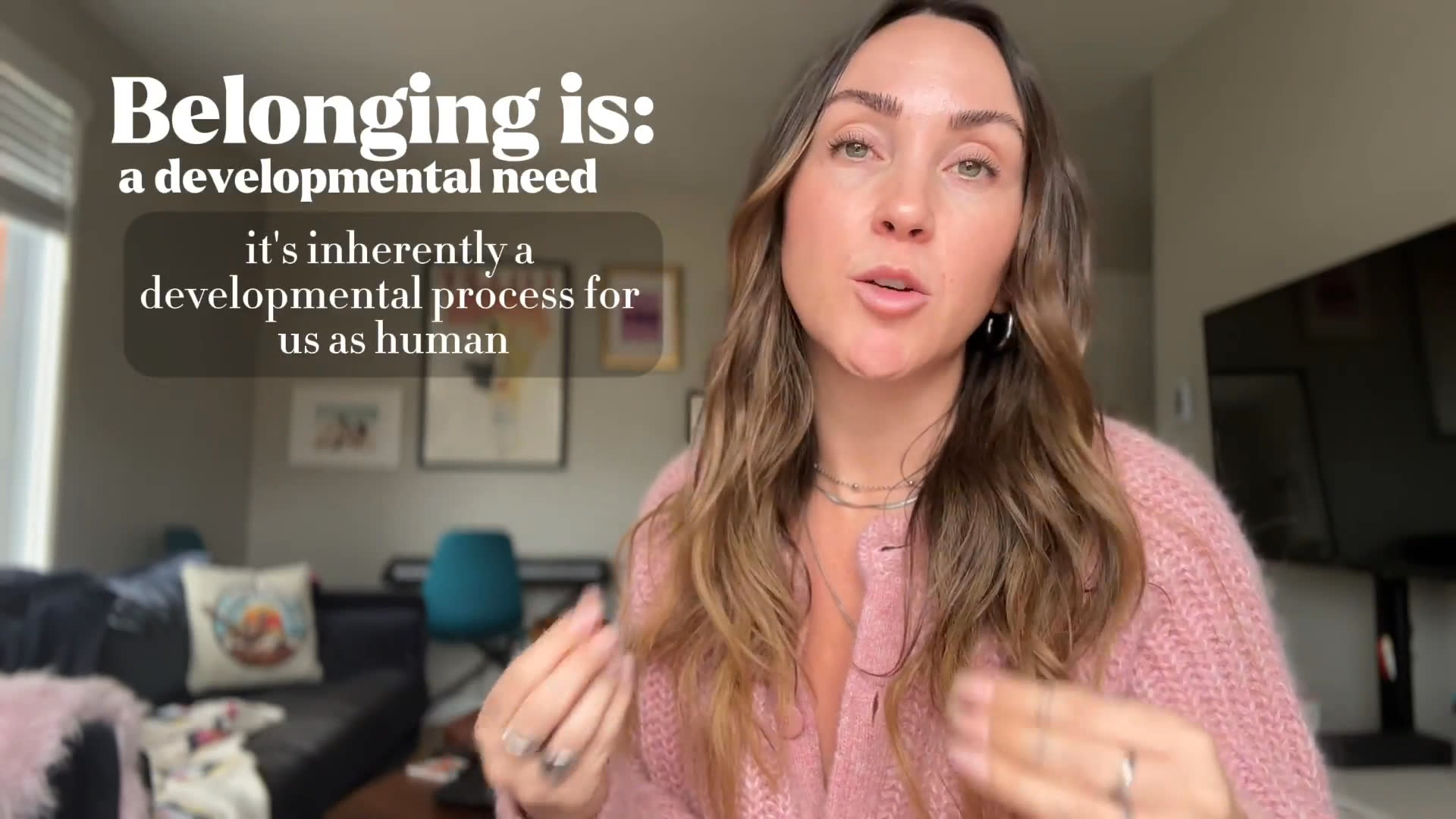
Chances are that something social was a priority for you, because developmentally, at that age, adolescents are highly focused on how they fit in with their peers. It's inherently a developmental process for us as human beings to start to assess how we belong. And the reason for this is if we think biologically evolutionarily, belonging was how we survived. Belonging meant no numbers. Belonging meant a tribe. Belonging meant community and people we could rely on to help us survive and continue on and flourish.
So belongingness is really an inherent survival mechanism. It's embedded in our DNA to want to belong, especially to a group. Belongingness is an inherent need that we all have. It's a human need, and yet so many of us who strive for it don't succeed at acquiring it. And there are a few reasons why, which I'm going to outline in the rest of these videos. But what I want to highlight in this video, first and foremost, is that belongingness is an inherent survival mechanism. And it's a human need, it's required.
And so it's not actually an abstract would be nice to have concept, it's an actual human need. So the first thing I want you to do is honor your need to belong. It's not silly, and it's not childish. It's human. And the second thing I want you to remember is that true belonging, when we experience it, helps us stay alive. My invitation to you is to start to think about in your life. When are times that I have felt like I belong? Who was I with? How did I feel? What parts myself felt safe to be expressed?
And then think about times in your life when you felt like you didn't belong and the same questions. Who was there? What parts of me was I suppressing or not feeling safe to express? How did I feel? And just start to take stock in your life of when you feel like you belong and when you don't. I'll see you for the next video. Thank you so much for joining along.
Reactions and comments are for members. Joining is free and takes a minute.