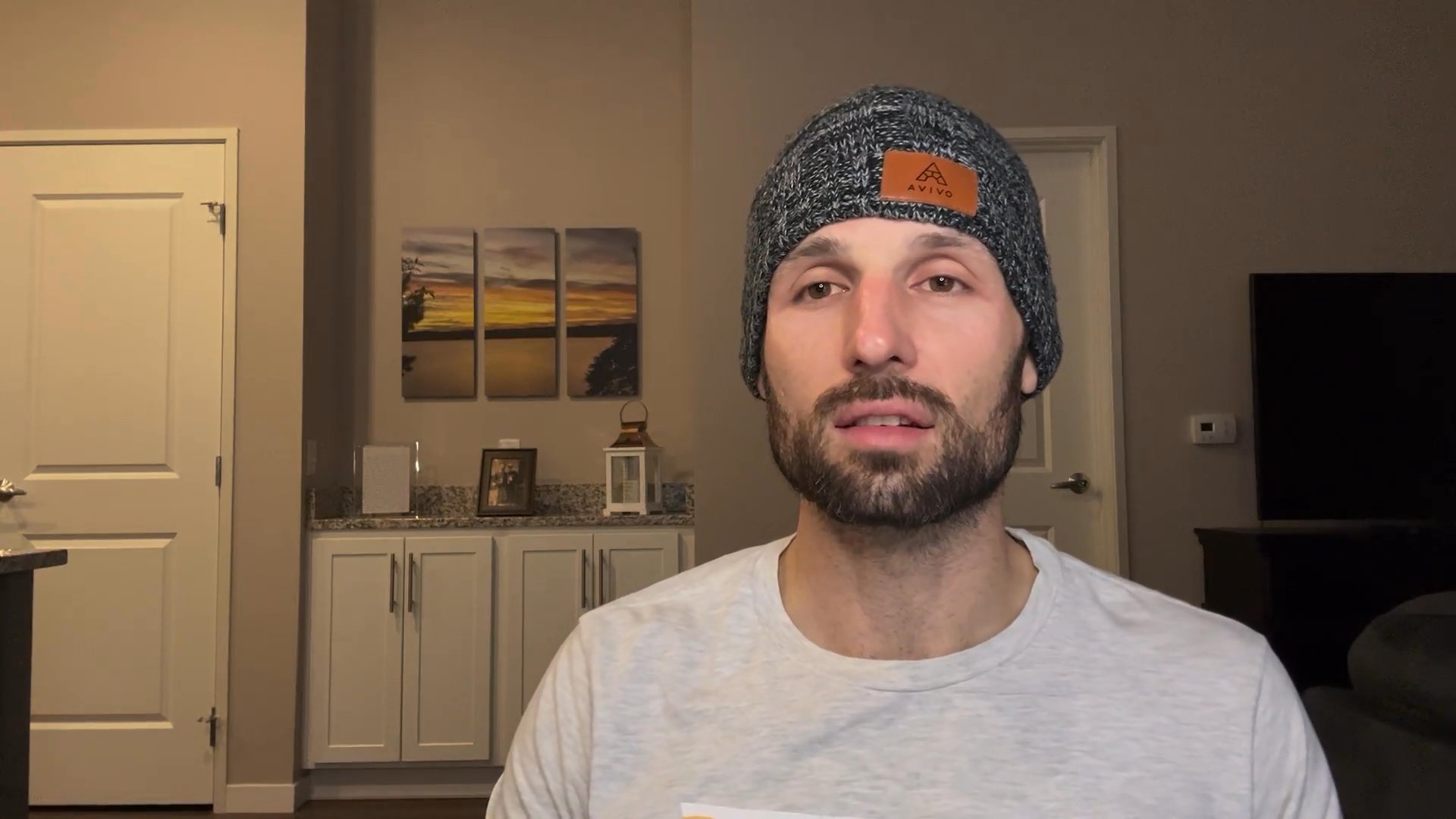
A home is one of the most basic needs and without a safe home, life can be challenging and miserable to navigate. Join me as we dive into the ways a home can make or break someone’s recovery!
Have you ever gone days at a time without knowing where you'll sleep at night? Well, if you have, that's great. You're gonna feel this. Come along for the ride because I'm gonna tell you enough about what that's like.
Jason Lennox: Four pillars of recovery, home health, community, and purpose. The truest definition of homelessness is an individual who lacks fixed, adequate nighttime residence. The barriers to the rest of the resources that we take for granted are high.
Only 50% of people who fall into a state of homelessness have something to do with drugs and alcohol. People who are homeless are nine times more likely to die from overdoses. For every person that dies inside housing, nine people die living on the streets.
I started using drugs and drinking alcohol at twelve until I was 24. In that twelve years, at least half of it, perhaps closer to 60% of it,. I would have been truly classified as homeless. I went to treatment and got a place to stay. Without housing, all the other needs, they don't stand a chance.
A colleague of mine says he will talk to anyone, anybody walking down the street. He says homeless people are not really as ashamed of being homeless. He urges you to take that into your days and weeks ahead. Try to be like Ben. Just say hi to people.
Have you ever gone days at a time without knowing where you'll sleep at night? Well, if you have, that's great. We're gonna connect. You're gonna feel this. If you haven't, that's all right. Hang on. Come along for the ride because I'm gonna tell you enough about what that's like, that hopefully you could shift a little bit and understand maybe what you have and what, what you don't have and what you didn't have to experience. So my name is Jason Lennox, and I am your resident recovery champion, here to talk about everything, recovery, mental health, and well being.
And I am ecstatic to be here with you tonight. And really, I open this series of the four pillars with an introductory message. And this first pillar, as I mentioned, I'll give you a brief recap. Four pillars of recovery, home health, community, and purpose. I'm going to dive into each of those. This is home and home living in the Maslow's hierarchy of needs at physiological needs level, very first level, so critical. And we know that people who don't have a home, by the way, if we think about homelessness, I always had a poor perception of what it actually, my definition of homelessness didn't actually match what it is.
And the truest definition is it's an individual who lacks fixed, adequate nighttime residence. Fixed, adequate, regular nighttime residence. And I always thought it just had to be the person sleeping under the bridge because, you know, yeah, I had a couch to sleep on this night and a floor this night and maybe a car this night, but I met that definition way before I ever thought I did. So that's homelessness. That's what. That's how it's defined. And so I want to lay that framework. And we know that people are homeless.
The barriers to the rest of the resources that we take for granted, so often they're high. Right. The barriers to healthcare, mental health, physical health, spiritual health, all the other resources, food, water, good sleep, all those things go out the window when we don't have that fixed, adequate, regular nighttime residence. And so I want to talk a little bit about that. It's a foundation. And I want to share a little bit about a couple statistics that really caught my attention. And the first being that of all the people who fall into a state of homelessness, do you know that only 50% actually have something to do with drugs and alcohol?
Now, I thought that number would have been a lot higher, but 50% of people who fall into that state, there are no drugs and alcohol. And in fact, oftentimes homelessness is what contributes and creates the addiction and alcoholism so it can be reversed. So that's. That was very eye opening for me and hopefully shares a little bit about the perspective that you might have as well. And the second statistic that I want to talk about is we know the dangers of the epidemic that's going on right now and the way people die from overdoses.
People who are homeless are nine times more likely to die from overdoses. Nine times. So for every person that dies inside housing, nine people die living on the streets. That's a phenomenal number. And it makes sense. Again, no access to those resources, the environments people are in. Out in the middle of nowhere, who's going to see a lot of people that, you know, end up overdosing out there? And so it's incredibly sad. Those are a couple important statistics, and I want to jump into kind of some anecdotal, personal story experience stuff, because I've been there.
You know, I was as early as 1617 years old, trying to figure out where I was going to sleep at night. And I didn't again realize that I had met that definition of homelessness as early as I did. But I started using drugs and drinking alcohol at twelve until I was 24. And in that twelve years, at least half of it, perhaps closer to 60% of it, I would have been truly classified as homeless. And again, I was sleeping on couches, on floors, in cars, on benches, wherever I could. But I'm so grateful for that experience, and you might think I'm crazy for that, but here's the reality.
Because I didn't have a place to sleep, the drugs, the alcohol, they were so much more appealing, and they were so much easier for me to consume, to fight off that pain and misery throughout the day, not knowing what was going to happen. So I'm feeding myself by day with drugs, alcohol, trying to figure out what I'm going to eat. And then by the time night comes, I realize I don't have a place to stay. And so just how tired I got, how fast it happened, all those experiences truly led me to a place where I was defeated and hopeless.
I mean, by the time I went to treatment, I didn't go because I thought I had a different way of life. I was hopeless. I was 21 years old, and my cousin Scott looked me in the eye, and by the way, he struggled with drugs and alcohol himself. And he looked at me and said, jace, why do you keep doing what you're doing? Look at your dad, look at your family history. You're 21, man. You're throwing your life away. Your kid doesn't have his dad. All the things. Why do you do it? And I don't remember what I told him, but I remember what I told myself.
I don't know, why do I keep doing this? And I got to tell you that that point is a moment I'll never forget, because it was simultaneously the worst moment of my life because I felt defeated and hopeless and like it was over. There was no chance for me. But again, simultaneously, it was the best point I ever could have had in my own recovery because I stopped pretending like I had the answers. And that was the truest form of accepting the powerlessness of the disease, of addiction. And so that was a great moment.
And again, all that was just sped up, and it progressed so much quicker because of the homelessness that I experienced. So that was my life. And, you know, I went to treatment and got a place to stay, and then I got my own place to stay legitimately, my own, for the first time when I was 24. And so I share all that because, again, this housing thing is so critical to me. And, again, I have this place here that is just the most amazing place for me to retreat to. And I love being here. I love sharing with you all from here.
And so I have that today, but sometimes I can take that for granted. So I always have to remember these things. And so, again, I get to talk about this. I get to think about it. You get to think about it. You get to talk about it. And we know that without housing, all the other needs, they don't stand a chance. There's no way I'm thinking about my mental health and my physical health and going to get an annual checkup. Certainly I'm not worrying about who I'm connecting with, what my self esteem is like, and purpose is so far from me.
My purpose when I'm in a homeless state is just to figure out where the heck I'm going to sleep and get food from. So I'm so grateful that I'm out of that cycle, but so grateful that I had that cycle as well. And so I want to end here, as we think about this and take this off into our days and weeks ahead with a story. And this is a. It comes from a colleague of mine. His name is Ben. He's actually a really good friend. And Ben's the kind of guy that he will talk to anyone, anybody walking down the street.
I mean, he's saying hi to everyone. It is just the. The guy can just talk to anyone and strike up conversation. It's fascinating. And we're walking by, getting close to the office one day after lunch, and it's a homeless guy who's regularly sitting outside the office. And Ben looks down at him and says, yeah, that's a good choice. The guy had a pint of ice cream, so he'd taken a few dollars that he had gotten, and he went for ice cream. And Ben looked at him and said, mm hmm. Solid choice, dude.
And he looked up and said, I know, I know. And so I talked to Ben after, and I go, man, you just. You can talk to anyone, huh? And he said, you know, jace, here's the thing. I see homeless people all the time and have conversations with homeless people all the time. Do you know that homeless people are not really as ashamed of being homeless and the fact that they don't have a place to go? They're more ashamed the fact that people don't acknowledge them? He said, they just want to be acknowledged.
And so I'm going to do my damnedest to make sure that I acknowledge that person, because even though he doesn't have a home, he's still a person. And someday, maybe he will. Someday he'll be like the yous and the me's of the world that get to create this home. And so he said, I will always do that until the day I die. So I want you to think about a couple things again. I want you to look around at all the things you have in your own home and think about what they mean and think about what life would be like without them, and perhaps feel some of that gratitude for what you have.
And then secondly, think about the Ben story. Try to be like Ben. Just say hi to people. Sometimes that's all they want. They could care less about the fact that they're homeless. They could really, really care more about the fact that you choose to interact with them, to acknowledge them, to look at them like they are just another human being, because that's what we all want, isn't it? So I urge you to take that into your days and weeks ahead. I thank you for hanging in there with me a little bit longer, this video, but I get passionate about some of these things.
Hopefully you feel that. Hopefully you can experience that. I look forward to what's up next, which is the health video of this series. We're going to talk about physical health, mental health, spiritual health, everything health. So hang in there until next time. We'll see you.
Reactions and comments are for members. Joining is free and takes a minute.