Are you struggling with a difficult situation and don't know how to start healing? This video is for you. In it, I share several tips for starting the healing process. Watch now to begin your journey to wholeness!
Nick Hanson: Be impeccable with your word. Don't take anything personally. Get down to the bottom of what's going on. It's better to do it imperfectly than not at all.
The fourth agreement from Don Miguel Rubies amazing book, the four agreements, which is always, do your best. And your best is going to look so much different on different days. If we don't take care of ourselves, then we can't help others.
Hey, Cadre fam. How you doing today? Nick Hanson here. Just wanted to talk through, you know, some things that I've been going through, some things I've been, you know, learning lately. I've been on the road for the past couple of weeks and have had so much fun and have met so many amazing people and, you know, done so many things and caught up with old friends and see new people and working on exciting projects. And it's been absolutely amazing. And I am exhausted now, but I have, you know, some.
Some time to relax. And, you know, I think that the more that I can learn to flow with the events of my life and get out of my own way, it is. It is super beneficial. And so I think one of my focuses, you know, on the platform is to just share how I've gotten from, you know, where I at, where I was to where I am now and how I want to keep growing. Because once you start on the healing journey, whatever that journey looks like, and you start experiencing the rewards and benefits, you know, that, that come with that, then you just want to keep.
You want to keep going, you know? And so that, I think, is one of the most exciting things about being alive is just that ability to feel and that ability to heal and that ability to connect with others. And so there's a saying that aspire to inspire, and the universe will take note. And so I want my life to be an inspiration, and on one day, it might look totally different than another day, but I like to think about Don Miguel Ruiz's book, the four agreements, which is really, you know, an amazing book.
And it basically says, be impeccable with your word, which essentially means tell the truth the best that you can tell it and, and state, you know, what it is that you want to do. There's such a tremendous power with language on deciding who we are and telling people, you know, who we are. And so to be impeccable with your word is really huge. And then another agreement is to not take anything personally. And so, you know, I, one of my things, I want everyone to like me, and so I can and have historically taken things very personally, but over the past few years, I've gotten a little bit better with just realizing when I'm doing that.
And when I even have that realization, I can kind of separate from it a little bit. If just through having an awareness of something, it loses its power. And instead of just getting caught up in taking things really personally, and it's just a lot easier way to live. So what is it? Be impeccable with your word. Don't take anything personally. Don't make assumptions. And that's another one that's really tough. And so don't make assumptions is like, don't assume, ask questions. Get down to the bottom of what's going on.
And this one is so tough because, you know, having those conversations can be. Can be really difficult. You know, if it's a work related thing, you know, maybe you need to talk to your boss about something. Maybe you need to ask for a raise. Maybe you are having an issue with a co worker. It's so easy just to gloss these things over. You know, maybe it's a relationship or a friendship and you want to talk some about something, but you don't know how. And I found that it's better to attempt to do these things, even if it is, you know, it's better to do it imperfectly than not at all.
And so if you have to stammer through it, whatever you have to do, just start that conversation. And, you know, I think that's a really important aspect of the healing journey, too. It doesn't have to be perfect. You know, it's just like, if you have that shred of willingness just to get started, whether it's getting sober or it's starting, you know, a new project or it's starting a new relationship, like that ability to just start, get started with kind of a beginner's mind. Like, try to, you know, not take what you, what the preconceived notions that you had in the past and, and try to live, you know, in that present moment.
And I think, you know, a way that I do that is meditation, prayer, connection, conversation, exercise. You know, we have all of these tools, um, and once again, doesn't have to be perfect. You know, if you have two minutes to meditate, that's better than not at all. If you have five minutes to do yoga, that's better than, you know, not at all. If you're trying to learn how to juggle, it's better to, you know, drop a couple balls and, you know, fail. And so that's another thing. And failure brings me to the fourth agreement from Don Miguel Rubies amazing book, the four agreements, which is always, do your best.
And your best is going to look so much different on different days. And, like today, you know, I had an all day. I'm a filmmaker. I had to shoot all day yesterday, wrapped up this really cool Hamlet project I've been working on for a year and a half, but I drank coffee later than I typically do in the day. I was up way later than I typically am, and I didn't get as much sleep last night, and so my best today isn't quite what it was yesterday, but I can still just attempt to be the best that I can today and that I just sat on the couch and watched tv for an hour.
I just couldn't. I'm just beat, you know, and that's okay, too. And so I think this. There can be a trick, too, with, like, I want to be a high performance, ambitious guy, but I also want to stay sane and stay, you know, the whole gas mask analogy or oxygen mask in the airplane. Like, we've got to put that oxygen mask on ourselves first, right? So that we're able to help others, because if we don't. If we don't take care of ourselves, then we can't help others. So it's this just amazing balancing act that we're living as human beings.
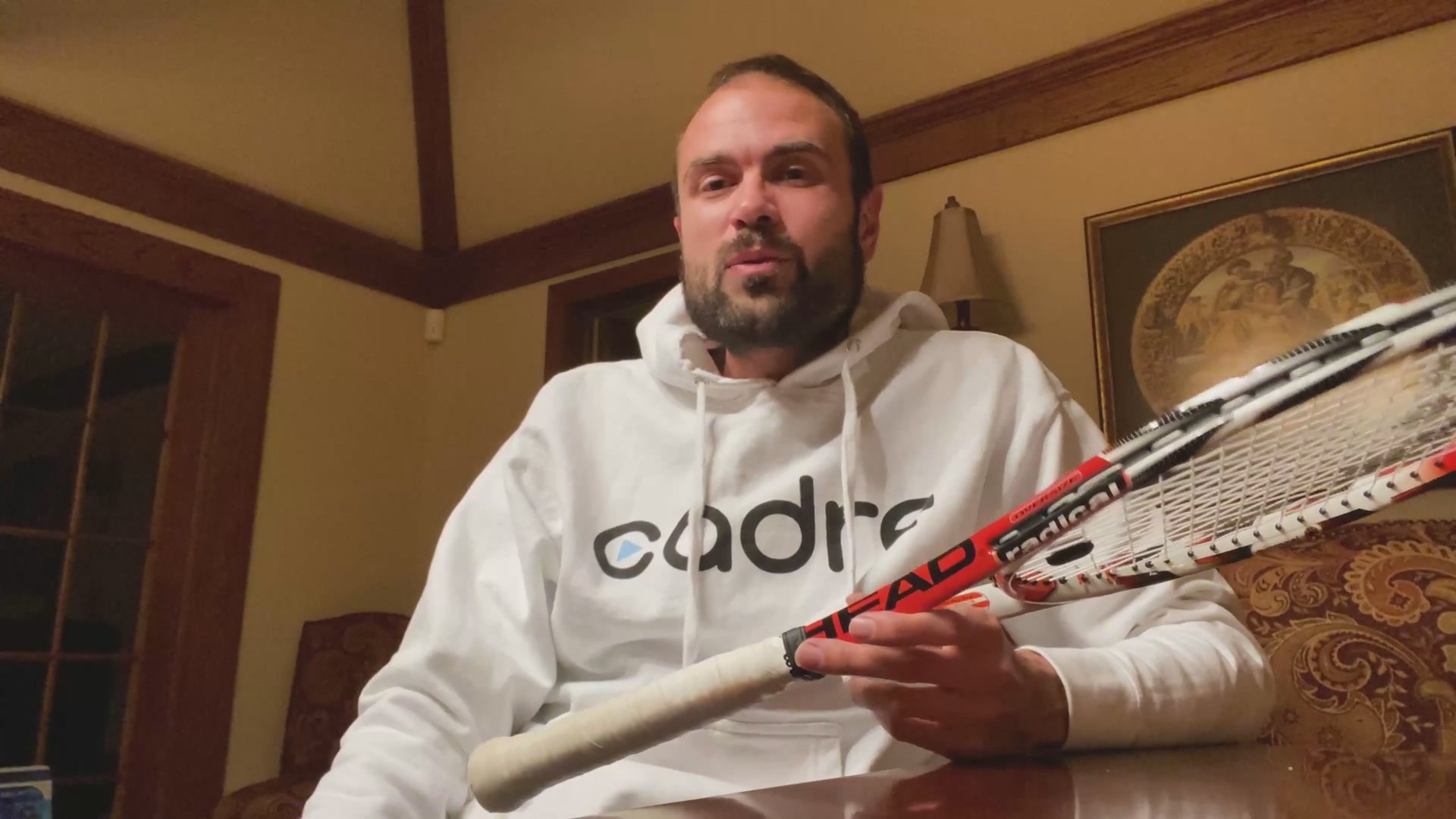
And so if you're listening to this right now, kudos to you for showing up and. And, you know, trying to get a message. And, you know, I don't want to pat myself on the back, but we can use some patting on the back. Like, hey, can say that. Nick, good job for showing up and, you know, trying to connect with others and, you know, trying to share a message of inspiration and hope and, you know, I mean, well, what else can we do? I'll take it back to a. I got a tennis racket over here as well, a little tennis analogy and kind of like the four agreements.
There's all these amazing things that we learned, you know, if we're willing to keep our ears open. And my college tennis coach, Steve Wilkinson, who was the winningest tennis coach in the history of the NCAA Division one, two, or three, and was really an amazing, spiritual guy. You know, he talked about the three crowns of where I went to college in the program, and that was, um, always give a full effort, have a positive attitude, and practice good sportsmanship. And those are the kind of things, you know, that I can take into, into everyday life and.
And keep trying to get better on. So that's my message tonight. I hope you're having a good one. I'll catch you on the flip side. Bye.
Reactions and comments are for members. Joining is free and takes a minute.