What tools do you have in your toolbox? Are they the right tools? Do you know when it's appropriate to use one tool versus another? We want to make sure your toolbox is equipped with everything you need to handle whatever may come your way throughout the day.
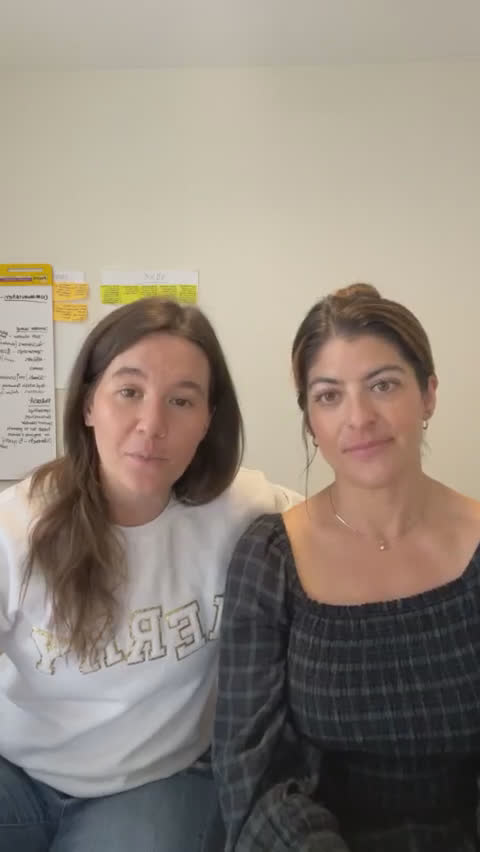
Mary: My sweater does say merry. This is my best friend and business partner, Jill. We work with teen and tween girls on life and personal development skills. What we want to talk about today is goals.
Goals, not field goals, but our goals. Author James Clear talks about the small, inconsequential things that can lead to big, massive change in your life. Goals get in the way of a couple of things. We like to shift the focus to who you're becoming along the way.
It's preparation and planning and scheduling to then work the plan. The whole name of the book is atomic habits. Having systems in place are way better in terms of helping you create the person you want to become.
Cadre, we're more concerned with you as the person and how you the person are getting better every single day. If you can focus on who you are, the things that you want to accomplish should be falling into place. Enjoy the rest of your day on the next episode of Toolbox Talks on a Tuesday.
Hi. Actually, hi, Cadre. Let me just make sure. Nice and clean. This is smudge free. In case you're wondering. My sweater does say merry. And yes, I did make it for Christmas, but I felt like I can be merry anytime I want because my name is actually merry and it's just a great representation of my overall state and who I am. It was great because on Christmas Eve, we spent it together. And there were some family members that I was introducing her to. And, you know, she's very witty. If you guys haven't picked up on her sense of humor over these lives and tuning into our prerecorded content so she'd be like, hi, I'm Mary.
And my name tag is already on, already on my chest. Spelled differently, but same. Same thing. I was volunteering, and it's been funny because. Is it from Christmas vacation? Yeah. My name is Mary. Yeah. So it's been a running joke between the two of us for a few weeks leading up to Christmas. And I saw a woman at church wearing a sweater that said Mary on it, and a light bulb just went off in my head. And I was like, I need that. I can go make it. m. And Amazon wasn't going to be doing one day delivery on Christmas Eve.
So I went to hobby Lobby and I made it. So that is what my shirt says. And now you know that if you don't know. My name is Mary. This is my best friend and business partner, Jill. It is officially the year 2024. So new year, same gig. We work with teen and tween girls on life and personal development skills. What does that mean? We teach them all the things we desperately needed at their age that we're still actively working on as adults. So self confidence, self awareness, self esteem, friendships, friendships, critical thinking skills, how to people better in a world where these are in our faces all the time, front and center, discernment is a big one.
All the things that Jill just said that we need to work on in as a society and what we want to talk about today, because it's very timely and super poignant, is goals. Goals, not field goals, but our goals. What do we want to accomplish this year? And we would like to take your theory on goals and flip it on its head and say that goals don't matter. Goals don't matter. Does that, like, make anybody freak out? Especially that it's January 2 and you've already done two days at the gym. We're eating right, and now we're like, wait, what?
They don't matter. What do you mean by that? So, I'm reading atomic habits by James Clear. It's one of my all time favorite books. I have probably read it and listened to it on audible in upwards of 17 different times. When I like a book, if I listen to it on audible, I'll listen to it again directly after I finish it so the concepts can sink even deeper into my brain. Because when you listen to something for the first time and you're, like, grasping these concepts, and you're like, oh, my God, that was.
Oh, my God, that was amazing where I'm at. Oh, that spoke to me. Did you write this book for me, James? So I like to refresh my memory on the concepts that he writes about in the book. So the word atomic means small. Itty bitty bitty tiny changes that can happen. Atomic, if you relate it to the Eibom, means boom, then big. So, basically, in this book, he's talking about the small, inconsequential things that you can do on a daily basis that lead to big, massive change in your life. Because oftentimes we set out goals that we want to be enormous.
We want them to be humongous, and we want them to be noteworthy, and we want people to notice, and we want the news to report on them like we did something humongous. And that's not realistic. And at the end of the year, we kind of look back on, okay, well, did we accomplish those things or not? And then we either decide if the year was good because of those things or bad because we didn't accomplish those things, and we don't want to be living in good bad. If this, then that. Correct. And you will hear Mary and I time and time again talk about goals, that it's not a checklist.
Yes, you have to do certain things, like those small, little, tiny decisions and choices on a daily that get you closer to that goal. But again, if you reach that goal and then all of a sudden you're like, well, wait a second. I thought if I were to accomplish that thing, then that's gonna make me happy. Oh, yeah, good. Right. So goals get in the way of a couple of things. You decide as a human that you're not going to be happy until that thing happens, but that thing is fleeting. Right? So as opposed to doing the little steps every single day and being regimented in those steps and deciding that you're going to be disciplined regardless of the outcome that you see, right.
You don't just get up one day and decide that you want to run and run for 30 days, and all of a sudden you're Usain Bolt. That doesn't happen. 2 seconds. Right. Conceptualize that for just a moment. Risa pisa. Happy new year. Boo. Boo. Hi, Reese. And James puts it in such an interesting way, right? You don't like the act. You don't turn on the tv just to simply turn on the tv, right. You turn on the tv to be entertained. So there's always a reason behind your goals. So you don't. He puts it in this way.
You don't rise to the level of your goal. You fall to the level of your systems, which means if your systems aren't in place, then you hitting the goal isn't going to matter because it's going to be an empty goal. So the way that Jill and I like to put it is who? Goals versus doogles. Goals. If you want to set goals. Amazing. We totally support you in that. But we'd love for you to shift the focus just an eensy beansy, tiny little bit to who you're becoming along the way, because, realistically, it's not about the thing you're accomplishing, it's about who you're becoming on the way to accomplishing that thing, because that thing is fleeting.
And like Jill just pointed out, there are several ways that goal setting sets you up for failure. And one of those ways is we decide that if we are in a state mental state, we can't be happy until that thing happens. So the saying, if this, then that if I hit the school, then I'll be happy, right? So we relent. We put off a lot of our lives until we reach this thing, so then we celebrate and then we're on to the next. So it's very fleeting in terms of the happiness and the feeling that you can feel while on the way in the pursuit of these goals.
And to put it into an example, Mary and I, last year, let's say two days ago last year, 2023, was a really challenging year. And if you were to look at the year on paper, you'd be like, oh, you know, it wasn't that bad. But for us, we knew that. We just. It was just hard. There were a lot was not clicking. There were a lot of valleys, more so than the mountaintops. And as opposed to us being like, you know what? We're chalking that up for a loss. We're failures. We can't do this. What we did was really take the lessons that we learned in 2023 to say, d***, okay, if we can overcome this, right?
So it's, who did we become in the valleys? Who did we become in the challenging times? Perseverant, resilient. We were able to articulate our feelings and communicate more effectively. We really were to say, you know what? We're gonna break this whole thing down because we need to start again. So don't look at a bad year as bad. Look at who did you become in the year that you, maybe you're not super proud of, or you had an incredible year, and you're like, ah, I became more disciplined or determined or whatever that is to carry with you into this year.
So reflecting on last year, to say, okay, who did I become that is going to then help me in these goals that I'm setting for 2024? Because I love that it's about the systems. If you want to. If you want to be on time, because you're late for everything, guess what? This system, this thing on your phone, needs to be filled out to the max. It's preparation and planning and scheduling to then work the plan. So I love that call out versus just like, well, I'm gonna wake up one day and go to the gym and just expect to, like, lose the weight.
Well, and that's. That's another fault of goal setting. We don't get specific. And in order to be terrific, you gotta be specific. So sitting here talking about this goal setting sets you up for failure, because we throw out these arbitrary, I would like to do this thing, and then we don't set a standard. Instead of saying, I will work out five days a week at this time, at this location, and saying it out loud is super helpful for you to actually do it. It's gotta be scheduled if it's gonna be done.
So the reason so many people fail on goals is because it is, like I just said, very arbitrary. And we don't do arbitrary around here. A lot of people think that habits. So the whole name of the book is atomic habits. Right? I don't wanna be so regimented. Isn't having routines and habits like that gonna make me stuffy and I'm not gonna be able to be spontaneous and do all these things? No. That is such a false narrative in terms of being regimented. Because regimentation provides freedom. Because if you're regimented, you're not wasting the mental energy thinking, well, am I going to work out today?
Well, where am I going to work out today? It is set in stone. What time am I going to get up? What am I going to wear? All of these things that you can have systems for, help your brain, not waste the mental energy on it, which allows you freedom. And that's what we all want, whether it's financial freedom, whether it's time freedom, whether it's relationship freedom. Having systems in place are way better in terms of helping you create the person you want to become than having goals in place, because you're going to have a thousand gajillion billion, trillion goals in your life.
They will come and go, but the skills that you garner along the way, that you refine along the way, those are the transferable skills that will come into, in and out of every situation and every goal you set throughout the remainder of your life. Right? Who doesn't want to be more resilient? Who doesn't want to be more persistent? Who doesn't want to learn how to pick themselves up after they've fallen down in the valleys of the year before? Right? And I don't know if you guys are noticing on social media, and I'm kind of digging this way of goal setting versus the whole.
The way that we've done it, the smart goals. And if you're a smart goal person, great. If that works for you, amazing. It doesn't work for me personally, but what I've been noticing on social media is like, okay, what's. What's out? What are we not doing? I'll be doing a post on that later today in 2024. What's out? And then what's in? And what I'm noticing on a lot of people's lists. And I actually even did this for myself. It just kind of. It allows you to simplify what you want. For me, I want flow, I want alignment.
I want ease. Are those goals like, yeah, I'm gonna have to create some habits and systems to allow myself to feel that, but it's not. I'm gonna work out five days a week, and I'm gonna eat whole foods for 30 days. You know, I don't want to get stuck in the weeds, because if I fall off course, which is likely to do that, how do I have the ease or the grace to say, okay, these are my commitments. This is what I want. This is what I'm working towards, and I'm gonna learn and evolve and get better as I reach those goals?
Well, and another thing that he says in his book is it's almost like a schedule, a win loss record. You win the national championship because you have more tick marks. In the w column than you do the l column, but there's likely some tick marks in the l column, but we're looking at it as a whole. So no one is going to be perfect. And we preach this a ton. It's progress over perfection, right? So, yes, you're human. You're going to have days where you eat the donut and you don't necessarily want the doughnut, but what's the habit around the doughnut that you could break and replace with something else?
And I won't get into that because there's a whole lot behind that. We're talking about who goals versus Dougals right now, but we're looking at it holistically, the whole picture. How many more wins do you have than losses? And if you have more losses than you have wins? That's data. And what does data do? It helps you refine the process. And if you can then refine the process, great. Then you can do better knowing the numbers. But if you know nothing about what happened, what transpired, other than the way you feel, that doesn't help.
So goals find your process. Who are you becoming? Who are you becoming? And if you're tuning in and you're like, whatever, it's just another day. This is a moment for you to really check in, to say, but actually, how do I want to feel by the end of this year? Feelings do matter. Yes, feelings do matter. But we're here to breathe belief into the goals that you want. And there are two cheerleaders right here cheering you on because it inspires other people. Yes, you need to be motivated for yourself, but it's just think of the ripple effect when you can show up happy and healthy.
It's going to impact all of those people around you. And it also gives other people permission to do the same. It's the group average, baby, 100%. So we believe in you. Go off and be merry. Go off and accomplish those goals. Let's do some big s*** in 2024. Cadre, we know you're on this app for that reason. So if you watched our livestream today, know that there are several other incredible creators going live on a daily basis to talk about you as the person, not the things you're accomplishing, which we want to applaud the things that you're accomplishing.
We want to be those cheerleaders that Jill just talked about. But we're more concerned with you as the person and how you the person are getting better every single day because you're focused on your who goals and who you want to be, not the things you want to accomplish that because generally, if you can focus on who you are, the things that you want to accomplish should be falling into place because you're bringing that energy in. Let's go. You're bringing that energy in. Yes. Reset. LFLFG. What's that energy right there?
All right, y'all, we will see you next week. Enjoy the rest of your day on the next episode of Toolbox Talks. Toolbox talks on a Tuesday. Bye, everyone. See you.
Reactions and comments are for members. Joining is free and takes a minute.