Let’s talk about reality of mental health in our world, through the lens numbers that speak to how many people are going through what we’re going through too. We’ll look at some of the quality of life factors that should, and are starting to, matter.
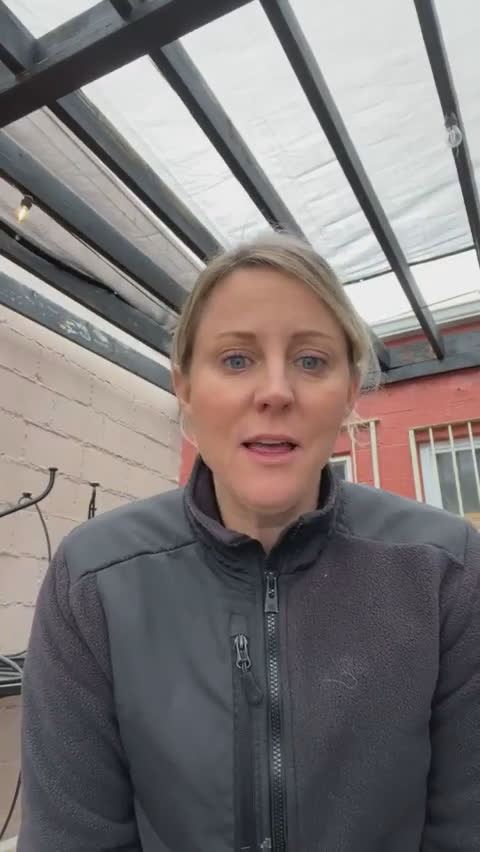
Shannon: I'm sitting outside today for my live because I am actually here with JC, our resident Cadre Sphere. Today, it is chilly, but beautiful on January 4. Welcome to my live stream.
The government has created a new set of criteria called Healthy People 2030. For the first time, there's a recognition that our relationships have a major, major impact on our health and our well being. How can we turn this around? Increase the proportion of adults who talk to friends and family about their problems.
Cadre. Hi, it is Shannon. It is 1205 in Minneapolis. I'm sitting outside today for my live because I am actually here with JC, you know, our resident Cadre Sphere, voice of reason, voice of calm. I don't know what you'd call him, but welcome to my live stream. Today, it is chilly, but beautiful on January 4. All right, friends, today's livestream is called by the numbers, and it's a little bit of a different one today. For those of you who don't know me, my name is Shannon, and I am not a therapist.
I am not a clinician. I am a woman who has anxiety, CPTSD, and parents with child with autism who has been in therapy for seven and a half years. So I just share my stories, right? I share what I learn. I share what it's like to be. I have a company called allowed. I'm a founder of that company, and we're building an AI enabled tool and community for people who take care of people to stop living in survival mode. And so I can speak to my experience from the research and the work I do in that space as well.
So today, I'm gonna talk about a different kind of number in this segment. Before, I've talked a lot about there are this many people with anxiety. You're not alone when you go to the grocery store. Six out of the ten people you pass may have that. But today I'm gonna talk. I'm gonna take it up to a 30,000 foot view to really look at society as a whole. And I'm gonna do that through the lens of our government and our healthcare system. And why that's exciting is what's happening in our world, in our government, and in our social system is they.
We, as a collective, are starting to realize that to be healthy people, the things that constitute our health aren't our physical bodies only. Right? And we all know that we're here on Cadre because we know that our mental health is a huge part of our well being. But so one of the exciting things that's happening is that the government has created this new set of criteria called Healthy People 2030. It's not criteria. It is an initiative. And what it does is it focuses on all these different parts of being human that matter in our healthcare system.
And so why that is exciting is one of the buckets that they've looked at for our well being as humans is around social and community support. So what does that mean? Essentially? It means that for the first time, there's a recognition that our relationships, our interactions with our friends and family and our colleagues have a major, major impact on our health and our well being. So why that's exciting is that with that recognition comes, and I'm scrolling over here on my computer, comes an intentional shift to solving problems that many of us likely face in this Cadre sphere.
So when you look at the social and community context, right, media. So I'm just going to show you this is going to be, I think you can see, you know what? I'm not going to show you. It's going to be icky, but you can see that some of the objectives are around things like reducing anxiety and depression in family caregivers of people with disabilities. So that's me, right? And that's my lived experience is knowing. And I know there's other people in our contrary sphere who have talked about being caregivers and the stress that, that the stress and anxiety that can come with that.
So that's an objective. How can we solve for that? There's a focus on adolescents. It is, let's increase the proportion of adolescents who have an adult they can talk to about serious problems. So that seems like, again, let's stop for a second and say that seems like a really simple human problem. But the fact that now our government is recognizing that it is such a problem, that lack of communication between our adolescents, our teenagers and adults has such an impact that there's a focus on it.
Children, there's a focus on increasing the proportion of children and adolescents who communicate positively with their parents. Again, these are human, human conditions. It's all about communication. It's all about talking to each other about the feelings we have. Health communications. This is one that's getting worse. And so how can we turn this around? Increase the proportion of adults who talk to friends and family about their health? It's getting worse. So when we think about all these things, and that's all I'm going to say about the statistics and the data.
And if you're interested in it, just Google Healthy people 2030 and you can get some more information. But why it matters is that we bumble through the world as ourselves, as I do with someone with anxiety and CPTSD and a caregiver, as you do in whatever that looks like for you, the knowledge and the understanding that there is this recognition that you and I connecting, that us connecting with others around us, that us acknowledging and talking about things like our health matters. And so the beautiful thing about these numbers is you could look at them and say, oh my God, we have so far to go and you could look at them and say, this is a huge problem.
What are we going to do? I think for me, I look at them and I jump up and down because I know that for the first time, there's a recognition of the things that have impacted my life significantly. And knowing that we are putting resources and time into finding solutions is a win for me. So this is, again, a little bit of a shift from the norm. But just thinking about that macro level and what we're doing here today, by you showing up to Cadre, by us talking to one another, by us interacting with one another, we're going to make a dent and we're going to start to shift the tide, and that's what we're here to do.
So that is it. Friends, I hope you have a beautiful Thursday. Keep doing what you're doing, keep talking to people, keep showing up here in the cadres sphere. We will do the same. And together we'll start to make the change that our world needs to be healthier. Bye. Have a great day.
Reactions and comments are for members. Joining is free and takes a minute.