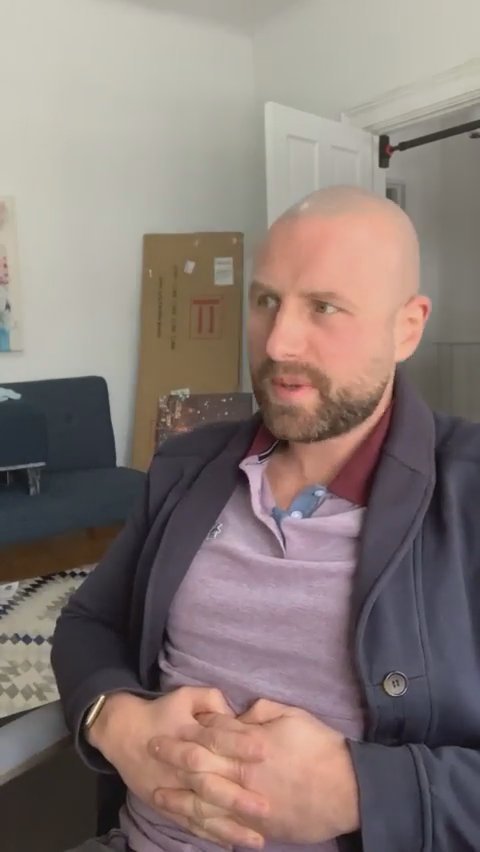
Today we are doing another episode of Mental Health Matters, except you bring the topics for me to answer. This usually makes for a lively and fun conversation, so come join and contribute your questions or experiences. Feel free to put any questions in advance on the community feed and tag me whether you are joining live or watching later.
Today is the ask me anything episode of Mental Health Matters. Answering your questions as well as mental health is important. You can also go to the community feed and ask questions there. Coaching. is a great option to reach your goals in whatever area you want.
ADHD and autism are in the same category of general disorders known as neurodevelopmental disorders, disorder and development. disorders, very often genetic. Any questions about mental health and addiction? This is the ask me anything episode.
Withdrawal is one of the most common topics people have an interest in. Medical professionals don't often give enough warning about withdrawals. The problem could be getting off the med if you don't do it properly.
speaker: Alcohol has a very strong genetic component to it. Early signs of alcoholism include blackouts and personality changes. There are deep misunderstandings between alcoholics and moderate drinkers.
There is almost a mercy in being just absolutely shattered by addiction early on and having. Being forced to get sober. That's predicated on your ability to eventually get sober, so. Remember, folks, coaching is available. Put questions in the community feed. Engage with us if you have questions.
What's up, Cadre fam? Evan here, your resident mental health and addiction therapist. And today we're doing another episode of Mental Health Matters where we talk about all matters regarding mental health addiction. Answering your questions as well as mental health is important. We'll play on words there. So let's wait. Let's see if we get some folks coming into the live, because today is the ask me anything episode where we could talk about anything. I brought some questions that I've gotten over the past couple weeks from viewers followers, Cadre familie, and so I brought some of those topics, and we could discuss those.
But in the meantime, as people come in, they could, as I say, ask me anything. So remember a few things off the bat. If you're watching this pre recorded Cadre coaching. If you're enjoying any of these videos, many of the creators also do coaching, but even if they don't, we typically have someone else who is a creator coach in that topic, in that field. So it's worth checking out if you want to do new year, new you coaching is a great option to reach your goals in whatever area you want. So there's that.
Coaching. Coaching. And if you ever have any questions, if you want me to do a video on something, if you want me to answer it in the live stream, I will do it. All you got to do is go to any of my videos. Essentially, you could comment, and I'll see it. You can also go to the community feed. You really want to encourage people to go to the community feed and ask questions there. And if you tag me, I will probably see it. And then, yeah, or just hop in the live and ask me anything. That is the purpose.
Okay. So in the meantime, let's bring a topic. So first, let's see. Let me get my questions up. So, first, I had someone ask me about ADHD and autism, and if these are things that you have at birth, that's an interesting question. And so ADHD and autism are in the same category of general disorders known as neurodevelopmental disorders, disorder and development. You'll find them at the beginning of the diagnostic guide that we use because it is in order of when the disorder develops. And in this case, it is at the very beginning of the guide, neurodevelopmental disorders, because it's believed to be a disorder of brain development.
So in many ways, yes. But at the same time, you can't really, let's say for, like, ADHD, it's like you can't really know until somebody gets older. But your brain is developing that specific way. It's kind of mapped out because, like mostly it's believed that it's mostly genetic, but, you know, some people can have those symptoms for other reasons, but it's not super clear. But, you know, we do know that a lot of it is very genetic. So if it's genetic, so say something like schizophrenia, that's genetic.
But still you may not see the symptoms until you're in your twenties, thirties, depending on your gender or sex. What's up, Eripa? How you doing, speakawanda? So, yeah, so disorders, very often genetic. So can you say that someone is born with schizophrenia? Well, not necessarily because they don't exhibit the symptoms till later. However, their brain is developing in a way where eventually that will, that will happen. So, no, you can't really say that. But for ADHD, autism, yeah. And autism, you can often see earlier, usually within that first level.
So I'd say it's safer to say, yeah, you're born with autism. Just takes a little bit to be noticeable. ADHD may be a little bit longer, but it is a disorder of brain development. So that's hard. That's hard to say for sure, but basic, let's just say basically yes. And speaker, wonder if you have any questions about mental health, addiction or if anyone else is tuning in. Hasn't said anything yet. Any questions about mental health and addiction? This is the ask me anything episode. I'd appreciate it and love to give you an answer to any of your questions.
So that's ADHD autism. Topic number two of four that I brought is someone talked about, one of my followers talked about having experiencing withdrawals from effectsr. It's interesting because this is one of the most common topics people have an interest in. And I know this based on, like, levels of engagement in social media and stuff like, I accidentally discovered pretty early on that, like, the topic of withdrawals, people are really interested in. A lot more people have been through with different types of withdrawals than I could even suspect.
And it's really uncomfortable and it's really shocking for a lot of people because I believe medical professionals don't often give enough warning about withdrawals. And it's not just like, it's not just like heroin that gives you withdrawals or alcohol even, which give you severe withdrawals, but certain, like, types of medication, like here, effexor, which is an SNRI, just one of the common antidepressants that work on the serotonin and norepinephrine. It's usually not a first line usually. Maybe like a second line antidepressant.
Sometimes. Maybe the psychiatrist or med provider may have a reason for starting you off on one of those. Be quite effective. Now, the problem with not being on the med, but the problem could be getting off the med if you don't do it properly. And that's where doctors really need to say, maybe it says on the bottle, but, like, do not stop taking this unless under a severe circumstance, because sometimes you get on a med and it could have different reactions. It's not like super likely, but sometimes people have immediate suicidal ideations or something, they first start taking it.
And in that case, they may often recommend, again, talk to your doctor. They may often recommend you just like, stop taking it. And call me if that's happening early on. But if you've been on it for a while and it becomes really saturated in your system, it's okay to want to get off for whatever reason. Again, sometimes I think a lot of times people just get off these medications for the wrong reasons, but they just don't go about it the right way, which is talking to your doctor and talking about the pros and cons, because maybe you could switch the medication, but even if you're like, doc, I want to get off.
I don't want anything, you know, then they'll give you, I need a taper protocol, and that way you won't experience it because something like effexor compared to other medications is extremely difficult. Withdrawal symptoms. All right, speaker one, you asked the question I've often wondered, no pun intended, why some individuals have their first beer and they are on a path to alcoholism. Others have their first drink and are not at all an addictive relationship with alcohol. What's the delineation?
Awesome, awesome question. Alcohol, and I believe there's, like, some pretty decent evidence for this, that even compared to some other substances, alcohol has a very strong genetic component to it. That's why you see it very, very correlated, causated in families where your likelihood of developing it is significant, significantly higher if you have a parent, because everybody, just like any drug, but especially alcohol, people react to it very differently. Alcohol is probably like the weirdest drug, maybe besides like ambien, but alcohol is a really weird drug.
I mean, think about very few other drugs, like, give you the same effect as alcohol. It's really in a class of its own. I mean, the bizarre things we do on it. I mean, it just becomes so normalized. We don't like, think about it all that much, but a lot of times you will see signs of alcoholism. Maybe not in the first drink, but, you know, in early stages of drinking, you see it in kids in high school. One of the things you notice is, like, early, so early blackouts. I'm going to write this down because this would actually be a good video.
Early signs of alcoholism. Thanks for the inspiration. Now, where was I? So, yeah, there's some early signs sometimes when you see people blacking out, because, like, in all the drinking I did, I never really, like, had that many blackouts. Maybe a couple. But that's because I was, like, mixing it with other things that I wrongly dreamed of. And blackouts, like, big personality changes. Now we all are, like, you know, usually like a maybe looser, more fun version of ourselves, at least at the beginning.
And then it gets kind of dark towards the end of the alcohol intoxication cycle. But, like, you know, those really severe personality changes, anger, rage, you know, like, passing out is another one. Like, people who really, like, just now again, like, oh, we all do. But, like, certain people, like, for me, when I would get drunk, I actually had a really hard time sleeping on it. And I think that's because, like, in a way, my body, I don't have, like, the genetic component of alcoholism. It was just like, I really wanted to drink, you know?
And it was, like, fun, but it's like my body kind of rejected it. So it was always, like, fighting it. Whereas I feel like people who have that alcoholism, their body absorbs it. And for them, it's like, it's almost like heroin, right? And then they start to have withdrawal symptoms. Sometimes they show early signs of withdrawal symptoms. Even at a young age. When they start drinking more regularly, they have more stereotypical hangovers early on. So other people, again, there's a vulnerability factor, and then there's how much you drink high in both, you're, like, much more likely to have issues with alcoholism if, you know, even if you have a lower and you, like, drink all the time, you could kind of break through that barrier, you know, like, and that goes for a lot of other drugs as well.
Just certain other drugs have even higher addiction potentials. So I believe the difference leads to misunderstandings between we. Between we. Between welcolics and moderate. Okay, I'll just say we alcoholics and moderate. Oops, my keyboard's. Let me try again. I think there are deep misunderstandings between alcoholics and moderate drinkers who have it under control. Yeah, I mean, it's really a spectrum, especially when it comes to alcohol. Something like heroin is pretty black and white, like, you're doing heroin, you probably have a problem with it, are addicted to it.
Alcohol, though, I mean, it's such a common substance that it's one of the few substances, like, everyone will probably do. Cannabis is another one that a very high percentage of people will do. Therefore, if you have that vulnerability, it's much more likely with those substances that it will manifest, because, again, it takes vulnerability and substances in your body to create that. So there's a lot of people who drink don't drink. People who drink don't have a problem with it, which would be like, I don't know.
Let's just say, like, the amount of people who don't have a problem with alcohol, who drink, it would be like, no problem, would be somewhere around, let's say, about 70%. Plus they have, like, no problem. The people who have, like, a real severe problem, it'd be like eight to 13% or a pretty noticeable problem. Right. And then maybe you have another ten, probably. Probably even bigger than that, who may not, like, appear to have that, like alcoholism. Maybe they're just, like, heavy drinkers and remain heavy drinkers and have some consequences.
Often the consequences are in long term health. So it may not be like they're losing their job or their, like, relationships are truly messed up, but it could come in health consequences later. And then, I mean, there's so much research that shows, like, if you want to look at, like, predictors of, like, long term happiness and. Yeah, like, long term happiness and, like, divorce. So relationships, like, one of the most cited complaints from a partner in a divorce is the other partner's alcohol or substance use.
And I see this all the time. I do a lot of family law assessments, and, I mean, substances are toxic for relationships, especially if they're misused. So whole other topic could be high functioning alcoholics. I personally know two of these. Yeah. And so, yeah, this is something that comes up a lot to the function. And those are the ones that are kind of in that middle category, but some of them are in that more severe category, but they have found a way to mitigate the consequences. A lot of times it's like work.
Like, when someone thinks of a functional alcoholic, it basically means, like, they can hold down a job and, like, make a living, you know, not end up going to treat me, because, like, the consequences are not bad enough in their functioning that they have to go to treatment. And so for them, it's kind of this longer term, you know, and it's like the same thing with cannabis. Like, even someone who has like, a very, very severe, you know, use weed every day. The consequences are sometimes more subtle.
And so it's. I call it, like, the disorder of misopportunity or the drugs of misopportunity, because it's not always, like, what it inserts into your life. It's about what you don't get. Right? So the insertion of things would be, like, slower cognitive functioning, motivation, effects on mood, and all these other things that create a lack of growth and not so much taking away. So, yeah, so those may be the more, like, functioning, but a lot of times those functioning, it catches up to them eventually.
Sometimes they just manage and, like, lose 1015 years off their life. Leads to heart disease, cancers, every negative health outcome. Honestly, alcohol increases the odds of. So there's always, like, this philosophical question, like, what's better to go hard, crash and burn, and then be abstinent, or just kind of be dragged along for a longer period of time. So that's kind of debatable, right? So I think there is. There is almost a kindness or a mercy. There's almost a mercy in being just absolutely shattered by addiction early on and having.
Being forced to get sober. And that's under the predicate that you actually can and will get sober otherwise, you don't want to have, like, a severe, ongoing addiction that's like, chronically relapsing over time. You don't want to wish that on anyone, but if you're able to turn it around pretty quickly, then that's a benefit. And that's like, what happened to me was I, like, got hit young, hard, and had to make that change. And now my life has been, like, exponentially better because of that. However, that beginning period sucked.
You know, it's like in war, like, you want a prolonged, dragged out war for years and years, or just the one side just crushes the other right away, and then you move on instead of dragging it out and then having the same outcome anyway in the end. So those are great questions. A good point. I think we'll just leave it there. And I got a couple questions we could save for later. Yeah, that was the word I was looking at. What's the word? Kindness. Yeah, there is a dark mercy in that. I mean, I've heard some studying, a little history.
It's like some generals upset. Like, that's the best mercy you could do, is just, like, go at it, crush right away, make a treaty, move on. You get the outcome you want. They don't get the outcome they want. Is that better than a prolonged conflict for years and years where maybe more people are negatively impacted. So that's just a metaphor I think of. But again, that's predicated on your ability to eventually get sober, so. Right. Assuming in the situation that you get sober either early or later.
Right. You have your life absolutely smashed right away. Not fun, you know? Or do you have it like, lightly, more lightly smashed progressively over time? Go ahead. You could. You could take a dark. A dark mercy. Yeah, maybe I'll write that down, too. Maybe I can do something that you're giving me so many ideas for videos. Well, thank you so much. Remember, folks, coaching is available. There's a coaching button over about any video. You see a lot of the creators, especially the ones who are coming out with new videos now.
A lot of them will do coaching, but still look into it if you're interested, because we can match you with someone in that same category, even if they're not doing coaching. Put questions in the community feed. Engage with the community. Engage with us if you have questions, the creators will often get back to you. And other community members are trying to build community here, hence Cadre. So I want to see folks do that. Feel free to watch my videos comment. I got some new series coming out if you're interested.
I mean, there's one out now about a 20 video series on addiction. So this is topics you're interested. I got, like, literally 20 videos about addiction, and I got one I'm gonna work on. I have all the videos written, but I'm gonna do a trauma series, so hopefully that'll be out in the next couple months. I have a chronic pain series out, content creation, if you wanna learn how to make content, I did one of those. I've got some cooking videos if you go deep enough. So I don't know, I've got a lot.
I got over 100 something videos if you are interested in this stuff. So there's a little something for everyone. But anyway, thank you. My speak wonder for coming in and making this a lively conversation. Ask some incredible questions. And with that, folks, it's been real. I bid you adieu, and we'll see you next week on another episode of mental health matters. Take care.
Reactions and comments are for members. Joining is free and takes a minute.