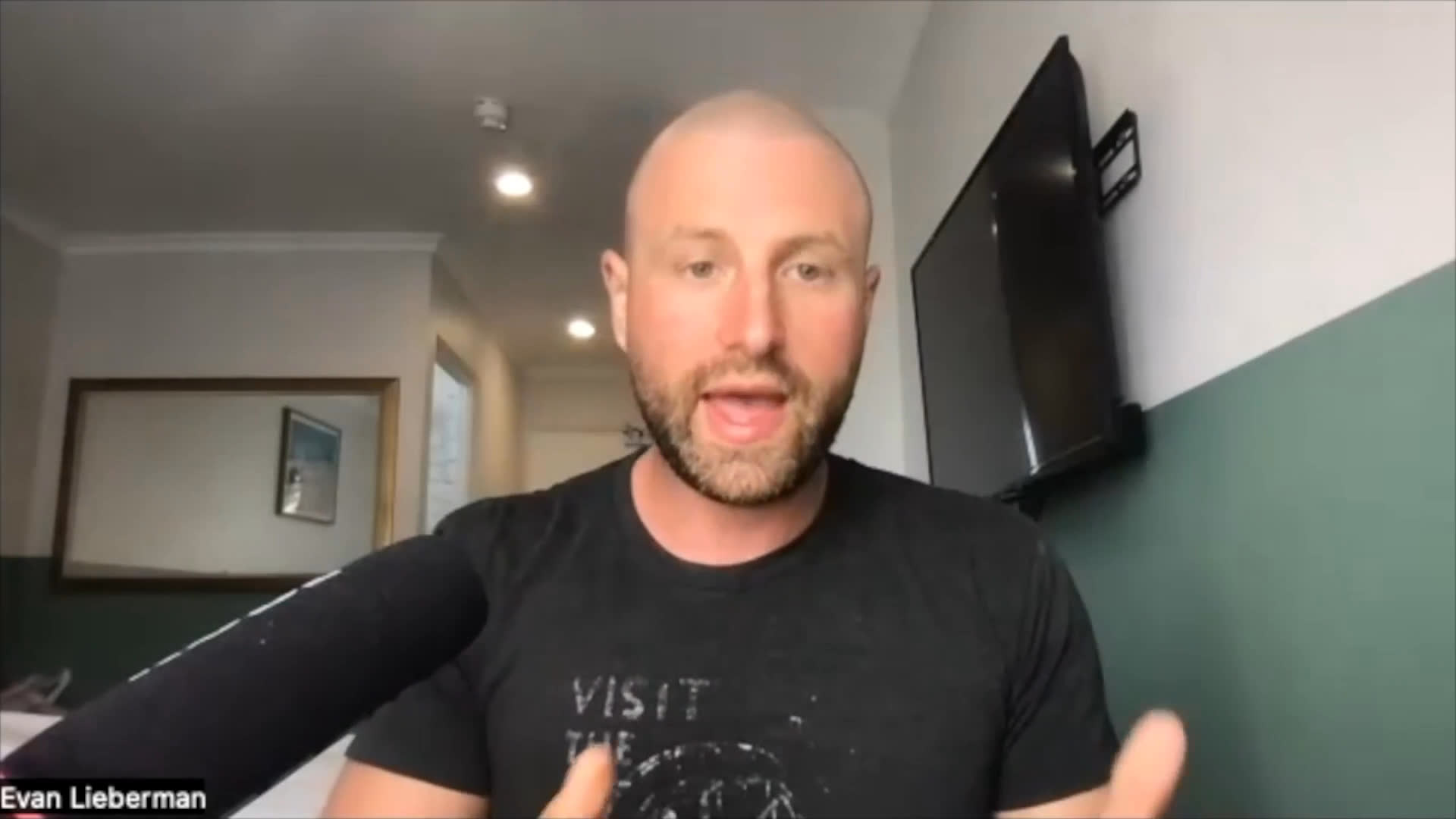
In this video two creators Evan Lieberman MSW LICSW LADC and Dr. David Everette sit down for an enlightening conversation on DEI in the workplace and how companies can embrace diversity not only as an ethical responsibility but to improve metrics. This conversation hit on some sensitive and timely topics but was a great example on how important it is to speak on these matters openly, honestly and without judgment.
Evan: This is a long form interview with one of our other creators, Doctor David Everett. He specializes in the topic of diversity, equity and inclusion. Some of the topics are sometimes sensitive, and we have a lot of fear of talking about many of us. Listen to the end.
Doctor David Everett is live from Sydney, Australia. He says he's living in a beach motel. Everett: I'm living it up pretty good. It's hard for you to find housing here.
We had a balmy 40 degree day today, so it was good. I think we're supposed to get a little bit of rain tomorrow, but rain is better than snow as long as it doesn't freeze. So hopefully we turn the corner.
I really came to this diversity, equity and inclusion space organically. I was into grassroots organizing, doing things on different campaigns. Now, obviously, I'm still in higher ed as an administrator who focuses on diversity.
Right now you're at Hamline and Minneapolis, and that's. St. Paul. It's like a smaller, private, small, liberal arts, private institution. Is it really the first university in the state of Minnesota? Yep. Even before University of Minnesota.
I'm originally from upstate New York, so I am the product of a single parent, non traditional home. My first job out of undergrad was a job with Travelers and insurance company. Being a VP of Dei at Hamline and Travelers insurance is a little bit different.
I don't think there's been much change fundamentally in terms of DEI programming or DEi initiatives. If anything, what has changed has probably been a little bit more expansive to basically be more inclusive of other groups that.
In mental health therapy, psychology, there's different camps. You're either going to focus on individual behavior or institutional capacity. Or you're going to think collectively. How do you talk about and think about both collectively?
And what are some of the goals there? Measurable goals that in some of these. Yeah. What does it look like for us to be becoming more competent and building capacity as it relates to DEI topics and those kinds of things? You may scale back and tackle some of. the low hanging fruit and then kind of build your way up to getting some. of the higher hanging fruit.
A lot of people prefer modeneity. They want folks who think like them. And they believe that that helps them as a department or as a team. How do you think and how do you feel about adding difference to your organization?
So obviously we know the landscape of society is changing, so we are becoming more in the direction of persons of color. What does that mean for organizations and their staffing? How are we taking into account the entire person?
How do we think about system change, where systems change in a way that we can affect the kinds of results and outcomes that we want? How are we peeling back the onion on some of those kinds of institutional systemic things that might be contributing to the results.
There was huge combination around, you know, the crack user, but there was no condemnation around the supplier or how the drugs got into communities. How do you expand the conversation that can help folks see some things differently that maybe they wouldn't normally see or hear? Taking that approach is something that builds empathy.
David Perry: A lot of people are afraid of this, and they're afraid to push against it. He says we have to get to a point where folks are talking to each other. Perry: The more that that doesn't happen, the more risk we run of staying in our extremists.
I think empowering students to think, challenging students to interrogate and be critical, creating spaces where they can engage and grow and expand are all beneficial. I just wish that within Dei professionals who take more of that, less of an attitude like you and more of like, authoritarian type.
But what youre seeing with affirmative action being under that may very well be removed. How do you strike that balance of revamping, revising so it isn't as problematic versus the total eradication or removal of it?
I would suggest that folks, um, you know, really invest some time into. some tools. The IDI, the intercultural development inventory. Maybe even the implicit association test. That would probably be my suggestion for folks. Well, maybe you could shoot me some links or something.
Welcome to my series, conversations with Cadre. I'm Evan, your resident mental health and addiction therapist, and I am so excited to share this long form interview today with one of our other creators, Doctor David Everett. And if you don't know Doctor David Everett, he is one of the creators here. So he has a bunch of videos, and he specializes in the topic of diversity, equity and inclusion. And he is literally an expert. And I was so glad to be able to talk to him about this because this issue is more pertinent than ever, and there's a lot of politics around it, so you see it in the news and there's a lot of dissenting voices on both sides.
And we were able to dig into some of these sensitive topics. And it was really cool. On a personal level, I mean, I knew Doctor Everett. We've been in a bunch of meetings together. We've had conversations, we've collaborated on videos, but it was really cool to hear his story and why he is passionate about the work he does. And to me, it was so fascinating to get his take on a lot of these different conversations, some of which are sometimes sensitive, and we have a lot of fear of talking about many of us.
So please check this out. Listen to the end. This is an amazing conversation and I think it could help so many people. Whether it's workplace or a different institution you work in, this will be very valuable. So check it out. All right. Doctor David Everett, welcome to the show. How you doing? Doing well. How are you, my good man? Good, good. I'm just live from Sydney, Australia. It's a rainy day, got huge waves I'm looking at, so I'm stuck in the drain. You're living the dream that most of us only get to dream about.
That's true. I'm living in like, a beach motel. But other than that, I'm, uh, I'm. I'm living it up pretty good. It's hard for you, hard to find housing here, but, uh, yeah. So what's going on? So you're in Minnesota? My, my home area. Yep. We had a balmy 40 degree day today, so it was good. You only maybe needed a nice vest and a long sleeve shirt. So hopefully we turn the corner. I think we're supposed to get a little bit of rain tomorrow, but rain is better than snow as long as it doesn't freeze.
So I'm very undone. Yeah, it's like warm, and then it rains, and then you're like, okay. And then the next day it freezes and you're literally just an ice skating rink and people. Exactly. And, you know, like at least three people that have like, fallen and like, broken a bone next day. You know, it's not just like elderly, it's like, you know. Right. It's just like, yeah. Yep. And you see, you know, cars on the highway sliding into the media and all that kind of good stuff, too. So we'll see. Yeah, thus is Minnesota, but yeah, I really appreciate you coming on.
I mean, I think this is such an important topic, and I, like I said before we, we started this, and I'm like, really curious about picking your brain about some of this. And I think, so I'm really excited to chat with you, but I think just to start off, maybe just a brief overview of who you are and your background and what got you interested in the topic you specialize in. Yeah, that's a really good question. I really came to this diversity, equity and inclusion space organically. So several years ago, late nineties, early two thousands, I was into grassroots organizing, doing things on different campaigns in terms of bringing folks get out to boat efforts, all of those kinds of things, from urban neighborhoods to suburban areas, and making sure organizations were able to build partnerships based on resources or lack thereof.
And going through some of that work really started to see how different entities and different institutions either approached things differently or understood each other differently. And even though there were legitimate attempts at collaboration and working together, they just always seemed to pass each other and not necessarily connect in a really constructive way. So I think that was my first introduction to how difference works and how different experiences and different expectations really do lead to different outcomes and different realities.
And so wanting to, I guess, maybe delve more into that, that's when I think really first started to understand the term diversity, even though back then it really wasn't a popular term. Right. It was, it was still more about affirmative action, you know, back then a little bit more. And then, you know, diversity started to evolve a little bit, a little bit more. And so, you know, did a few, you know, formal things from a position standpoint in government and state government, obviously, I had teaching experience on a number of levels, community college, four year institutions, and then actually got into, you know, formal diversity, equity and inclusion roles.
And so I think where my experience, and I won't say maybe started to take shape, but really started to be a little bit more robust, is being able to bring all of that experience from grassroots organizing and some of those nonprofit roles into the DEI work and being able to then think about application and making some of those transitions into more of the institutional kinds of ways and practices with policies and processes and practices. I think it's a combination of the two. Right. So having that kind of organic, grassroots beginning coupled with some of the formal positions and trainings and education and all of those other kinds of things, and then being able to think about it in a both and kind of way to move it forward.
So that's kind of my journey. And now, obviously, I'm still in higher ed as an administrator who focuses on diversity, equity and inclusion and tries to, you know, in every way that I possibly can, you know, challenge the institution to be better in ways that really impact people and. And whether those be, you know, staff, students, faculty, community, you know, all of the stakeholders when you start to think about what makes a community and all of its flourishing parts. Yeah, I appreciate that because I was going to ask you about your current role.
What's your educational background? So I have a two year degree from Monroe Community College, and that was liberal arts based, and then a four year degree in business administration and then a master's degree in leadership and then a doctorate in leadership. Oh, awesome. And so right now you're at Hamline and Minneapolis, and that's. Oh, yeah, St. Paul, and that's probably people who don't know. It's like a smaller, private, small, liberal arts, private institution. The first institution in the state of Minnesota.
Is it really the first university in the state of Minnesota? Yep. Even before University of Minnesota. Even before the U of M. Yep. That's cool. That's a good claim to fame. Mm hmm. So, yeah. So what is like a day to day like, look like for you? Yeah, you know, it typically depends. So there's some interaction, obviously, on a number of levels, whether, you know, I might be teaching a class in the morning and then, you know, may have meetings and thinking about programs or co curricular programs throughout the rest of the day.
Could be some planning sessions in terms of thinking about opportunities for students outside of the campus. So, you know, whether it be taking in and taking on some grant writing and looking at that, whether it be thinking about some institutional partnerships and things on that level. And then obviously, you know, some of the, you know, the internal things in terms of making sure there's good interaction and engagement on campus. So hosting forums and community conversations and things of that nature, making sure, you know, some of the more interesting topics or more prevalent topics are being engaged by our community and making sure I'm fostering some of those types of engagement opportunities.
That's awesome. Yeah, very cool. So, yeah, I guess I didn't realize. So you. So you do teach some classes or like a professor and some of those courses. Yep. So I teach a first year seminar, which obviously is exactly what it sounds like. So incoming students all have to take a first year seminar. And then depending on, you know, what happens in that first year or that first semester, you know, there could be a follow up course or there could be some leadership courses, 2nd, 3rd, 4th years, for sure.
Yeah. And I guess I'm curious, too, just kind of getting the background, like, is there anything from, you know, just like, who you are? Like, I guess I don't know much about your stuff. You know, just like a background too, is like you and I both, you know, are working together in a wellness app startup. And that's how we met, you know. So I've gotten to know you a little bit, but I guess, I guess I never heard about, you know, your history or, like, you know, are you from Minnesota or, like, you know, what are some.
No, I'm originally from upstate New York, so I am the product of a single parent, non traditional home in upstate New York, Rochester. And so, yeah, you know, my mom had me when she was 17 and constantly worked two or three jobs, probably from the time I was five or six years old. So I was pretty much a latchkey kid raised by, you know, the recreation center or recreation centers and all of those other kinds of things that most cities had for kids to kind of try to stay productive and not get into trouble while at the same time, you know, doing what you could in school and having school activities.
So very, very independent growing up, lots of responsibility, and at the same time, you know, still being able to enjoy, you know, childhood in terms of being able to, you know, play basketball or hang out or, you know, do summer things, you know, like camp and all of those other kinds of activities. So. And then from there, obviously ended up going to undergraduate in Kentucky, so went to Kentucky State University, right from Rochester, New York, and then following undergrad, came straight to Minnesota from Kentucky.
So went from north to south, and then from south back up to north for sure. And what brought you to Minnesota? Was it for to work at Hamline or. No, so it was a job with company called the Travelers and insurance company. So that was, yeah, that was my first job out of undergrad. And so I had planned to be in Minnesota for about two years because that's what the counseling center always tells you to do, get your first job, two year experience, and then, you know, make some moves. And I made some moves, but it didn't take me anywhere outside of Minnesota.
So two has turned into 20 plus. So, yeah, being a VP of Dei at Hamline and Travelers insurance is a little bit different, huh? Yeah, a little bit different. A little bit different. I guess what has changed, because everything seems to be political now. And so have you noticed a change in kind of like what Dei initiatives look like versus even like a couple years ago? And where does that play in? I don't think there's been much change fundamentally in terms of DEI programming or DEi initiatives. What I think has changed for the most part is the social media component and how some of that either gets portrayed or how it gets relayed in terms of, you know, some of those, some of those kinds of things.
But fundamentally, I don't think Dei as a construct has really changed much. If anything, what has changed has probably been a little bit more expansive to basically be more inclusive of other groups that. So it isn't just about, you know, racial, it isn't just about, you know, gender. It isn't just about, you know, some of those main kind of group emphasis where some of, you know, some of the things that has changed in society has been the addition or at least the acknowledgement of so many other groups and in their own identity makeups and their own identity formations and understanding.
So that's made it, I think, a little bit more expansive. But in terms of core construct and what the emphasis should be and what the focus is on, I don't think that's changed much at all over the years. It's interesting, and one of the things I was curious about, too, in my world, in mental health therapy, psychology, there's different camps or there's different theoretical orientations that view the problem in a different way or view the solution in a different way. Whether it's cognitive behavioral therapy or motivational interviewing, they take roughly the same problem, but they view it differently, have different solutions.
Maybe they don't agree. They have various research that they cite to back up why their model is, you have therapists that are, I'm a CB. Some are kind of more like myself, a little more eclectic, but I focus more on trauma and embrace, and I believe that this is more important people's thoughts and is there something similar like that in DEi? Are there different models and how do you think? Question. I wouldn't say that there are different models, but I would say there may be different approaches.
And why I make that distinction is because at the end of the day, you're either going to come down to two camps, you're either going to, you know, have an emphasis or focus on individual behavior, or you're going to focus or have an emphasis on, you know, institutional capacity. Um, I'm, I'm from the school of thought that it should be a both and not an either or. Sure. Right. And so how do you, how do you talk about and think about both collectively? Um, and the timing of that might look like there's a primary need to focus on individual behavior initially, but at some point, ideally, maybe you get to some of the institutional kinds of things, or it could be the other way as well.
So that's usually what you might see in terms of a distinction from an approach standpoint. But at the end of the day, it usually involves one or the other or both. And there's not too much, there's not too much more to it than that. In terms of approaches. You're either going to, again, think about capacity and competency individually or separately. Excuse me. Or you're going to think collectively. And what are some of the goals there? Measurable goals that in some of these. Yeah, it depends. Right.
Yeah. So as an organization, you could have a goal that we are going to have an increase in diversity hiring by a certain percentage in a certain timeframe. What does it look like from a diversity hiring standpoint? That could be a goal. You could have a goal of reducing the number of DEI complaints or issues. That could be a goal. What I think is a good goal is how are folks feeling as it relates to engaging in DEI work in that space in their respective roles so you can have that as a goal? What does it look like for us to be becoming more competent and building capacity as it relates to DEI topics and those kinds of things?
So you can have a number of areas that you want to identify, but I think it's also very important to know and to note what are you in a position to do and what does that look like in terms of short term and long term? And so you may not be in a position as an organization to address some of the things because of your capacity right now. Right. And so you may scale back and tackle some of the low hanging fruit and then kind of build your way up to getting some of the higher hanging fruit. Okay. Yeah, that makes a lot of sense because I was looking up there again, this is just me doing a little Internet sleuthing or whatever, but they talk about something like the diversity management model or the cultural competence, intersectional social identity model, allyship model.
Are those things that are philosophies in it, or is that just something I googled randomly? Oh, I mean, I think philosophy is a strong word, but maybe approaches. Right. So you could have, you know, some of the cultural competency, you know, approaches. And again, that that's. That's really all about building how folks understand culture both for and of themselves as well as for and as it relates to others. Right. So what does it look like for me to understand more about where Evan might be coming from based on Evan's experiences and expectations?
And then how does that impact me in terms of my own experiences and expectations, being in that same space with Evan? Right. So there's, you know, there's that and, you know, some of the other kind of tangible things as it relates to equipping people, you know, what are, you know, what are we thinking are great capacity pillars to have for folks? And so whether it's a tool like the intercultural development inventory or whether it's the implicit association test, the IAT, or some of those kinds of things that really help you kind of unpack more about yourself.
And so the more that you can become a little bit more self aware, hopefully that leads to opportunities to then think about how that relates and affects engagement with other folks, particularly other folks who might not be that much similar to yourself. Yeah. So I kind of like doing implicit bias tests and that kind of thing. Do you find that there's a lot of resistance, let's say, when you train students or maybe someone who's maybe of a different political affiliation, who maybe aren't on board with some of these philosophies, maybe they're just actively hostile, but maybe they're more, just in a general sense, more what happened to good old color blindness?
Are we poking at this wound and are we making it worse? Just kind of stating some of the things that people might say where it's like, instead of having just purely merit or having people apply and not know because it seemed like that was the goal, but then it shifted, and now it's much more, maybe for good reason, more complicated, like you said, of where these things intersection versus just not dealing with it or, I don't know. What. What do you think about that? Yeah, absolutely. You see that all the time, right?
So, you know, there's. There's one. There's one thing to think about, pure merit and just merit alone, you know, based on however and whatever criteria one thinks is meritable, right? So you have that, and then there's the question of, okay, well, who and what gets to define what qualifies as merit or meritable. And how do you weigh that? Right. So I can honestly tell you, has a really challenging conversation just around that in and of itself. Like, what if you just think about, you know, for instance, you're hiring for a position and, you know, here, here's all the criteria and all of the qualifications that we want to have for an individual filling this position.
And then you kind of go through that list and you have to ask yourself, okay, give me an example of why, why the person, a person would need this number of years of experience to do this job, right? And that becomes a challenging question. And so as you start to really get into some of those kinds of nuances, what you're really asking folks to do, which is which can be problematic. I'll give be honest. Which really can be problematic. You're asking folks to interrogate what and how they assess and what and how they place value on and why, which can be really, this can be really disconcerting.
That's what I was telling you before, is like, I'm just like, I feel like some of these are just such complicated problems and I hear like maybe arguments on different sides and like, I understand and I don't even know what to make of it sometimes. And I don't even know if there's always a great answer. Cause I think we, like, try to oversimplify things and try to look at things as black and white. And here's the right answer. Like, let's just take like a hypothetical situation where let's say I have a group of applicants and I'm an employer on a small scale, and these are thoughts that I've had to have.
So it's like personally, I see a huge value, especially in the mental health space, given my clientele. A diversity of people having a diversity of, let's say, therapists who work for me in different backgrounds is just such a value. It's very clear cut. Now, let's say I'm trying to hire for a therapist. I dont even know if therapist is always the best. Lets go with it. So lets say Im trying to find a therapist. I really want someone whos trauma informed or they have certain very objective credentials or maybe its your computer programmer or something like that, and they need to know Java.
Two years of this, I dont know about any of that stuff. I only have so much control. Lets say an employer of who applies to my jobs and who responds to my outreach. Lets say its both ways. And not everyone is a great recruiter and companies dont always know what to do. But lets say I have five applicants or lets just say two applicants to make it simple. And this one person has more experience in JavaScript, these very objective measures. However, I do want that diversity and there is someone of a more, and we got more intersectional comes from a more marginalized background that I think there's value there.
Where is the balance? How much should that be weighed? How much should the diversity piece be weighed versus just the pure cold fact of this person being able to do this specific job? I just don't know the answer. You know, I think that that brings into consideration a couple of other things, but for the, for the most part I would say as a premise, diversity, inclusion, equity and some of the other words that are used as it relates to should never, should never be placed above the quality of the candidate if that makes sense.
Right? So you know, you don't, you don't hire a black candidate if they're not, if they're not qualified, right? So let's, that isn't the purpose of diversity is to, it's not the goal is to give somebody who's not qualified a job just for the sake of getting them a job, right. Which sometimes, you know, folks will kind of, you know, throw that out there. So that's the first thing, the second thing is, you know, how do you, how do you, and this again becomes a challenging piece. How do you think about the role?
How do you think about the job, right? And, you know, and how does that play into the culture of your organization and what you want the culture of your organization or your team or your department to be? A lot of people, you know, still to this day really prefer modeneity. Right? They want folks who think like them. They want folks who look like them, who have the same experiences. And they believe, you know, that that helps them as a department or as a team? Obviously, you know, data and studies show otherwise, but they still believe that.
And so it becomes a matter of how do you think and how do you feel about adding difference to, you know, your organization, your department, your team? And what value does that bring in a really substantive way to what you're trying to accomplish as an organizational mission and who you're trying to serve, right? So obviously we know the landscape of society is changing, so we are becoming more in the direction of persons of color. And so what does that mean? What are the implications for organizations and their staffing, right?
And, you know, what does that mean to be more reflective of some of those changing demographics within society? So I think there are other, like, components that kind of come into that question. But I think really what you're getting at is exactly how I think Dei efforts kind of get characterized negatively is that, you know, you're telling me to hire, you know, this, this person, kind of when I have a more qualified person over here that you're telling me not to hire because they're not in a minority class or they don't represent, you know, one of those different kinds of groups.
And that's it. And that's not what, that's not what quality Dei efforts are about. Right. Quality Dei efforts are about. How are we, how do you think about providing opportunities for groups that historically may not have had those opportunities? And what does that mean in terms of providing support as well, but then also realizing that there is value in that? Yeah, that's really interesting to hear you say that, because I think that does get caricaturized or maybe it strawmans the argument of the DEI, or even something like an anti racism lens, intersectionality lens, where I know that there's this philosophy of if the outcome is not as such or there's equity, then there is something wrong with the system.
So let's say for that example of. Okay, yeah, I mean, I mean, I'm not going to hire someone or I shouldn't hire someone just based on, like, who they are in the intersection, but, like, you know, would you say too, let's say I have the two candidates, but it's like, pretty close. You know, it's like this person has two years experience. This person has one year experience. Do I still, is it just that objective where it's like, pure colorblind, whatever merit, where it's like. And I have an interesting kind of anecdote that I heard.
Maybe I'll just, I'll throw it in there just before I have you answer this, but I heard from Neil degrasse Tyson, and he said something that really kind of hit me, and it was something that I kind of believed before, when it's like, where does the role of someone's upbringing play in, in someone's disadvantage? Because, like, what he said is, like, often in cases, like, let's say you have two people applying to college, right? In that same. Where this person has more extracurriculars or this, they have like, a slightly better GPA or they were in higher classes.
However, it's not about that person's, you know, marks or achievement. It's about this other person who maybe came from a more, like, disadvantaged background. This is how they performed in their environment. Right. They kind of rose to the top as valedictorian or got this certain GPA, but they did it despite all these obstacles. So what does that say about their character or their ability to perform in this job versus the person who grew up and had every single advantage and have all the marks?
So, yeah, I guess that's, like, where do you weigh that? If you got someone two years experience, but they got, you know, less a diverse background, how do you. How do you weigh that variables at 10%? Yeah, no, I mean, that's a, that's a really good example. And I think, you know, what that speaks to is how. How are we, as employers or institutions, etcetera, how are we taking into account the entire person? Right. And so as, as you weigh, you know, whatever some of those variables are, how are you making sure, in addition to those variables, you're weighing other variables or other aspects equally or just as much so if it's.
Yeah, I really would like a person who has two years experience at this level, but this person has three years experience at this level, and I'm pretty sure. Pretty confident that it wouldn't take much for them to step up to this level and hit the ground running. How are you having those types of conversations, and how are you expanding the thinking behind that criteria setting or those kinds of things? Because historically, what has happened, there has been such a hard line drawn at some of those, you know, criteria or some of those requirements or some of those qualifications that that's how many folks have been excluded intentionally.
Right. And so you, you hold a hard stance on some of these requirements when they really aren't necessarily that necessary, and they aren't, you know, that quote unquote required in that sense. You know, so it's kind of stepping away from coming up with constructs to exclude and thinking about ways to include or be a little bit more open in different ways. Yeah, that makes a lot of sense. And I think it's just like, my very logical brain, like, wants an answer of, like, 15% or something. Just doesn't work.
That just doesn't. Yeah, it doesn't work like that. But I, you know, I think. I think what you're getting at, which, which I totally vibe with, is, you know, how. How do I hold myself accountable? Right. And if it's 15%, then fine, at 15%. If it's 5%, then fine, it's 5%. I just, I know that as a society, we kind of focus on those types of things, whereas, you know, I tend to think if we're providing space for the engagement and the opportunity to explore, some of those things will happen naturally, for sure, because you're thinking about them differently.
Yeah. So I think in metaphors a lot, and I see a connection here with. So I work with a lot of, like, families with addiction, and, you know, and they are mental health, and they have kids who just say kids or a brother or sister who just, like, struggles with addiction. They're in and out of treatment, or they refuse to go to treatment, and they say, well, how do I. How do I engage with, like, how much leeway do I give them? They relapse or they're just, like, not finding a job. And. And I just, like, came up with this, like, out of nowhere at the top of my head, where it's, like, I call it the 15 to 20 rule, which is, like, giving them 15% to 20%, more like patience, support, and understanding than you normally would, because they're someone who struggles with mental health, with addiction, and they may need just a little bit more to get to that point.
However, if you go more than 20%, then that actually may have a negative impact where you may be like, again, this is my world. Like, you're enabling or you're maybe allowing this to continue by being too soft, but then if you go, like, too hard or you're too. Just, like, you need to be exact. You're not meeting them where they're at. You need to be. Exactly. You have to meet this criteria of behavior and this, or we're cutting you off and we're not helping. It seems like there's a balance in there as well, where you don't want to hire the person who's just not qualified just because of their intersectionality, but also, you want to have a little bit of wiggle room there.
But it sounds like, and I like this, not just to weigh it for the sake of intersectionality sake, but saying, like, no, this is an actual strength, and this person may very well do just as well as this other person because this is actually a variable that shows, like, you know, they ran the. The race. They didn't get as good a score, but they had rocks in their backpack, you know, and, like, yeah, there's something to be said about that. Yeah. And again, you know, thinking about some of. Some of those intangibles.
Right. And allowing those intangibles to come into the conversation just as much as we create space for the tangibles. Right. So, you know, it does become kind of this. This. This healthy mix of, you know, thinking about, you know, what a person has done, but then also, you know, the conditions or the circumstances under which, you know, the person has done those things. So. And being able to talk about that for sure. And so would you say, like, so let's say, like, I have my company, right? Or let's say a school.
Like, let's say you have hamlin or just any example of an institution, right? They're like, really? Like, they want this to be, you know, they want to have diversity. They want to have equity. They want include. They want all of that. But just the recruiting, maybe just the people. They're just not there. Like, the candidates are not there. They can't find them. They're not applying. And then you just look at the outside, and I think there would be people who criticize, say, look, your institution is lily white.
You're doing something wrong. You're being either blatantly racist or there's a systemic issue in your institution just based merely on the fact that there is an inequal outcome. Right. I mean, I guess I don't know my question, but I don't know. I just, I guess I just, I see a lot of that. And, yeah, I can see, like, both sides of, like, outcome versus, like, hey, I'm really trying here, you know? Right, right. And again, you know, I think that's where, you know, you can have some of those healthy conversations around just that in and of itself.
Here are our results. Here are our processes. How are the two connected, and how do we think about. And this is where I think system change is so important. How do we think about system change, where systems change in a way that we can affect the kinds of results and outcomes that we want and going into the mechanism or systemic nature of some of that stuff, whether it is policy, whether it is process, or whether it even is in some level, some of those practices, how are we peeling back the onion, so to speak, on some of those kinds of institutional systemic things that might be contributing to the results that we see or the outcomes that we have, which is the huge debate when you start talking about the equity gaps, whether it's achievement gaps, whether it's health disparities, whether it's, you know, some of those other kinds of things.
Right. It's, it's how, how are we actually, you know, thinking about some of these structures and systems in ways that allow us to really interrogate them and hopefully change them that can lead to better outcomes and better results? Yeah. No, yeah, that makes a lot of sense. And I think, like, and I think I maybe have that bias or just because, you know, like, I don't know. I don't, like, watch a lot of news, but I like hearing some of the public discourse about. But, like, there's just. There's a lot of yelling going on and, like, I'm kind of.
And I'm, like, scared. So, like, in my world, right, of mental health, right, there's been this huge push, and I think a lot of it, obviously, for the better. But I've seen some conversations in a Facebook group of social workers who will take some of these principles, whether it's anti racism, some of these more postmodern, contemporary views of these things, and maybe someone says something that kind of seems innocuous, but then someone, like, finds a reason or a way that this doesn't align with that, and it turns into this, like, I don't know, like, people like online bullying and, like, you know, and I may bring up some, like, examples and see your thought on it, but it just seems like a lot of people, like, like, live in fear of not doing these things right or being labeled or criticized, you know, where it's like, yeah, maybe they don't have a, you know, a master's or PhD in, like, a liberal art gender study or something like that, or.
Because, like, very complicated. Like, some of the. Some of the rules, you know? And I don't know what my question is, but it's just, like, a lot of. No, but I mean, you. That's a. That's a really good point, because, you know, there. There are folks who, because of their fear, you know, anxiety, apprehension of being labeled or misconstrued or misunderstood, who won't step into that space of, you know, addressing something or attempting something or speaking to something, which is. Which is really sad, but it's really true.
It's a reality. One of the things that I constantly talk about is we have to get away from this binary of right and wrong, right. We have to get away from this. You know, either you agree with me or you don't agree with me, right? We have to get away from those types of rigid binaries, because I think understanding is better than agreement. So how can we operate from this mindset of understanding and shift away from this mindset of agreement or this mindset of right for versus wrong? Because whether I agree with you or not, if I understand where you're coming from or I understand why you feel, the way that you feel or what's contributing to how you see things or how you have experienced the world, I'm in a better place to still stay connected with you because I understand you.
It's not based on whether I agree with you or not. It's rooted in the fact that I understand where you're coming from because I took the time to connect with that and to delve into that versus just shunning you because you said something that I didn't like or that I didn't agree with. I'm someone who I consider myself to be a liberal. I consider myself someone who believes in a lot, like, just about everything you're saying right about it, the strength of diversity, that this is necessary, that there needs to be some change to balance inequities.
So I believe a lot of these underlying principles. But over the last few years, and I started to see this maybe around 20 1415 when I went to grad school for social work, which is, like, I'm learning a lot of these things. I'm like, oh, yeah, this makes a lot of sense. But then I've seen. I don't know. I've been mortified from what I've seen out of some of my peers and what I've been seeing in the greater public conversation because, like, I'm someone who, like, I really believe in, like, healthy debate and communication and persuasion and so, like, what's been really sad for me to see is that a lot of that behavior of, like, yelling, and it's like, it's both sides, like, yelling at each other, like, whether it's from intersectional side of things or the.
We don't need to pay attention to this or even worse on the right side. That kind of what my side has been doing on the left has really pushed a lot of people away, locked them down, put them in fear. They feel excluded from the camp of conversation. Right? And that's really hardened this side. And then you see things like the riot and this. I could be wrong, but, like, you know, like, the rise of, like, Donald Trump, you know, or these characters, like, a Jordan Peterson type character. Like, some of these people come up that, like, push against it, and you have these people that are, like, love it because they feel so demeaned or, like, meant to feel shame.
You know, it's just from a communication standpoint, like, like, like, in speaking with you. Like, I don't feel that way, like, at all. Like, you see, you know, like, you're someone who, like, comes to it with, like, balance and a calmness and a. Yeah, and, like, a. Someone who could walk a middle path in a gray area, but, yeah, I don't know if my question is, but just. I don't know. But you know that I think that is a larger societal problem. Right? We don't know how to talk to each other. We just.
We don't. I mean, there, there is yelling. There is, you know, screaming. There is, you know, condemnation. There is critique. There is, you know, people staying in their bunkers and doubling down right there. There's all of that everywhere. It's so pervasive, which makes efforts and work around this particular area that much more difficult and challenging as in other areas. I mean, even when you start to think, I don't know how old. I don't know how old you are, so I apologize there. I remember you.
I remember growing up, you know, during the crack epidemic, right? And, you know, there was. There was huge combination around, you know, the crack user, but there was no condemnation around the supplier or, you know, how the drugs got into communities or thinking about it in that way. You know, and like I said earlier, I was a product of a teenage mom, right? And so, you know, even in the seventies, there was huge combination around, you know, black women having children out of wedlock. Right. And so in thinking about that in terms of, you know, condemning the individual.
Right, and. And condemning the reality of the individual and that child or, you know, that situation, but not really thinking about resources or not really thinking about, you know, all of those, you know, community realities, um, that plagued and continue to plague, you know, urban areas in. In some regards. Right. And so it, again, it's more to me, how do you expand the conversation as to go back to my earlier point, how do you expand the conversation that can bring in other variables and other dynamics that might help, uh, folks see some things differently that maybe they wouldn't normally see or hear?
Um, and that's where I think a lot of me and my constituents kind of sit in our roles is because we're asking folks and institutions and organizations to maybe think about some things a little bit differently than maybe they historically have. Yeah. And I think taking that approach is something that builds empathy. And I think that, especially with our online culture, there's a lot of, like, very. I think, like, a lot of it, like, even on both sides, like, very antisocial behavior of Internet bullying, and both sides think it's righteous where it's like, well, if you disagree with me on the left, then you're on the side of the system or the oppressor raving this.
And then if you're here, you're liberal, blah, blah, blah, whatever. Insert name here. And I just find that I think there's so much less of a gap than what we think there is if we're able to have these calm, like, tell everyone, like, calm the f*** down. Totally agree. You know, even though. But then, like, the other side say, oh, calm the f*** down. Well, look at. Look what's going on. Look what's going on in these urban areas. And you're telling me to calm down? It's like, no, no, no. Like, you're.
You're correct. This is, there's a lot of horrible s*** going on. But, you know, by approaching it in this way and having this level of dialogue, you're actually making the problem worse. You're hardening the other side who you actually may need to get the votes or to be on board in the society. Like, we have to have some agreement on it. And again, it just, like, it makes me, like, pretty sad to see because I really think, like, let's say, like, let's say you took, like, a trump person again. I've had, like, clients who are.
And, like, almost just, like, as a thought experiment or, like. Cause I, like, I'm actually, like, writing a book on this, like, about communication and, like, healthy persuasion and support and, like, dealing with, like, difficult folks. And, like, one of the things I talk about is, like, just that importance of empathy and to, like, sit down and have a one on one conversation. Like, for example, if you sat down with, like, a trumper or something, that. And I probably even shouldn't call him that.
You know, it's, like, derogatory in a way, but, like, someone who is a fan of Donald Trump or something like that. And you sat down, who has a. And you just said, like, here's my experience. Here's where I came from, or I grew up with a single mother. Here's some of the obstacles that I faced. Here's some of the race or whatever that situation was, that person, I think, would, their defenses would melt down. Just like when I'm dealing with a client, like, doing an intervention or something on a person who's like, I don't want to change.
I don't need help. Right? They have their walls up. I can't change them. But if I say, I understand where you're at, I understand why you believe you're. And then they could start talking about that, you know? Yeah, we used to have some really great conversations around Ronald Reagan and his presidency and reaganomics. A lot of us who grew up and saw some of the realities of his policies and one of the interesting things that I totally agree with you're saying, you know, back then, it was. It was easier to have some of those conversations because, you know, folks were a little bit more willing to engage, and it wasn't so combative.
Yeah. Right. And it wasn't so confrontational in terms of, you know, I don't agree with you, so you're wrong. Cancel. You know, get out of my face. Yeah, that kind of deal. It was really, you know, I think, a genuine exercise of exploration, which you don't see much these days. You don't see much at all, unfortunately. Is cancel culture real? Oh, it absolutely is. Oh, my God. Oh, yeah. And then every, in every way. It absolutely is. I think it's unfortunate, but it absolutely is. Well, I hear on the left, you know, of people who, like, espouse some of these beliefs, like, it's not real.
Like, this is just justice. And I'm someone on the left. I'm like, no, it is real freaky. And I understand why. And I'm like, I'm glad I run my own businesses. But again, you could have your reputation ruined. And that's what I'm saying. There's just this climate of fear. And I think to have these conversations and, I mean, and I could just tell you, I'll be super honest as a white dude and who has friends who are well meaning liberal, a lot of people are kind of afraid of this, and they're afraid to push against it, and they just kind of.
I think there's, like. I think there's people that really are, like, firebrand. Like, they believe in all this, like, wholeheartedly. Then I think there's, like, people kind of, like me who, like, believe in this, but, like, kind of have some criticisms about the extreme. And then I think you have some people who, like, just go along with it out of fear. And so I think, yeah, so, I mean, just, like, I know, like, a lot of my friends who I know, like, are on board with, like, the underlying principles and want that equity, but are just, like, don't, like what's going on on our own side and, like, live in a state of fear.
Yeah. And I've. I've had people say that to me, you know, in different ways. Right. You know, um, you know, David, I want to do the right thing, but I'm, you know, I'm scared that it might not come out the right way. Right. Or really fearful that it might not be understood the way that I wanted that I've. That I'm hoping that it will because of that, I choose to stay away from it or I choose to avoid it or I choose to, you know, just kind of keep my head down and, you know, so, yeah, all of, all of that is real.
But I do think, you know, kind of what you alluded to earlier. I do think we have to get to a point where everybody's talking to one another. I really do. Unfortunately, you know, I don't know how to make that happen or how that would look if I did. I'd probably run for president or something. I don't know. But I do think we have to get to a point where folks are talking to each other and that I think the more that that doesn't happen, the more risk we run of staying in our extremists, which I think can be kind of dangerous.
Yeah. No, I completely agree with you. And you see this with politicians and a couple of politicians I like or admire. I think a good example would be, I don't know, someone like an Eric Adams in New York or an Andrew Yang or someone who's all like, we need to have these conversations who are calm and can bring people who could bring both sides together, because for me, I just look at things from more of a communication standpoint. Yeah, absolutely. Yes. That's really cool to hear because, you know, like, and I'll be honest, too, like, I don't know, like, real talk, but, like, you know, I've, like, wanted to have this conversation for a while, but, like, I did have some, like, fear coming into it.
You know? Like, oh, what if I say the wrong thing? Or, like, I don't know. I mean, I think just because of that just heightened, you know, I'm, like, I'm afraid to have these conversations, but, like, I really want to. But again, you know, I think. I think, you know, it take to get to a level of understanding, even if you don't agree, can be such a powerful way to engage. Right. And regardless of what the difference is or what the differences are, if you're approaching that engagement opportunity as a way to learn or as a way to understand and you're.
And you're sincere about that, you know, I think chances are you'll get much more out of it than if you are approaching it from the standpoint of agreement or disagreement. That's why I really like conversations like this, where it's one on one, because I think there's so much more empathy, understanding that gets built. And you take away this idea of, like, I'm scoring points for my side and my peers, like, this mob mentality that I think is a real problem, you know, where it's like, I think people try to find things that people do wrong to, you know, so it's, like, performative, like, and I was looking at.
And that's why I say cancel culture is real because people do that. Right? People cherry pick things to then say, aha, got you. Right. And that's a social reality right now, which scares people from doing some of the things that you said. Well, yeah. And I think that makes people. Because the thing is, like, okay, you have the other side. They completely disagree with you. They don't even want to hear you. Then you have some people who would be sympathetic to you if you approach them in a nice way, but then you have people on your side who are afraid of you, and it's like, there's only this really small sliver, and you've pushed everyone away.
And even the people that are just to the left of you are afraid. Right? And they don't want to deal with it. They don't even want to go into that world because it's like they're walking on eggshells in a landmine field, and so it pushes them away. Then they're less likely to engage in or, like, engage with Dei or some of these more intersectional concepts that are important to talk about. I'll give one example again. My inner life fear comes out, but he's got these culture war topics, and so one of them recently still going on, but it's kind of the issue of, say, transgender men or, I'm sorry, transgender females in sports, right?
And everyone's going back and forth, and, like, this is something that I literally didn't understand. So I have, like, I have a friend who is a trans man, and I was like, oh, like, I'm gonna. Like, I'm gonna try to engage with this. So I said, because, like, I literally don't understand, you know? And I said something like, hey, like, you know, from my perspective, like, release. Like, I'm trying to understand your perspective, but it does seem like that there would be an inherent unfair advantage to a trend based on their genetic makeup, and da da da da da, that it could be a problem, whatever.
And I really said, hey, I would love to hear your perspective. Tell me where I'm wrong. I love engaging. Tell me where I'm wrong here. And I got, like, there was a thread of people who were like, how could you even think that? Like. And it just, like, it got so crazy. And I was like, you know, I was afraid to even say it, but then I'm like, oh, my fears justify, like, I couldn't have that conversation because I got just lambasted. And then it made me want to be more like f you, you know, like I really tried here and yeah, I don't know.
But see, that's that again, you know, when someone expresses a willingness to be vulnerable, right, to ask the question or to engage, you know, there has to be some level of empathic reception to that, right. And so you aren't driving the person away because they ask the question where you are, you know, really, you know, tearing the person down because, you know, they didn't know something or, you know, whatever the case may be. But again, that's why, you know, I think I could be wrong, but that's why I think that that cancel culture stuff is real because I'm not about, you know, it's really not about educating someone.
It's really not about, you know, helping someone understand anymore. It's all about, haha, moments got you and, you know, raising, you know, the ire of other folks against you because you said something or because you thought or because you didn't know something, right. And so all of that, all of that becomes super prevalent both in the moment and how we approach the moment which causes, you know, like you said, you know, a lot of people to say you're not going to do it. You know, that happened where students like come up and like Evergreen.
I don't know. There's like a lot of those, like what do you, like, what do you tell students? Because, I mean, especially liberal arts rules, I would imagine like a very high percentage of them are coming with that attitude, that firebrand and like, for me to even say, given my demograph, to say that cancel culture is a thing, they're like, oh, you're just a conservative. No. Well, you know, I think for many, many students across the board, you know, in higher ed in general, you know, they do come to campuses with, you know, tons of, you know, expectations that maybe, you know, when, when we were in school, we didn't necessarily, we didn't necessarily step on to campuses with, and I think that's a huge benefit, though, right?
And I think empowering students to think, challenging students to interrogate and be critical, creating spaces where they can engage and should engage and grow and expand are all super, super, super beneficial, not just while they're on our college campuses, but when they step into workspaces and work environments, you know, how broad is their thinking, how adaptable are they, when they get into some of these workspaces, how can they lead? And what skill sets do they have based on the college experience?
So I think all of those are super important where, where I think, you know, higher ed in general kind of, kind of falls into this trap of, you know, how does that look? Right? What do, how do we do it? And for some, doing it, you know, really takes the form of, you know, a draconian, antiquated model of, you know, I'm the professor and, you know, you're the student, whereas, you know, I think in some, in some instances, that can be so helpful. Right. Because that's critical. But then in other instances, how do you, how do we think about, you know, the space and the learning environment as shared, right, where everyone can learn from everyone?
And it doesn't necessarily have to be kind of this, you know, top down or this positional power versus one who doesn't have positional power kinds of things. No, yeah, that makes a lot of sense. And, yeah, I mean, I just wish that, you know, do you see that, like, within Dei professionals who take more of that, less of an attitude like you and more of like, an authoritarian type, like. No, this is it. This is the intersectionality. You bowed out. Yeah, I think I've, I think I've seen that play out more perhaps in, like, workshops or kinds of plenary sessions where somebody might be presenting on a topic and all of a sudden a question comes that might be a dissenting voice and as it relates to that topic, and the presenter doesn't necessarily handle it with the type of respect and grace in terms of a conversation.
So I've seen that play out, but I've never actually seen a person in a role be that hardcore or rigid in terms of helping the institution or at least attempting to help the institution advance in some ways. Yeah. Because you really can't. I mean, most of us, if not all of us, we know we have to be collaborative in our roles because we depend on other areas for support. So, you know, we, we have to be collaborative and we have to be, you know, kind of, you know, relationship builders and, you know, all of those kinds of things to help the institution accomplish certain things.
Yeah, no, I totally, I totally agree. It makes a lot of sense. And I think that's some of the just blanket criticisms of some of these Dei efforts in workplaces actually kind of push people away or they make them less interested, or at the very least, they sit through it and it doesn't persuade them. You have a huge investment, which probably on its face is a very good thing, just in amount of dollars spent towards Dei efforts at companies. But a lot of that, I think people may do it disingenuously or out of fear or they're trying to score.
Look, what we're doing, we're bringing all this in. And I think that's another criticism to where it's like a lot of people are just doing this to score points or just are doing it. Yeah. And that's where you have to ask the question, is it leading to change? And if it is leading to change where and how? And if it isn't, then why is it? And then how do we rethink what we're doing? So, yeah, I think some of it can be super performative. Right. With, with no results. And, you know, some of it can be, you know, less performative and really intentional and have powerful results.
Right. So it all depends on, you know, where and how, you know, some of those structural kinds of things can also be dismantled in ways that allow for change to happen. So, you know, you can't. Well, I personally don't think that you can totally avoid, you know, folks who, you know, do the, go through the DeI trainings, whatever just to go through it because they have to and it doesn't really make a difference on them or to them. You're not gonna, you're not gonna avoid that. Right. There's just gonna be people who have that outlook.
But again, what are you doing in addition to that? Right. So, yep, you might not be able to change this individual, but how can you help the institution change? No. Right on. I completely agree with that as well, that if it's not done in a genuine way, it's just probably not going to yield that results. And if it's done based in fear, not out of a genuine interest, but at the same time, where's the balance? It just has to be done. So I think even, too, I have friends who work out in Silicon Valley and that whole world, and there's just an emphasis on it.
It seems like some of it, at least is out of fear. And people, a lot of professors have that complaint now in academia. They're afraid of their students because of that call out and the cancel culture. There's many instances of folks getting fired, but also that joke of slacktivism or what you see at institutions like the New York Times where people have been brought on for diverse viewpoints politically, and they just leave because it's, this is just homogeneous thought process. There's no room for those conversations.
Yeah, it seems to be an issue, for example, and I was curious, just kind of get your case on some of these again, if you're comfortable talking about it. But back in the day, there was that, there's that James Damore, do you know what I'm talking about? That case? No. The top of, he was the one who did, he was the worker for Google, and he wrote this letter pushing back on the idea that somewhere like Google was systemically oppressing women or something like that because there wasn't a lot of female software engineers.
But he wrote this dissenting article being, well, that's more due to a lack of interest versus someone like Google discriminating or something. And he got fired. And it was this whole issue. And it was kind of like what we had talked about before of how much do you weigh merit or how much of it is an institutional problem versus an individual bias problem. Do you not remember that one? Didn't he? But I will say, even though I'm not familiar with specifics, you have to make room for those conversations, though, as tough as they may be, you know, still having them is helpful and I think healthy.
Yeah. And I mean, he was someone, too. It's kind of like early, it was like 2017 where he got just blanket fired, you know, when that email went out, one of the things I wanted to talk about because of right now whats happening with the, and we think we hit some of the points on that. But what youre seeing with affirmative action being under that may very well be removed. And then youre seeing a lot of this with college admissions where youre having these tough conversations. Youre also seeing it in some of these specialized high schools and charter schools or even the public schools that are for gifted children and the criticisms on them for not being more inclusive, where do you, where do, I guess maybe we covered a little bit.
Where do you strike that balance of, yeah, again, I think having the conversations are always helpful and healthy. But I also think, too, just, you know, that the eradication of something doesn't necessarily mean that's the answer either. Right. And so, you know, how do you think about both? You know, again, I'm a huge, I'm a huge, huge proponent of both and constructs. Right. And versus either or construct. Yeah. So how do you think about both? Right. So if affirmative action is the issue or is the quote unquote problem, then how do you think about that in terms of revamping, revising so it isn't as problematic versus the total eradication or removal of it.
And if you can start there in the thought process and the conversation, that might lead to better ways to create a better structure that can help still a number of people, um, in, in significant ways. Do you think the way we've done affirmative action is the most effective? I think it. I think it was. Historically, it needed to be. Um, but as with all, as with all processes, um, you know, how it, how it might be applied or misapplied can also be a factor too. Right. So again, thinking about it holistically, I absolutely think it's been super beneficial and helpful, but I can see where an argument might be, well, it really wasn't super beneficial and helpful for all of us, for society as a whole, particularly if you start to draw lines of identity, really rigid lines of identity based on whatever, which, you know, for, for many of us, particularly those of us who fall within some of those identity lines, you know, we needed that type of assistance.
We needed that type of help. We needed that type of opportunity because historically, we, we weren't getting some of those opportunities. So. Yeah, I absolutely do. Does that mean, as with any other policy, that, you know, we shouldn't revisit it and rethink it over the course of however many years? Absolutely not. Let's think about making it better. Let's think about making it more practical or applicable. But that doesn't necessarily mean we should just go right to the removal of it either, just for the sake of removing it.
What would be, like, let's say you had your magic wand. What would be like, a few ways to make it more effective and more appropriate for where we're at right now. Like, what would be your recommendation? Well, the first thing I would start with is how people understand it in general. Right. So usually most folks associate affirmative action to quotas. And, you know, if you, if you fundamentally believe that affirmative action is about a quota or quotas, you, you could then think, oh, yeah, well, then it's damaging just as much as it's helping.
But that's not the only thing that affirmative action is about. Right. There's, there's so many other aspects to it. And, you know, how do you think about candidate pools? How do you think about applicant pools? How do you think about all of these other kinds of ways that create access to folks or create access for folks? That really wouldn't happen if we didn't have something systemic in place to make sure it happens. That's where I think we could have a really constructive conversation, at least to start with.
Yeah, I mean, so the other big, you know, thing with the supreme Court is, you know, the. However you want to look at. But like, you know, the discrimination of Harvard and one of the other schools, I forget what it was, of being excluded, you know, based on kind of like a quota system, of being like, there's too many asian, you know, and so they're, know, a lot of pushback, and you kind of saw some similar things. I don't know if it was maybe California, New York, with some of those specialized gifted schools where kids weren't getting in or because of their demographic.
And it kind of brought up things like jews were kind of excluded in a similar way back in the day. What's your thought on that? Because these things are so complicated, and I guess there's nothing, you know, and they are complicated, and. And I think there's, you know, there's the other side, too, that we can talk about or, you know, can be brought up. How many people are admitted who don't necessarily credentially deserve to be admitted, but relationally, you know, they're. They're. They're admitted because.
So, I mean, you know, having. Having the conversation and focusing on what aspect of it, I think, does a disservice as well. Right, right. So that's the whole. That's the whole systems change piece, right. How do you think about the system in its entirety, right, versus one piece of it or one aspect of it? And that doesn't mean at some point you don't hone in on an aspect to change, but how do you still think about it holistically, you know, doctor, ever. Thanks so much for your time. This is, like, super.
You are more than welcome, and I apologize. I should have said that sooner. So I'm sorry. Oh, no, it's fine. No, I mean, we kind of hit all the things I wanted to hit, you know, but I just want to thank you for your time. Like, any parting thoughts, you know, or, like, any literature, recommendations or something for our audience to. That would be beneficial for them to get your message out. Uh, recommendations from me. Wow. I would. I would. I would suggest that folks, um, you know, really invest some time into.
Into some tools. Right? So I had mentioned the. The IDI, the intercultural development inventory earlier doing that. Um, maybe even the. The Iat, the implicit association test. Excuse me, implicit IaT, whatever the a stands for. I can't remember, but it, you know, it helps you recognize and work on some of your. Or at least the recognition piece of your biases. So I would just encourage folks to invest in tools like that. And even if you like to read and even if you have an interest in picking up some of those types of resources, kind of starting with some of that personal stuff, I think gives you a really good lens to begin reading, you know, some of those resources that you might dub in.
So that would probably be my suggestion for folks. Awesome. Well, yeah, maybe you could shoot me some links or something. I'll put it in the show notes for everyone and. All right, doctor ever, thank you so much. All right, you enjoy yourself. Take care.
Reactions and comments are for members. Joining is free and takes a minute.