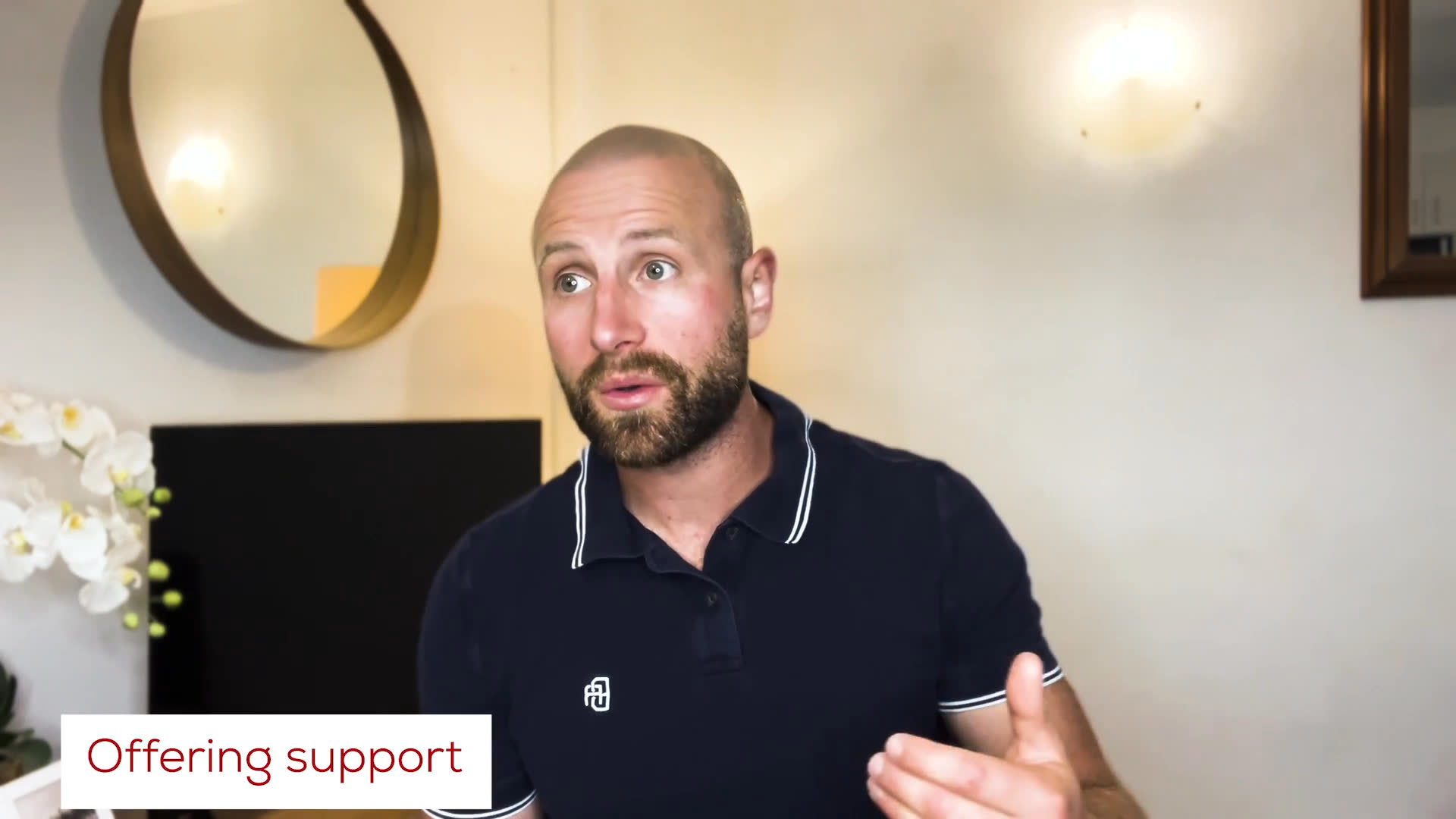
In this heartfelt episode of the Addiction Masterclass series, Evan Lieberman, MSW LICSW LADC, reaches out to friends and family navigating the tumultuous waters of a loved one's addiction journey. Grounded in compassion and expertise, Evan presents his top 5 tips for effectively approaching and supporting loved ones grappling with substance abuse. This masterclass episode provides invaluable insights for those feeling overwhelmed or uncertain, offering guidance on fostering understanding, setting boundaries, and ensuring both personal well-being and the well-being of the person in question. Join Evan for this essential exploration, providing tools and strategies for those most intimately connected to the ripple effects of addiction.
If you have a friend or family member struggling with addiction, you may feel helpless. In this video, Evan gives five practical tips, almost steps for what you can do.
If you're concerned about a friend or family member's addiction, here are five steps for helping. Approach the situation with support and an attitude of non judgment. Do a little homework before you start the conversation as a means to provide resources.
So what, if anything, can you do? If you have a friend or family member struggling with addiction, you may feel helpless. You don't know what the best way to support them, or if you need to go do more extreme measures and intervene somehow. I'm Evan. I'm your resident mental health and addiction therapist, and this is my addiction masterclass. And today we're going to break down one of the most important topics, one of the most frequent questions I get on how to help or support a loved one struggling with addiction.
Now, I'm sure I could do multiple videos or a whole series on this, but I thought in this video, I'll give five practical tips, almost steps for what you can do. If you have a friend or family member where you're concerned about their addiction, whether it's a severe concern or you're just starting to notice some patterns. Now, I figure before we jump in, I'll just give you a few signs of someone who may be struggling. And we talked about in the earlier diagnosis video about some of the symptoms.
So, for example, you may see mood swings. They may seem more depressed. You may smell alcohol on them. They may be struggling with work. They're not doing things that they once loved. There's just a general change in their attitude and personality. Now, this could be something like depression or anxiety, but often with substance use, it comes on a little bit more suddenly and often, you're just going to start to notice an increase in their use. So if you notice some of those signs, that's just a starting point.
So without further ado, here are five steps for helping someone you think is struggling. My first tip starts with an overall philosophy, and that's approaching the situation with support and an attitude of non judgment. If you come in showing that you have any kind of agenda or you're being critical, it's going to raise their walls up. If that individual's defenses are up, there's no productive exchange happening whatsoever. That individual is not going to open up to you. They're not going to admit if they have any issue because they're going to feel attacked.
Often when someone's in the throes of addiction, there's part of them that's always protecting that addiction, even though there's another part that wants help. So we want to be able to get to that part of them that feels open enough to share any concerns or struggles they have. So it may just start with, how are you doing? This next tip is all about if someone's guarded, maybe that individual doesn't offer that information about their mental health, emotional health, chemical health, when you ask them.
And that's very normal. So at this point, you may have to point out some concerns, but of course you want to do it in a very delicate way. My next tip is all about not falling into the trap of debating. I always say collaborate versus debate. Try to work with that person as you get them talking. It's like a back and forth dance. You want to validate what they're saying, but you could also push back a little bit through asking questions like saying, so do you feel like your use is not an issue whatsoever, but being sincere about it, being open to being wrong and just trying to get them to talk about how their addiction, how their substance use has a negative impact and continue to validate them every time they admit it.
Like, if they say something like, you know, I really have been drinking a bit more and I've noticed that it's been affecting my work. And you could say in response, wow, I appreciate you being open about that. Yeah, I have noticed a little bit of a change. My next tip is all about doing a little homework before you that conversation as a means to provide resources. So if you can find some resources that may be helpful for addiction or mental health, this may make it a lot easier for that individual to say yes because it takes out one or two steps of them needing to find these things for themselves, and they may be struggling with motivation.
So if you have the resources ready for them, it's going to bridge that gap. Now, the next step in finding resources is, I always recommend providing and then stepping away. It's always a dance. It's about pushing a little bit and then pulling back. Pushing, pulling back. For example, I'm offering them help and support, but I don't want to keep pushing and making them feel trapped or uncomfortable. So when I step away, I'm showing I don't have that agenda. Hey, here are things to help you, and I hope you go through with it.
I may say something like, hey, I have a friend in a similar situation, and he found this one therapist to be extremely helpful. So I want to give this to you in case you want to call them. And then I could ask, what do you think? And they may say, you know what? Yeah, I'll give them a call. And then at that point, I could step back and then maybe check in on them later and just say, hey, were you ever able to call? Oh, no, I wasn't able to. I didn't get around to it. That's okay. Hey, is there anything I could do to help facilitate this.
I really think it could be beneficial and I'd love to see that. Right, so you're still coming with a nonjudgmental attitude. You're being supportive, you're pushing a little, but not too hard. Now, my last suggestion is all about you, and that's you seeking help and support. There are awesome programs, something like Al Anon, that developed alongside the twelve steps of alcoholics Anonymous for friends and family members. Well, at the earliest stage is basically just wives, but now friends, family members, anyone in your life that's been impacting you through their addiction.
It's not just about helping them, it's getting help for yourself. Often when you're too entrenched in the situation, you're too emotionally attached. You make decisions that are counterintuitive, that are more emotional in nature, that could push the person away. So sometimes by you being able to get help suggestions, whether it's through something like Al Anon, families Anonymous, or seeking a therapist for yourself, this can be hugely beneficial. Remember, addiction is a family disease. It requires usually support of everyone around them that may be enabling.
Remember, in the end, chemical health is complicated. No two people are coming with the same addiction or substance use issue. Therefore, the same approach isn't perfect for everyone. However, some of those overarching principles like being supportive, non judgmental, not getting into debates with them, offering support and stepping back and letting them come to you. These types of principles are ones that work very well in a variety of situations, and they're just about being a good friend or good family member.
And remember, let them come to you when they're ready.
Reactions and comments are for members. Joining is free and takes a minute.