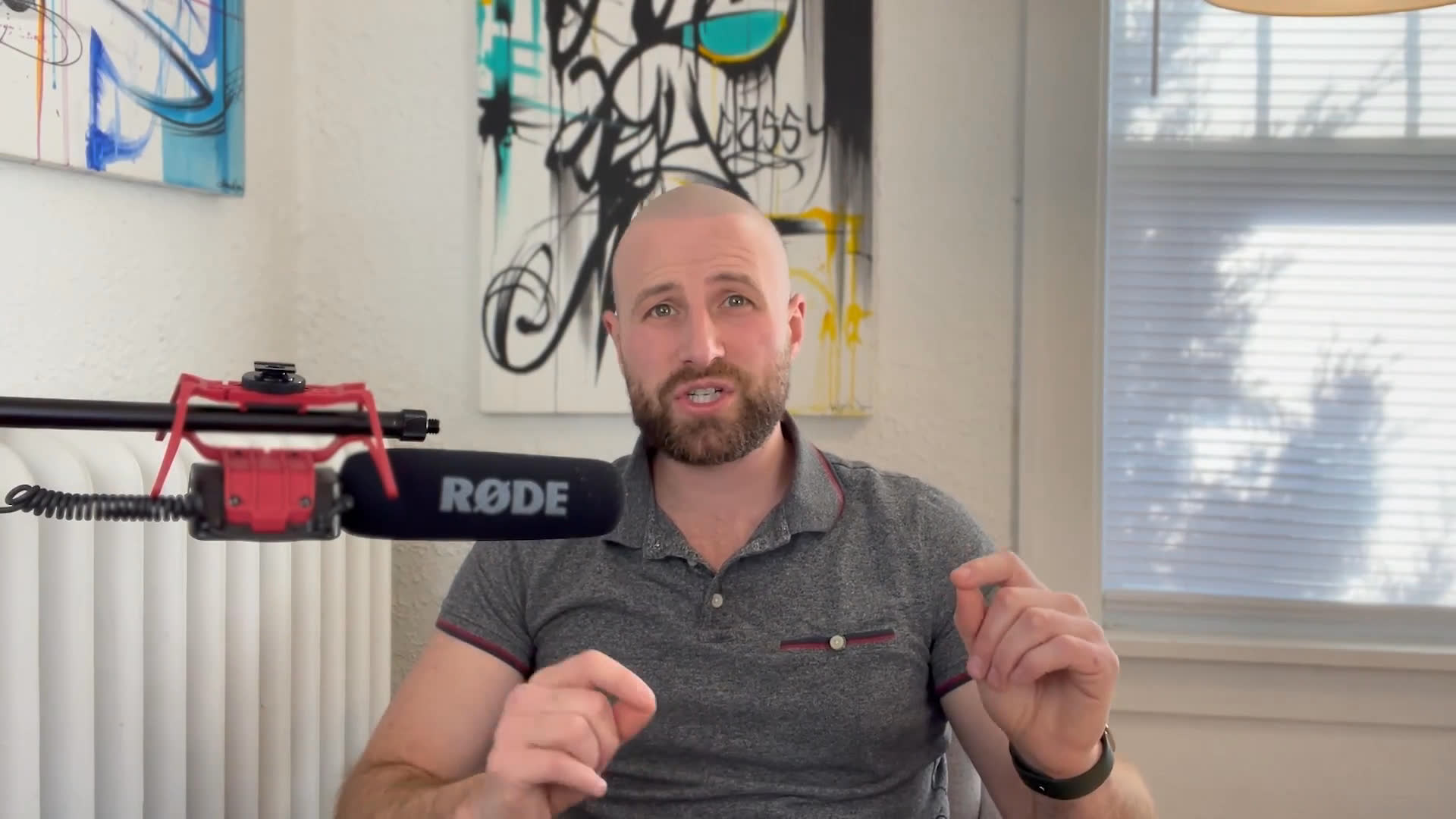
In this video, Evan, Cadre's Licensed Addiction and Mental Health Therapist, breaks down the act of cheating with all of the stigmas and misconceptions. Infidelity is one of the worst experiences people can experience, and society tells us it is an unforgivable act. But are the other ways to look at it?
It's usually around 15% to 20% of people who admit infidelity in a partnership. But there's another group of people where it is much more problematic and a chronic pattern. As our society evolves, relationships outside of monogamy are becoming more and more accepted.
Not all relationships are healthy and people should not be together. Only 20% of couples that have a cheating episode actually break up afterward. You can come back from cheating if your partner is willing to take action and do the work.
So many of us know what it's like to be cheated on. And I want to talk about this because it's one of the worst feelings someone could experience. Yet on the other end, the phenomenon is so misunderstood and morally stigmatized in our society, and that leads to the experience feeling even worse. So I want to dismantle some of the misconceptions around cheating things like once a cheater, always a cheater. Well, let's look at the data and see what's actually true. I've always wondered how many people actually cheat in relationships.
I've looked at a bunch of research studies over the years, and it's usually around 15% to 20% of people who admit infidelity in a partnership. Now, keep in mind, that's just people who admit it, and that's just in marriages. So those numbers are probably much higher. And is it really possible that 20% to 30% of people are irredeemable cheaters who can't change? When you think about what a relationship is, I'm guessing the general default is monogamy, because that is the standard of society. Often we go into relationships expecting that there's not going to be any sexual or romantic contact outside of the confines of a relationship.
Otherwise, that's cheating. I heard a pretty funny quote that I'll never forget, and it's that monogamy is only successful when there's no cheating, physically or romantically outside of your relationship, and then someone dies. Even though that quote is silly, you have to admit there's some truth in that. When we see a relationship where there's cheating and the partner stay together, we're often quick to judge them. Think Bill and Hillary Clinton. Look, I'm not here to say that monogamy is a broken institution and that nobody should partake in it.
I think monogamy is right for a lot of people. However, I think it's important that we expand the definition of what a successful monogamous relationship is. As our society evolves, relationships outside of monogamy are becoming more and more accepted. Now, non monogamy just means everything that is not monogamy. There's a lot of different setups, and I find that a lot of people have this misconception that non monogamy or polyamory is just everything goes, and that there's no boundaries in those relationships.
However, cheating happens in those relationships as well. I find that there's also misconceptions about non monogamous relationships in the same way there are with monogamous relationships where people have cheated that when someone has sexual or romantic contact out of the confines of that partnership, it's doomed to fail. However, research shows that with non monogamous relationships and monogamous relationships, the divorce rate is about the same. Let's take a minute to break down people who have cheated and why that may be.
One of the reasons is that monogamy is hard and this is reflected by that 20% to 30% of people who have cheated in relationships. And we cannot say those people are irredeemable or that once a cheater, always a cheater. However, there's another group of people where it is much more problematic and a chronic pattern of behavior. So among those individuals who may chronically cheat or it becomes an ingrained pattern, I would break them down into two groups as well. The first reason people may chronically cheat is the way society is set up, that monogamy is the default and that just doesn't vibe with them.
But they dont necessarily think theres another way to go. Theres a lot of parallels here to how LGBTQ folks have been treated for decades, centuries or even millennia, feeling pressured to be in relationships with folks of the opposite sex, even though that doesnt vibe with them physiologically or emotionally. Unfortunately, there are a lot of victims to people feeling coerced or pressured into a relationship style that doesnt vibe with them. Not only are they emotionally damaged by this, but their partners who are in these one sided relationships and eventually experience betrayal when the truth comes out.
With another group of people that serially cheat, it's more of an ingrained behavior and often more pathological. One reason may be sexual compulsivity. They just don't feel like they have control over this behavior, even though they want it to stop. There's another subset of people who commit infidelity, and those folks present with antisocial behaviors, often lacking empathy or a complete disregard for their partner's feelings. And this is one of the reasons why I think people who cheat get so stigmatized that people just assume they're in that subset of people who don't care and who will always cheat no matter what.
Now that we've established that relationships are inherently difficult and not all cheaters are the same and irredeemable, what should we do if a partner cheats? This is a really complicated question, and not all situations are the same. Some relationships just aren't healthy and people should not be together. And cheating is just one reflection of this. If you feel like the relationship is worth working on, that you have a foundation and there's a possibility that you're willing to move forward.
There's a few questions that I generally ask. First, is your partner taking accountability for their actions? Are they exhibiting genuine empathy for the hurt that they caused you? Next, what actions are they willing to take to better themselves and the relationship? Are they willing to do individual therapy? Couples therapy? Usually. I recommend both. Also, are these actions generally short lived, and they're just doing them to get back in your good graces? I find that our culture as a whole has an overly simplistic view on why cheating happens in relationships.
For better or worse, all the blame gets put on the person who cheated, and this totally disregards patterns of behavior that develops that both parties generally have some culpability in. And this is why relationship therapy is so essential after a cheating episode. Another statistic I found interesting was that only 20% of couples that have a cheating episode actually break up afterward. And this may sound crazy as well, but a lot of couples report that a cheating episode actually saved their relationship.
It was like an alarm bell that something was wrong and something needed to change. Another fact I find interesting is that a lot of couples who are non monogamous started off as monogamous, and it wasn't until an episode of Infidelity that they realized there may be a relationship set up that's better for them. And one of the most ironic parts of that is that the individual who goes into the non monogamous relationship more reluctantly often ends up enjoying it more in the end. At the end of the day, I don't want you to think that I am justifying cheating in any way.
I know how that betrayal feels. I've been there. It's horrible. But I don't want you to think that once a cheater, always a cheater, is an inevitable prophecy that can't be broken. But I do think it's important to destigmatize cheating and understand it for what it really is. You can come back from cheating if your partner is willing to take action and do the work. If you're willing to take action and do the work together, you can live a happy and fulfilled life.
Reactions and comments are for members. Joining is free and takes a minute.