The Scientific Effects of Love on the Brain, the Body, & Your Mental Health (Part 2)
Doctor Charryse is a licensed clinical mental health therapist, mindfulness practitioner and author. What does it mean to cultivate peace and harmony in your life? Keyword being cultivate. Because it has to be something that we choose to develop on our own.
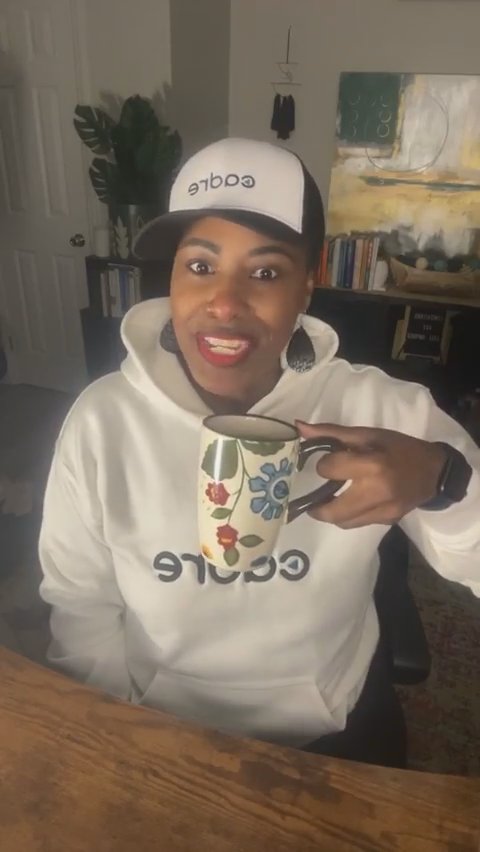
It is February 14. For those who. Who celebrate are Valentine's Day. And for those who don't, happy day. Good to see you all. I do have my mushroom coffee today.
Vip is sold out. Luke Winlitt, JC Lippold, Rachel Havocaust, Doctor Leslie Davis will be coming to Charlotte, North Carolina. It is going to be phenomenal and it's not too late. All the information is out there in places that you follow me.
"I'm gonna spend the next few weeks talking about various aspects of love. And I do want to get into the neuroscience of love and what it does to your brain and your body " But not today, because I'm feeling a little spicy.
I want us to get into seven myths about love that can impact your mental health. Love in itself is not a feeling. Love is a choice, and it is a commitment toward yourself. Does your commitment to how you love yourself change when you don't feel good?
Opposites might attract, but don't always stay. Even in relationships where you're opposite, you still have core values that are intersected. Where are you in connections that are opposite of what you need?
Love does not guarantee happiness. Character is not negotiable. Your role in the life of the people that you love is not to help them change. Try your best not to partner yourself with people or with situations based on potential.
Audrey: Where are you neglecting to love yourself? Audrey: Love doesn't conquer all, but being in a loving relationship with a healed and whole person does. The love conquers all concept can also leave you in toxic situations.
I popped in Monday afternoon at noon and did some qigong and some mindfulness. The background music that you heard me use in the live is actually a playlist for meditation music by RJ Bird that can be found on Spotify. Have an incredible, incredible rest of the week, and I will see you next week.
Hello. Hello. Welcome back to live with Doctor Charryse. If this is your first time here, I'm a licensed clinical mental health therapist, mindfulness practitioner and author and I work one on one and with professional organizations and nonprofits all across the world to help them look at the concepts of what does it mean to be well in word and in action? And of course, I'm always here to talk to you about what does it mean to cultivate peace and harmony in your life? Keyword being cultivate. Because it has to be something that we choose to develop on our own.
It's a good morning. It is February 14. For those who. Who celebrate are Valentine's Day. Happy Valentine's Day. And for those who don't, happy day. Right? There's room for everything. Good morning. I'll give everybody a moment to come in. Hello, Maria. Hello, Jaiden's mommy. Thank you. You know, I had to have a little red lip. It's been a minute. Good to see you all. I do have my mushroom coffee today. Oh, it was great. I will be honest, this was the first morning that I was like, oh, I should have changed the time of this because my bed felt great today, but it took 2 seconds after that for me to go, absolutely not.
This is what I need to do. All right, a few quick announcements and let's get into it. Recalibrate. Vip is sold out. I cannot wait to spend time with everyone, but specifically time with those of you that are going to be coming to Charlotte, North Carolina with myself, Luke Winlitt, JC Lippold, Rachel Havocaust, Doctor Leslie Davis. It is going to be phenomenal and it's not too late. So make sure that if that's something that you want to do that you can. All the information is out there in places that you follow me.
I feel like there was something else that I was gonna say, but it'll come back to me. I'm a little hyper this morning. You know, once I did get up, it's here. So even though it may feel very cliche to go, it's February and we're talking about love and some people will go, oh, love is not a good subject for me or oh, it's fine for me. It's not an issue. I don't want to talk about it. We're gonna talk about it. I'm gonna spend the next few weeks talking about various aspects of love. You'll see a description in the section of the calendar for these lives.
Ignore it. And I say ignore it because I need to stop putting descriptions in there, I always have an overview of what I want to focus on, but then I don't want to time myself down. And if you've been around me for a while, you know that. So just ignore. But we are going to focus on love. And I do want to get into the neuroscience of love and what it does to your brain and your body. But not today. Today, because I'm feeling a little spicy. I want us to get into seven myths about love that can impact your mental health.
So our seven at seven. Number one, love is a feeling that is one of the most dangerous mindsets that you can have about love. Love has feeling, and there are different kinds of love and different ways we love and different people that we love that create different feelings. But love in itself is not a feeling. And here's why that's crucial. If we reduce love to a feeling, then when the feeling is gone, we will leave. And there are people that do that. I don't feel the same way about you anymore.
Feelings are fleeting. I also want you to think about all of these myths in light of yourself. So if we also navigate our day in our life and our mindset is love is a feeling towards me. Well, I don't know about you, but I don't always feel like loving on myself. Every single day, you're going to have days where you don't feel love for yourself based on various things, but you don't stop loving yourself, because love is not a feeling. Love is a choice, and it is a commitment. It is a choice and a commitment to the relationship that you're in with other people or another person.
But it's also a choice and a commitment toward yourself. And so, as a point of tangible reflection, something that I want you to ask yourself is, does your commitment to how you love yourself change when you don't feel good? When you don't feel good about life, about yourself, about the way you look, about the number on the scale, does that change your choices and your commitment to loving your body in a healthy manner? And if the answer to that is yes, then we need a mindset. Check around the concept of love being a feeling.
Sit. Break. Number two, seven myths about love that can impact your mental health. Opposites attract. That is a cliche that is used very well in movies and films. But the challenge to that as a whole is that opposites often don't attract. And if they do, it's temporary, because then, as time goes on, think about it, you know, similar to moving in a different direction, you'll start to diverge, because you'll realize myself and this other person, we're not complimenting each other. Each other. Well, opposites might attract, but don't always stay.
Even in relationships where you may say, oh, you're opposite, or my husband and I, or my partner and I are opposite on this, you still have core values that are very intersected and keep you bound and connected. You also have different areas of your life where you complement each other. There's a difference between the things that we have that are opposite, complementing one another, ebb and flow, versus completely being in two different places. That's incompatibility. How do you make that personal?
When you think about the thing, things that you need and a lot of the hurt that you have likely experienced in a work relationship or personal relationship, if there was a struggle or you felt betrayed or hurt by a situation that you thought was loving, it was because, or likely because as you move forward, you realize, oh, wow, I thought we were on the same page here. And now I realize we think completely opposite around these subjects and these values. So, personal point of reflection that I want you to consider asking yourself, where are you in connections that are actually opposite of what you need?
Maybe you are searching very hard to try to find your place to belong. But if you are in a place that is opposite of your true nature and temperament, at some point, that relationship, that place, that partnership, will become a challenge to you and will end up being a dynamic that is difficult because. Because you're not finding that common ground and you'll continue to feel disappointed. Number three, and I promise I won't go as long on all of these. But these are important. Sit. Break. Love guarantees happiness.
Tell me your beliefs on that. Do you believe that love guarantees happiness? And not a trick question. Just want to get your thoughts that on is something that when we're in moments of our life where we feel unloved, there can be parts of us that believe, if I had love, then I would be happy. Love does not guarantee happiness. Being loving with the right person or being in love or having a love relationship with the right person can add to your happiness, can be a part of your happiness. But happiness is a intricate and complicated recipe that depends on a lot of different things.
Let me give you an example. You could be in a healthy partnership relationship, both personally or professionally. But if you don't love yourself and have a good relationship with yourself, then there is no guarantee that you will feel happy. It will still be a struggle for you. So it's not always a guarantee. Number four, character is negotiable. Character is not negotiable. When it comes to finding love with other people, it is highly important to make sure that you know the kind of character that you desire and you appreciate and you want in your life.
And then you can work on connecting with people that have the kind of character that makes you feel safe and comfortable and open to receiving the unconditional love that you desire. Number five, this is a big one. I can help this person change. That is one of the largest or most common myths that is detrimental to the mental health of other individuals. Your role in the life of the people that you love is not to help them change. Change is our personal work. Most people don't change. Most people learn to hide the change that they need to make, or they learn to do enough to make sure that the person that wants them to change feels like they're trying.
Have you ever been in a situation like that where someone did just enough to go, oh, I think they're. And then you're like, okay, no, nope, they're. They're actually not. No matter how loving you are, your love cannot make someone else change. And here's why that's so important. Because if your belief is, if I do this, then my love will make them change. When they don't change, you will internalize it and think it's your fault, which can then be very harmful and damaging to your self worth. It can lead you to believe you weren't enough, and that is a lie and not truth.
When someone is compatible with you, when someone loves themselves, well, they will change because they know it's for the better. They will change because they want to and they see the value in it. And then what it gives to someone else is just a bonus. But change has to come from our own desire to see that we want to be different. And you cannot help a person change. Try your best not to partner yourself with people or with situations based on potential. I would not suggest, number six, love guarantees compatibility.
Have you ever had a situation where you were like, oh, my goodness, I love this person, but we are not compatible. They were a lot of fun. You had some good moments of all kinds. Keep it clean. But you also realize, but I know we're not going to be compatible long term. This isn't someone or this isn't a situation that I can see myself in long term, because you knew your values were different, your core was different, your character was different. What you wanted out of life is different. So love does not guarantee compatibility now, let's say that you're in a situation where you're like, it would have been great for you to tell me this years ago because you may have now married somebody or be in a relationship with somebody that you thought, I love them, so we can make this work and we can be compatible if you're there, that's a whole live of its own.
Do the best that you can, given the situation that you have. Because one of the most challenging aspects of loving other people is recognizing, oh, wait, I actually saw this about them from the beginning and I overlooked it because I love them. And now it's getting more and more difficult to overlook. But this isn't new. I knew this. I may have said this in, in this setting before, but when I think about the couples that I've worked with, whether they were dating, engaged, married and having issues, 95% of those couples, when we get to the core root of the issues that they have, and I ask, well, tell me how long, you know, this has been an issue.
Was this something that you noticed before or, you know, has it evolved into the relationship? 95% of those couples go, this was an issue when we met. This was an issue when we were dating. This was an issue early in marriage. But I thought that our love and time would change it, and that's not how it works. Love does not guarantee compatibility. That is why it is important for you to know who you are and what you value outside of pleasing others. Because if we believe that love guarantees compatibility, then we can also put ourselves in situations where we just try to become what other people expect out of us until we realize that's not sustainable.
And number seven, love conquers all. Oh, it sounds so good to say that. It sounds so cliche, like it should be on a t shirt. But at the end of the day, love doesn't conquer all. But being in a loving relationship with a healed and whole person does. Love conquers all. It does not. Because someone could say that they love you and also emotionally abuse you. Someone could say that they love you and also not reciprocate that love. Someone could say that they love you. And you, of course, still have really difficult situations that are happening and occurring in other places in your life.
So the world would love to make us believe that if I am just, then everything in my life would be perfect. And that is not true. And I want you to really consider that, because we often believe if I was loved, then I would feel perfect. If I would love myself, then everything would be fine. And I have to love myself by looking a certain way, it becomes this intricate web of a lot of different lies we believe about love that then has us looking for love in all the wrong places. Love doesn't conquer all, but healing is a huge component, and that is why, oh, my gosh.
Yeah, we take it way out of context. If I was in a different setting, Audrey, I would go there, but that was definitely in the back of our mind. Here's another reason why I want to debunk that thought. The love conquers all concept can also leave you in toxic situations, because somewhere along the way, you were taught to be loving at the expense of calling people out on their stuff. And so you want to be very careful not to use toxic positivity in love as a way to stay in situations or stay in connections that are harmful for you and not loving and are actually tearing you down because someone else modeled for you.
Just show love. Sometimes love means leaving. Sometimes love means saying no. Many times, love means speaking yes truth that another person may not want to hear, but it's necessary in order for your growth. Love means boundaries, and that's not just with other people. That's even with ourselves. So seven at seven, I'll run through them. One, love is a feeling. Two, opposites attract. Three, love guarantees happiness. Four, character is negotiable. Five, I can help this person change. Six, love guarantees compatibility.
And seven, love conquers all. So want to take one or two minutes and go. What do you do with this information? I gave you a few questions early on that you could use for personal reflection. But the other thing that I want you to do when it comes to self is ask yourself one, where are you loving yourself? Well, and I want you to be able to write that down and give specific examples. And then on the other hand, where are you neglecting to love yourself? Well, in what specific areas? You could always use this with the five domains, spiritually, physically, financially, socially, and emotionally.
Where are you loving yourself? Well, where are you neglecting to love yourself? Well, and then I want you to choose one action step, one thing that you want to do more as a means of showing healthy and consistent love to yourself as a way of pouring into your mental health. All right, have an amazing day. I got to see you guys twice this week. For those of you who are like, twice, wait, what did I miss? I popped in Monday afternoon at noon and did some qigong and some mindfulness. So you definitely want to hop back and listen to that.
It's a great kind of plug and play the background music that you heard me use in the live on February 12 is actually a playlist for meditation music by RJ Bird that can be found on Spotify. So if you found that soothing, head over to Spotify and check it out. And there's also a few prerecords that I've done this month just to keep you kind of coming back and giving you some good motivation and personal growth. Have an incredible, incredible rest of the week, and I will see you next week.
Reactions and comments are for members. Joining is free and takes a minute.