The Scientific Effects of Love on the Brain, the Body, & Your Mental Health (Part 3)
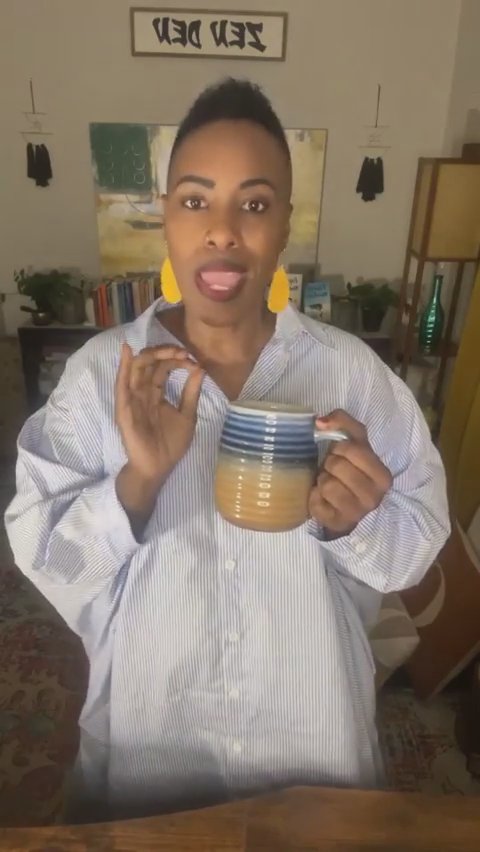
Doctor Charryse is back for another Wednesday morning. My beverage of choice this morning is iced green tea. We'll let everyone come and join us as you come in.
Question of the day: What was your win over the last week? Show gratitude by being able to access positive aspects of your life. List of your wins because it also motivates us to search for our own and find ours.
Shame can have too much power. It can become a barrier to our ability to love ourselves. Practice self love, which is the opposite of shame, is an intentional practice. It also improves your mental health. Love is an integral aspect to leading a happy and healthy life.
Doctor Charryse: Live a life that you would value consistently. She says worries get in the way of your success. List seven statements and write a tally mark for each one. At the end, add up all the tally marks and put in the chat where you landed.
If shame narratives toward yourself cause you anxiety, they're holding too much power. You fear that you're going to maintain that older version of yourself. You emotionally eat as a means of suppressing your emotions. How well do you do letting go of your past?
Are you moving through life right now in an authentic way? Are you in spaces where you feel free to be who you are? Our ability to be accepted by ourselves is influenced by the people in our life.
You notice where you are holding on to patterns of thought, feeling, or behavior that are causing you problems. Your behaviors and your patterns are up to you. I encourage you always to lean in. Wait until you see the updates that are coming in Cadre.
For those of you that are listening to this in real time, I want you to notice where shame surfaces. To redirect and to choose an opposite action. Share this with someone who may need it. And as always, I will see you again next week.
Hello and welcome to live with Doctor Charryse. I'm so glad that you're here. I hope you have something to wet your whistle. My beverage of choice this morning is iced green tea, one of my favorites. I am so excited to be back with you on another Wednesday morning. I'm going to take a few sips. You do the same and we'll let everyone come and join us as you come in. Question of the day what was your win over the last week? We do a really phenomenal job acknowledging all the areas in our life where we need to improve.
But if you're in this space, it's also about how can you cultivate peace and harmony? By being willing to do the work. And you do the work one by showing gratitude, by being able to access positive aspects of your life. So share with me a win that you've experienced over the past week. The caveat is don't put and or but at the end because we do that to ourselves a lot, right? We go, oh, this is something that I did but. And that really diffuses and takes the air out of your wind. This sounds like a very small practice, but it's a very important tool when it comes to changing the way that your brain organizes in creating neuroplasticity.
Big long word that just means your body's ability to change over time. And we have that neuroplasticity forever. Hello Joanna. Hello Charlize. What's up RJ? Yes. Study hard. Recap later. I'm cheering you on. I hope everything goes well. Yeah, applying b*** is very bullyish. Again you're saying good morning, but don't cheat when I come back and I recheck this live, even if you're listening on replay, I want to see a list of your wins because it also motivates us to search for our own and find ours.
We've been talking this February, if you're listening to this in real time, about love and different aspects. One of the areas that I want to focus on today is how shame can have too much power. And as a result of that, it can become a barrier to our ability to love ourselves, but also our ability to give and receive love. Have you ever been there? Have you ever been in a place where you felt like you weren't matching what you wanted for yourself, you weren't living up to your current potential, you were frustrated because you hit a wall.
Life was lifeing. I've been there. I'm in the middle of a life is lifing moment. But guess what? Those moments happen and how we respond to those moments will tell us a lot about how we've cultivated love as a peace and harmony practice that is absolutely beneficial to our mental fitness. So again, wrapping that all together in a more concise way, practicing self love, which is the opposite of shame, is an intentional practice that will not only benefit your ability to operate in life from a mentally fit place, but also improves your mental health, your ability to love yourself with flexibility, with compassion, but also your ability to love others and believe that you are worthy of receiving.
And that's not something that we often like to consider, that there can be things in our life, in our present, in our past that we anticipate in the future that has us locked up in shame. And as a result of that, can make it very difficult for us to be in a good, loving relationship with ourselves. And if no one has ever told you that loving yourself important and it is not selfish, it is a core component of your self concept, of your self image, and a integral aspect to leading a happy and healthy life.
So before I begin with the content that I want to give you, and I'm going to try to keep it under 15 to 20 minutes, I'm going to take a few steps. So, so, so good. Okay. The first thing we're going to do is start off with a little assessment. Because, you know, I'm a clinician, I love assessments. I do believe that they have value. I'm going to read seven statements and I'm going to pull out my little notebook because I want to make sure that I get these to you clearly. Then as I read these seven statements, I want you to just write a tally mark for each one that you agree with.
Yes, that's me. Tally Mark. No, it's not nothing. And then at the end, if you're comfortable, I want you to add up all the tally marks and then put in the chat where you landed. And no shame. All right. Number one, my painful experiences and memories make it difficult to lead a life I value or to live a life I value. My painful experiences and memories make it difficult for me to live a life I would value. And I want you to think about this. Live a life that you would value consistently. I want some of you that have kind of been in this mental fitness game for a while to add consistently.
Because if you're intermittently living a life that you value, are you really living that life? Number two, I'm afraid of my feelings. This means that is you are avoidant. Even if you're aware of them, you may stuff them, you may blunt them, you may put them on a shelf, you may be toxically positive, meaning you're always focused on, I feel amazing, I feel great, I feel awesome. Which still can be a sign that you don't want to address all of your feelings. Number three, I worry about not being able to control what my worries and feelings.
Number four, emotions cause problems in my life and I want you to consider problems as both internal and external. You may be great at hiding your problems from the rest of the world. They're unaware that you have problems. But if you took a really good inventory, you would go, but those problems still exist. Most people just don't recognize it. Number five. Or that was number five. Number six, it seems like most people are handling their lives better than you. So if you feel like you compare yourself to other people, no shame.
We're going to work on it while you're here. Over time. But you constantly look at other people and think, oh, they handle things better. What's wrong with me? I wish I was like that. Tally Mark and number seven, worries get in the way of your success. Again, you've been in this game for a while. Mental fitness, mental health, supporting yourself. Worries consistently get in the way of my success. So that could look like worry becomes a barrier to your success. Or when you start becoming successful, this happens.
Fear of success. Then you start worrying that you will not be able to maintain the success that you have. So seven items, seven tally marks, let me know your score. This just gives me a good idea of where you're all landing and it gives you an opportunity to be able to be honest and acknowledge. Oh, wow. When Doctor Charryse first started talking about this, I didn't think she was necessarily talking to me. All right, let me repeat those questions again. Number one, my painful experiences and memories make it difficult for me to live a life I would value.
Two, I'm afraid of my feelings. Three, I worry about not being able to control my worries and feelings. Four, my painful memories prevent me from having a fulfilling life. That's probably the one I left out. Five, emotions cause problems in my life. Six, it seems like most people are handling their lives better than I am. And seven, worries get in the way of my success. Thank you for keeping me together and so good to see that some people are in the lower echelon, which is perfectly fine. I hope you stay there, but if not, this is going to be helpful information for you to keep in your back pocket or share with other people as needed.
So seven ways that shame may be holding too much power in your life. Wonderful. Still. Two, four. Again, no judgment, just being able to notice it. One, if shame narratives toward yourself cause you anxiety, they're holding too much power. One question that I want you to ask in terms of a reflection question is, how well do I do letting go of my past? That is an important skill. That is such a piece to reflect on. You may hear me say, or have heard me say in the past. Every day is a new opportunity to make choices that will change your life.
I'm a full proponent and believer of that. But if shameful becomes a part of our story, then what happens is we take our past and we pull it into our present, and it can slow us down. So, seven ways. Your shame maybe holding too much power is that shame narratives towards yourself cause you anxiety. You fear that you're going to maintain that older version of yourself. Here's the reality, and I won't elaborate on all of them this much, is that there's an older version of yourself that is extremely proud of the version of you that.
That is operating right now in some form or fashion. Number two, you view everything that happens to you or around you through the lens of inadequacy or shortcoming. So you might be an individual that feels like there are times and situations where when something happens, you go to blaming yourself first or you even think you have to fix it. Oh, this is a problem. What do I need to do? Is this because I wasn't enough? This didn't work out the way that I want it to? Is this my fault? There's shame existing somewhere that we want to be removed or reduced.
Number three, you emotionally eat as a means of suppressing your emotions. So one of our kind of subtle or sometimes not so subtle behaviors when it comes to shame is we eat our shame when we're feeling higher moments of shame or not presenting the way that we would like or not feeling the way we want to, that can change what we reach for, and we can move into a place of emotional eating. If you've been there, it's okay. If you are there, it's okay. And if you are no longer there, kudos to you for finding a little bit more adaptive ways.
Thank you, Beth. I am. This was the first thing that I could find today. So I was like, it works, and it's comfortable. I keep little things around my office. I know you guys don't care about this, but we're here. We're family. And I can say this anyway, to grab really quickly, and I was like, this yellow is just making me happy and bright today. So thank you for allowing me to go off topic for a moment. All right, number four, you fear that others see your inadequacies. Have you ever been in a conversation or in public?
And then shortly after that conversation, you went back and started replaying everything that you said in your head all throughout the day. Did I say that right? I should have said this. What did my face look like? I wonder what they thought about this. That can be a form of shame that comes from some part of your core believing that you have to present a certain way, or there's a level of expectation that you have with yourself that may have been ingrained with you as a child, and as a result, it can create a lot of perfectionism and overanalyzing what you say, what you look like, and how you present to the world.
So, again, for an application piece, I want you to consider, are you moving through life right now in spaces where you feel free to be human? And it sounds really simple, but we could be in a lot of spaces where you feel like the stakes are high, and then you kind of notice, I don't know, that I'm fully operating as myself because I do kind of feel like I need to come and present in a certain way. Speaking of what we're wearing or what I'm wearing in this moment, my daughter asked me the other day.
She was like, mom, when you are sharing with other people, do you feel the need to dress up in order to present a certain way? Absolutely not. And those of you that know me know that my brain, my education, my heart, my passion, my purpose is the same whether I'm wearing sweats and a hat or whether I'm wearing an oversized dress shirt and earrings with lipstick. It's purely preference, but I want you to be able to ask yourself that question, too. Are you moving through life right now in an authentic way?
Are you in spaces where you feel free to be who you are? Because if not, the environment around us absolutely will impact our ability to love ourselves. Our ability to be accepted by ourselves is influenced by the people in our life. And you also want to consider, where are you holding on to any historical shame narratives? I didn't put this in there. This is your bonus for the day. Were you also potentially holding on to any shame narratives that have been historically passed down, even in a loving way, because you had a grandmother or grandfather that taught you really great things but also instilled things into you that are different than who you are?
Because that thing, their season of life. You might need to give yourself permission today to break up with some historical narratives that are keeping you pigeonholed in a specific way. And someone is asking a really great question, is, can you really be you? I am a proponent of absolutely. And. And I'm going to go there for a moment. We can always be ourselves. And it's important to know the people that are around us and their capacity for us to be ourselves. And that doesn't mean that we need to change who we are.
It doesn't mean that we need to be masked by shame and hold ourselves back. But there is something to be said about your inner circle is going to allow a different level of freedom than people who just met you. And so you do want to have some way of determining who are the people in my life that I want to stay, who are the people in my life that I tolerate, and who are the people in my life that have shown me that I can trust them with my innermost self in strategic moments, and I can allow them to come in closer.
And that can be extremely important. Whether you are a professional, whether you're a pastor in ministry, or whether you're just navigating your individual life in public spaces is finding that room to know who are the people that have the capacity to allow you to operate as your full and authentic self? And how do you make sure that you're spending time with those people so that you're not caught in a shame cycle of thoughts and emotions that are keeping you bound to believing you're presenting as a certain way?
Because I think what you'll notice, and if you've been in life for a while, when you are walking around in a shame filled, perfectionist, inauthentic version of yourself, you also end up attracting other people that are not your people and that are not for you and that will limit your reach because you're then so constricted. Might seem like a tangent, but I believe it fits with knowing. Is shame holding too much power? Number five, you internalize your shame outwardly and pretend you don't care.
All my outcasts, unhealed outcast. You know what I'm talking about. If you were with me for fear archetypes. But if you're the kind of person who presents as tougher than you are and, oh, I roll things off my shoulders, but you're actually kind of sensitive and you're like, that kind of hurt. But I'm not letting anybody know I am talking to you, there is still a level of shame there around. People are not allowed to really know who I am. And as a defense mechanism which can hide the true level of our shame, the true level of believing that we can belong, then we'll act like we don't care.
How will you know if you're a person who is? Like I act like I don't care, but I really do. Well, one, let's be real, you know, the other way that you will know is if you stiff arm people and keep a lot of people out of your life. I'm going to sit here. If you don't really let people in even though they think they know you. Yes, I'm talking to you. Prime example of you have some things that you're trying to keep under pocket. You don't believe that you can belong and stay in connection, or that people can handle it, or you would be ashamed if they of experience this version of you.
So you act overconfident like you don't care, like you don't need people. Like things roll off of your shoulder. I know I'm talking to somebody. Tag your friends. Make sure they're here so they can get healed too. Number six, you buy, hide or binge on food to make yourself feel better. Even little grazing of sugar. Dopamine. Not judgment. We're just talking awareness. Your behaviors will always tell you what you really feel about yourself. When shame, perfectionism, fear of failure, fear of success, fear of belonging, all can be parallel.
In some ways is holding too much power in your life. You may find that you're eating, drinking, or smoking your way out of it, and that's a sign that you actually want to sit with it and go, how did I get here? How is this impacting me? And what can I do to break up with this narrative that I'm holding on to? Because shame is often rooted in a narrative. It's not just about the experiences that you had that caused you shame. It's also about the subsequent beliefs that you developed about yourself and the thoughts that you have based on that experience that now stay with you.
And because you are so attached to what happened then, it is guiding the way that you operate now and really keeping you from experiencing the health, the peace, the joy, and the harmony that you truly desire. Number seven, you often relapse back into problem behaviors. That's not a word that we enjoy, problem, but let's be real. There are times in our life where we have certain behaviors that are creating problems. And I could give you a bunch of fluffy words to change that, but there's also something about acknowledging this is the choice that I am making.
This is the thought that I am holding on to. This is the limiting belief that I'm ascribing to in my own mind, in my own gut. And it's causing a problem because it is keeping me stuck, or it keeps me in my head, or it makes me anxious, or it makes me feel sad or depressed inside, or it makes me have less patience with the people in my lives. It makes me fear I will be by myself forever. The list can go on and on. So what do you do with all of this information? You go back, you listen, you replay.
You notice where you are holding on to patterns of thought, feeling, or behavior that are causing you problems or leading you in a direction that's opposite of where you want to go. So that can even look like you sitting down and writing thoughts, feelings, behavior, slash patterns and writing down what you're noticing in terms of this has been a thought that, man, I haven't had this thought in a while, but it continued to come up. Or I've had this thought for a long time and it's not leaving. Here's a feeling that I've been holding on to or carrying lately that is with me.
And as a result of it, I'm not acting as confident as I know that I could be. I'm not going for that new opportunity. I'm second guessing myself in this role because of this thought and this feeling, and then that's resulting in these behaviors or patterns. I am not prioritizing sleep anymore. I saw someone in there. I am eating ice cream as if it's my best friend and confidant. I am binging. I am grazing. I am not moving. I am pushing people away. Your behaviors and your patterns are up to you.
I encourage you always to lean in. There's a whole world out there that is going to give you soft and sweet and fluffy and feel good and you're amazing and you are. But I also want to invite you into the world that sits down and says, I'm kind of a mess in some places. I'm a good mess, but I'm kind of a mess in some places. And I'm willing to look at it. I'm willing to look at the messy me and work on cleaning up my thoughts, my beliefs, and my behaviors so that I can experience more harmony, more rest, more authenticity in my life.
All right, I love you all. I'm always so glad that you're here. Wait until you see the updates that are coming in Cadre. Let me just add that it is going to maximize your experience in beautiful ways. Some of them will take place again on March 1. For those of you that are listening to this in real time, as you go throughout your week, I want you to notice where shame surfaces. And at the moment that you see shame surface, I first need you to go, uh uh. Like, seriously, out loud. Mm mm, not today.
Because sometimes we have to talk to those parts of ourselves and then ask yourself, where can I redirect? Where can I do? Opposite? Opposite action is a skill of what my shame is encouraging or tempting me to do. That is where your power lies, in your ability to notice, uh uh. To redirect and to choose an opposite action. Share this with someone who may need it, someone who may need to be encouraged. And as always, I will see you again next week. Until then, remember that knowledge is not power without application.
So I need you to do your work. Have a good one.
Reactions and comments are for members. Joining is free and takes a minute.