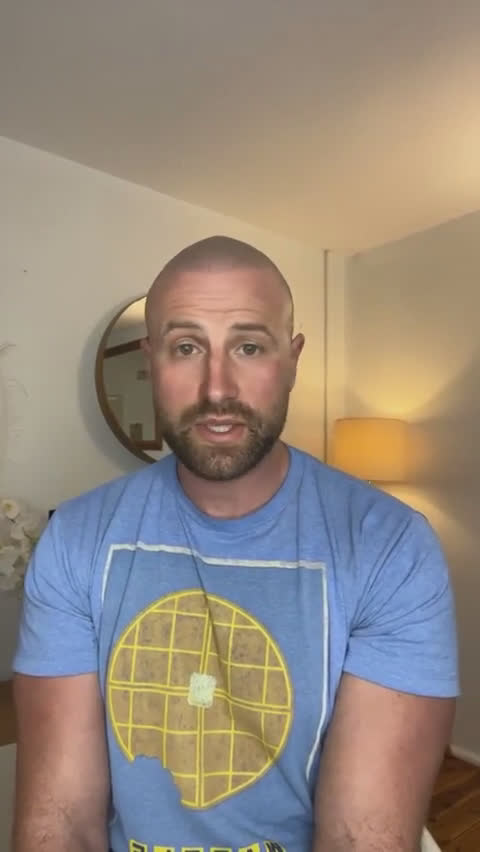
We had a technical glitch, so here is part two of today's AMA
Alright, folks, we're back. This is the ask me anything episode. Mental health matters. And. We had a little technical difficulty before.
The dark triad traits are psychopathy, narcissism, machiavellianism. Psychopathy is a term from the criminal justice forensic world to describe a certain pattern of behavior with most notably about 20 traits. Having these traits can be beneficial.
So here, I just got a question on a video. Remember, you could always comment on my videos, and I will be able to answer these questions. If not, I got other topics.
Borderline personality disorder is a reaction to trauma that people struggle with. Relationships, attachment, emotional control, behavioral control, desires for extreme coping. Substance use creates massive difficulties. It's one of the more popular topics you'll see on social media.
With quiet BPD, it's usually contained on the inside. Some of the most difficult clients I've had have struggled with this. It's thought to be. more prevalent in women, but it's also present in men. Next week I'm bringing a topic related to trauma.
Alright, folks, we're back. Mental health matters. We had a little technical difficulty before. So this is the ask me anything episode. And. Yeah, so let's finish the we were talking about before, which is about the dark triad traits, psychopathy, narcissism, machiavellianism. So if you're just like tuning in now, I'm gonna pull up a good question here. So if you're just tuning in now to this video, basically people have asked me about these different traits, what that means. So one, narcissism, obsession with self about feeling better than others.
This leads to exploitation of other people, manipulativeness, obsessions with status, power, doing things to get ahead. Now you also, that's a pattern of behavior. Pattern of behavior, machiavellianism, essentially manipulating others to get ahead. Psychopathy, lack of empathy, disregard for the rights of other people. It could be criminal type behavior. There's like 20 different traits. What up, speaker wonder? So all of these are basically ways of describing traits of behavior. Now, narcissism is associated with narcissistic personality disorder, which is a mental health disorder which embodies all these traits.
And a lot of times these very much overlap. There's like a big Venn diagram with all of them that if you had like machiavellianism, there's no like machiavellianism disorder. But those traits are often present in narcissism and antisocial personality disorder. Most associated with psychopathy. Psychopathy is a term from the criminal justice forensic world to describe a certain pattern of behavior with most notably about 20 traits. I'm not going to list them all, but these are all associated with it.
Often having like early childhood behavioral problems, run ins with the law, revocation of probation, parole, impulsivity, lack of control of oneself, their behavior, their emotions, a lack of empathy, a lack of taking responsibility for one's own behaviors, you know, acts of violence, you know, towards other people. So those are just like a handful of them, right? So this is often what you'll see in folks, high degree of folks, you know, in prison who've had, you know, multiple crimes, career criminal type behavior.
So criminal versatility, that's another one. Now granted, there not everyone in prison is a psychopath. Now, a lot of this is actually genetic. A lot of this like pure psychopathy. It's like, it's like, it's really like having a different brain structure. It's almost like a form of like neurodiversity in a way. One though that has not a ton of upsides. However, there actually can be. So there are people who have these traits that are quite functional, who live pretty normal lives, and a lot of times you'll find them in certain positions that are thriving, for better or worse.
It just depends on how much of a grasp they have on it and how much of a counterbalance they have. For example, you may see folks who are, like surgeons, have high degrees of this. There's certain jobs that attract CEO's, surgeons, sometimes law enforcement, clergy. A lot of times when you have something that's, like, related with power. However, a lot of times, people excel in these roles because a lot of these traits are associated with, like, kind of like, a lack of fear response, an ability to detach emotionally.
So often, like, having these traits can be beneficial. There's a really good book. It's called, like, was it like a psychopath inside? Basically, it was a researcher who was researching brains of psychopaths, and just for a fun or experiment, like, took brain scans of, like, different friends and family members, and he came across one that actually had the traits of psychopathy. Turned out it was his. And then it actually, like, drew all these insights from it. Looking back on his life and seeing how, oh, yeah, maybe I do exhibit some of these traits.
Right? So it can be more subtle. It doesn't necessarily mean you're a bad person. Doesn't mean you can't maintain relationships, even though that is typically more difficult for folks. So here, I just got a question on a video. So this is. Remember, you could always comment on my videos, and I will be able to answer these questions. Okay, well, I just got the notification. Where is it? Someone just did this. If not, I got other topics, but maybe it was just on my phone. It popped up. Well, this is embarrassing.
Maybe it's no refreshed it. Anyways, let's go into another question that I have. Maybe we'll do one more, and one you'll hear the term like, borderline personality disorder. We talked about this in depth. Basically a reaction to trauma that people struggle with. Relationships, attachment, emotional control, behavioral control, desires for extreme coping in ways that are unhealthy. Substance use creates massive difficulties. And like I said, attachment, relationships, emotional control. And so it's, like, very common.
Also, it's like, in the pop psychology realm, a lot of people have been diagnosed with this. So it's one of the more popular topics you'll see on social media. I saw a video recently, and people have asked me about something known as quiet BPD. Now, it's not like a technical term, but essentially I've seen this phenomenon, and it's actually when folks exhibit some of these types of traits, it's almost more difficult to treat. Like, some of the most difficult clients I've had, the ones who have, like, really have really struggled to make improvements with, have struggled with this.
So basically, like, BPD is often thought to be quite obvious, right? It's very outward. It can be like explosive anger, these, like, troubles in relationships. It's just like a real difficulty letting these intensive emotions slip out. It's almost like having a lack of an emotional filter. However, with quiet BPD, it's usually contained on the inside. And these individuals are able to project a certain perfect, usually a perfectionistic image of themselves outside, but on the inside, they are suffering immensely.
And some. And really there's, like, almost an obsession with containing it, like, needing that to appear perfect, not. And really having immense fear of others, seeing their vulnerabilities that come with, like, the trauma that they've experienced. And that's. And it's almost like. It really is almost like an obsession. Like an obsessive component. A lot of, like, obsessive compulsive traits. A lot of times they hide it with substance use, a lot of times with alcohol. And so sometimes that could, like, seem normal.
It's like, oh, they just drink, but, like, secretly they're drinking way more. And sometimes, like, what usually ends up happening is like a rubber band that holds back, but eventually, boom, it snaps, you know, under the. Over time where it gets difficult to hold it back, where it's, like, the structure. It's not on a firm foundation, so it collapses once in a while, right? And then they got to build it up and then they can't really hide it because they may end up in a psych hospital for being suicidal, they may, you know, the substance use may get the best of them.
Maybe there's, like, an outburst, you know, like, where they literally cannot contain those emotions and it comes out in suicidal ideations. And like I mentioned. And then when that happens, they are become absolutely mortified, right? Because their obsession is to not show that to the outside world. And so, therefore, like, they have these voices, these narrations that are so strong that to them, it feels impossible to change those narratives. The way they speak to themselves, those automatic thoughts and voices are so strong, telling them, you know, you're bad, you're a piece of crap, you're useless.
I mean, just some of the worst negative core beliefs. And even though they logically know it may not be true, like, they just feel like it is absolutely horrible, hopeless. And they come in time after time and really, really struggle. I mean, not that they can't get better, but it takes a lot, a lot of work to be able to start changing those narratives. So, I mean, there could be. And that's just my experience, it could be other folks who have the more quiet version who maybe don't have that same level of intensity, but just the people who I've worked with who have it.
You know, really. I've had a couple clients, though, because sometimes you'll see this a lot in men, too. Or maybe it's not even quiet. I mean, it's almost quiet in the sense that you don't even think about it. You know, it's not in the same outward words. Like with. Maybe with women it just presents and again, on average, presents in a way. And that clinicians are looking for it more because it's thought to be. It is more prevalent in women, but it's like nowhere you have, like, ADHD, antisocial, antisocial personality, autism, narcissism.
These are typically more looked for in men, whereas BPD is more of a female disorder. Right. So sometimes it presents differently in men and then at the same time you're not looking for it in the same way. Seems a little quieter, but I've had some success with those clients as well. Anyway, hope you got something out of that. Maybe neither these things apply to you, but I don't know, I just thought these were like just interesting topics in psychology. If you're a nerd like me with that, you'd be interested.
Anyway, we'll see you next week. Next week I'm bringing a topic. It will be trauma related, so if you're interested in that, come check it out and until then, we'll see you next time.
Reactions and comments are for members. Joining is free and takes a minute.