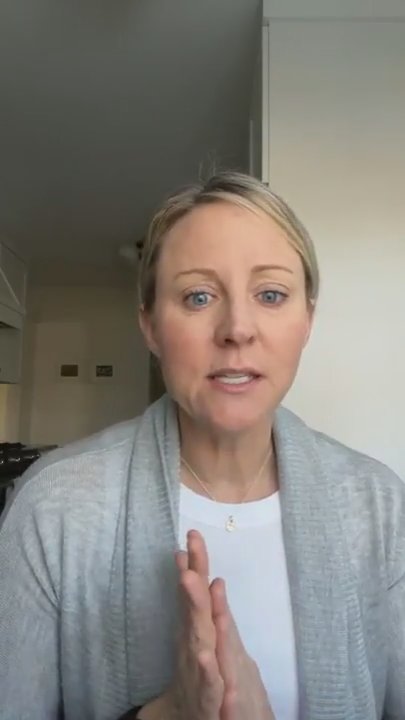
What it feels likes to be a caregiver and talk to others about it
Shannon is a caregiver for a child with autism. She also has generalized anxiety disorder and she live with CPTSD. We will talk about what it means to be a caregivers and why that can be hard to talk about.
Today we are going to talk about caregiving. We're going to look at the word caregiver and what it is. And then we're also going to say what it's not. Because I think why it can be hard to talks about it is because it is not always what people think.
Shannon Shannon: The word caregiver conjures up a person who is calm and patient. She says in her lived experience as a caregiver, it's someone with a disability. Shannon: My version of caregiving is not always calm or always right. Caregiving never ends.
We will all be likely, in some way, shape, or form a caregiver for someone we care about in our lives. There is no right way to do it. And wanting to talk about it because it's hard is valid. We're going to be talking more about caregiving on Cadre on Thursdays.
Cadre. Good morning. Hi everybody. It is Shannon. Welcome to things we aren't supposed to talk about today. I'm super excited because we are going to talk about what it means to be a caregiver and why that can be hard to talk about. So, for those of you who don't know me. Hi Nikki. For those of you who don't know me, I am Shannon. I'm not a clinician. I'm not a mental health professional. I'm a human being who is a caregiver for a child with autism. I also have generalized anxiety disorder and I live with CPTSD.
I've been in therapy for a year. So I've spent a lot of time learning how to live with all of those things and that is the perspective that I'll share my content from. Alright, so today we are going to talk about caregiving and we're going to do two things in this time together. As you can see, I'm incredibly professional. My notes are on paper towels. So I promise you they are legitimate, even though they're on paper towels. Hi Alec. Good morning. Okay, so we're going to do two things today with the word with why it's hard to talk about caregiving.
Number one, we're going to redefine. We're going to look at the word caregiver and what it is. We're going to maybe redefine it a little bit. So we're going to say what it actually is and then we're also going to say what it's not. Okay. Because I think why it can be hard to talk about it is because it's not always what people think it is. Good morning, junk food junkie. Good morning, guys. Thank you, JC. Paper towels, baby. This is the way paper towels are the future. Okay? So I want to talk about what a caregiver is.
So I am technically, according to the world, a caregiver because I take care of a child with a disability. But when I, as a human, think about the word caregiver and I think about what that conjures, conjures, conjures, conjures up in my mind, to me, it is a person who is calm, it is a person who has the answers. It is a person who for some reason I envision, you know, someone who is taking care of someone who's laying down or they're sitting right there. You come to this other human, you care for them, you know exactly what to do.
You have all the answers. You're patient, right? When I think just in a vacuum, what a caregiver is. Those are all the things that come into my mind, right? So again, one more time, I'm going to say those attributes. Calm knows what to do, comes in at exactly the right time, has their s*** together. Let's just say that. So now I'm going to juxtapose that with what a caregiver actually is, in my experience, and what I believe it to be contextually. So break down the word for a second. I'm an english major nerd, so bear with me.
A caregiver, I am to give care, right? Which means that my intention is to be on the person that needs care. Trembling caregiver is absolutely resourceful. Right? They have to figure it out. I give care. I know what to do. All of those things. So what I will say in my lived experience as a caregiver is that my lived experience taking care of someone else. And in my case, it's someone with a disability. It is a lifelong disability. My son has autism. He was diagnosed at two. It will affect the trajectory of his life.
It is. We're coming up to this fork in the road where we have to make decisions about his future. And it's legitimate. But I can tell you that my version of caregiving is not always calm, is not always right, is not always patient, because that's not life. Right. Caregiving is an always on thing. And I'm going to also reframe this for a second to say it is not only caregiver. We all give care to others, right? And yes, there are buckets that affect millions of us. So many of us take care of aging parents.
We are caregivers for our aging parents. We are caregivers of people with disabilities. We are caregivers with mental conditions. Honestly, parents. Parents are caregivers. We don't talk about it in that way. But in reality, your job as a parent is to do all the things for that child that they can't do. That's caregiving. So, number one, I want to reframe that word just to say it may not be exactly how we think of it today, which can make it hard to talk about, because caregivers are supposed to look x way.
Okay? So that's the first thing. The second thing I want to say is the biggest distinction is that in my mind, and I'd love to hear from you all, caregivers take care of moments, right? Like, yes, we're always on, but I think there's this picture in the world that it's about coming and giving medication or it's about making a meal or teaching a skill or whatever that might be, right. Being resourceful, like you said, Trevor Berry, and what can I do in this moment? I think the thing that makes it hard to talk about caregiving and culture is that caregiving never ends.
Right? It doesn't end. I'll talk about my own experience. My son will always have this diagnosis. My son will always need our support, and that's okay. But what that means is that I, as his caregiver, don't come in at a moment, and I'm patient and kind and have all the answers. I don't always know what to do. Right. There are many, many days when something is presented to me that I have no idea what to do with. Right? No idea. And that can make me feel bad, because then I believe because of this thing I have in my head of what a caregiver is supposed to be like and all the things that they're supposed to do, know how to take care of me, you know, have all the answers, all of those things, then I can start to look at myself and say, oh, my God, you're not doing a good job.
You suck, Shannon. Why can't you be that caregiver that you're supposed to be? Junk food junkie says caregivers aren't just a person who takes care of someone who's terminally ill. Exactly right. Parents, grandparents, aunts and uncles, older siblings, absolutely. 100%. And that is exactly my point. So, for all of us, we are all caregivers in some way, shape, or form. Some of us are caregivers of people in a more consistent way. And that's great. It doesn't change what's needed in the moments when you are caring for someone else, even in our own brains, to say, I'm giving care to this person, I love this person, I'm doing my best with this person.
And I might not always look patient and kind, and I might not always know exactly what to do. And I used to tell myself this when my son was really little and I was so struggling in the beginning. And I would say, you know what, Shannon? How would you know about all the things that come along with autism? You wouldn't. You didn't get a class in it. You didn't get a course in it. And I would say the exact same thing for every single person out there who is a caregiver, we're not taught how to do it.
Junk food junkie. If your grandma or grandpa or aunt and uncle siblings takes care of someone else, there was no education that they went through to say, like, cool, I got it. I got a master's degree in this. Now I know exactly what to do. That doesn't happen. So I believe that is why it can be difficult to talk about caregiving to others. Is it can feel like a downer to say, hey, this happened in my life because it's just part of your life. And so I just want to tell you that if you feel like that as a caregiver, you're not doing anything wrong, right?
You're gonna want to talk about it. It's part of your life. That's okay. And it doesn't mean you always have to have your stuff together. And it doesn't mean that, you know, there's a right or a wrong way to do it. So those are the two things I just want to leave us with today. As we think about caregivers, whether that's ourselves, whether that is people we know in our world, or whether that's someone who, you know, who is talking to you from that perspective, just know that caregivers, again, are many things.
It takes on many, many, many forms. We will all be likely, in some way, shape, or form a caregiver for someone we care about in our lives, period. Number two, there is no rulebook. There is no right way to do it. You're not doing it wrong. And wanting to talk about it because it's hard is valid. So that's what I want to say today. I think. I think I got through all my notes, guys. I mean, you can check me later, but we're going to be talking more about caregiving on Cadre on Thursdays, starting in a pretty consistent way.
On March 8, we're going to bring some more people to the platform who live this experience as well, so we can help each other normalize talking about it and reframe it as just part of our life. So, you guys, thank you for joining me. Jungfoon junkie, Nikki Chummerberry. Alec, it's so fantastic to see all of you. Thank you for being part of the Cadres fair. We will see you back here soon, and I hope you have a great day. You're doing a great job being you. Bye, guys.
Reactions and comments are for members. Joining is free and takes a minute.