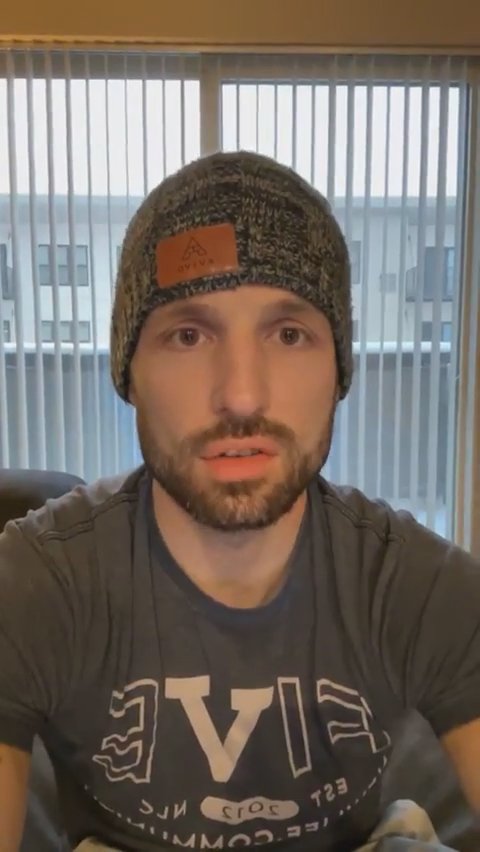
Join me every Sunday evening to set the tone for the upcoming week, with stories that bring out the serenity inside all of us!
Jason Lennox is your resident recovery champion. Here to share with you about all things recovery, mental health, well being in general. We're getting a little surprise here at the end of March.
A couple of the most important three word phrases that I've ever used. They're both related to a very special person in my life. He's no longer with us. He passed away in 2014 to a motorcycle crash in Colorado. Here are the three words that have incredible power behind them.
In this world, we feel like we have to have all the answers. Are there addictions? Are there things that you really want to get better at? And maybe you just don't know how. That's a hard spot to be in. But it is the first step, in my opinion, to be able to do something more meaningful.
Next week we're going to tap into that with three more words that I will say made even more of a difference in that I don't know. There's a release there with that. Have an amazing, amazing week. Stay warm.
Happy Sunday to the Cadresphere. Jason Lennox here. I'm coming to you from Minnesota. If you are in Minnesota with me, you see that we've gotten a bunch of snow. We've had a very mild winter here, less snow than I can ever remember and less cold than I can ever remember. But we're getting a little surprise here at the end of March. So anyhow, but it's still light out. So I've been hanging inside all day. Again, my name is Jason Lennox and I'm your resident recovery champion and here to share with you about all things recovery, mental health, well being in general.
And I wanted to start, I have two parts. I want to do one part this week and then one part next week, but a couple of the most important three word phrases that I've ever used, that I've ever heard and that I will ever think of. And the first I want to ask you starting this week, if I had to ask you what's one of those three word phrases that I'm thinking about that's the most powerful out there? What would you say? What would your answer be? You can drop that in the chat. You can say that, you can think that or you can not play along at all.
But I'm going to give you a second to think about the three most important words that you can think of that I might be referring to. And I can tell you that all of you, whether you're watching this now or you're watching it later, you all got those three words right. Because either you literally said the three words, you said a different three words, which implies the three words, or you literally said, I don't know. Because you don't know. I don't know are the three words that I think about and three words that have incredible power behind them.
And I want to give you a couple examples. I was thinking earlier about this time. I actually went to a recovery meeting on Friday and we talked a lot about how people come in and have to admit to certain things, being powerless, this is all psychological component of the disease of addiction, substance use disorder. And this always takes me back to this story. But I'm going to tell you a couple, and they're both related to a very special person in my life. His name is Scott. He's no longer with us.
He's my cousin. He was my older cousin. He passed away in 2014 to a motorcycle crash in Colorado. And I grew up idolizing him. He played baseball and I was three, four, five years younger and would always run around tagging along just wanting to be on the field with them. And the first story I'll tell you is pretty funny, actually. I think I was eight or nine and I'd been begging to just play on the team. Thank you, Sherry. It's good to see you here. I've been begging to play on the baseball team with the big boys, and he finally let me do it and he said, all right, kid, here's a shirt, here's a white shirt.
We're the oatana Raptors. That was the baseball team. You can have number 29 because that was my birthday and it's the number I wanted. So go home, here's your shirt, and we'll meet back here tomorrow, and we'll get playing. And so, not knowing, again, this is where, I don't know, comes in. In this instance, again, a little bit funnier because it's way back. But I take the shirt home and I take a sharpie to it, and I'm eight or nine years old. And by the way, it hasn't gotten a whole lot better in my adult years.
I still have terrible handwriting. So I tried drawing out this massive two and then this massive nine on the back of this white shirt, and it is atrocious. And I show up the next day and I got my shirt on, and my cousin's like, what the heck did you do, man? No, that's not how we do it. We got to spray paint this thing. We got to draw the stencils, and I'll fix it. We'll fix it. He gave me a little slack. Cut me a slack. We got a different jersey for me. And I went on. So that was the first story I remembered.
Wasn't even going to share that, but thought that was a little funny compared to kind of the latter part of the story. The second, I don't know, story I have with my cousin Scott is actually one of the most meaningful. I was 21 years old. It was 2008, maybe summertime somewhere, somewhere in there. And as a little context, I had been struggling with drugs and alcohol for a long time by 21. I started when I was twelve and got really bad by the time I was 15 or 16 and had a really, really rough stretch from, I'll say, 16 to 24 when I ended up in treatment.
But I'm 21 years old, and my cousin, we're sitting on his back porch. It's a Saturday morning in Oatana, Minnesota, and I'm already half in the bag, I'm loaded, I'm drinking a bunch of alcohol. I don't know what else I was doing, but I was not in a good spot. And this is a cousin who actually struggled quite a bit with drugs and alcohol in his own life. And he still had the wherewithal to approach me that morning and say, jace, why are you doing what you're doing? I mean, you've lost your father to this thing.
Your grandfather is on his way out. You've seen this destroy your life over and over and over, and we're all watching you do it, man. Why do you do this? Why do you gotta be drinking Saturday morning? And I don't remember what I told him. I told him something, some sort of lie, just like I usually did. But I do remember that that was the first time in my life that internally, when he asked me that question, my answer was, I don't no. And that was a really, really, really hard spot for me to be in, because while it was probably the best spot I could ever be in, in terms of recovery, it was the worst spot I could ever be in terms of my life and the hope and the despair I felt, because not knowing why I was doing what I was doing, he was right.
In the face of all things that were happening in my life, with my family history, just with where I was in and out of jail, I kind of exited my son's life. I was just as bad as I ever was, and I had all the desire and willpower put forth to try to not go down that path, and yet I continued to do it. So I say that was the best point in terms of my recovery, worst point in terms of my life, because I went on for the next three years not really thinking there was a different kind of life and thinking that my destiny was my father's destiny, and that I would leave this world sooner than he did at the age of 39.
And that was a really, really tough way to live life. But I say that was the best spot in terms of my recovery, because it was the first time in my life I stopped pretending like I had a different solution or like somehow I could beat this disease that was beating me over and over and over. It was the first time because I said those three words, and again, I didn't say them out loud, but saying them to myself, accepting that I didn't know I didn't have an answer, was the first step to actually getting me to a point where maybe there was a different kind of life.
Because that's the game that we play over and over. There's a recovery, there's recovery literature, and on one of the pages, it says, we come up with hundreds of different alibis and reasons for why we do what we do. And some of them sometimes make sense, the lives we've lived, the pain we're dealing with, and just because. Maybe it's just fun to go out and party all the time at those young ages, but the reality is, none of them make sense. And every once in a while, this book says he may tell the truth, and the truth is that he has no more idea why he does what he does than you do.
And that was the point I was at, and it was long before I read that, but that's where I was at 21. And again, that did not mean. That did not mean that I was going to go on and all of a sudden succeed, because I. I said I didn't know. But it was the beginning. It did open the door for me to stop pretending like I had all the answers for this kind of thing. And I got to believe that whether you're here and you've struggled with substance use, you are struggling with substance use, mental health, all kinds of different addictions out there.
It's not just the substances. We talk about money, we talk about food. Everything is in front of us all day long. And the first step for me, that huge step in those powerful words, were, I don't know, there was such a release of having to pretend like I knew it all again. It felt like I was destined to die at that point, but at least I stopped pretending to have the answers. And that was so key. So key for me. And so I ask you, as you go on and go on through your weeks, what it is that you might be holding on to, what it is that you might.
Because in this world, we feel like we have to have all the answers. I lead teams and divisions and programs. I've helped in many, many ways in the substance use disorder space. And so I'm in a position where I feel like I have to have the answer a lot of time because people are coming to me. That's the world we all live in, though. We all have to have the answers, and we're all being compared and all these things we make up. So think about those things. What are they? Are there addictions? Are there things, things that you really want to get better at?
And maybe you just don't know how. That's fine. That's a hard spot to be in. That's a hard place to come to terms with. But it is the first step, in my opinion, to be able to do something more meaningful and to get out of that. And next week we're going to tap into that because I have a second part of this with three more words that I will say made even more of a difference in that I don't know. I don't know is the beginning. But there were three more words that would transition my entire life and get me to a place where I'm able to speak with all of you versus being buried 6ft under maybe next to my cousin.
So I hope you've all gotten something out of the I don't know and hope you all realize that it's okay. And sometimes it's more than okay. And sometimes it's necessary to not know. That's why we have people around us, because there are people who do know. There are people that know. They've traversed these journeys ahead of us and we get to utilize them. But that won't happen unless we come to terms with I don't know. So hope you can say that a little bit. It's fun. I've said it probably 20 times here.
It really is. There's a release there with that. So think about in your life where you know where you can say I don't know and where you might be struggling. And just know that there are many people out there who've been there who've done that and we'll continue on. So come back next week. Three more words. Might have an idea what they are, but if not, then you'll have to come back. You should come back either way. Check it out. Thank you, Sherry, for your words and everyone else for joining watching on replay.
Reach out anytime with anything. See you in a week. Have an amazing, amazing week. Stay warm.
Reactions and comments are for members. Joining is free and takes a minute.