How to manage your anger so it doesn’t ruin your relationship.
"It's been a really good day. I am just enjoying the spring weather. And just a side note, I'm actually in a Zoom meeting right now for a training about how to help first responders with mental health "
Today, Jarrett gives you seven tips on how to manage anger. I think that anger arises because it's a need for self preservation and self protection. Whether you're being angry and expressing that, or you're receiving that in a relationship.
The first tip is to recognize that anger is a signal. Second is to identify what is your primary emotion. Third is to acknowledge the damage caused by anger outbursts. Focus on repairing and rebuilding trust in the relationship.
Your next tip is to try the opposite way of communicating when you're angry. Take that pause right. Think about what you want to say. As painful as that can be, use your words and communicate.
Next month, I will start talking a little bit about what is toxic in relationships. If you have any questions or examples of toxicity in your relationships, send it my way. I hope you guys are having a wonderful day.
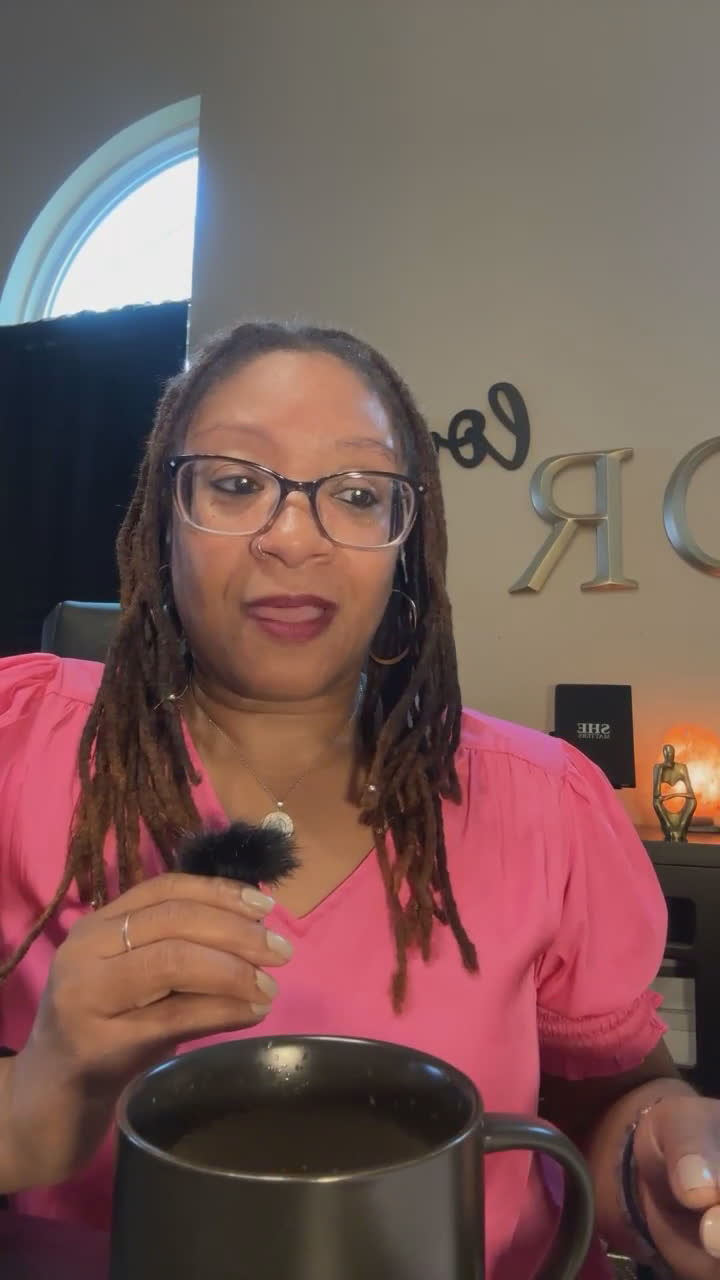
Hey, y'all. I got my coffee today, but I have no coffee. Drama. Can you believe it? Finally. It's been a really good day. I am just enjoying the spring weather. It's not too cold, not too hot. And just a side note, I'm actually in a Zoom meeting right now for a training about how to help first responders with mental health. So that is playing in the background, but I have it muted. So if you see me looking over there, I'm just checking to see if they're calling on me for anything. But I'm here, and we're talking about anger again.
Hello there. I have really been doing a self reflection on my own anger and just wondering, how did I get to this place where anger has erupted at certain points in my life and how I expressed my own anger? I will say just kind of looking back at my journey with anger, I don't think I was ever an angry person growing up, but I do remember when I first experienced domestic violence. That's when my anger kicked in. And so that got me thinking about anger showing up when I needed to protect myself.
And I think that happens for a lot of people. You know, we question why someone so angry. I think that anger arises because it's a need for self preservation and self protection. Hello there. So today I'm going to give you seven tips on how to manage anger. Whether you're the person, you know, being angry and expressing that, or you're receiving that in a relationship and that relationship. Again, it could be a friendship, it could be a romantic relationship, a family relationship. So, yes, they're not calling on me.
We're good. All right. So the first tip I have, and I've said this in other lives, is to recognize that anger is a signal. So your anger indicates something doesn't feel right or something's not okay, and you feel the need to speak up for yourself. It's a way of self preservation. So recognize anger is not bad. Anger is a signal. Number two, I want you to identify what is your primary emotion. So we have talked several times about anger is what is on the surface, and there's other emotions underneath.
Anger is a secondary emotion. What is your primary emotion? And it might take you time to pause and think, what do I really feel right now? So a good way to start to learn new words of how to communicate what you're feeling and to identify what you're feeling is to use a feelings wheel. It sounds so juvenile, right? Like, I need to use a feelings wheel to say how I feel, but it's so helpful. You can see on the feelings wheel other emotions that are connected to anger or emotions that are connected to sadness or happiness.
And as you learn new words to use, you're learning a different way to communicate with the person that you're upset with. The third tip I have for you is to acknowledge the damage that may have been caused with anger outbursts. Anger is powerful, and I think about the power of a geyser. So anger is something that is really under the surface, and when it erupts, it is damaging. So that geyser, it's boiling underneath the surface. People think about the volcano effect, but I look at it differently.
I like the power of water. And with that geyser, something just clicks, and we don't have control over it. We don't know when it's going to happen. And when it explodes, it's hot, it's powerful, and it burns. It burns us, and it burns the other person. But at the same time, we might feel good if we're the one expressing our anger. So just be aware that your anger sometimes causes damage. And following that, your next tip is to focus on repair. So acknowledge, yes, I may have hurt someone because I expressed my anger in a way that wasn't healthy.
I need to repair that relationship. I need to apologize. I need to acknowledge why I was angry and why I expressed it that way at that time. Focus on repairing and rebuilding trust. So if you think about your friends and your romantic partners, this is something that came up for me recently in a session with a client, is we are easily offended when our friends and our romantic partners hurt us because we chose them. And we chose them with the idea that we could trust them with our emotions, with our physical safety, all of that.
And when they hurt us, we're confused, and it might cause some anger. So focus on repairing and rebuilding trust in the relationship and think about how you can protect the other person and how they need to protect you. So if you felt unsafe where you express your anger, what was it in that conversation or in their behavior that made you feel like you couldn't trust them or you couldn't protect yourself and you trusted them to do that for you? So look at that. The next tip I have for you is develop a secret word or phrase when you need to take a pause in your conversation.
So, conversations, when there's anger involved, it gets heated, and sometimes it erupts very quickly. You might need a little code word with that person, especially if it's your romantic partner. It could be as simple as, hey, let's go get some coffee, or, hey, I need to go get some skittles or I need some ice cream. You know, whatever it is that's nice and sweet, that indicates this is getting to be too much. I need to step back. I need to take a break. But I will advise you, when you take that break, communicate the need for the break, but also communicate that you intend to come back to the conversation and take that pause.
And sometimes the person that hears that might assume, oh, you just need five or ten minutes, you'll be fine. You'll cool off. But what if you need longer than that and it's okay if you do? So if you feel like I need more than ten or 15 minutes, I'm still hot. I'm still heated up about this situation. I need more time. Check in. Just text them, call them, say, hey, I'm still going through it. I am not in a safe place to communicate right now. I need more time, but I will come back. And I think what that does is it creates a safe space and intimacy in the relationship, even though there might have been damage that occurred already.
And so that is part of repairing and rebuilding trust with the person that you're in the conversation with. Your next tip is to try the opposite way of communicating when you're angry. So if you get angry and you typically explode and you're using big gestures and loud words and cursing and yelling, try your best to do the opposite of that. Take that pause right. Slow down the way you're communicating. Think about what you want to say. But if you're the person who typically will shut down when you're angry, try the opposite of that.
Take that pause and think about what do I need to say right now that I'm not saying? As painful as that can be, use your words. Use your words and communicate. I'm upset. I'm sad. I'm frustrated. I feel like you hurt me. I feel like you left me alone. I feel abandoned. Whatever those feelings are, use your words and communicate. So again, that tip is to communicate in an opposite way that feels natural to you and what you've been doing to express your anger. So I will ask you guys, who are there, have you used any of these tips before?
Do you have a tip that you want to share? If you can just comment in the chat there, I will say for myself, I have been surprised how anger showed up for me. So I'm going to tell y'all a secret. I remember a time I got really, really mad at a boyfriend that I was dating. This is way back, okay? Much younger years. And I had never expressed anger so aggressively. I would say, and I'm gonna remind y'all, I'm short. I'm only 411, so there's not much I can do or I felt like I could do at the time. But I was so mad, and I wanted him to know.
I was so upset with him. I remember picking up a candle and chucking it across the room, and I actually hit the window and broke my window. So I was upset with myself because, dang, I just ruined my candle that I loved, and I also broke the window. Now I got to pay for that, all because I got so upset. And I did not manage my anger in that moment. I didn't say what I felt. I showed him how I felt. And if I would have taken time to step back and say, I am hurt by you, I don't trust you anymore. I can't believe you did this to me.
If I would have used my words, I would have saved my candle and saved some money trying to get that window repaired. So just try it. I want to thank you guys for tuning in again. Next month, I probably will start talking a little bit about what is toxic in relationships. So if you have any questions or examples of toxicity in your relationships, send it my way. I'll try to do a deep dive if I need to on some of the topics that come up, but I hope you guys are having a wonderful day. And make sure you get your coffee.
Bye.
Reactions and comments are for members. Joining is free and takes a minute.