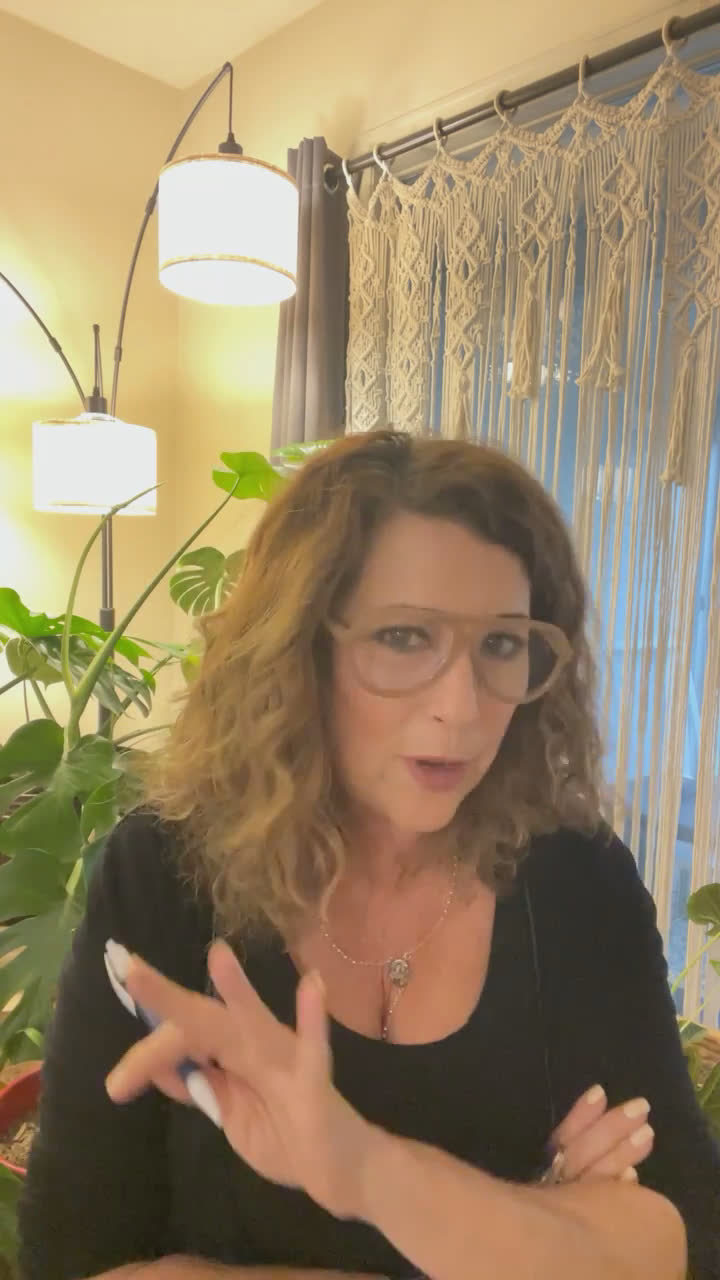
This week we will be talking triangles. Changing unhealthy dynamics isn’t easy. Triangles are the smallest, most stable relationship structure, but each triangle comes with its own roles and challenges. Bowen’s Theory of Family Dynamics helps explain why sometimes “two isn’t a party” and “three isn’t a crowd”. https://www.thebowencenter.org/triangles
All right. How are you? How was your weekend? Happy happiest of Sundays in Minneapolis.
Comedy Centered is a weekly meetup topic, plus share, 06:00 on Sundays. This week's topic is alter egos. I encourage you to share, chime in on the chat.
Bowens theory is that the smallest, most stable unit in these situations is a triangle. Triangles are everywhere. There is no escaping triangles. So we create these triangles to help relieve tension.
When it's a high stress triangle, that's when the original side outsider, moves out. Through a series of this triangulation, they can ultimately become the person who is now in between the dyad. Only through understanding and through grace can we make changes.
When we try. to move around, sometimes the only difference between triangulation and being in a triangle is someone's motivation. These are really, really important when you're talking in the context of recovery.
"I tried to triangulate out my own addiction. Everything was getting scheduled around my drinking and my, and my relationship, and then everything else. Everything else work, other things became outsiders, " he says. "I'm just sharing information in kind of a humorous way "
"It's always about motivation. What's the motivation behind what's being done? " says author. Why is exercise so important for mental health? Well, when someone's pivoted out. That causes physical problems, anxiety, high blood pressure.
Is there stress in the triangle? And is there a way that we can kind of look at it and go, huh? What's the source of the stress? And what's the topic we're avoiding? The relationships that matter are the ones that are closest to you.
I don't know if anybody. No one bet on sharing any thoughts they had for their alter ego. Maybe next time. Want to share if they've named their alter alter ego and found a little outfit for them? Um, next week.
But we're going to talk about individuation. How we feel about ourselves being able to present our authentic selves outward. And throughout the week I'll be sharing some chats and some fun stuff in the posts. We will see you next Sunday.
All right. Hey, Cadre family. It is I, Tiffany Norton. How are you? How was your weekend? Happy happiest of Sundays in Minneapolis. Well, I'm in Hudson, Wisconsin, and it's dreary and rainy, and I kind of love it that this sounds. It sounds strange, but in. In my recovery path, one thing I've really appreciated on the weekends is, hi, jewel. Jules. Rainy days, because I kind of feel like it's a free pass on productivity. Like, you don't have to get as much done. There won't be as much pressure on Monday.
Like, what did you do? Like, did you barbecue? Did you do all these things? You know, were you social? Did you go outside? Did you meet people? You don't have any of that pressure when it's raining. No, I didn't. I stayed inside. It was fabulous. Hey, Alec. Welcome. Hey, thanks for joining. Welcome to Comedy Centered. Welcome, welcome, Anna. Hey. This is going to be a weekly meetup topic, plus share, 06:00 on Sundays. That's the plan. And we're going to basically, these are things that. I am a stand up comedian here in the Twin Cities.
I've also been on the road back, you know, trying to cope and overcome with my alcohol disuse disorder, among other things. And what I found in the last two years while I've been unpacking my own stuff was that a. There's a lot of resources out there that I wasn't aware of, and I just like sharing things and giving people little nuggets when I can. But a lot of the reasons why I was using alcohol were actually attempts at solving problems. I had not developed proper problem solving skills, clearly.
And so. Oh, hey, Shannon. Welcome. So we're going to talk about some of the stuff that I think is interesting in this comedy centered every Sunday. And I encourage you to share, chime in on the chat. This is, of course, a safe space. I'm not a licensed psychic, psychiatrist, psychologist, any of that kind of stuff, but I will talk about those matters a bit. But, of course, if you're ever, ever, ever, and I've been there, if you're ever really, like, it's bad, please, please, please reach out. Please reach out.
Okay. But it's gonna be a fun topic, I hope. When we left off last week, we were talking about alter egos. My alter ego is Patricia. Patricia is kind of a boss lady. Patricia is my alter ego that it's kind of my masculine energy that comes out when I need to do something harder. I have to kind of pull myself out of my own personal pity party. Patricia is mean. Patricia wears a pantsuit. So if you did have any time to consider what your alter ego was over the course of the week. You know, I share in the chat.
You can, but let's kick it off. So, triangles. Okay, now, we're not gonna get deep into math, because God knows that is not my forte, but I stumbled across this concept, and it's funny. I've talked to a couple people about it since. Bowens theory. Family theory. Family dynamics. Bowen's b o w e n. Bosher. Yes. Family theory of dynamics. And one of his core principles is that. And this is not new research, but it's getting a fresh set of eyes, and people are realizing how important some of this research was, because when we're entering family dynamics and social dynamics in general, his theory is that the smallest, most stable unit in these situations is a triangle.
He refers to a two person relationship as a dyad. Okay, so that's two people. Let's. You know, we'll use a dating example, right? It's a. It's two people meet, they're attracted, they start dating. That's the dyad. Right. But then stress is kind of happening in the diet. All of a sudden, there's tension, and the two people don't, in the diet, aren't really ready to confront wherever that tension is. So we have a tendency to bring in a third person and to create a triangle through the triangle. There's benefit in it because we're able to release some tension.
Okay, so here's a very common example. You're having an issue. Let's say there's a co worker that you don't care for, right? You can't really go right to the co worker, necessarily. I mean, there's a lot of, you know, there's hierarchy. There's a lot of politics in play. You can't really dissolve the tension with that coworker directly. Right? But the tension's there. So what do you do? You gossip, or you tell another coworker about that person, or you talk to your spouse about it, right? And so it's a way to diffuse that stress.
And those are okay examples, right? And there are good triangles and bad triangles. Triangles are everywhere. There is no escaping triangles. You have a husband and a wife. They get married, and they have a child. That's a triangle, you know? And so we'll. You know, that's. That's kind of the gist of. Of what we're talking about. So triangles, according to his theory, in a nutshell, are the most stable, smallest of the groups. And we have, like I said, many, many triangles and families are made up of all of these triangles, right?
So we create these triangles to help relieve tension. And the reason why we're releasing the tension is not, is because for some reason or another, we don't necessarily feel that we can have that. That direct interaction with that person. Okay, so once the triangle has too much tension in it, that's when it's gonna start spreading a little bit. Right. But nothing gets resolved necessarily by bringing in this third person. So in good times, you've got a dyad, and maybe you've just got, like, that best friend who's the neighbor that comes in and, you know, and is kind of like the.
The stress relief. Like they. They come over for the barbecues or whatever, and. And, you know, you joke around, and so the two people on the diet, they're considered the insiders in that group. And then you've got the one outsider, right? Your friend, or, you know, maybe family member or whatever, right? So. But when the stress levels in the triangle reach, like, the moderate or the, you know, mild to moderate level, what can happen is that there is a shift. The two people acting, the initial insiders will use as a term the initial insiders.
One of them is the stress is too much between the two of them, and they start moving outward more towards the outsider, and then the outsider starts moving upward in the triangle, mediating between the two sides. Does this sound familiar in anybody's dynamics at all? I know I've done this many times. Right. And so what happens is the insider is now an outsider. The outsider can watch the stress play out between the former outsider and the current insider. Okay, so. And these triangles aren't necessarily.
Oh, hey, bronze, metal. These triangles, though, are not necessarily. How do I want to say it? I mean, they're always. There's always the give and take, but it. They're not always people. It's anything that really can kind of come into a relationship. And I'll unpack that a little bit more here, but I'm getting ahead of myself. Okay. I get so excited when I start talking about this, and sometimes I forget, like, lay it all out first. But anyway. Okay, so that's mild to moderate stress. Mild to moderate stress.
Your former insider starts moving to the outside position. The outsider trying to help keep the triangle together, and stress free goes in and starts negotiating on behalf and trying to relieve the stress between the two people. Okay, so. But when it's a high stress triangle, that's when the original side outsider, moves out. Okay. The original insider and outsider were fighting, but now the original outsider, through, you know, a series of this triangulation, they can ultimately become the person who is now in between the dyad.
I don't know if I'm. Let me see if I can clarify this with better. For better, with an example. Okay. So a person I used to know, and this is a safe space, and I. You know, I'm using this from a practical example for my life because I want to be able to convey the point it is not to malign anybody ever. I'm not. I'm not. We all do things, and only through understanding and through grace for ourselves and others can we make changes, right? But we have to understand these patterns. I have. I've. I.
Long ago, I had a friend who was one of those friends who was always, you know, always kind of looking today, but never really had somebody in their life, right. And. But I always noticed that they were always pair up with these other couples that they were always doing. This person was always doing something with another couple, right. And I would see this triangulation play out sometimes in the sense that this would be the person that, oh, I should. This would be the person who is just the tag along.
But then there's a fight, you know, between the husband and the wife, and she's the best friend. So then the wife tells her, like, oh, God, you know, wow. And there was, you know, I'm not gonna go into what you can imagine. And the wife is very upset, doesn't want to confront the husband yet, but doesn't know what to do, turns to the friend to relieve the stress, the stress. The friend, the outsider now takes this on as their cause and goes to the husband and is like, you're gonna do this and you're gonna do that, and you're gonna do this and you're gonna do that.
Right? And. And it. I saw a repeating pattern of. Of this reinsertion into the middle of this dyad, right? So that is not what we would call a healthy triangle, and we could even maybe make in that argument. And I don't. I'm not a clinician, like I said, so I'm not going to say what someone's behavior is or isn't. I'm not going to label it, but it could almost be misconstrued as something called triangulation, which is a verb. Okay. And we're going to talk about that as well. But you're looking for triangles, so let's think of some basic triangles, right?
Husband, wife, they have a child. A common example would be husband and wife. They have the child, husband and wife, there's a lot of tension. Maybe there's money stress. Maybe the baby's really fussy. Maybe they're both not really sure they made the right decision on having a kid or whatever, right? So then the husband becomes very involved with work. The wife becomes overly involved with the baby. Now the triangle almost becomes the wife, the husband, and the husband's work, right? And then the husband, the wife, and the baby.
So now there are these interlocking triangles. So this pivoting of the insider. Outsider, the reason why we have to be cognizant of this stuff and why it matters is what's, like, the worst gut kick. And we can all think of a time when I bring up something like this, and I hope I don't upset anybody, but when you felt like an outsider, somebody who was an insider in a group, you were the insider in a triangle. And for some reason, now you're out and you've been pivoted out somehow, that you were in the dyad, you guys brought in the outsider, and now the outsider and the other person, our besties, and now you're out in the cold.
So when we try. When. When these move around, sometimes the only difference between triangulation and being in a triangle is someone's motivation. Are they. Are they. Are they trying to get. Are they trying to compensate? Are they. Are they trying to insert themselves into this diet? Because they themselves are insecure, and this takes the pressure off of them thinking about themselves, they can involve themselves in someone else's relationship. You know, it's hard to say everybody is different, you know, but these are really, really important when you're talking in the context of recovery, at least I think that they are.
Um, because in what I alluded to earlier and what I getting, like I said, getting ahead of myself from my own personal life, there was a lot of tension in my marriage before it ended. And my husband, my ex husband is an amazing father and an amazing guy. He's a good guy. That was never the problem, right? It wasn't. And because he was such a good person, I felt like I was such a bad person that I wasn't happy in my relationship. So I didn't know what to do with this information. And it's never a good feeling as a human being where you think that everybody thinks that your spouse is a better person than you are.
Right? And so when I look at it, I was doing that I was attempting to, and not in an unfaithful way, but bringing in my best friend and telling her all about what was going on. And then she put on the cape and went in and said, you need to treat her better. Right? Like, I. I got an advocate to go in and help me with the stress. I wasn't doing this consciously, mind you. Of course not. But. So I tried a lot of things like that, you know, where you complain to someone, but how, you know, you're an unhealthy one.
How, you know, you maybe are triangulating yourself or you are being triangulated, is people talking behind each other's backs a lot? If. If you're constantly talking about the person behind their back or someone's constantly talking about you behind your back, that's a, you know, an indirect form of manipulation. And, you know, you might want to look at the motivation behind that, that type of behavior. So, anyway, so I tried, personally, in my life, many different ways of reducing the stress in my diet, because I did not want to have a divorce.
I did not want to divorce. My parents divorced. And it was God awful. They fought in court for years. I mean, almost a decade, back and forth. It was nuts, right? So I just thought that was the worst thing I could put my kid through. I didn't want to do it, you know, therapy, the whole bit. A therapist that. They're a therapist now, that's a healthy triangle. Bringing in a therapist to relieve the stress that the dyad can't handle anymore. That is appropriate if you are connected with the church or affiliated.
And a spiritual leader. Yes. Someone neutral. Someone. Right. You know, absolutely. Those are great ideas. So. Sorry. Diet coke addiction alert. But the. So we brought in anyway, therapists tried it all, friends. And I started noticing that that was when my drinking started ramping up. Now, I had drink, and I had nice and nice grammar, Norton. It's not like I hadn't suspected that I had problems with drinking, because it wasn't like I would drink all the time or every day, but when I would drink, I would drink too much.
I would drink to get drunk. I wouldn't drink to just like, in my mind, it was like, what was the point of having one? Why would I just have 200 calories for no reason? I'm in it for the buzz, you know, that doesn't do anything. What's that worth? I'm not paying $8 for that. You know, terrible reasoning. I. Obviously. Right. But what hit me in my recovery journey, and especially when I hit this, and I was doing some journaling, which I highly recommend, just to get to the root of some of your stuff.
I realized that I was in a. I was in a triangle. My husband was in a triangle and he didn't realize it. And alcohol was my. The dyad I was in, I had shifted him kind of, to outsider. And I was in a relationship. I was in a dyad where the. My addiction and I were in the primary relationship. And eventually everybody kind of became the outsider. Anybody who tried to come in to my dyad and tell me my dyad was wrong, well, that's not okay, you know? But then when you're living and you're with an addiction all the time and you're.
And you're doing it a lot, you even get into a bad relationship with your own addiction, right? So then you look at your addiction as if it's a person. You're like, you're the problem around here, you know? What? And what did I try to do then? I tried to triangulate out my own addiction. So what I did was I'm like, alright, well, I'll stop drinking for a little while, then I'll spend more time with people, right? And so then I'm now isolating out kind of, right? My drinking, not solving the problem, not resolving anything, right?
I'm saying that's the problem, not me. That is the problem. So now I'll be in this relationship over here, this new relationship that I just started, and then that. That's what I'll work. That's where that. That's what I'll work on, right? That's. That's what'll fix it. New diet. But guess what? My addiction's just hanging out over here because my addiction's got all kinds of time. It's not like it's a real person. It doesn't have other things to do. It doesn't. It's not going to meet someone out and about at a farmer's market and leave me, right?
It'll always be there. It's right there. And so then the dyad. Now we got stress in this new dyad, this new person. I'm like, ugh, you know who starts looking good again? My bottle of white wine. My addiction. My chardonnay is right over there. And I think to myself, well, I could triangulate you out, human, because I could just go right back into a very, very meaningful relationship with my wine. How about that? And so when I put it together, that when it got to the point when my primary relationship, because really, the primary relationship you're in is whoever you're spending the most time with or whatever you're spending the most time doing.
And there's an old proverb, and I don't remember where it comes from, but, like, whatever you take into your hand, you take into your heart, right? And I'm not, like, all religious or nothing, but it's true. And I was, everything was getting scheduled around my drinking and my, and my relationship, and then everything else. Everything else work, other things became outsiders. So, thinking about how we are in triangles, I mean, how many triangles, right? We've all been guilty of a triangle with Captain Morgan, right?
Absolutely. You know, and. And that's the thing, too, because you know how destructive it is. You know what it's doing. You. You're not stupid. You're not stupid. But as I, you know, as I was saying last week, and this is, you know, I've learned this from Gabor, mate. This is not me. I didn't come up with any of these ideas. These are all brilliant, brilliant researchers, and I'm just sharing information, I hope, in kind of a humorous way. And I usually, I always throw myself under the bus because I am a comic.
And I think, you know, living out and telling people how it went down for you, you know, it helps destigmatize some of this stuff, right? But it really did the. Now I'm getting. God dang it. See, I got. I got a compliment in the chat, and then I got all flustered. I get flustered by compliments. I really do. Anyway, what else is, I got? Okay, so. But with triangles, man, it. If you. When you. When I opened my eyes to the fact that that was my primary relationship, that was, that was, I was scheduling everything around that, and I was rejecting other things for that, and I was isolating to that point.
And. But addictions are always. They stem from there. I found it. They stem from, um, a solution, actually, an attempt to solve a problem. You. You've heard it probably a million times. You know, something works until it doesn't work. Well, it's true. You know, drugs, alcohol, food shopping, these are all self soothing. These are all dopamine release, you know, things. These are all activities that release dopamine. And if you have a naturally lower dopamine level in your system due to medical reasons or things beyond your control or maybe, you know, long term use of any alcohol and things like that will keep those lower.
And when you use those chemicals a lot, your body literally becomes not even so much addicted to the actual components in it. But, you know, the, the. It triggers those dopamine receptors, and you're getting addicted to that ding. That ding. You know, just like putting something in a shopping cart and Amazon, like, ding, ding. It's a little dopamine hit, you know, and our brains are wiping for it. We love it, love it, love it, love it, love it, love it. So hard not to get enough of something that almost works, as they say, in recovery.
So. Okay, so thinking about triangles. Thinking about recovery. Okay, so what do you do? Like, how do you. Okay, great, tiff, thanks for bringing this up. Now, I got to analyze everything in my relations, you know, but, but I think. I think once you kind of start looking for some of these triangles, you're going to, you're. You're going to be like, wow. Okay. All right, so here are some common phrases and stuff. Like there's. And roles, right? And this is a very, very, very high overview of the overall theory that he shares.
Because there's eight whole things and there's a bunch. But, like, the victim, right? The peacemaker, persecutor, scapegoat, mediator, confidant. You know, these are all words we're kind of familiar with, right? Oh, yeah. So interesting in the chat. It's so interesting to think of all the things we depend on to fix relationships that are complicated. Yep. Social media, tv, exercise, shopping, et cetera. Right. Well, it's all for. We're all trying to release stress. We're all trying to release anxiety.
But that. Oh, that was my other point. So. But why is this so important for mental health? Well, you know, when someone's pivoted out, when you, when you feel like an outsider, that causes physical problems, anxiety, high blood pressure. I mean, that is a deep, deep trauma. Yeah. Exercise is mine. Yep, yep, yep. It's. It. But, you know, there's dopamine habits, but anything can. You know, it's like. But are you, are you getting the dopamine from this thing to escape other things? It's. It's always about motivation.
What's the motivation behind what's being done? What's the underlying. Is it, do you have to exercise because if you don't keep your body looking a certain way, you would have less value? Is that it, or is it. I have to exercise because I feel so fantastic after I sweat and I, you know, and I run and I just get it all out. You know, those are two different motivations. But when you see both of those people running, you don't know which, who's operating under what or some combination of the two, you know?
Um, I'm not an exercise person. That's not how I. I like walking. I like walking slowly in non allergy season. That's what I like. Okay, good. Um, so we covered that. We covered that. Um, yeah, let's see. I think I covered a lot of that. I don't know this inside. You know, I don't have a big production budget. It's just. Nope, I know. And it's falling, so there's that, too. Okay, cool. Oh, my God. The time is just flying by. I want to see if anybody has thought in the chat at all about a triangle that they're in.
Is there stress in the triangle? And is there a way that we can kind of look at it and go, huh? What's the source of the stress? What's the. What's the topic we're avoiding? I think this is especially pertinent, too, since, you know, now this Cadre, which is fantastic, and it's an app, so you can literally, you know, get us anywhere on the go while you're traveling. You know, you're not alone. But we're, most of us, I think at least a lot of us are based out of the midwest. And in the midwest, you know, stress, social stress.
Oh, God. That's why we need football and potlucks and things to talk about and weather. We have to have weather, we have to have something. Something to keep the conversation going. Anything but talking about ourselves. Right. Keep it moving. I don't want to get anywhere near any feelings. Right. But, yeah, think about that, and think about how maybe it wouldn't be the worst thing in the world to talk to the person that you're in the triangle with about the stress you're feeling as opposed to, you know, trying to avoid it.
Right. What's the worst that could happen? Maybe writing it down, maybe practicing, you know, but easier said than done. And also, I also have to, must absolutely put that caveat in there. If the person that you're thinking about is somebody that has done things that aren't forgivable yet or maybe ever, there is no need to necessarily revisit that to figure out the motivation or to figure out how to release the stress in that relationship. The. The relationships that matter, the triangles that matter, are the ones that are closest to you, and those are the ones you want to, you want to start with.
Right. Oh, Jules has got a share. Oh, thanks for sharing. My two triangles, me kids and work, and then me husband and work. Right, right. And how do you show up differently in each of those triangles, right? They're both dependent on you in some way. So which. Which ends of the. Of the triangle are you in? And, you know, what are the diets? What are the core insiders? Who are the insiders in those triangles? And does someone feel like an outsider? You know, often the kids in a relationship end up being the scapegoat for, you know, the problems in a relationship.
You know, I'm not saying you, Jules. This is personal experience, right? This is me understanding the dynamics of my parents. And then we. Then they had, you know, my little brother was born, and then I. The. And I can see it now. The triangle changed. They were like, oh, no, she's fine. It was him. Now it's him, you know, so I just moved her on. But this is not, you know, this is not to malign my parents. We. We all do the best we can, but so much of this stuff is on autopilot. And that's one of the things, too, that there.
This is, this has generational influences. Even though you may, as a child, never have met great grandfather, your dad, through a series of events, may still end up acting just like great grandfather. Right. And carry on those same things. So. So only without, you know, we just have to look at it. We just have to be willing to look at it. We don't have to willpower ourselves to do anything, but we have to be willing to look at it and hold it and. And not judge it, but also not turn away from it and act like, you know, it's not there.
I'm really good at acting like things aren't there. I use my kids to get out of work. Yeah, right, right, right, right. I'm sure your kids use you for stuff too. Nope. I gotta go home to mom. They're in a triangle. They're. They're in triangles with you too. You know, like, it's just dunk, dunk, dunk, dang. Dunk, dunk, dunk all over the place. Right. Okay, so. Oh, man. It's already 630. Okay, so I'll wrap up. I don't know if anybody. No one bet on sharing any thoughts they had for their alter ego.
That's okay. It's all right. Maybe next week. Maybe next time. Maybe next week. Someone wanna. Want to share if they've named their alter ego and. And found a little outfit for them? Um, next week. We're gonna just keep with the theory, though, a little bit with, uh, bones. And I'm learning and reading along with you guys and preparing. So yeah, I mean, I also, um, in the show post too, I will put in a link, um, if there's something I think that's pertinent, if you want to look ahead to, um. Yes.
Yeah. Willing. Yeah, we talked about that last week. Willpower. Terrible word, will. Willingness. Yes. Willingness is a positive one. But we're going to talk about individuation. Individuation. It's kind of like talking about being an individual a lot, but individuation as it pertains to balanced family theory. And this is just kind of like how. How we feel about ourselves being able to present our authentic selves outward. Right? So I hope everybody felt like this is authentic. This is definitely me being authentic hourly for sure.
At least I hope you guys think so. Yeah. We will see you next Sunday. And throughout the week I'll be sharing some chats and some fun stuff in the posts. And if you like what you saw, please comment, and we'd love to see you next Sunday. All right, take care, everybody. Be safe. Oh, it's counting down.
Reactions and comments are for members. Joining is free and takes a minute.