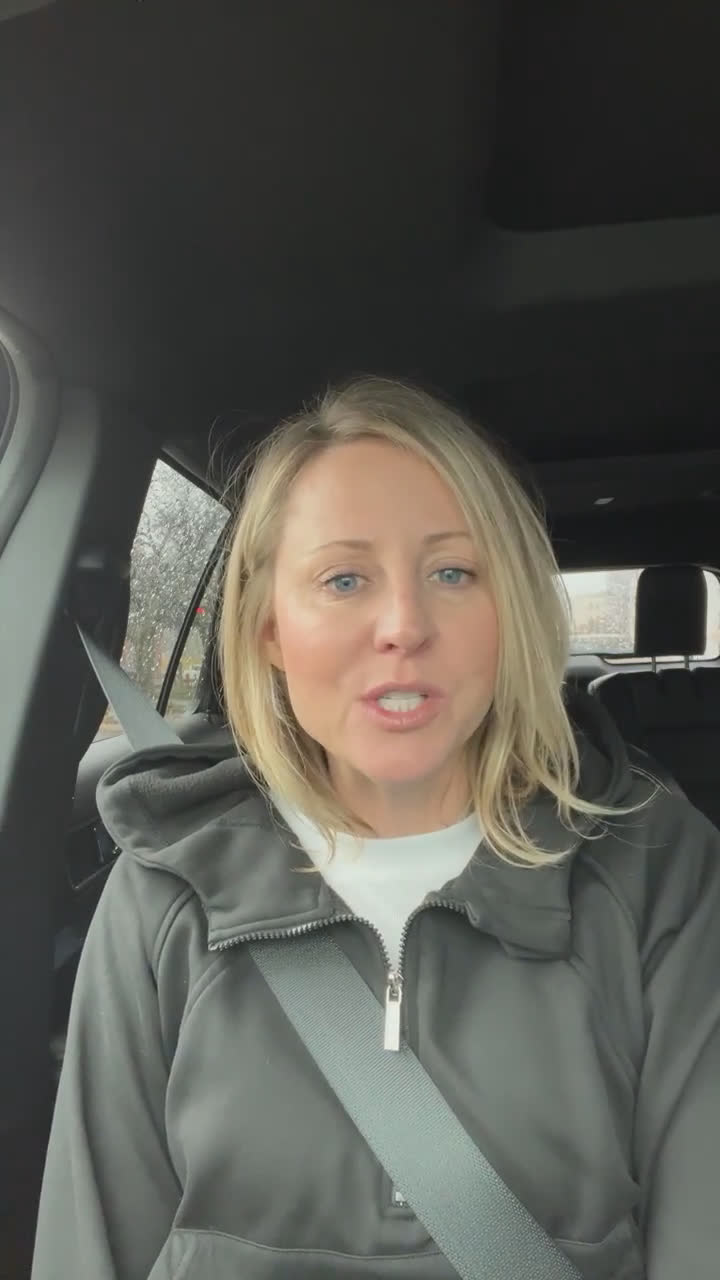
Join me to talk about the things that are hard to talk about in culture, like what it means to be the caregiver of a child with autism.
Shannon: Happy Thursday. Caregiver day here on Cadre. I'm a person with a lived experience of parenting a child with special needs. My self appointed role is to share my lived experience as a caregiver.
If you're a caregiver, what do you owe others about your person? And how do you know how to manage that line? Each of those parts come with feelings. How do you manage yourself and the response of others around you?
Colleen Lindstrom: Let others see the humanity that exists within this caregiving relationship. Jules: It's okay to think about all these things. Take the solace in knowing that we're all just weirdos.
Holly Lindstrom is coming up next. She is a caregiver of both her mother with dementia, as well as her son. Minnesota Autism center clinicians are coming up today at noon. We've got girls mentorship showing up this afternoon. And last but not least, Michael and Paul.
Cadre, good morning. It is Shannon. Happy Thursday. Caregiver day here on Cadre. I will give you all a second to join. I'm sitting here in downtown Minneapolis. It is a rainy day, and we're hoping that this is just the prelude to some mayflowers, even though I guess it's technically may starting yesterday. But, yeah, it's a rainy day here in Minneapolis. But again, we'll take the spring all day long over the winter. So good morning. For those of you who don't know me, my name is Shannon. I am not a clinician.
I am not a mental health professional. I'm a person with a lived experience of parenting a child with special needs. I have generalized anxiety disorder, and I have CPTSD. So my self appointed role here on Cadre is to come to you to share my lived experience as a caregiver so that you can feel less alone in your role as a caregiver. I tend to do that more as a. I share sort of, like, what's happening in my life to do that. I feel like, for me, it's nice to see and hear others talk about stuff that I go through, and so that's what I offer to you.
So today, what I'm going to talk about relative to caregiving is. And you'll get it. If this is you, right? If you're a caregiver, what do you owe others about your person, and how do you know how to manage that line? So what do you owe others? How do you manage others relative to your person? Right. Usually, if you are a caregiver, the person you're caring for is either someone who has a health condition, someone who has a disability, someone who maybe is going through dementia. Right. Innately, we're caregivers because we are taking on someone who needs care.
So there will be something that manifests in them, likely visually or socially, with others. I think I'm making this more complicated, that it means that it. I can't talk. Needs to be. I will use my own example. My son Wyatt is 14. He's almost 15. He has autism. He manifests in the world as having autism, meaning his behaviors at times manifest as moving around, pacing a little bit. Right. So he has behaviors that if you're out in the world and you were to see him on the street, you'd say, oh, yeah, yep, something's happening.
Right. And so I think for all of us as caregivers, maybe it's a parent with dementia or Alzheimer's where there's a manifestation of that in the world. So one of the things I know that I have thought about a lot is how do I manage a couple of parts? How do I manage myself relative to others reactions? How do I manage the dignity of the person I'm caring for? And how do I manage sort of like the cultural response to whatever's happening. Good morning, Jules. I'm so happy to see you here. Thank you for being here.
So those are, like, the three things, right? How do I manage myself? How do I self regulate? How do I manage the respect of the person I'm caring for? And then culturally, how do I manage sort of the response of others around me? And I think it's tricky, right? And I think each of those parts come with feelings. And especially as caregivers, we probably feel a lot in general, right? Like, typically, if you're a caregiver, you're going to be cognizant of others emotions and feelings. So I think the first one, let's start with you.
I think one of the first things you can do, one of the first things that I do to remind myself is a, yes, my person has something, and I have something, too, right? I'm not technically neurodivergent, but for any of you who know me, you know that I've got some things, right. Colleen is on this live stream, and she knows I've got some things right. I don't have a diagnosis of autism. I don't have a special needs diagnosis. I do have generalized anxiety disorder, which means that if I'm in a room and I am anxious, that manifests for me in movement, right?
Much like my son, who has a diagnosis. So if I can reframe in my head, like, yeah, my son is pacing, and my son might be sort of disruptive to the norm of the world. And guess what? Every single one of us is that in some way, shape, or form, because as humans, we are allowed to take up space in the world. So when you think again of managing it relative to yourself, it's sort of first self talking yourself and reminding yourself that, like, hey, I'm allowed to take up space in this world. I'm allowed to move my body.
And that means every single one of us is allowed to have that same respect, and so does my son. And for him, that manifests a little differently, and that's fine. So it's sort of like having to go through that self narrative when at times your reaction can be, oh, I have to, you know, I have to manage this relative to culture. The second piece, sort of honestly is connected to the first, which is, how do you respect and honor your loved one with the thing that they're dealing with in the world? With dignity.
And I think it is. It's pretty connected, right? It's. I don't even want to say letting them be them, because who am I, right? Who am I to let anyone do anything? It's embracing that. It is supporting the things they're doing that are amazing and the parts of them that are fantastic. And it is probably, honestly, as I'm speaking out loud and talking to myself, I think it's very much the same thing as number one, which is acknowledging that they're human, that gets to show up in all of their glory, and that's it.
Right. And so it's not incumbent on anyone else to tamp that down. It's not incumbent on anyone else to change the way people show up, because we're all allowed to do that. And then I think the last one is culture, and this one is hard, because I think there's so many stories in culture, and you guys all know, right? We live in a culture of everything's okay. How are you? I'm good. Oh, no, I'm good. I'm great. I'm fine. I'm fine. And I think it's a little bit of letting others see the humanity that exists within this caregiving relationship, because what I have found is that sometimes people will stare, sometimes people might, you know, you can sense they're having a feeling.
And what I have found in my lived experiences is that often what they're actually doing or seeing isn't negative. It's curiosity. And oftentimes, it's in service of something that is relevant to them in their own life, meaning they might see something happening with you, and it's actually a window into something that is happening to them. And so it's like a little bit of peace for them to be like, oh, my gosh, I'm not alone in this. And so I think it's just sort of overarchingly being able to take a breath as a caregiver and say, whew, I have feelings.
The person I'm caring for has feelings. The world has feelings. Oh, my God. That's a lot of feelings. And being able to just say, yeah, we're human. That's it. Right? And, Jules, you said you do the same thing when your anxiety hits. Your leg bounces up and down 100%. I stretch, which can be, you know, can be disruptive at times. I stretch. That is how I calm my body. And that is how a lot of people calm themselves. So whether it's the loved one you're taking care of, whether it's the culture that you're living in, my overarching message today, is that a.
It's okay to think about all these things. It's okay to be like, oh, God, how do I manifest this? My person with this thing that I'm caregiving for is doing this thing that can be, you know, different in culture, and just to take that breath and say, like, yep, 100%, guess what? I do weird things. Guess what, Colleen Lindstrom, I'm gonna call you out and say you do weird things. You actually don't do that weird of things, but we all do. Okay? And so, Jules, her leg bounces. Great. That's freaking beautiful because it means that you are processing and living in the moment that you need to be in.
So I encourage you, if you ever stressed by that. I used to get so stressed by it when my son was young. I felt like I had to apologize for everything. And now I just choose to say we're human beings, and that's the truth of it. And so I hope that might give you a little solace for yourself. Colleen, thank you for acknowledging you do do weird things. We all do. Exactly right. So take the solace in knowing that we're all just weirdos. I guess that's the message. I guess that's the ultimate message.
We are all weirdos, and that's a beautiful thing. All right, friends, Holly Lindstrom is coming up next. Sandwich generation. She is a caregiver of both her mother with dementia, as well as her son. We have got Mac clinicians. Minnesota Autism center clinicians are coming up today at noon to share some thoughts from a clinical and human point of view. We've got girls mentorship showing up this afternoon to speak about young girls and the population of girls that need support and caregiving. And last but not least, Michael and Paul, who you cannot miss.
She has the most. I will go out on a limb and say she has the most amazing hair of anyone on Cadre. And if you want to fight me on that, feel free. m. And report back. Jim. Jim from the gym is here. I love seeing you. You guys are all doing an amazing job taking care of others. You're beautiful people. Continue to do what you do. Be weird. We'll all be weird together and continue to come join us here on the Cadre sphere, and we will take care of each other. Have a great day, guys. See you soon here on Cadre.
Bye, guys.
Reactions and comments are for members. Joining is free and takes a minute.