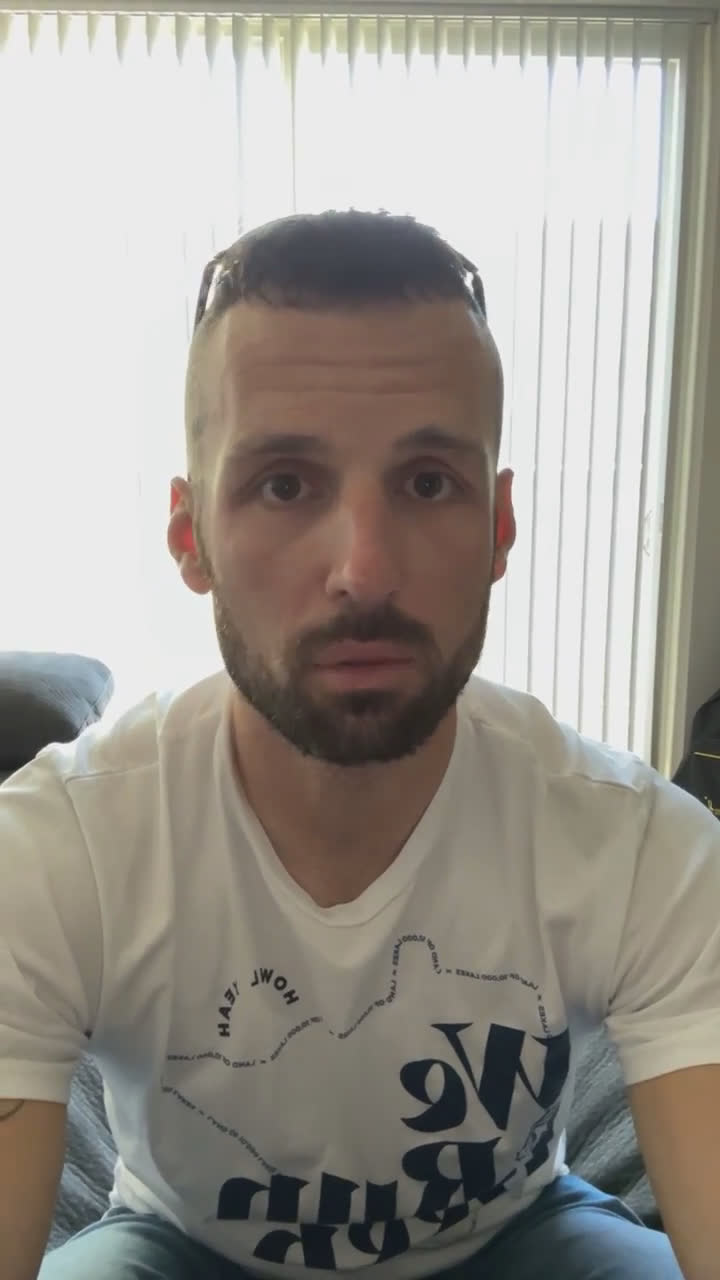
Join me every Sunday evening to set the tone for the upcoming week, with stories that bring out the serenity inside all of us!
Jason Lennox is your resident recovery champion. Here to talk about all things recovery, mental health and well being. The day before Memorial Day.
This is my Sunday Serenity series, and tonight's topic will be service. Thought it couldn't be more fitting as Memorial Day is tomorrow. Service in terms of recovery, I learned very early on was going to be critical. Would love to hear your stories of service.
Service can make or break someone's recovery, and oftentimes does. The second point about service is it can really put things into perspective. When I'm out there serving the world, serving its people, I'm regularly reminded that my life is not that bad.
The cost of service in relation to the return. Me contributing to someone else's life usually costs a lot less and sometimes a ton less than the return and what other people receive on that. It can be so much greater for the receiving end.
Good Sunday evening, Cadre crew. My name is Jason Lennox. I am your resident recovery champion. I'm here to talk about all things recovery, mental health and well being, and, as you'll see, speak, wonder. Good evening. I told you, I promised you last Tuesday when I was wearing my Celtics shirt that I would be repping the wolves here when they play on Sunday. Here. The day before Memorial Day. So happy to be here. I know people might be out and about celebrating. I just came from a family event and we had some good food and was enjoying it.
So, like I said, Jason Lennox, resident recovery champion. This is my Sunday Serenity series, and tonight's topic will be service, fittingly, because as I mentioned, we're the night before Memorial Day, the day that we remember all our fallen heroes, all the people who didn't make it home, who sacrificed everything to fight for our country and to fight for our freedom, and again, didn't get to come home. So I want to take a moment just to remember them and be silent and, you know, think about all those who've had to suffer through that.
All right? Happy Memorial Day weekend. If it's not a happy weekend for you, you know, hang in there, hope things get better. But. Good evening, Jules, Chris, good to see you all here again. Here to talk about service tonight. Thought it couldn't be more fitting as Memorial Day is tomorrow. And again, remembering the people who served in the ultimate way. What I'm about to talk about is service in a different kind. And certainly the service work that I've done over the years didn't have the deadly risk by any means that some of our people face.
I've got lots of family that have served in the military. Both brothers have been overseas deployed multiple times and seen a lot of things, but they both got to come home and still have them around. So grateful for that. But service in terms of recovery, I learned very early on was going to be critical. And thankfully, I had people that were there looking out for me that were telling me that that was going to be the case. Because, you know, in treatment and oftentimes we hear in, especially in today's world that we got to do everything.
We got to take care of ourselves. We got to do for self, self, self, self. Those who have struggled with substances, alcoholism, things of that sort, we know that that was the life we lived for a long time, and we became very selfish and self centered. So while I don't disagree with that because certainly we have to do things to take care of ourselves, you know, I was reminded early again by the people who were there to mentor me at a sponsor, recovery sponsor. And he said, you know, I was about nine months into recovery, and he said, you're ready to sponsor other people and mentor and show people the way.
And I told him, you know, in treatment, they told me that we should find someone who's been doing this for a couple years that should be an ideal sponsor. So by my calculation, I have about 15 months before I need to do any of that. And he looked at me and said, I don't care what they told you in treatment, this is something that you are. If you want a chance at this kind of life, you need to do it. If you wait two years before you start helping other people, you're probably not going to see two years.
And I was so grateful that, that he shared that. And by the way, for all those watching, would love to hear your stories of service and what that means to you and of course, comments along the way. Love to make this interactive. So sponsor says, you're going to do this. And he actually, many times for some of those things. The first guy that I mentored in recovery was a match that he put together. I walked into a room and he said, you need a mentor. You need to mentor. You guys are a pair. So it was kind of the story with my sponsor, my recovery mentor, and I'm glad it was.
He'd signed me up for service commitments at meetings I wasn't even attending. And he would call me after and say, oh, by the way, you're now the district treasurer here for the next two years. I know you weren't there, but I went ahead and voted you in. But I'm so grateful for that. And I listened to that man because he had a life that I could see worked. And, you know, that's, that's what I wanted, so I was willing to do that. So three, three critical components, three key lessons and things that I've learned from service.
I'm going to leave you with the three here. First of all, service can make or break someone's recovery and probably more times than not does. So I say can because not everybody who gets into service ends up staying in recovery, and not everyone who stays in recovery ends up being of, you know, significant service. But I've seen over and over and again, thankfully, I had people there directing me to serve and finding ways to help me serve because it saved the day for me so many times. And when I look around the rooms of recovery and the people I know that have done this over the last 13 and a half years that I've been in recovery, the ones that stick around are largely the ones that find ways to get involved and serve our world.
Again, my sponsor said, your survival, your level of wellness and health and prosperity in this world will be dependent on how much you serve it and how much you serve the people in it. It can make or break someone's recovery, and oftentimes does. Again, the people I've seen hang around the longest are the people that are out there getting their hands dirty and rolling up to sleep and doing the work for others. So that's the first point. The second point about service and what it can do is it can really put things into perspective.
I'll tell you a story about this one, too. And what I mean by that is we all have these brains that like to drum up all the problems and think about all the things that aren't going right in our lives and maybe make our lives just miserable. Service regularly puts things into perspective. When I'm out there serving the world, serving its people, I'm regularly reminded that my life is not that bad. And I'll tell you a story. I was driving. I had started this cancer charity. It was a charity for kids.
And what we would do is we would go into hospitals in southern Minnesota, mostly Mayo clinics. Sometimes we come up to Ronald McDonald House in the metro area of Minnesota. We would bring in events and we would dress them up as superheroes, sometimes as queens, princesses, whatever it was, we would bring events into these hospitals. And one night, I remember driving over to Rochester thinking how terrible my life was going at that point. It really wasn't. But, you know, we all have the days right at the end of a work day, and work's not going that great.
You know, I felt like. I think I had something going on with my car. This was about ten years ago, so I don't necessarily remember all of it. Maybe family, I don't know. But on the way over, I'm just thinking about all the things that aren't really working in my life. I get to this hospital and we're putting these events on, and I remember seeing some of these kids, you know, 4610, twelve, some of them running around with terminal illnesses. And they knew it. They knew that they were not going to get out of this next year or two alive.
And we're hosting this event, and some of those kids who knew that they weren't going to live much longer were running around happier than anyone else in the room. Can you believe that? That anyone else in the room. They were free. They were enjoying moments for that day. That's what we were, the four a day foundation. We would put these events on. And I remember leaving there that night and I just almost, with a little bit of shame, but I was able to snap out of that and say, man, I'm just going to use this as a lesson.
If those little kids that are running around at the end of their lives can be the happiest in the room. I really don't have any business putting my head on my pillow tonight without being grateful for the life I have, for the problems, I would call them, that exist in my life because they were really good problems. To have a job, to have something with a nice car, to have relationships that I have to, you know, navigate some of the problems. So service can always put things into perspective really regularly.
It just reminds me that my life is not that bad. And service is a reflex of the heart. I love that. Speak wonder. I love that. So the final. So again, the first one, it can make or break recovery. The second way, second thing that service can do is it can always put things into perspective. And, you know, speak wonder is contributing in here. Service is a reflex of the heart. It shows, you know, shows some, something inside of us. The last thing I want to talk to you about is the cost of service in relation to the return.
And what I mean by that is service on my part. Me contributing to someone else's life, me contributing to someone else's path usually costs a lot less and sometimes a ton less than the return and what other people receive on that. Let me give you a couple examples in a story just to tie this together. The last six months, there have probably been three examples. And some of, you know, Chris, you're on. I know you experience this regularly. I've navigated some phone calls. I've gotten some calls from random people.
There was one just recently, and she was looking for a placement for her father who was going to go to prison if he didn't find it. She didn't know what to do. She's googling, she's calling, she's not getting anywhere. She just reached out and said, I know that you've got some experience in this recovery and you do some work here. Can you help me? And so for the next several days, we did some back and forth, and I ended up actually one day in the car just calling her on Facebook, messenger, audio, never met this person.
I just said, you know what, I'm going to call her and I'm just going to try to talk her through this. And we talked for a little bit, and then she got what she thinks she needed and she was going to continue on. A few days later, she messaged me just a couple days ago and said, I got my father into this program, and because of that, he doesn't have to go to prison. They've stayed. He was going to be gone for years, and they're giving him a chance. And she's like, I just. I can't thank you enough.
You have no idea. I'm a nobody to you. You don't know me. I have no idea why you would do this, but it's absolutely life changing. And I've gotten to do that kind of thing a few times over the last six months, and I will always pick up the phone and do that. And that's what I mean by the cost, which for me was a couple hours of my life is so much less than the return. I mean, this woman is life changing, right? And her father. And maybe she would have navigated that anyway, but I don't know, maybe she wouldn't have.
And maybe instead of reaching out to tell me that, um, she's seeing her father walk off to prison, so the cost just doesn't even compare to the return and the relative value that it adds. And when I. I'll end with this story. This is the greatest example I learned because I was on the receiving end. My recovery mentor sponsor and his wife, they took me in after I was leaving treatment. I was in treatment for about six months. I left from jail, but I was homeless. I didn't have anything to myself name.
They took me in. It was the greatest gift anyone has ever given me. I didn't know where I was going to go. And if I ended up back in the same houses I was in before with the same people and on the streets, I don't know if I'm talking to you today. So they took me in and they showed me how to live life, and they showed me how to be of service, and they showed me a love and created a new family for me. It saved my life. And when I talk about this to them, you know what they think it was? We just opened our doors.
We had a basement open. We just took you in for four months, fed you a little bit of food, and watched you on your way a little bit. So again, relatively speaking to them, it was nothing. They opened their doors and, you know, something that they'd probably done before. To me, it was the difference between life and death. Truly, I believe that I don't know if I'm here today. And so that's the importance of service. That's what service can do. It can be so much greater for the one receiving than those of us that give.
And again, the example I gave a couple hours of my life, the difference between father going to prison or not. Probably a life changing experience for the daughter. Who knows what that ripples out to be? I received that. I'm so grateful that I was able to receive that, and so grateful that I decide, you know, each and every day that when I can give back and when I can provide that opportunity and contribute in any way, that's what I'll do. And so if you ever find yourself in a position of needing something, needing help, please reach out.
Please reach out. You have me. You have plenty of others on this app and plenty of others in this community. I love watching you all share with each other and showing up consistently. But that's what service is all about. Service can make or break recovery. Number one, service always puts things into perspective. Makes me realize that my life is actually pretty good, or at least not as bad as I thought. Number two, and then number three, man, the value of it. What other people receive is so much more than it costs us and so much more than what we think it is.
We will just never know. And so that's why I choose to continue to give hope. You all have gotten some value out of this, and I hope you all are enjoying a three day weekend and remembering again. All of this service I've shared is nothing compared to people who walk in the line of fire and have made that ultimate sacrifice. And of course, their families, who are the ones that deal with the aftermath. So thank you all to all of you who've served, any of you who've lost anyone, truly have my heart.
And hopefully you take this thing and run with it and serve. It doesn't have to be something major. You know, we give the little smile, we buy the extra coffee for someone, we just tell someone what they mean. Those are the little things that make a huge difference, too. So look forward to catching up to you all next Sunday. Until then, have great.
Reactions and comments are for members. Joining is free and takes a minute.