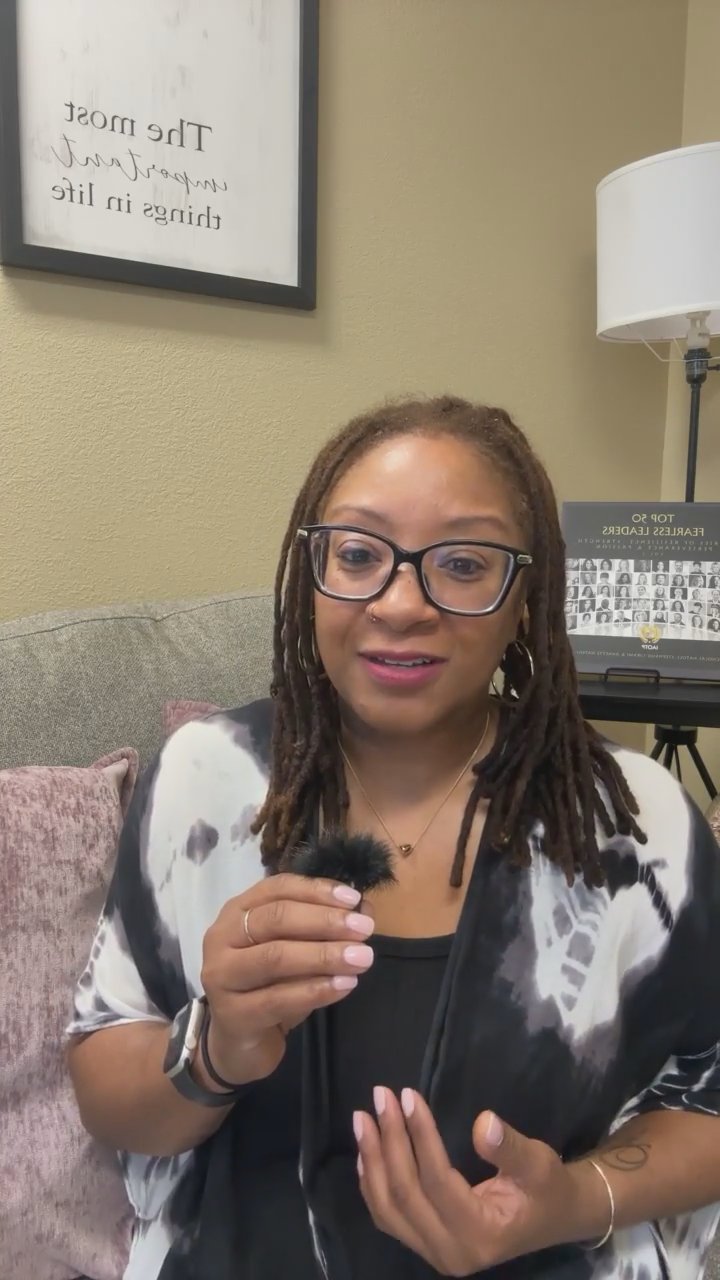
Dr. D discusses what it feels like to cross personal boundaries, linking observations from attending the Indy 500 to reflections on maintaining limits in relationships and deciding when to grant second chances.
Hey, Cadre, what's up? Sorry for the delay. We're going to be talking about boundaries today. Boundaries and what it feels like when we cross our own boundaries. Hope you guys are doing okay.
Anna: I went to the Indy 500 for the first time ever. She asks: What does it feel like to cross your own boundary? Anna: It's important to maintain your own boundaries. Not just for others, but for yourself.
Virginia: We're raised to give second chances and forgive. But when we're talking about crossing our own boundaries, you have to also consider, am I ready to give that person a second chance? Take some time to evaluate where are you with your own boundaries.
Hey, Cadre, what's up? Sorry for the delay. If people are waiting on me, I was trying to log in, and for some reason, I had to make a new live stream. I don't know what happened, but it's okay. I'm here. Hope you guys are doing okay. I do need a sip of coffee because I just got out of a session with a few clients, so my mouth is a little parched. But I will share with you guys. We're going to be talking about boundaries today. Boundaries and what it feels like when we cross our own boundaries. Hello there.
So, I want to recap my weekend. I had a really great weekend. I took a sporadic trip to Indianapolis, and I went to the Indy 500 for the first time ever. Didn't know what to expect, but it was really nice. I do love the sound of the cars. It's really. It's super loud, but you could feel the vibration even when the cars passed by. You could feel the wind from the cars, like, even though you're so far away. It was really exciting, and I love seeing the dynamic of when cars crash and how the race slowed down and just the enjoyment of the crowd, and I didn't know what it was going to be like.
That was my first time ever. But I saw so many things that I want to share and tying that into boundaries. So if you guys know anything about racing, and I typically think of, like, a racetrack for runners, not necessarily for cars, but when there's a race, you know, there are lines. Let me put this coffee down. There are lines on the track, and those lines are boundaries. Right. And I don't know much about racing. I never did track because I'm the type of person, I'm not going to run unless somebody's chasing me, so I'm not going to run unless I have to.
But I do enjoy watching the sport of racing used to race. I hope you enjoyed that, because I could never do it. I probably would get winded. But with those lines, maybe you can tell me a little bit about it. But with the lines, those are the boundaries. Right. And so I. I do remember seeing, and even on the racetrack for cars, that there would be moments when someone would cut the person off and kind of take over that lane, right. And it was really exciting to watch. But at the same time, I always wondered, what did that feel like when the person got crossed, when that person or that car, the racer got in front of that person, and what did that person feel that got left behind?
Like, oh, my gosh, you just crossed my boundary. You just took my spot. You just, you know, whatever it is, right? And so I started thinking about, how does that feel for us individually? Not when someone else crosses our boundary, but when we cross our own. So think of a time when you've done that in relationships, whatever relationship it was. You know, I can remember several times now, y'all know, if you don't know, I'm gonna tell you. I have been in several toxic relationships. And so I have learned that it's important to maintain your own boundaries.
Hi, Anna. Not just for others, but for yourself. And so I took some time to think about, what does that feel like, to cross your own boundary? And the feelings that came up for me, and tell me if this is something that you resonate with, but there's a sense of embarrassment. Like, oh, my gosh, I did it again. Or there's guilt. Maybe you're sad, high speak, wonder. Maybe you feel disgust. Like, how could I do this to myself again? But the question that really came to mind for me, and I had to write this down.
We might tell ourselves, I let them hurt me again because we crossed our own boundary. So why is it that we internalize that responsibility that I allowed them, I allow the other person to hurt me? That's what boundaries are for. Boundaries are to keep us and others safe. And that boundary can be a rigid boundary. It can be a gentle boundary. Right? And so I'm thinking about some situations in my own life. I'll get personal with this today. Hi, Jules. So there have been times in relationships where when I crossed my boundary, I remember exactly how that felt.
I remember when it happened and how I felt. And so an example of me crossing my own boundary is there have been times when a person I was dating hurt me so bad, right? So bad, where I was like, I'm never talking to them again. I'm never gonna go see them again. If they call me and ask me for one more thing, I'm not doing it. And I would tell myself, and I would be strong about it and confident, like, I'm never doing that again. And then I may not talk to them for a while, but then that person pops up a few months later, hey, how you doing?
And I answer the call. I respond to their text. You know, I invite them back into my personal space. And so it's not that they cross the boundary, because I don't remember ever telling them, don't call me. I just remember shutting down and telling myself, I'm not going to talk to them anymore. So I didn't set the boundary for them. I set it for myself. And how I crossed it was responding to their text, answering their phone call, responding to their email. They want to check on me and I tell them how I'm doing.
I just crossed my boundary. I remember how much they hurt me. I remember telling myself I don't want to do this anymore, but here I am engaging in a conversation with them and crossing my boundary. Let me know if that resonates with you, if you've done that for yourself. And I think that happens a lot of times when there's toxic relationships where you maybe have this sense of, well, maybe if I try it again and it's been a while that it's going to be different, or if I try it this way and I do things differently, I'll get a different outcome and you might find out that that's not true.
So go back and remind yourself, why did you put the boundary up in the first place? Why do we need these boundaries? To protect ourselves. To protect ourselves from getting hurt or from hurting someone else. Right? So think about those lanes that we talked about in the race. Are you staying in your own lane? Are you crossing the lane? And if you're crossing it, why ask yourself, why am I doing this? Do I expect a different outcome? Do I have hope that this relationship might be different this time?
Do I believe that I've changed so I know how to navigate this relationship differently, so I'm not going to allow myself to get hurt a second time. You know, there's so many questions to ask, but remind yourself of those lanes, those boundaries that you need to stay in and remind yourself, you know, it's safe right here with the boundary. It's for our safety. So there's some comments in here I want to go back to, and I don't know how to say your name, I apologize. But you said that you resonate, you feel disappointed and you're also sharing that.
You think because we're raised to give second chances and forgive. Absolutely. And I think that is a cultural thing that we're raised to believe that people are maybe better or. But there are some people that are raised to think if they hurt you one time, that's all they get. You get taught how to have these very rigid boundaries where you don't give people second chances, they hurt you one time, they showed you who they are and that's what you stick by. And I think there's a balance that has to be, um, put in place when it comes to do we allow someone to have a second chance with us.
But I think when we're talking about crossing our own boundaries, that second chance, you have to also consider, am I ready to give that person a second chance, and am I going to behave differently and stick to my boundaries with that person? Right. We can forgive and we can allow people to change, and we are. We might be looking for that sense that, yes, they have changed, but even if that person changed and we didn't, right, we can get triggered by our boundaries being crossed previously, and we might be looking.
So tell me if this resonates with you. You might be looking for moments when that person is going to hurt you because you've already experienced that pain with them. So take some time to evaluate where are you with your own boundaries? Is there something you need to do differently to even identify what the boundary is? Did you put a boundary in place? Did you communicate the boundary? Because there again, like I said, there were times where I put up a boundary for other people thinking that I told them and I never did, but I needed to put up that boundary for myself.
And mentally, internally, I told myself what the boundary was, but I didn't stick to it. So. Hi, Virginia. Nice to have you here. But, yeah, I think I'm gonna stick with this topic of boundaries for the next week or so because there's another avenue I want to talk about when it comes to boundaries. But that's all I have for you guys today. I hope you're having a wonderful day. Enjoy the sun wherever you are, and don't forget your coffee. Bye.
Reactions and comments are for members. Joining is free and takes a minute.