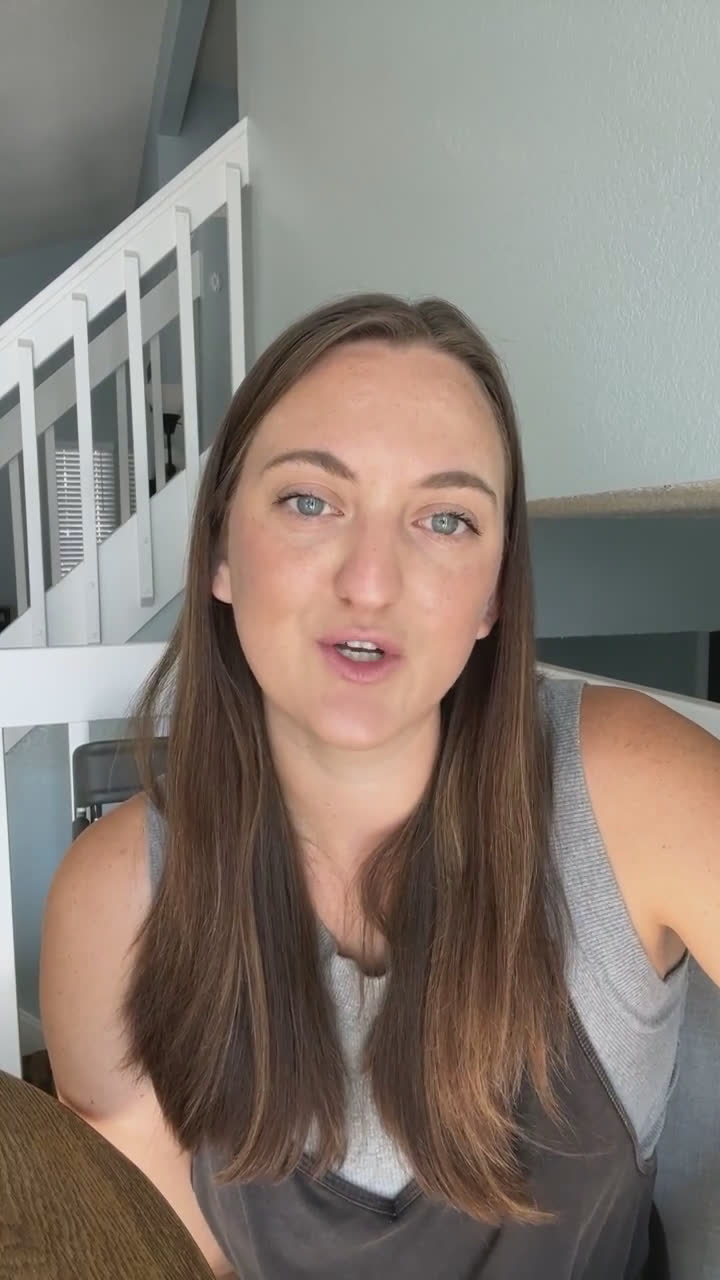
A host debunks the idea of good versus bad foods, arguing food has no moral value and sharing perspectives to help listeners navigate flexible, less judgmental choices around eating and body image.
Coming at you live from Littleton, Colorado. House sitting and dog sitting for the week. Another new, another new background as promised, every week with me. You may have seen a little bit more of an extended title this week.
Are there really good and bad foods? The food that you choose to eat does not reflect who you are as a person. Food's not moral. Never has been, never will be. All of the messy in between is where most of our growth comes from.
Otherwise, even after that, we've got a jam packed day. But yeah, thank you for joining me and I will see you next week. Have a good one.
Good morning, everyone. Happy Saturday. It is nice to be here once again. Week three for me. Coming at you live from Littleton, Colorado. House sitting and dog sitting for the week. So another new, another new background as promised, every week with me. Hopefully we get some people popping in here. I am going to go ahead and just start talking. You may have seen a little bit more to the title this week. And good morning. Nice to have you here. This is a Steph new name. I don't know you, but hello.
Welcome. So you may have seen there was a little bit more of an extended title this week. Thank my previous couple weeks on my lives. And today I really want to talk about are there really good and bad foods? And spoiler alert, I move through the world with the answer to that being no. And I want to share a little bit more about that just to provide some context and perspective and maybe something resonates with you and it's something that you can apply moving forward to kind of help you navigate or adjust or.
Yeah, just take it with you moving forward. Good morning, mother. Wonder if anyone else will pop in? So are there really good and bad foods? I think we all have heard this extensively. Good, bad, healthy, unhealthy, something along those lines, right? That dichotomous language around food. And a lot of times it happens without us really even thinking about it because it's been so programmed into our society and into social media and even in healthcare. And one of the biggest arguments to move away from that, I guess, that we hear, is that attaching morality to food and we're adding a moral value to something that should not have a moral value.
The food that you choose to eat does not reflect who you are as a person and your level of goodness as a person. Good morning, Katherine. And we do not live in a binary world, as JC has put it, if you've ever heard him say that. And the language I tend to use is black and white, right? We don't live in a black and white world. We live with everything in between. So why are we so quick to assign very distinctive opposite labels to food and to movement and XYZ, whatever it is, we as humans have a tendency to do that because it's less messy and it's, it's less uncomfortable to live with very clear cut lanes.
And I want to challenge that because all of the messy in between is where most of our growth comes from. And I want that to be able to be applied when we think about making decisions around food and our bodies and our health, because it helps to take the pressure off a little bit. So a couple things I just want to throw out is considerations. The first is what I already mentioned. Food's not moral. Never has been, never will be. You are not a better or worse person depending on what you choose to eat or what you choose not to eat.
And another thing I see happening with that a lot is we can start to project that onto other people and start to form judgments on other people based on our own rules that we've placed on ourselves, which isn't really fair because we don't know their circumstances, we don't know what they're doing for their health and wellness, mental, physical, emotional, all of the above. And another way to think about this is, I think, fiber right now, right? If you spend any time on the Internet, or maybe you're talking to your doctors, there's a big push for fiber.
We love fiber. I, as a dietitian, love fiber. It's good for so many things. And there are some people in the world who eating excessive amounts of fiber, or even just like what the daily recommended amount your 30 grams of fiber is, would make them feel really terrible. Someone who might have IBd, ulcerative colitis, or Crohn's, that is an inflammation of the GI system. If you put a lot of roughage in there, you're gonna feel a lot worse. So now, is that food good or bad? Is fiber good or bad? Because if a good, right, good food is bad for certain people, that's a really confusing message.
Just like, here's another example. Red meat, full fat, dairy, things like butter, have essential nutrients that our bodies love and can utilize. And there are many people who eating a lot of those foods are going to potentially have health concerns. We know high amounts of saturated fat are associated with cardiovascular disease and risk and lowering saturated fat. So reducing those foods can help those people. And not everyone has those conditions, right? So again, if that good food is bad for those people, or in their mind, that bad food may be good for someone else, that's a really confusing message.
And what you run the risk of with that is then having someone who maybe doesn't have as much experience with watching nutrition or diet, or having those conversations with their doctor or a dietitian or whoever it may be, if someone strives so far after that messaging that they heard from one individual person or maybe a couple individual people, they are going to follow that advice instead of listening to their own bodies and reflecting on how those things are actually making them feel. So that can be really hard and really damaging.
If someone who does have IBD eats a lot of fiber, feels worse, it can increase the risk of malnutrition. It can increase the risk of medical complications. So is it good or bad? What I would challenge is reframing to looking at food as what it can help support. Because we, of course, can be mindful of our health and our overall wellness. And if you have specific lab work you're wanting to improve or whatever, shifting towards how can I honor what I need in my health in this moment? If you were here an hour ago, one of the things that Doctor Charryse talked about was the importance of gut health on our mood, because we know there's connections in that direction, bi directionally, actually.
And so shifting towards instead of this, food is good or bad to the point where now we are either passing judgment or sending confusing messaging or even just allowing space for guilt and shame to creep up because you are putting that morality back on yourself if you quote unquote, mess up or eat something bad. But shifting to thinking about, you know, where am I in this moment? Maybe I've been on vacation. Maybe my digestion's not so hot. I am going to focus on eating something that is going to be supportive of where I am at in this moment.
And in that case, that might be some fiber to help get things moving, that might be drinking more water. It could be. Man, I've had a really, a really hard time with my mental health lately, and I haven't been eating at all. What is going to be helpful for you and supportive for you in that moment is trying to just eat regardless of what it is. That's step one. And then we can layer on all of those more specifically ways to support where we're at. Maybe you have specific goals in the gym or performance goals.
Maybe you're an endurance athlete. Maybe you are, you know, aiming for a PR deadlift. PR, that's one of my goals right now. How can we eat in a way that's supportive of that in that moment? Because it also changes, right? Our health changes across our lifetime. Our goals change throughout our lifetime. So I would encourage you to shift from if you find yourself being caught up in I can't have this, it's bad, I should have this, it's good. Oh, I was so bad today, I need to be good tomorrow. Or, oh, I was so bad today, I might as well like, who cares about the rest of the day?
To get out of that mindset, try shifting towards where am I at in this moment? What is going to be supportive for my body and my needs right now. Can think about tomorrow. Tomorrow we can think about dinner at dinner time. But what can we do right now? And I will leave you with that. Thank you for joining. I'll probably I missed last week in the community tab, but I think I'll probably put some prompt up later today about what's one way that you are going to reframe your mindset around food when there are negative thoughts that come up and go off of that.
So. And if I can figure out how to put a resource in there, I have a resource, too. A little handout worksheet, whatever you want to call it. I am a big, big worksheet handout person. So you'll see those from me from time to time. If I can figure it out, I will. If you want to stick around, we have another live stream coming up in just about 17 minutes from, I think, Jean. So if you wanna stick around for that. Otherwise, even after that, we've got a jam packed day. But yeah, thank you for joining me and I will see you next week.
Same time, different place, probably. It was good to spend time with you all this morning. Have a good one.
Reactions and comments are for members. Joining is free and takes a minute.