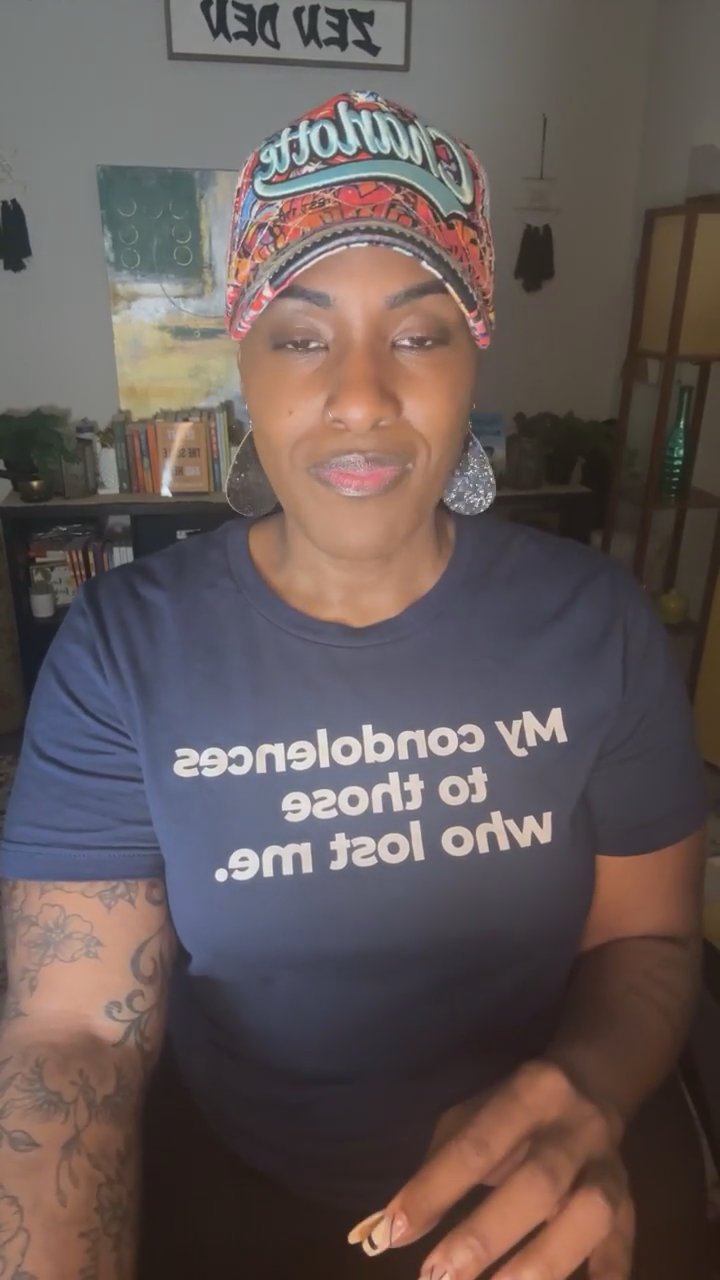
Doctor Charryse, a licensed therapist and mindfulness practitioner, explores the difference between helping and rescuing, who’s prone to rescuing, the fears that arise when stepping back, and five practical ways to change that pattern.
Doctor Charryse is a licensed clinical mental health therapist, mindfulness practitioner, and author. We talk about all things life, but most importantly, how you can experience both peace and harmony if you do the work.
We've been talking about the difference between being a helper and a rescuer. I want to talk about who's prone to being a rescueuer. And then talk about the core fears that you may experience if you try to back away from rescuing. Five ways that you can change your path.
You may be prone to being a rescuer if, number one, you were parentified. If there are any codependency patterns in your life, you may also be prone. Rescuing is a habit that has been built over time. Is it time for you to break the pattern?
What's up, Khadra Sphere? How are you? Like, seriously? I want you to think about that for a moment. We'll get into all of our things, but that's how I want to start today. I want to look you in the eyes and ask you, you doing okay? You taking care of yourself? Making yourself a priority? If not, I'm glad you're here because this is our time to get together, to encourage one another, to be encouraged, and then to move away from this moment and know that better is possible. Welcome to expired mindsets.
I'm Doctor Charryse, if this is your first time here, a licensed clinical mental health therapist, mindfulness practitioner, and author. And we talk about all things life, but most importantly, how you can experience both peace and harmony if you do the work. Come on in. Pull up, as we sometimes say, grab whatever beverage of choice you would like. I am watered up, so I'm just going to be dry here. Say good morning to someone. Good morning to all of those, all of you who are coming in. And yes, you're doing it.
Let me know where you are. What's up, Erie? Hello. Speak wonder. Hello, Shelly. Hello, Joycelyn. Hello. Is it spin? May? Hello, Maria. Good to see you. One quick reminder. Hello, upstate South Carolina. Oh, I'm so glad that you're on my screen as well. It's always good. It's funny, especially those of you that I know from other circles. I am seeing your. I'm seeing you in my head. I'm seeing your face in my head. And I love, love, love this time. And oh, yes, you know, I was like, we need a statement, t day, in case you need this.
My condolences to those who lost me. Sometimes people don't deserve you just being real. What's up, Georgia? Don't get me off. But sometimes people don't. Let's get into part two of where we started last week. For those of you who come consistently, or if you're just picking up where you are, we've been talking about the difference between being a helper and a rescuer. The last live, I think, was really great. Talking about the difference between the two, and I gave you an assessment that you could really kind of score yourself and go, oh, hmm.
Who am I? Wow, I didn't realize, because our rescuing can also be really sneaky. It can just be something that we've always prided ourselves on, something that we do well, something that we think is part of our identity. And we don't always see how it can be harmful or how it can enable other people or other systems. So I want to do three things today. I want to talk about who's prone to being a rescuer, just to give you a little some ideas that I think are helpful and valuable in your own journey.
And then talk about the core fears that you may experience if you try to back away from rescuing or if you feel any guilt when you don't. And five ways that you can change your path. So you may be prone to be a rescuer if, of course, this is not an all exhaustive list, you may add to it. Interact, give me your thoughts as we continue to go along. But here are just four, like, patterns and themes that we see working with other people, or I see working with other people in the world of psychology and in doing a little research around it.
So you may be prone to be a rescuer if, number one, you were parentified. Essentially that means if you were a child parent, if you had to grow up too fast and were given too much responsibility, this could be you had a parent who was an addict, a parent or caretaker, primary caretaker. You could have had a parent who was an alcoholic. You could have had a parent that just wasn't mentally well, and as a result, you had to rescue in order to survive and stay safe. So you learned, I have to do whatever I can to make things better or things will crumble.
So you didn't get the same experience of learning that you could rely on other people. Number two, you may be prone to being a rescuer if you are a highly sensitive, if you are an empath. Sometimes people don't believe this about me. None of you, right? I am a highly sensitive. I am an empath, but I am a healed one. So I can feel that part of me that absolutely wants to go in and handle a situation so I can stop feeling it all. That's what a highly sensitive and an empath does. Oh, this is too much.
I'll do anything to get out of this pain and this emotion. I don't like their anger. I don't like their mood. So you go in and you try to fix things and be nice and, oh, let me do this for them, or let me do this for my boss or whatever that dynamic is, because you're trying to help combat how it makes you feel. And that is one of those subtle, sneaky dynamics of being a rescuer, but it comes at a cost. Three, you may be prone to being a rescuer. If there are any codependency patterns in your life, if there's a part of you that is very enmeshed and desires deep attachment, but doesn't consistently have it.
And number four, if you have a strong desire to be needed, if you find your value and worth in being needed, and it's okay if you do, but you want to meet that need with parameters, then you may be prone to being a rescuer. The core fear when we are in the place of rescuing is if I stop doing what I'm doing, this person or this job, will they still love me? Will they stay in my life? Will they allow me to stay in theirs? Will they get rid of me? Will they find me valuable? So a big part of our rescuing and our desire to rescue is also we see it as a way to be secure, but actually it allows us to be manipulated by the person or the system that knows, oh, they'll do whatever I want if I give them just a little bit of attention, just a little bit of crumbs.
That's why we also see a lot of highly sensitive empath with narcissist because they're hanging off of those crumbs. So being a rescuer will keep you in a loop in a pattern of rescuing, resenting and regretting. I'm going to pause right there. Water or coffee or tea or not. I want you to think about that. Keep this to yourself because this is deepen. You rescue, then you resent the person who is unappreciative of your rescuing, of your sacrifices, of what you've done. And then you may regret being in relationship with that person or system.
But it's complicated. It's not always easy to get out of. It could be a partner or spouse, could be a job that you love. You love what you get to do in the system, but as a result of it, you may feel abused by it at the same time. The thing to consider and to keep in mind today's hard truth is rescuing is a choice. It is not involuntary. It is not something someone makes us do. It might be something they want us to do, but it's not something that they make us do. It is a pattern or a habit that has been in place and been built over time.
Is it time for you to break the pattern? Or are you learning things that you might be able to share with someone who, you know, struggles in this area and you can point them here for support. So here are five things that you can do in order to start breaking loose. One, recognize what's your responsibility and what's not. To stop taking responsibility for other people's problems, responsibilities and feelings. You are not responsible for how someone else feels. You're responsible for how you feel and how you communicate it and how you share it, or whether or not you choose to share it.
But how another person responds is their work, and it does not always mean that you are the cause of it, even if they make you feel like you are. Number three, refrain from giving advice that wasn't requested. I feel like that's the easiest way to get started, is to stop yourself when you're trying to rescue, even lightly. Four, consistently notice when you aren't meeting your own needs, because often time as a rescuer, you're so busy trying to save the world that you are not saving yourself. If I could title this, and I titled it a little different so people know what to find, it would be rescue yourself.
Maybe that needs to be the next podcast, right? And number five, consider how rescuing is actually meeting your own needs. We love to make ourselves believe, well, I have to do this, because if I don't, then what will happen? They'll be fine or not. That's on them. They'll grow, they'll do what they need to do. Those kids are going to be the kids that they are, no matter what. As you can see from that adult child that you're still rescuing, or you just recently stopped rescuing, who hasn't changed.
So if then it doesn't work, rescue yourself. I want you to keep that in mind as you go throughout the rest of the week and we will meet again on Friday. Have a good one.
Reactions and comments are for members. Joining is free and takes a minute.