In this video, Evan, Cadre's Addiction and Mental Health Therapist, shares some of the common landmines people step on in their relationships. By avoiding what he refers to as "relationship blocking behaviors," you can have more vulnerable and healthier exchanges in your relationships leading to more fulfillment. This video is part one, where Evan shares the first four behaviors, so when you are done, check out part2!
The host frames the goal of becoming better communicators across relationship types and explains they identified eight common blocking behaviors. They announce this video will cover the first four behaviors.
This chapter defines control as a relationship blocker, gives examples like commands and punishment or manipulation, and explains that controlling tactics may work short-term but damage relationships long-term.
Using a cable-news analogy, the speaker describes deflection—especially whataboutism—as a common way to dodge issues. They offer an example and a couple's humorous technique ('let's stay in Cleveland') to call out and diffuse topic-jumping.
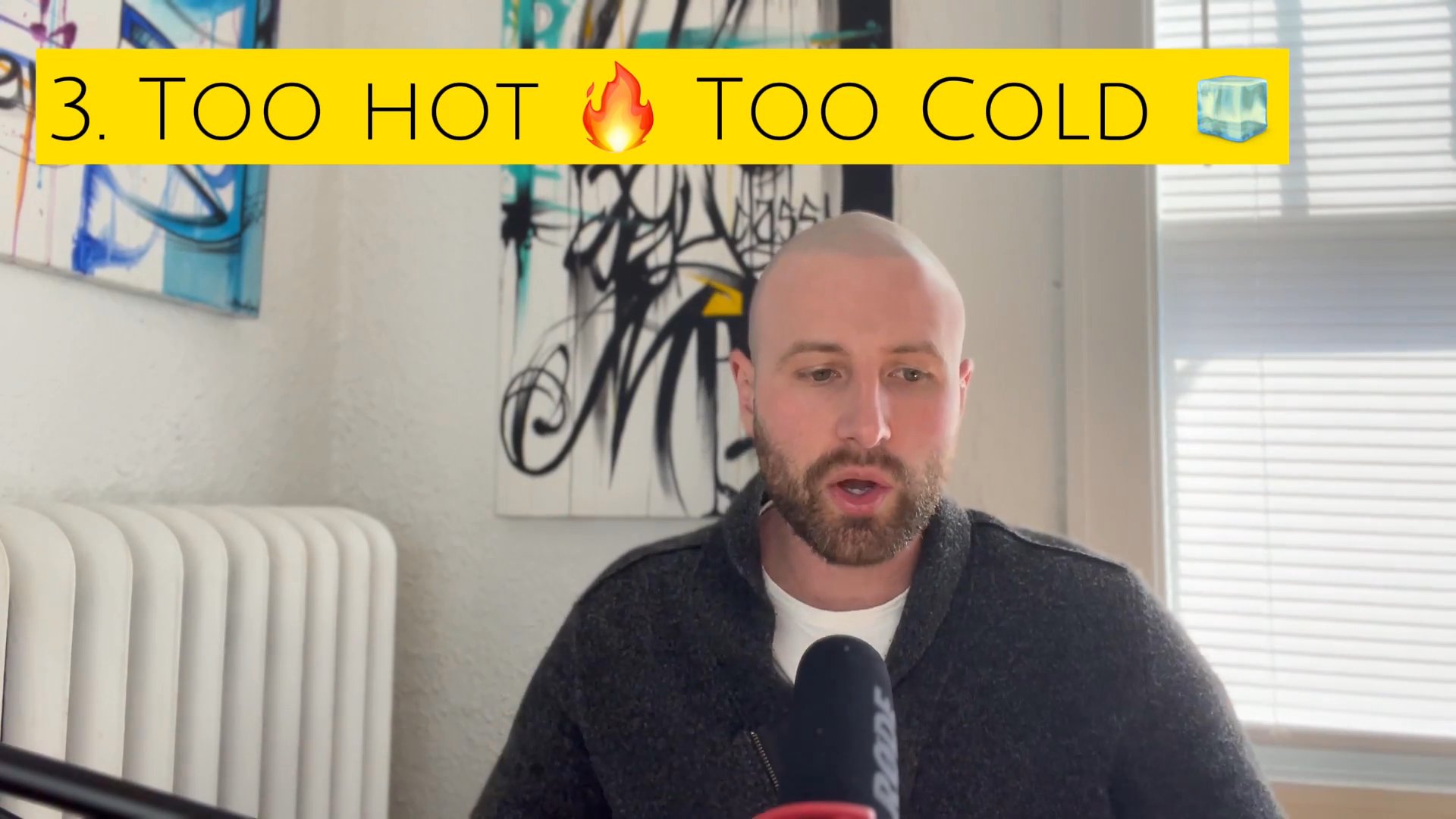
The presenter contrasts 'running too hot' (flooded by emotion) with 'running too cold' (emotionally removed), explaining how each undermines healthy exchanges. They emphasize finding an emotional balance that mixes connection with reason and problem-solving.
Avoidance is presented as a root of many unhealthy coping strategies, with a car-maintenance metaphor stressing the need to address issues early. The host urges viewers to be mindful of blocking behaviors and invites them to watch part 2 for the remaining four behaviors.
I want to take a minute to discuss how we could be the best communicators in all of our relationships, whether it be personal, professional, or otherwise. As a therapist who's constantly teaching effective communication skills, I noticed these behaviors that are always getting in the way of building healthy relationships. Over years of working with families and couples, I got better at recognizing these relationship blocking behaviors, and every time I noticed them, I would write them down. So here is a list of the 8 relationship blocking behaviors, and there's 8 because those are the ones I've noticed so far.
But for the purposes of this video, we're going to go through the first four. The first relationship blocking behavior and potentially the most detrimental is control. When someone senses that they're trying to be controlled, nothing raises their emotional walls faster. Look, nobody likes to feel like they're trying to be controlled. And one example of this is when people use the phrase, you need to do something. Whether it's healthy or not, it doesn't matter what it is. For example, I could tell you, hey, you really need to breathe oxygen and your likely response is going to be to hold your breath just to spite me.
Usually when we're trying to control somebody, we're using punishment. If you don't do what I want you to do, you're going to pay or through the form of manipulation. When you try to control someone or really any of these relationship blocking behaviors, they may work. However, you're only getting short-term gain for long-term pain. At the end of the day, it's just going to damage the relationship. The next is deflection. Now think about watching cable news or a debate. You'll often find that someone tries to switch the topic, especially when the other person has a pretty good point.
Just like the cable pundits, one of the most common forms of deflection is whataboutism. Hey honey, I'd really appreciate it if you helped me out with the dishes. Well, what about the fact that you never let me do what I want to do on the weekends? Now here's the thing, perhaps both of these issues are something worth addressing. However, when you jump from issue to issue and you deflect, nothing ever gets resolved. When somebody provides criticism, whether it's healthy or not, the tendency is to raise our walls to protect ourselves emotionally.
We don't like feeling attacked or like we're doing something wrong. One couple I worked with taught me this technique that I thought was awesome, basically to hold other accountable whenever someone was changing the topic, the other person would say, hey, let's stay in Cleveland. This was a funny way for them to point out when they were doing this relationship blocking behavior, and it was a funny way to diffuse the situation. As a therapist, one of my favorite relationship blocking behaviors I refer to is running too hot or too cold.
It's key to find an emotional balance. When we're running too hot, we're flooded by emotion. That's anger, sadness, anything that gets in the way of us having a healthy and productive exchange because we're not able to see how they truly are. Further, it puts us in a combative and defensive mode so that a healthy exchange is not likely to occur. On the other end, we have running too cold, which we don't tend to talk about quite as much, but it's removing all emotion from the situation. This could be a problem because when we sense someone is running too cold, it makes us feel like they really just don't care or they're just trying to avoid the situation and not acknowledge our feelings.
I find that folks that tend to be hyper logical fall more in this category of running too cold. They may be too focused on problem solving and you've heard that old adage of, hey, I'm not asking you to solve my problems. I just want to be listened to. At the end of the day, it's important to find emotional balance and have the room at 70 degrees. Every emotional exchange needs to have some element of logic, reason, and problem solving, but also acknowledge the importance of an emotional connection.
The final relationship blocking behavior we're going to discuss today, I could probably do 20 videos on and that is avoidance. As a therapist, I've found that almost every unhealthy coping mechanism comes down to avoidance, whether it be drug use or just ignoring issues that you know you need to address. Every healthy relationship requires maintenance, just like a car does. For example, if you never change your oil, that's going to do damage to the engine over time, and at some point it may just be irreparable.
As issues in relationships come up, it's important to address them right away, otherwise they fester and get worse. I find that it's so important to learn about relationship blocking behaviors and be mindful of them because at the end of the day it could save you a lot of heartache. I call it addition by subtraction. By simply avoiding these traps you may not have to use these other forms of fancy communication to solve your issues. However at some point I'm going to teach you those anyways. If you found that learning about these relationship blocking behaviors was helpful be sure to tune into part 2 so you could learn the last four.
Reactions and comments are for members. Joining is free and takes a minute.