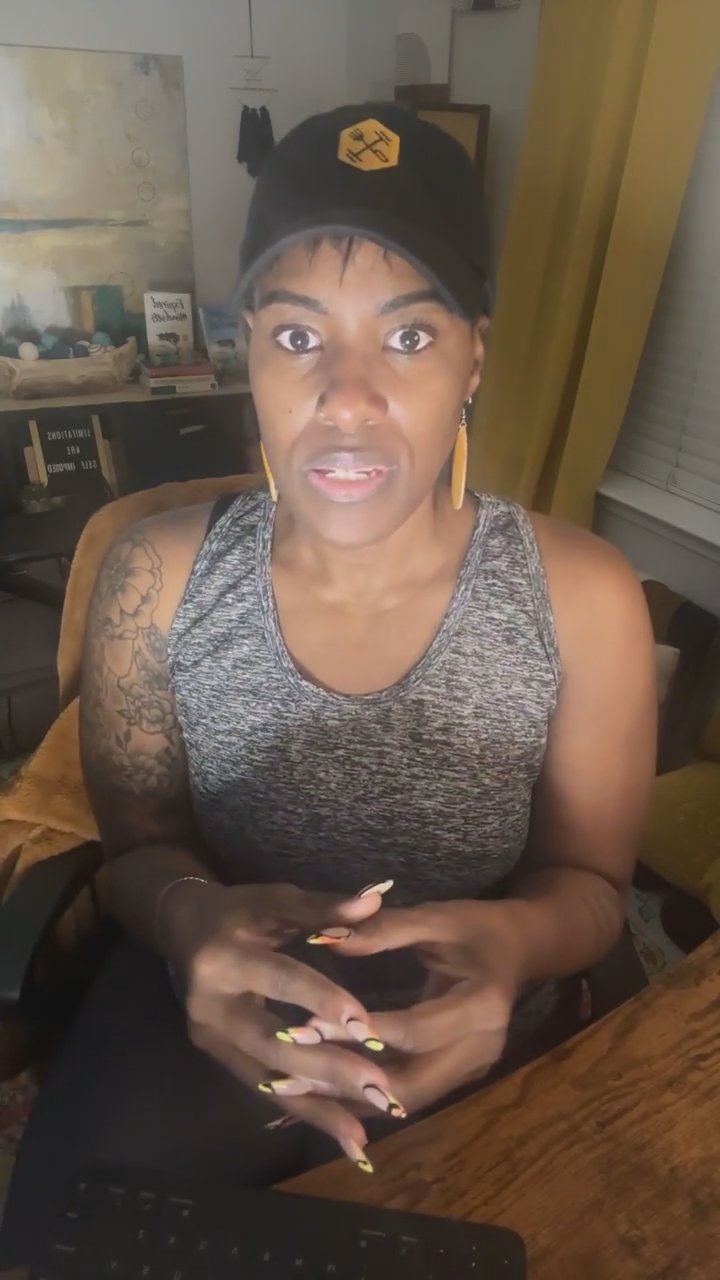
Dr. Charryse explores how personal triggers can reflect unhealed pain, names common patterns (abandonment, critical caregivers, feeling like a burden) and guides a two-column journaling exercise to notice them.
Live with Doctor Charryse is produced by Quadra sphere. The show aims to help people experience peace and harmony in their life. Midweek is a great time to begin the process of rating your week.
The things that trigger us can be a reflection of things that we might still need to heal from. Those elements are going to show up in your relationships. If we're not careful, it can really damage or make the relationships important to us more strained.
If you often get triggered by the fear of someone leaving, you might still need to heal from a sense of abandonment or rejection. If you often feel like most feedback feels like criticism, then you might have experienced a critical and disapproving caregiver as you were growing up. And healing is a lifelong process.
If you often get triggered by feeling like you're a burden, you might still need to heal from your needs. If you often feel bad about spending money on yourself, raise your hand. Clarifying or checking your assumptions is a helpful skill.
Good morning, Quadra sphere. I hope all is as well as possible in your week. Doesn't have to be great, but the hope is always that you are sliding in to mid week. That's the time you're listening to this and you're at least in neutral or your head is above the water. Welcome to another session of Live with Doctor Charryse. This is your first time here. Welcome. I'm a licensed clinical mental health therapist, mindfulness practitioner and author and my goal is to really help you engage and work towards experiencing both peace and harmony in your life if you're willing to do what it takes to help cultivate that because we all know that it doesn't come on its own.
Wonderful to see those of you who are coming into the space and joining us. Good morning, Texas. As always, I encourage you to do two things. I'm looking at my lips and they're super chat. Come in. Let us know where you are in the world, where you're coming from. And midweek is also a really great time to begin the process, if you haven't already, of rating your week. We do this so that it's your opportunity. Dirinda, I'm glad you made it to kind of pause and check in and ask yourself, okay, there's been a few days in a week.
How am I really doing? Hello, Fayetteville. What do I need? That's the other big capacity, right? How are you doing? But I want you to be able to identify what do I need to stay where I'm at if I feel like I'm in a good place or what do I need in order to move forward and see myself kind of climbing up? Hello, Eripa. And your rating is subjective. Hello, upstate. Way to catch in on sleep. If I had to rate my week, I would give it a six where it were midline. And I feel like I've had to fight with that six, fight for that six.
I feel like I've had some wonderful support in my life that's helped me even be at a six. I would probably be a little lower. But I'm glad to be here today. I want to focus on our inner thought life. Hello, DC. And understanding that how the things that trigger us can be a reflection of things that we might still need to heal from. And then when you find those things, hello, northern Minnesota. And you realize that they're creating a certain thought pattern in your life. How do you work through that thought pattern?
How do you work through that overthinking that's centered on something that hurts you. So here's what I would encourage. I have a list here of triggers that can reflect pain that we need to heal from. If you're taking notes, you want to put a line down the middle of the paper and say, if you often get triggered by that's on one side, you might still need to heal from, and that's on the other side. In my own life, especially over the last month, I have been connecting major dots. It's been pretty interesting as I've been doing my own thinking, as I've been in conversation with people.
Have you ever had that, you know, happen to you where you're, you're talking to someone and then it makes you remember something that you haven't thought about in a long time, and then it's like it beelines together and you're like, oh, wow, never saw it that way. And sometimes when those dots connect, we also realize, oh, that's why I feel a certain way about this. That's why I'm a little insecure about X, Y and Z and putting those pieces together and understanding what triggers us or activates us, that's an even better word, is super helpful.
Here's why I say activate along with trigger. First of all, some people just don't like the word trigger. They don't want to acknowledge it. But activate essentially is also saying you experience something or have a thought, whether it's a thought in the moment or a thought about the past, and it activates a response. It starts your mind racing. It may hurt or sting a little bit. You notice, it makes you emotional. It could be a number of things. Those activation points are trying to tell us something about what we just experienced and or the things in the past that we still need to work through so that we can experience peace and harmony and nothing overthink.
Here's why it's important to go through this process. It's extremely helpful to understand your activation points and where you may need to heal, because those elements are going to show up in your relationships. They're going to show up in your relationships with the significant other in your life if you have one. They're going to show up in the relationship with you, have with yourself, and they're going to show up in your vocational role and how you believe you're perceived. Or when people say something to you, to us, we interpret it through the lens of our health and well being.
I want you to think about that. When people say things to us, when we're in conversations with people, when we interact, we take it in. And it's filtered through our health and well being. And so it's filtered through the parts of us that are healthy and secure, and it's also filtered through the parts of us that are still hurting, even if we're not aware of that. And if we're not careful, it can really damage or make the relationships that are important to us more strained than they need to be.
So the first one, if you often get triggered by the fear of someone leaving, you might still need to heal from a sense of abandonment or rejection. If you felt abandoned or rejected specifically growing up or even as a child or even later in life with the people that you love, never staying, that can create a huge point. So if you have that feeling where you're like, huh, I'm always concerned they're going to leave, that if I upset them, if I don't say the right thing, that they're not going to be there.
There's some abandonment and rejection that may need some work. Number two, if you often feel like most feedback feels like criticism, and you take whatever said to you, unless it's warm and fluttery and it hurts, then you might have experienced a critical and disapproving caregiver as you were growing up. Or you may be in connection or have a partner that is critical and disapproving. Therefore, when anyone says anything to you, there's this wound kind of already there that gets poked when you get feedback that doesn't feel like it's good and makes you feel safe and secure.
Three, if you go through seasons where you feel like you're unimportant to loved ones, have you ever felt that way? Where you're like, I know what they think. They think they're doing plenty, but you don't feel as important or valuable to them as you would like. Now, on one hand, it could be that they're not holding you in a place of importance, but if you notice that that's something that you repeatedly feel, and those people really are showing up for you, then you may have experienced seasons of life at significant moments where you felt like you had an unavailable or a self focused caregiver.
Growing up in life, we can have great parents or grandparents per se, and they were in the house physically. They provided our tangible needs, but if they were not emotionally available to you as a sense of support, you could have still really be in a place or still have experienced a hole with feeling like they were truly there for you. Of course, if you also had someone that had any kind of addiction or a mental health challenge. That can also be a factor which is really challenging. Number four, if you get really activated by people who raise their voice, speak to you in a certain tone, or often look at you a certain way and, you know, like, oh, that deeply bothers you, then you may have experienced or maybe instill in need of some healing around living with people that are unpredictable or scary.
And again, many of these kind of you might still need to heal from points do center with how we've grown up, but also that may be replicated in the partners that we've chosen or the workplaces. So I don't want you to leave any area out. I always want you to think both personally and professionally, are you working in a place where you feel like, yeah, I have this one manager and they make me nervous, they make me anxious. They say one thing, but I don't get that felt sense from them. And they're unpredictable.
Their emotions are unpredictable. And yeah, healing is a lifelong process. And we always want to be in the place where we are looking back just long enough to continue to heal in the present and move forward. Now, some of you may think, I'm pausing for just a second. Why in the world would I want to do all of this right now? Because we always want to uproot the things that are standing in the way of us experiencing the most amount of health and well being as possible. We don't ever want to assume, oh, I'm done, I'm healed, I'm over that.
Because things can be reactivated when we get back into certain situations. And specifically, things can be reactivated when we are stressed. That's when you're going to truly find out when you're stressed or you're exhausted, you're going to find out the things that activate you at an even greater point and be an indicator of, here's what's still happening for you. Number five, loud noises. If you often get activated or triggered by loud noises or sensory overwhelm, you may have grown up, lived in, or constantly experienced a chaotic environment.
It is me. I can definitely say this, and it's pretty interesting because I don't know that I was able to put that together until maybe my early thirties when I started learning about sensory overwhelm. Prior to that, just went through life and couldn't quite figure out why I would get overstimulated, why I would feel anxious, why I felt like I needed to pull back after I was out of, you know, a major kind of situation with a lot of people. And then I was able to connect that to. I grew up in quite a bit of chaos.
Things were constantly changing and unfamiliar, and something could be happening here or there at any moment. And I didn't really have anywhere to go all the time. And so as a result of that, I can be very overprotective. And I know as an adult that then my constant work is not to withdraw, not to isolate. When things get really activating for me, I want to pull back and go into a show. And that specifically comes from chaotic environments being overstimulated, trying not to overreact because of that.
So it helps me pull all of that together and even to tell the people in my life, like, hey, here's what I want to do right now. I'm trying really hard not to go into my shell because I'm activated by you just being you, or I'm overstimulated or whatever. So once we know these things, it also allows us to communicate to the other people in life, okay, there's nothing wrong with us. It doesn't mean that something happened with me and that person. It just means that something between us hit a trigger point.
And I'm trying to figure out how to manage it and navigate it. And it's a lot of work because when you get activated and triggered, you also have a lot of thoughts. Number six, if you're often triggered by authority and being told what to do, then you might still need to heal from being in environments or seasons where you felt controlled or that you couldn't have a voice. So if you're like, don't tell me what to do, this is who I am, and you just need to deal with it. Don't tell me how to spend my money.
Don't tell me you know where I can go and where I can't go. Then you might want to circle in and go, wow, where have you felt controlled? Where did you feel like you couldn't have a voice in some season of life? And so now in this next one, you are fighting to make sure that you maintain that. The next one, I think we're on 123-4567 these are just bulleted for me in that number. If you often get triggered by not feeling worthy or good enough, you might still need to heal from the part of you that has had to perform or do things in order to earn love.
So somewhere along the way, and maybe still the message is, if you do for people, then that's how you receive love or feel like you received attention or affection. Once something like that sets in place, it can be really challenging a lot of people. Pleasers. That's an undertone. A lot of Enneagram twos that are peacemakers. That's an undertone. If I'm just the helper, number two helper. If I'm the one who just does everything for everybody, then they will love me. Then we'll be okay. Then I will feel like I'm good enough.
Except for you. Really don't. And so you continue to do more and more and more at your own expense. Side is there anywhere in your life right now where you're struggling to feel enough? And as a result of that, you're overcompensating by productivity and by action and by giving in a way that isn't helpful for you. I could, of course ask a reflection question on all of these. I won't do that. You can kind of process that yourself, but that's one that I feel like I want to ask. Number eight, if you often get triggered by worrying someone is upset at you, then you might still need to heal from being around someone for a significant period of time or having a harsh and punitive caregiver, partner, spouse, vocational person in your life.
The list get goes on and on. Let me also pause here and take a moment because I feel this is a little heavy for some people. You may see yourself in many of these. That's okay. Knowledge is power, even when it's uncomfortable. So see if you can let whatever you're feeling just kind of sit there without judging it, without doing anything with it, but just going, oh, wow, didn't expect that. I'm resonating with quite a few of these. You have the rest of your life to decide where you want to start and how you want to work through things.
You don't have to solve any of these things right now. You couldn't if you wanted to. And it doesn't mean that you are bad or wrong or not in a good place, but it is helpful information to have and I think this will be a good resource for you to come back to the next one. If you find that you often get triggered by feeling like you're a burden, you might still need to heal from your needs. Being ignored or shamed someone in your life, repeatedly not meeting your needs or making you feel like you're being too sensitive, you're too much.
Then you're often going to feel like your needs are a burden. And as a result of that, then you may not communicate your needs. Then you may not share your needs needs. You may try to manage too many things on your own because you do not trust that other people will not view you as a burden. Last two. If you often get triggered by spending money on yourself, raise your hand. If you struggle or have struggled in the past with buying things for yourself, then you may have experienced seasons of poverty or a scarcity mindset.
So there is this part of you that feels like, oh my gosh, is it really okay for me to do this for myself because something's going to happen and I may need this money because you've had past experiences where there has been financial lack. Here's what's interesting about when we're in that season is we will feel bad about spending money on ourselves, but we're quite the giver. And we'll spend money on other people with no issue, but then feel horrible when we do it on ourselves. That's a beautiful place to do some work because it's important for you to care for yourself and be okay with, you know, meeting your needs and buying things for yourself and also meeting some of your wants.
And then the last one, if you often get triggered by feeling dismissed or invalidated, then you might still need to heal from not being allowed or not being able to show your emotion without feeling like there was some sense of consequence. Okay, so let's say that you're in a situation and you're noticing that you are being triggered by one of these areas and feel free, as things come to mind, to add to this list for yourself, one of the things that you can do is maybe kind of have this list handy.
Then take a moment and go, okay, I realize that in this moment, I am worried that someone is upset with me. That's your. Your moment in the, you know, that's your point. In the moment of insight, then you might ask yourself, can I prove that this person is upset with me? How much of this is a true statement? How much of this is an assumption that's in my head because things don't feel reassured to me. The second thing that you could do if you feel comfortable is what we call clarify or assumption check.
That means go to that individual and ask them, hey, are we okay? Because something about us feels different. It feels like it shifted. Clarifying, you know, checking your assumptions is a really helpful skill is a little scary to do, but it's better for you to check those assumptions and actually know the truth of things than to sit in your head and replay those things. So then let's say you've done that process of reflecting. It's what I'm feeling. I've asked this other person. Then from there you decide, how do I need to respond to repair things with that person?
If it's worth being repaired, or if it's something that you realize this is a you thing and this is in your head, then you would ask yourself, how can I work towards reassuring myself? And if you feel like I have no idea, then the other thing I would want you to consider is, what are other reasons that things may feel different between me and that person? Oh, we haven't been in connection lately. I haven't talked to them in a while. They have other things going on and so they're not showing up the same way with me.
So part of that is also deselecting, centering yourself, so identifying your trigger, checking your assumptions. Can I prove this? What evidence do I have that it's true? And decentering yourself in the sense of what are some other reasons that I may be feeling this way? Because it's not always about us. It isn't. All right, I don't want to flood you with any more information that I've had already given, but I think this will be a helpful, just kind of tool for you to really look at and constantly be aware of what's happening in your own life, looking at where you're feeling triggered and activated.
And if you're seeing certain themes come up, then that's a sign of a place that you can start doing some work and being intentional about addressing. As always, I'm so glad that you chose to come and be here during this time. Yes, it's a whole lot, but I try to give a whole lot because I want you to have plenty to come back to. And if I just did one thing, then it wouldn't fit everybody. So I'm pretty sure that by the time we roll through this list, everyone has, including myself, a few of these that they know.
Yeah, this is me. This is something that I've seen lately, and this is something that I can lightly be begin to process and work on going forward. I hope you have a fantabulous rest of the day and rest of the week, and I will see you all very, very soon.
Reactions and comments are for members. Joining is free and takes a minute.