Say nothing. Sometimes it is the very best solution.
This week, Jarrett ponders how to communicate with your partner. How often is something so urgent that it has to be communicated right then? If it feels urgent, it's definitely a sign that it doesn't need to be said.
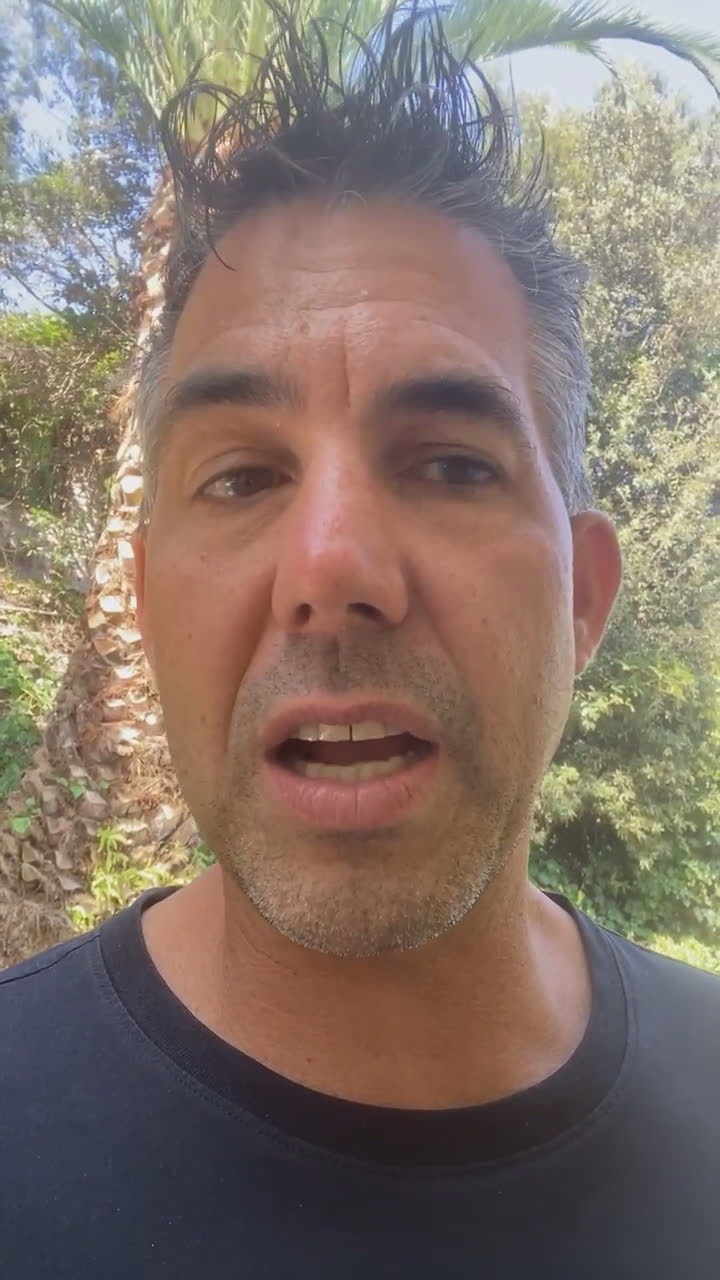
All right. Well, hey, everybody in the quadrosphere. How is it going? I'm a little late. My watch is slow from when I just got home from being out of town for work, which I had an amazing trip, amazing trip to Kansas. I did some work in a prison, and I got to go visit my old, where I did graduate school 28 years ago. I got to go visit some of my meetings there and see some old friends. It was crazy to think of 28 years ago, but today. So last week I did conscious living because I really wanted to talk about being unplugged.
So this week I am going to do conscious coupling, which is normally the third week. And it's like, you know, when I do conscious coupling, I mean, one of the things is I am not one of those people who talks about couples or relationships and pretends like, I don't have tons of issues in my relationship. Tons. Maybe not tons, right? But we've got issues, right? We've got challenges that we're trying to heal. Things that we're trying to heal after 21 years and a lot of ups and downs and old patterns to break, new patterns to establish.
Right. And one of them is really interesting. Right. What are the patterns you've established in your relationships regarding conflict? How do you deal with conflict and how do you deal with communication? So I had something come up with Nancy, and I was frustrated. And it didn't seem like there was an opportunity to talk on the phone because of my travel and my work schedule while I was on the road and then her schedule while she was covering everything while I was gone. So I had a text, right?
I had a text completely ready to go. Okay. Now, in the past, and maybe some of you can identify with this, whether it's a conversation, a phone call, or a text. And I've got some thoughts about texts in general, but I'll talk about that in a second. But in the past, I would write that text, and I would send that text because that's what you do. That never worked. That never went well. Write that text and send that text. No, no, no. I started that text. On Sunday, I let it sit. And then on Monday, I let it sit some more.
I edited it. I then contacted a friend, and I read it to him. And as I was reading it to him, I knew I shouldn't send it. So what is that about? Well, one, that is the gift of what we call the pause. Is there really ever anything that it feels urgent? Right. It feels like it has to be communicated. But how often is something so urgent that it has to be communicated right then. In fact, chances are, if it feels urgent, it's definitely a sign that it doesn't need to be said. So I read that text to my friend.
I heard it. I was like, I'm not sending that text. So then I totally redid the text, and I sat with it for another day. Then I finally sent the text. It was totally different than I was going to send. And I explained that I was only sending the text because I didn't really see there being an opportunity for us to talk before I got home. And part of what I was communicating was related to something kind of immediately when I got home. What's the point? The point is this. In your relationships, like, when we say conscious coupling, we're constantly being, we're constantly having old stuff come up, right?
There's a great line that says, if it's hysterical, it's historical. And I love that line, right? Because it doesn't even have to be, like, hysterical from the perspective of, like, really wound up. But you can just be pretty activated around something, and it's pretty sure it's historical. So the opportunity, right, is to look at myself, see what's going on. Why does this feel so urgent? Why do I feel the need to communicate this to Nancy? Like, what am I really trying to communicate? And what is the part of me that needs something?
And, you know, from like, Aca, adult children of alcoholics and that kind of work, inner child or even, you know, some of the ifs stuff. But it's just like, I love the idea of a loving parent and reparenting. And it's like, I have spent most of my marriage looking to my wife to reparent me, and that is not her job. And that is actually not what you want for a partner or from a partner. And so from my perspective, that was what I had the opportunity to do, right? When you pause, you have the opportunity to look and see what's coming up, take care of the part of yourself that feels like it's so necessary and needy to get something from your partner.
And then approach your partner as a mature adult, approach your partner not needing anything, and you can still request something, as I did in my text. But then I didn't need her to respond a certain way. I didn't need her response did not determine my sense of feeling loved or validated or heard, even though I appreciated her response. So that's the deal, dude. Thank you. That's very kind. That's the deal, right? The deal is pause pause and ask yourself if it really needs to be said. And if you really think it needs to be said first, say it to a trusted friend or mentor or sponsor and see what they think.
Because I tell you, man, the stuff in my head that seems so brilliant, so necessary and even so well thought out, sometimes it's just laden with neediness, anxiety and old wounds that, you know, that's the gift, right? The gift is the partner can bring that up for us, but then we miss the gift if we think it's about the partner. So that's my challenge. For those of you watching in your partnerships conscious coupling, pause, take a deep breath. Give it 24 hours. The next time you think it's really necessary, the next time you think it's really urgent, see if you can give it 24 hours.
All right, thanks, everybody, as always and have a great weekend.
Reactions and comments are for members. Joining is free and takes a minute.