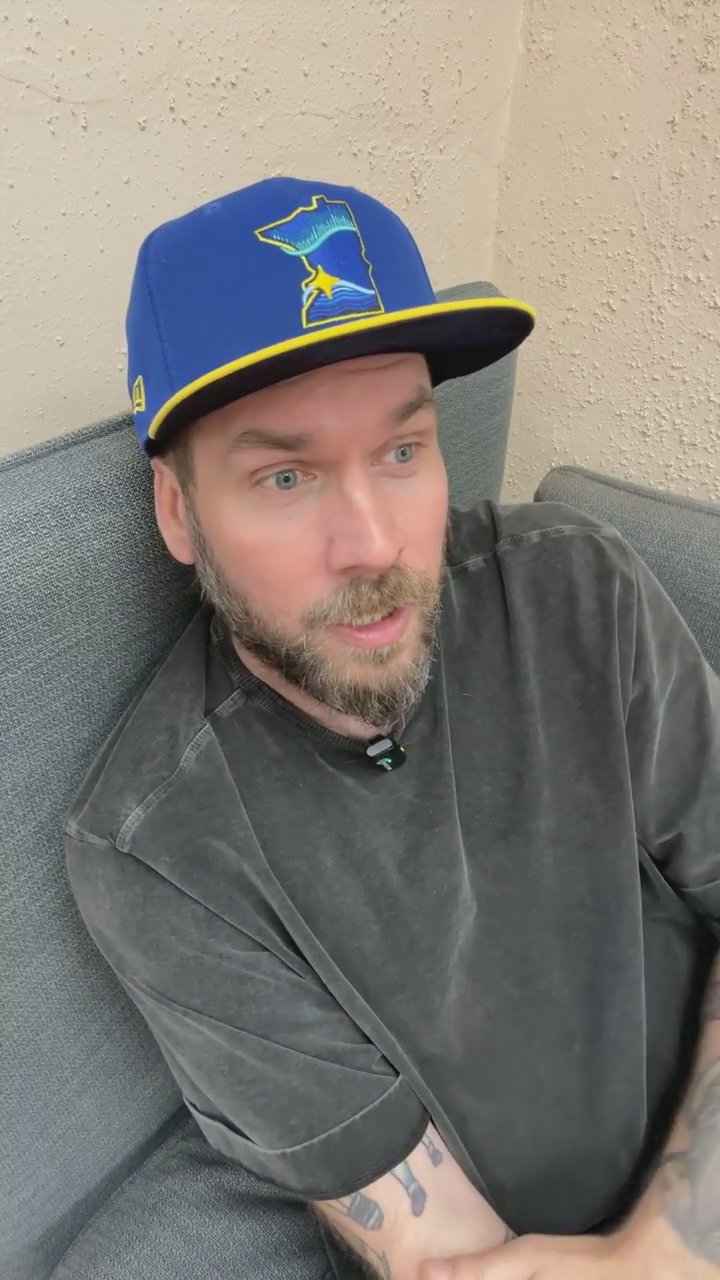
Pastor Seth Perry shares his lived experience in addiction and bipolar I recovery and explores how cultural identity shapes whose voices people heed. He reflects on the church’s credibility, cultural navigators in recovery, and criminal-justice reform.
Pastor Seth Perry: I'm in recovery from addiction. I have bipolar type one. That's the lens that I see the world through. Let me know how you're doing this wonderful Sunday.
Shannon: What is the voice that you will listen to? And this is something very key for someone like myself who's a. cisgendered male. The church has ruined its credibility with other people and the public, and they need to rebuild some of that if they're going to be relevant.
The same goes for recovery. There need to be cultural navigators that understand the culture because they are a part of the culture. Part of how we can reform our criminal justice system away from an industry model and into a culturally relevant model.
Doctor Leslie Davis is on Tuesday at noon. Anila is doing her Wednesday night, 09:00 p. m. central time. Have a wonderful day and let's just chill out. See you later.
Hi. Hello, everyone. My name is Pastor Seth Perry, and welcome to talk stigma at 01:00 central time. Central time, yeah, I'm on the central time zone. 01:00 in the afternoon on a Sunday afternoon. And so again, my name is Seth. I'm a pastor. I'm in recovery from addiction. I have bipolar type one. I'm in recovery from that, active recovery. And that's the lens that I see the world through. But I also in all of that. And welcome to speak Wonder. Hello and say something. Let me know how you're doing this wonderful Sunday.
Yeah, I'd love to hear from you. And this is the lens that I see the world through is recovery, bipolar recovery, addiction recovery. And also, I'm a pastor. That's kind of how I ended up a pastor. It's a very long story that I may tell one day on the Cadre sphere, but as it is right now, I have some other things to tell today. And thank you for that. Hello, speak wonder. Thank you so much. And so I've had a very good week. And Shannon, hello. It's nice to see you. Hi to you and happy Sunday. I'll go into what I've talked about.
And Jules, hello again. Happy Sunday to you as well. Welcome to all of you who are here. Got a really good story to start things off that'll transition into a little bit of what I've been thinking about. So it starts off like this. This week I was called into doing a whole bunch of stuff. You know, I spoke at the Chicago county sheriff's chaplain's dinner this week to a bunch of police officers and their chaplains about mental health and recovery addiction. And then later, I spoke to a woman's group at a church about recovery and mental health, recovery and addiction.
And so, you know, with those groups of. They were people that looked like me. They were people that had similar economic circumstances to me. They saw themselves in my story. And I think that there's a lot in that lesson right there that I was teaching people that were very much like me. And I think that I, through that process, they were connecting, really, to my experience because they identified culturally to me, which isn't to say that someone who came from completely different circumstances couldn't connect with them, but this will transition into what I want to speak about.
And that is what is the voice that you will listen to? What is the experience and identity that you will listen to? And this is something very key for someone like myself who's a. I'm a male and I'm a cisgendered male. My pronouns are he, him, and I come from a middle class background. I grew up in the suburbs. My parents were professional, and I am white. And so I have been from the seat of privilege my entire life. That is the way that I see the world. And basically my recovery, I had to have someone like me be a voice that I listened to.
I needed to hear from other people that had experiences like me and tell me, hey, change the way your life's going. You can do this. You can enter into mental health and addiction recovery. Now, I'm a pastor, and the church has ruined its credibility, and they need to rebuild some of that credibility. The church has just basically said, we are the dominant voice for so long. And the reason really why, you know, I started this is because I had a discussion with Colleen from Cadre, and she's like, why don't you do talk stigma, you know, 01:00 on Sunday and talk about the emotional damage that churches do, talk about religious trauma.
And this is one of the big points that I want to hammer home time and time again as I'm talking on Sunday nights, is that the church has ruined its credibility with other people and the public, and they need to rebuild some of that if they're going to be in any way relevant. And so there's kind of a parallel to this in the world of epidemiology. And I was listening to some public radio this week and there talking about epidemiology, the study of epidemics and the study of disease. So whenever there's an epidemic in any part of the world, good epidemiology dictates that you would find someone who is within that culture to promote using a vaccine.
And, oh, and you know what, Shannon, I appreciate you, and I'm glad you're here because we've touched base a little bit about exactly your story, too. So I'm glad you're commenting on that. So think about this. If there's an epidemic somewhere and then a scientist comes along and is not from that culture and just says, look, you got to take a vaccine or you got to take this medicine or you're going to have to do this and move here or relocate or something like that, whenever there's a large epidemic, there needs to be voices from within that culture that believe that there is an epidemic happening and that there is an appropriate solution.
And so let's get back into talking about recovery then. So if there is an opioid epidemic and if there is a mental health crisis and if also, if there is this major distrust in spiritual institutions. The same goes for recovery. And I've been working recently with people that are called cultural navigators. So I can't go and do work around recovery in indigenous communities because I am a christian white male. There's already a deep history of major trauma within the indigenous community here in North America with the residential school system.
So I have to take a backseat and learn and be navigated through that. And I probably actually could support in ways, but I cannot be the one who provides help. There need to be cultural navigators that understand the culture because they are a part of the culture. That's why identity matters. When we're talking about religious trauma like this, same thing would happen in the black community here in the Twin Cities. I can't just step into a community and say, you know, I've got these great spiritual resources and a perspective on recovery.
I have connections within the recovery community, and I know counselors and referrals and go and teach and do a lecture, necessarily. That's the job of a cultural navigator. I could support in some way financially through other means, but I certainly shouldn't step in. If there's any examples in your life, why don't you throw them in the chat right now as I provide maybe another one. Right. So if you. And if you have any thoughts, let me know because I'd love to hear your perspective. Another thing like the Hmong community in the twin Cities, there's a massive issue with Hmong encampments, and there are cultural issues that I specifically do not understand.
The only way that I would understand them is if I was Hmong and if I grew up Hmong and if I understood the cultural nuances of communication and perspective in the world, because why does the church have less credibility than it did a hundred years ago? Well, because people really had awoken to how the church was just sort of trampling over cultures and. Oh, yeah, working with this somali autism community. Absolutely. And I have connections with a somali cultural navigator, too, and I'm glad that you, you mentioned that.
And Shannon, we should touch base about the. Some autism resources that I need, too. I was just having a conversation right here in this office about an adult autism diagnosis, and I was going to send you an email today anyway. So I think we'll touch base about that. And that's the beauty of Cadre. So again, so using your example again, how, let's say, someone from my community and someone from the somali community, there are going to be some nuanced ways that folks navigate the early stages of a diagnosis of an autism diagnosis, there's going to be completely different resources probably as well.
That's a perfect example. Again, the question is, what is the voice that you listen to? You know, because on the spiritual side, I have grown up in a culture where I have been guided and taught, you know, what is a particular vision of what I call, quote unquote, God. Right. That's powerful stuff. It sticks with me. Right. And so whether you have been hurt by the church or nothing, that image is still going to be in one's head. That's the experience that I've had when I'm working with people who have religious trauma.
And so Jules says, I work within a jail system. There are many folks, and I lost that comment. But so I assume that you're talking about other culture, cultures within that without. Within those institutions. And. Agreed, absolutely. That's part of. Part of, I think, how we can reform our criminal justice system away from a. Away from an industry model and into a culturally relevant model for the people who are incarcerated. So if people are incarcerated, then they should have culturally specific resources to them if we truly are incarcerating people with the hopes that they will be reformed, you know, so if you.
If you are Latinx, then there should be some stuff to connect you to your culture. I believe that a disconnection to culture has particular symptoms that work themselves out, that end up maybe in people being incarcerated by the law. And I have seen people that have gone through the drug court system and be reconnected with their culture after they've been sentenced. And that's a real thing. Right. And so there is a spiritual peace within there because everyone talks about God differently from culture to culture.
Right. And that's why myself, as a pastor, I need to be in a posture of understanding, openness, and just allow people to kind of just. Can we just chill out? Can we just be chill with other people's ways of thinking and believing what spirituality is or isn't? And even the people who've been hurt and called, you know, have, have really latched on to atheism or agnosticism. Can we chill out on that and just let people be? And I think that's what I'll leave you with. So if you're sharing with anyone about the phrase of the day, it is, hey, can we just chill out on it for a bit?
All right. I just want to say this before I go. I had a great week here on Cadre. I recommend, if you haven't, Doctor Leslie Davis. I connected big time with that I put her on my desk for a little break. So that's Tuesday at noon. Doctor Leslie Davis. That was one of the best live streams that I've ever interacted with. And then, of course, I want to say JC has embraced the term, that he's the camp counselor here. m. central time. m. now. And it's a good way to end your day, because I just get finished doing some busy work, and then I see that I get a notification that she's on, and if I have time and I'm out walking the dogs, then I tune into that.
So have a wonderful day, and let's just chill out. Chill out. See you later. Almost done.
Reactions and comments are for members. Joining is free and takes a minute.