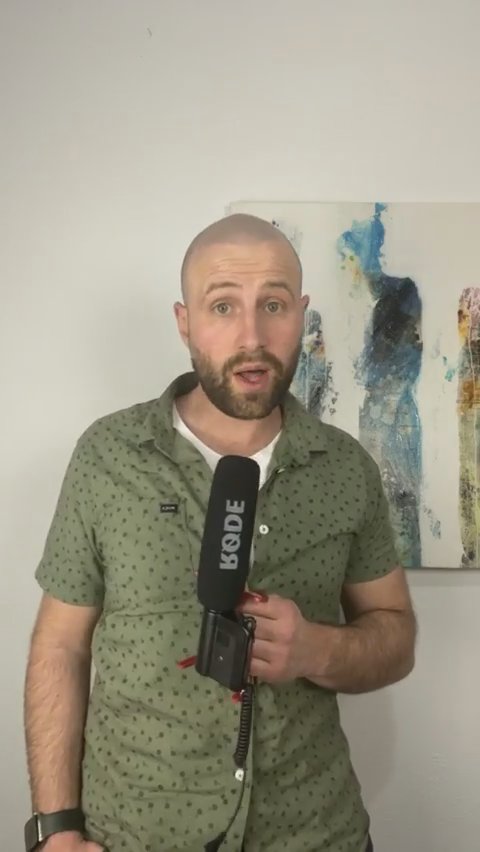
And this live we will be covering a couple concepts in regard to the communication series. We will discuss the importance of setting your ego aside and the benefits from allowing others to get the win.
Evan: I teach a lot about communication on this app, and I usually teach it from the perspective of conflict resolution. Speaking of conflict, my dog is thinking someone's here when they probably aren't. So, back to what we're doing.
When we're in conflict, it's important to realize that our egos are at play. What our ego really is is our sense of self. This concept of honoring the almighty ego is a form of mindfulness. It's acting with intention versus just reacting.
Trying to allow someone else to feel like they have won. There's a principle in psychology called loss aversion. It's not just about the money, it's about I want to walk away feeling like I got something. How do we prevent that from happening?
There's medical directors in this program. Tom and Jerry are both trying to protect their egos or sense of self. Go to your boss and ask them a question about something going on at work.
Sometimes we have to let other people help us sometimes. One of the reasons why often people decline help is they don't want to feel like a burden. Never rob someone of that opportunity to be helpful to you.
Lieberman: Give someone the win, honoring their ego, allowing them to feel good about themselves. If you're able to let that go, really in the end, you win, right? Be sure to put in the comments if what you learned or what you got out of this or any situations in your life that you think could benefit from doing this.
All right, we're live. Ladies and gentlemen, my name is Evan. I am your resident therapist here at Cadre, and I wanted to go live because something really interesting happened to me this week. And as you all know, I teach a lot about communication on this app, and I usually teach it from the perspective of conflict resolution. So you should go check out some of those videos. Speaking of conflict, my dog is thinking someone's here when they probably aren't. So, back to what we're doing. So there are two concepts that I want to talk about today that relate to this story, to this thing that happened to me this week.
And as you can see in the title of this, I call it honoring the Almighty ego. Right? So when we're in conflict, it's important to realize that our egos are at play, right? We got two egos. If it's me and somebody else. And so what is the ego? We hear about this all the time. Someone being egotistical. And often we look at the ego as something bad, as something negative, to be egotistical, to be egocentric. However, what our ego really is is our sense of self. So if we have an inflated ego, we have an inflated sense of self.
But the ego, in and of itself is not necessarily a bad thing. It just is in a conflict. It's important to honor my sense of self and that person's sense of self, right? So the model of communication I teach I call mindful communication, which is essentially, you know, a form of mindfulness, which I believe to be putting thought into something, right. So it's acting with intention versus just reacting, because that's what usually gets us in trouble, right. When we're emotionally activated or triggered, we often act out of emotion, and it doesn't always go the way that we want, right.
Because we don't necessarily put thought into it. We are just reacting instead of acting. This concept of honoring the almighty ego is a form of mindfulness. I teach about a lot of different concepts. This is one that I've just seen come up over and over again, not just with my clients and my clinical practice, but this is something that comes up in my life, and I'm sure it's something that you'll be able to relate to, because if I'm in a conflictual situation, whether it's at work, whether it's a spouse, you know, there's this sense of self that I have that I am protecting.
Right? I'm protecting my ego. You know, often in relationships, there is some sort of power dynamic, right. And maybe I'm trying to maintain a certain position, but really, at the end of the day, I'm trying to preserve my sense of self. And usually when I'm getting angry or upset or I'm upsetting somebody else, you know, that those feelings of hurt or those feelings of resentment often come from when somebody is making me feel a certain way about myself that I don't want to feel, right. It's often, you know, we all have our sensitive spots, right?
Someone could say something to me and I could laugh, right? Or they could say something to me that really triggers something from my past, something that I believe about myself. We call these a core belief, right. So often when I'm feeling resentment, it is because somebody is saying something to me that is making me feel a way about myself that I don't want to feel, right. And often, too, there's making me think about myself in a way that I don't want to believe. Right. They're tapping into those core beliefs.
And so then I become reactive. My walls go up. And when my walls are up or the other person's walls are up, either or, or both, there could be no productive or healthy exchange. And it often is a continuation of that cycle, of this conflictual, often combative situation. So when we talk about mindful communication, I always remind people that all we could do is take accountability for ourselves and for our part, right. I can't force somebody else to communicate in any way. I don't have control over other people.
All I have is control over myself and how I approach situations, how I show up in these various situations. So doing mindful communication is essentially on me, because when I do that, I'm much more likely to get a positive reaction out of the person if I'm laying my weapons down and I'm showing that I'm coming from a place where I want to collaborate, where I want to solve a problem, where I'm not trying to just be defensive and protect my ego. It's often going to go better, and often that other person is going to also exhibit more positive forms of communication, right?
So it's all about not letting our guard up. And again, that principle of mindful communication is acting out of intention and not just emotion. Because in a conflictual situation, I'm often feeling angry, frustrated, sad, and I'm not always going to act in a way that I'm going to be happy about later when I look back. Or maybe I do, maybe I feel justified. However, that may do further damage to the relationship. So how does this pertain to the ego. What could we learn from that? And I notice in a lot of situations, especially where there's conflict, we don't take into account that other person's ego, right?
It's really about a sense of empathy, is trying to understand where that person is at. How do they feel about themselves in this situation? Asking myself, what is it about this situation that may make this person reactive or make them not feel good about themselves? And at the end of the day, like it or not, you know, maybe you could relate. I feel like all people do this, but we all want to win, right? Nobody goes and plays a game, a sport, and happy when they lose. Maybe you have some super altruistic people, and I could learn from this, and that's great.
But at the end of the day, I mean, we want to win, right? Because winning feeds into our ego. I feel better about myself when I feel like I have won or I feel like I have accomplished something. And when we talk about an ego, there is the sense of healthy ego. I mean, that is okay. However, when I become obsessed with that or I'm only focused on winning. If I am in a conflicting situation with a coworker, with a boss, I want to come away and feel like I won. I got the best out of that person in this situation.
And if I'm going in with that mindset, and I may not even realize that I'm doing it, the situation is bound to go poorly. So when we talk about honoring the ego, it is really honoring this person's sense of self. And what am I getting at with all this is sometimes you have to let the other person win. So you may think, well, if I let them win, then I'm losing, right? But then I'm going into that situation, into that communication with that mindset of win lose, that this is some form of combat, right?
So it is on me to try to change that dynamic by using a more mindful form of communication. And this is just one little trick, if you will, is to allow someone else to feel like they have won. Now, some may argue this may seem a little manipulative. It depends how you define that. But, you know, it's, you know, but it is in an altruistic sense, you know, trying to have somebody walk away feeling good. And it may not be having them just walk away feeling like they've won. And ha ha ha, they think that, and I just got what I want.
But at the end of the day, it's them walking away not feeling like they have lost. You know, there's a principle in psychology, you know, called loss aversion. And it's like, I would much rather avoid losing $5 than gain ten. Like, it's really bizarre that we are more focused on avoiding loss than we are gain. So that just goes to show how important it is in a situation to not feel like you have lost. You could think about car salesmen. They know this very well. So it's like, if I'm going to buy a car, it's like, what is the main goal?
Often we go in like, all right, I want to get a deal. But we all know that you could think about a situation where you go to buy a car and you're like, okay, here's my budget, and I'm not going to go under that. But then you go and you see the car, and they got all these bells and whistles and they have these features you've never even heard of, and you're like, well, I need that. You didn't even know you needed that. You didn't even know it existed, right? So it's like, all right, I'm willing to stretch my budget a little bit, right?
But I do. I want to. So it's not just about the money. It's about I want to walk away feeling like I got something. Like, I like feeling like I got something, you know, that I came away with a good deal, or at the very least, walking away, like, not feeling like I got screwed over or that I lost, right? So it's not as much about the money and a car salesman or none of that. It's more about the feeling, right? So there's little tricks that these folks use, but again, it's about loss aversion. So how is it?
How do we prevent that from happening? So trying to get into that person's head, trying to be empathetic and understand where they're coming from, right? And there's. I mean, I could go in forever about all these principles of communication that I will talk about at some time, about using empathy, about listening. I mean, these are all things that are all very important when you're in that process. But thinking in the back of your mind of how can this person walk away feeling like they got something in return, feeling like they didn't lose, right.
Because I could go in and maybe I have the power in the situation, right? Maybe I go and maybe I'm smarter, I'm more clever, I'm a better debater. Maybe I do have more power. Maybe I'm their boss, right? So I want to go and protect my ego. And my ego says, you know, you need to win, or at the very least, not lose. So I have to be, you know, it's. So it's really imperative for you to be mindful of that, to that loss aversion, to really getting out of that combative mindset. So that's principle one.
Honoring that person's ego, honoring that. That person has a sense of self that they are trying to maintain. And the minute they sense that you're trying to win, that they're in combat, then their walls go up. Nothing gets resolved. The relationship continues to be damaged. So I'm going to give you an example of this. And within this example, I'm going to highlight this other related principle. So, it was funny. So a friend of mine, I ran into him, a really close buddy of mine, and he's been working at this new job for about a year.
Really loves it. A great opportunity for him. He also works as a therapist in behavioral health. And he got a new boss. So he had a really good relationship with his current boss. They got along extremely well. But then she was getting a promotion, and then. So he knew there was going to be someone else coming in. And really hoping that he would have that same kind of relationship. So this new boss came in, and he was pretty clear at the beginning that this may not be that positive of a situation.
Because my buddy. We'll just call him Tom. Tom knew this person from before. So my buddy Jerry. Okay, so my friend Jerry. His boss is Tom. And so Jerry and I went to grad school together, right? And we're in the same class. And sometimes we would have people come in. They were maybe not in the same year, but we'd be in some of the same classes. And Jerry came in. Tom. Sorry. Tom's the. Tom's the boss. So Tom came into our class, and I think, like, I introduced myself, and I really don't remember this.
He reminded me. But he was, like, really standoffish and, like, really snippy. Like, he was just very, very prickly. Right? And so when he came in, he's like, oh, God. Like, this guy, who's a really difficult person, is now my boss. And that was kind of the dynamic right off the bat. And it was pretty clear that Jerry's boss, Tom, was threatened by him. Because Jerry had been in the field. You know, he'd been at this job for a year. He was doing really well, and he was getting recognized. So people were recognizing how great of a job he was doing.
He was feeling on top of his game. He was well respected. I mean, this is a very reputable place. Corporate. There's medical directors in this program. And, you know, he was starting just to get that vibe, like his boss was feeling threatened. I think part of it, too, is, I mean, they're about the same age. They have the same education level, been in the field for a while. So maybe they were a bit newer and felt like they were coming into this new dynamic and new situation. And maybe in some ways, they wanted to prove themselves right.
So that person, the boss. And so Tom and Jerry are both trying to protect their egos or sense of self. Jerry wants to continue to feel like he is a valuable member of the team, that he is a good therapist. And Jerry coming in, wanting people to respect him as a boss, he worked hard to get where he is. So right away, they were butting heads, right. And Jerry could pick up on this vibe that maybe Tom wasn't his biggest fan. So a little game of cat and mouse, I guess so. And so things kind of came to a head because I guess they were doing rounds, you know?
So it's like, kind of a high pressure situation where all the team comes together and they discuss a case, and then they collaborate and they ask each other questions, and they try to answer, come up with solutions for problems. And a question was asked, and the boss, Tom, answered, and he kind of got dismissed by the medical director. So then Jerry came in, and he gave his piece, and the medical director's like, yeah, that's great. Right? So right there, Tom, the boss, got snubbed and was outshined by Jerry once again.
Right. And he noticed that in that situation, right. That really affected the boss's ego. So now this dynamic is continuing, this contentious dynamic. And even a couple times, my buddy, he let his emotions get the best of him and maybe got short with his boss, right? And so when I talked to my buddy about this, I'm like, okay, tell me a little bit more about the situation. Tell me more about your boss. And I sort of knew who they were. He said, look, I understand why he got the job. He's extremely intelligent.
He's gifted at what he does. All right, right there, that's an acknowledgement in this situation of the positives this person is bringing to the table. So he has an underlying respect for this person. Right. But again, he's trying to maintain his ego in this corporate. In this work environment. He said, okay, I don't know. Like, I'm at a head with him. I don't know what to do I? You know, I. You know, how can I change this dynamic that we've already kind of dug our heels into? And I thought about it, and then this principle came to mind, right, that to honor the almighty ego, to recognize where this boss was coming from, to put himself in his boss's shoes.
And so we talked a little about, okay, like, what is your boss feeling? Why may they be feeling like this? And so we talked about what I just did, and I thought of this idea, and I said, tom, why don't you try this? Because he mentioned a situation where he was kind of, you know, he. His boss was trying to interject on something he was doing, and he was, like, giving him this advice that he already knew, and it made him frustrated, right? So now he's feeling like, okay, you think I'm stupid by not knowing this?
So I'm going to go ahead and prove to you that I know what I'm talking about. And I said, how about this dynamic? Try this. I said, go to your boss and ask him a question about something going on at work, right? Something about a patient, some difficult, some legit difficult situation you're dealing with, and maybe you know the answer to it. But I want you to go to your boss and ask them for their opinion on something, right? So ask them something about a client. Ask them, what would you do in this situation?
Hey, I'm at a loss, right? And you said, huh? Yeah, that actually may be a good idea. There is this one situation that I'm dealing with that, you know, maybe they would know more than me, even though I've been here, you know, it'd be good to get that outside opinion. So he went and he did it. And the next day, he came back. He's like, yeah, that went really well. And just like I had expected it to go, you know, because he went in there and he gave his boss a win, right? Now, we don't always want to look at it that way, but the boss, they needed a win, right?
They're coming into this situation, they're feeling like they're maybe not respected. Maybe they're feeling bad about themselves. Think about it. Maybe I'm not a good leader. Am I as smart as I thought I was? Is this something I could even do right? But when Jerry went to Tom and said, hey, can you help me with something? You know, it really gave. Made his boss feel good, because at the end of the day, which is the second principle that I want to touch on briefly, is allowing others to help you.
Right? So, first of all, he let his boss have that win. And, you know, and that really changed the dynamic because it shows, hey, I respect you. I respect your opinion. And the funny thing at the end of day was he said, you know, maybe I didn't go in really thinking I needed that much advice, but, you know, actually what they told me was really helpful. Right? So he actually got benefit from doing that, even though he went in not necessarily doing it for that primary reason. Right. He let them have a win.
Now, principle number two, that is related, which is letting others help you. So this situation comes up a lot, and especially with some of my clients, especially some of us who are perfectionists. I don't know if any of you could relate to that. Whereas someone's like, hey, can I help you with something? No, I got it. Can I help you pick that up? No, I got it. Why do we do that? A couple reasons. One is if I let them help me, okay, that's showing some kind of weakness. What? I can't pick up that box myself.
I can't solve this problem on my own. I need money. You're going to loan me money? What are you trying to say? That ego, it's penetrating that ego. It's making me feel bad about myself. But sometimes we have to let that go. We have to let other people help us sometimes. One of the reasons, one of the other reasons why often people decline help is they don't want to feel like a burden. I could go in forever about the psychological, the trauma, and how that can contribute to folks having this mindset of not wanting to be a burden or getting defensive when other people are wanting to help them.
But at the end of the day, I try to reframe it to folks and I ask them. This sometimes hits them right between the eyes. They say, how do you feel when you help others? Oh, I feel great. It really helps my ego. It helps my self esteem when I'm being helpful, when I feel needed, when I feel useful to somebody else. So are you going to rob that other person of that opportunity to be helpful to you? Whoa. So maybe you don't need the help. Maybe you do need the help, and you're being a little too prideful.
But I say, never rob someone of that opportunity to be helpful to you because you may not be being a burden. If that person is offering help, often it's because they want to help you. So why don't you oblige them, allow them to help you? Now, of course there's limits to this. They're trying to you know, maybe. Maybe they're someone who almost compulsively tries to help people at the expense of themselves. Right? So, I mean, there are limits to this. And I'll give you. I'll give you a funny example of how I've applied this situation in my life that's made my life a bit easier.
Okay, so I'm jewish. I don't know how much you all know about the jewish culture, but we have something in the jewish culture, at least in my family, we call it food pushing, right? And it's not just a jewish thing. A lot of Italians think about the grandma, like, eat, eat. You're too skinny. Or, you know, they just, like, they just want to feed you for some reason. There's some maternal paternal instinct to feed your young, right? And so my family are very guilty of being food pushers, especially my dad.
Not interestingly, not my mom, but my dad is one of the most epic food pushers of all time. So when you go to my house, he's like, hey, do you want a sandwich? Do you want some coffee? Do you want. And most of you go, oh, no, I'm okay. No, I'm good. Are you sure? Do you want some fruit? Do you want something kind of toxic that. Do you want some fruit? Do you want some this? Do you want to some. I don't know. Like, whatever. Like, whatever is in the house, he's going to offer it to you. Because my dad, God bless him, I mean, he is a very generous guy.
I mean, he's. He likes to take care of people sometimes, too, you know, sometimes too much, so. Right? So when I come home, right? He wants to go into dad and, hey, what do you need? Do you need this? Do you need that? Can I do this? And again, I'm not complaining, because that's definitely. I prefer that to the opposite. But I mean, to be honest, it kind of gets annoying sometimes, right? My whole family's like, dad, no, I don't want. You asked me six times if I want pistachios. No, I'm good. Right?
But eventually he'll kind of break you down. And I just learned over time that, like, if he really wants me, like, I'll just say yes, all right? Even if I don't want the tea, you know, I'll do it anyway. I'll take some water. I'll take some tea. Because, you know, when I switch it around, I get into his mindset. He just wants to be helpful. It makes him feel good. Right? So is it that much of a burden to me to, you know, eat a little snack to allow him to do that? No. And it actually, it makes my life a lot easier because that I don't have to say no 16 times, you know, like I said, he wears you down.
So on time, two or three, I'm like, sure, okay, let's do it. Right? I'll eat that. Yeah, I'll let you help me because it makes him feel good. And then I don't have to hear it 16 times. My friends come over and he'll be like, hey, you want some fruit? You want some nuts? You want some drink? I got this, drink that, drink this, drink, you know. No, no, no, no. Mister Lieberman. I'm good, I'm good. I'm sure I just ate before. You sure? Okay. And sometimes I'll just look at them, I'll be like, just say yes.
Like what? I'm like, just do it. Just say yes. Take the freaking nuts. Because he's just gonna keep going on and on, right? So again, that's another example of allowing someone to be helpful, right? Giving them the win, honoring their ego, allowing them to feel good about themselves, right? Because in that situation, my dad, it's not a conflictual situation, but in the situation with my friend, right, there are these two egos coming at each other trying to defend their sense of self, right? So if you're able to let that go, really in the end, you win, right?
We don't want to necessarily look at it that way with winners or losers, but at the end, what is your aim? Your aim is to, you know, protect how you view about yourself to make this a better, healthier relationship. And in the end of the day, you win. So I hope that was helpful and I hope that you continue to follow my communication series and be sure to put in the comments if what you learned or what you got out of this or any situations in your life that you think could benefit from doing this.
So until next time, folks, we'll catch you later. 5432.
Reactions and comments are for members. Joining is free and takes a minute.