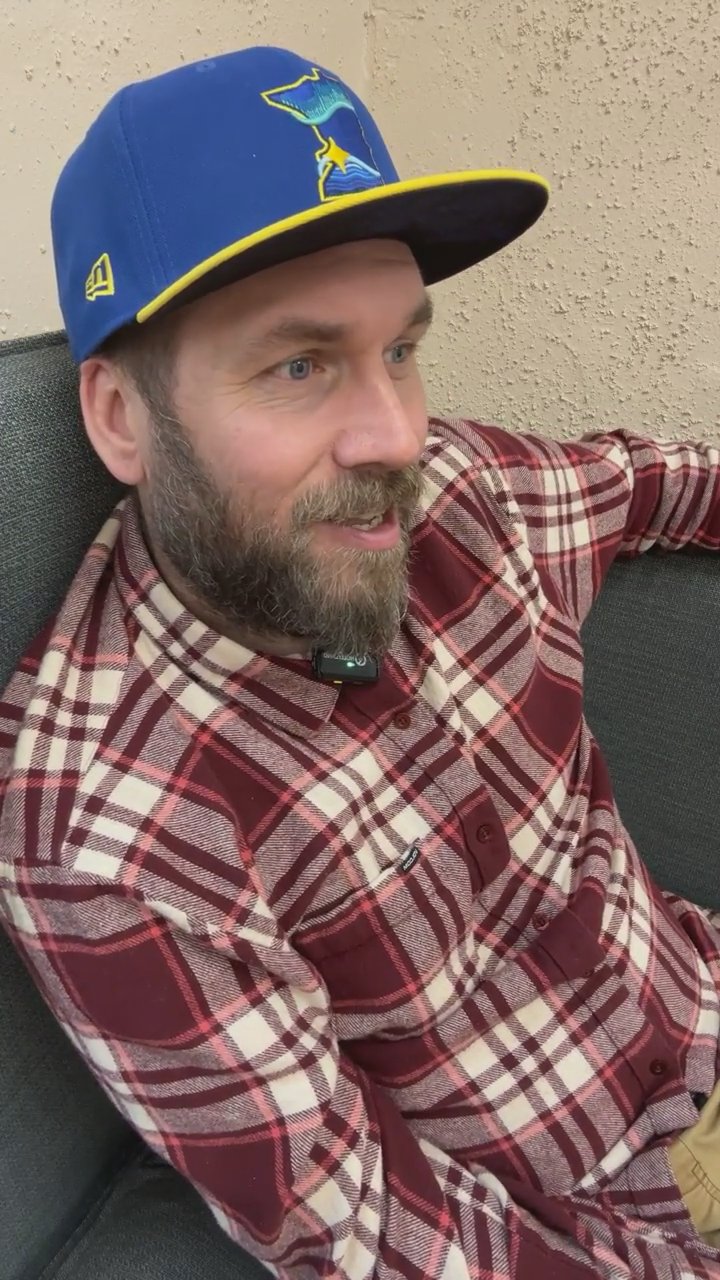
Seth Perry, a pastor in recovery, reflects on faith, recovery and community wellness, asking what if mental health resources were as accessible as chips and energy drinks, and shares plans for an upcoming pastors' retreat.
Seth Perry is a pastor in recovery from addiction and bipolar disorder. He's about to go to a retreat in Minnesota with other pastors. Perry would like to hear from you today. Drop a comment.
What if wellness was as accessible as potato chips, Twix bars and monster energy drinks? You could find those things anywhere, even in places like food deserts. It wouldn't be too easy.
What if wellness was as accessible as potato chips, Twix bars and monster energy drinks? I want mental health and public health services more integrated into church culture. The well being of community really should be the center, the center of a church.
So that's 10 minutes. Just remember, check out some more of the live streams this week because I will be in and out of them. I'll see you next Sunday for Talk Stigma.
Hello, everybody. It's Sunday and it is time for talk Stigma. My name is Seth Perry. I am a pastor. I am in recovery from addiction and I am in recovery from bipolar disorder as well. I'm in active mental health recovery and addiction recovery. That's my story. That's who I am. And I'm here back in my office on my couch. I'm about to go to a retreat. And I'm quite excited about that. And welcome to Ray Manda. Say hello. Drop a comment. And I'm going to begin, you know, chatting and letting you know how things are going with me.
But I'd like to hear from you today. Just tell me how you're doing and how your Sunday is doing right now, and I'll let you know how I'm doing. So here's how I am. I'm about to go away on retreat. I'm going to drive up to Alexandria, that's in Minnesota, and so going to drive about two and a half hours with a bunch of other colleagues, pastors, so pastors just like me, and we are going to get together and study and kind of have a little bit of time to just recuperate a little bit. It's the fall.
It's been busy up to this point. I'm looking forward to this. I'm absolutely looking forward to this. So here's my question for today. What if wellness was as accessible as potato chips, Twix bars, or monster energy drink? What if wellness was as accessible as potato chips, Twix bars and monster energy drinks? You see, I could go to any street corner, you know, where there was a corner store. Wouldn't matter. There's probably one in a small town somewhere in Minnesota. I could walk to one right now.
Or if you're downtown in a busy city, you could walk to a street corner. You could get potato chips, Twix bars, and monster energy energy drinks. You absolutely could. I bet you could. It wouldn't be too easy. It's too, too hard for, for anyone, really. You know, it'd be really easy for, for you to find those things. Those things are accessible. They're, they're around if you need sugar, if you need some polysaturated fat, I guess that. Is that what's in potato chips. I'm a pastor, I'm not a nutritionist, but I'm pretty sure.
And you know, everything you could find in a Twix bar, you could get that. You could get all those things. Caffeine guarantee. I don't even know what's in Energy drinks. I have not had one in a very long time. So all that, that's right there, right? You know, anywhere, even in places like food deserts, right? You could find that stuff. So I was listening to a docu podcast this week. It was called People Fixing the World. The most recent episode took place in Kenya. And that got me thinking about this question.
What if wellness was as accessible as potato chips, Twix bars and monster energy drinks? I mean, you can drive around here and there's quick trips everywhere in the countryside. And this podcast talked about truckers for a little bit. Truckers in Kenya. In fact, there was a trucker in Kenya that had been actually driving for about 30 hours straight. You know, so they were interviewed by the BBC. And I just thought it was a really interesting interview to talk about this guy because he came to a truck stop and there were people there doing mobile outreach.
They had a container truck that did medical outreach to truckers in truck stops. Okay, so things like HIV screening, things like checking blood sugar, getting medication for free, all for free, right? Getting medication for like, things like diabetes, checking people's heart, all that kind of stuff. And that's when it, you know, got me thinking, because the whole concept was we have a problem in Kenya and the problem is some of our truckers are dealing with particular diseases. How do we address that?
And so they said, let's go to where they are. So where there are potato chips, Twix bars, and monster energy drinks, there also were medical services. So I don't know, I hope I haven't been to Kenya. So maybe they have Twix bars, potato chips, and monster energy drinks there. But regardless, that's a very interesting concept, integrating wellness services into specific locations where people need the care instead of the opposite, which is having people navigate their way to treatment. Here's another example from the exact same episode, People Fixing the World by the BBC.
They had barbers in Kenya that were trained to talk about mental health for men. Mental health services for men were available at barbershops. And I thought that was such an amazing concept because you would have these people trained to be non professional services. They were first and foremost a barber. And secondly, they were given some training on how to speak with people about their mental health, some training at how to refer people to other mental health services. I just thought this was such a good idea because they also integrated one other aspect as the men were getting their hair cut in these barber shops, which everybody needs to go to a barber.
I don't have a ton of hair, but I still go to a barber, as they're at the barbershop, they would play music that was, sounded a lot like popular music, but it had the theme of mental health, emotions, vulnerability. So really where, where you had a population of men that were not seeking that kind of care, they were able to access that care because the care was brought to them in a context where they would be more comfortable and also be more open to receiving that care. Because you kind of have to trust your barber.
Right? It is a relationship of trust, definitely. And if they're, you know, providing suggestions, then yeah, maybe, maybe I would, I would be open to that. Right. So, you know, I live in the world of church and there are many institutions out there, so church is just one of many institutions. But I was thinking about, you know, integrating this kind of services in church. It is what I do. It's what I do. I want mental health and public health services more integrated into church culture. And we have the stigma of mental health and we have the stigma of vulnerability to receive even medical services that exists in the church still.
I see it, I believe it's still there. You know, because churches are motivated about other things, there's other priorities. Sometimes they're more motivated on metrics like membership, money, politics. But the well being of community really should be the center, the center of a church. It should be the center of many other institutions. If you're in and out of institutions, you know, out there in the world, there's so, so many different ones. Financial institutions, if you're a part of that whole finance framework, or, or maybe you're in public service, maybe you're in health institutions as well.
And you might want, even though, you know, some of those might be there with the purpose to serve people, sometimes they don't always work that way. They are focusing on other metrics, you know, other statistics. So maybe, maybe we can start thinking about this wonderful podcast that I listened to this week, People Fixing the World by the BBC. Maybe give that a listen and think about how you can start advocating for that kind of change in the institutions that you inhabit. And if you're already doing that kind of work, go ahead, make a post on it here in Cadre.
Let me know that you're thinking about this kind of stuff. And I just want to let you know I'm really grateful for all of you, grateful for everyone else on the Cadre seer that contributes on a regular basis because it brings life to me and for that I really am grateful. So that's 10 minutes. That's my time. Just remember, check out some more of the live streams this week because I will be in and out of them and hopefully we will be both in the comments of some upcoming live streams. I'll see you next Sunday for Talk Stigma.
I am so grateful. My name is Pastor Seth Perry and it's been a good Sunday.
Reactions and comments are for members. Joining is free and takes a minute.