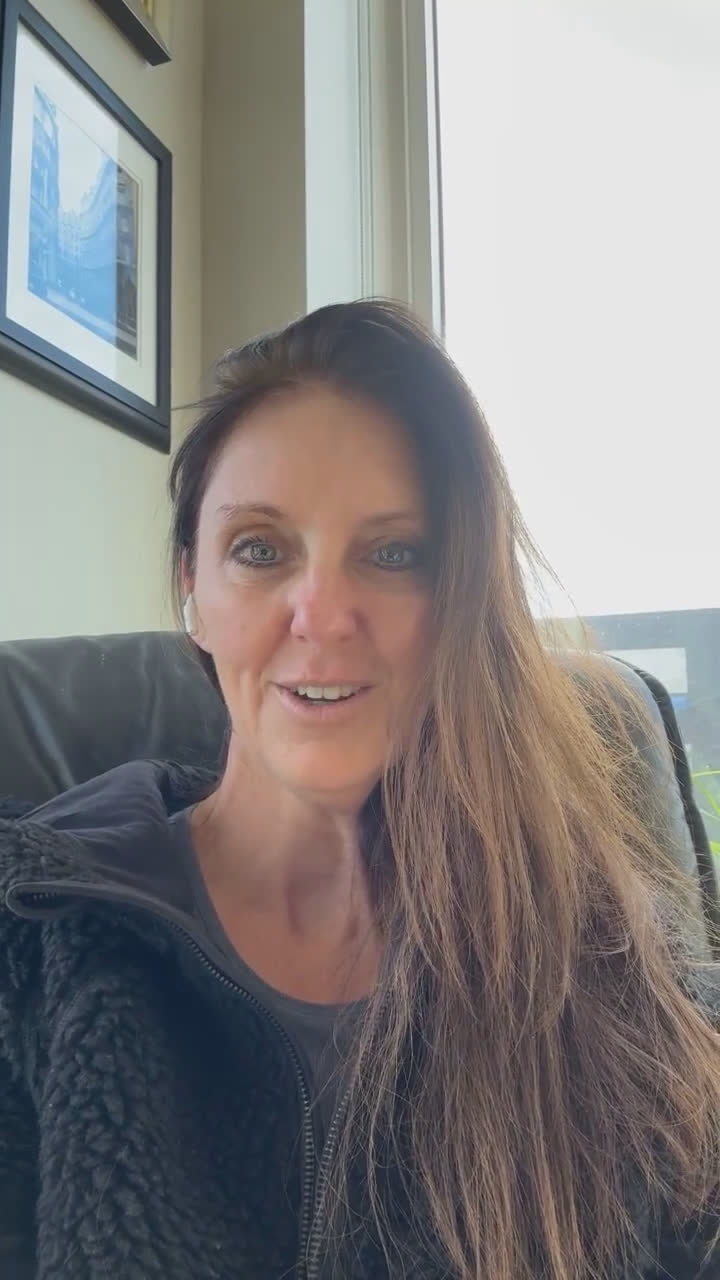
Jean Nichols explores leading with authenticity through real-life coaching examples, centering change, personal blind spots, and balancing people and tasks while inviting reflective breath and questions to start a conversation.
Jean Nichols talks about leading with authenticity. She like to bring in a lot of real life examples with her clients. Simply invite you to breathe, to find your breath, hold space for your breath. Happy Monday.
The only constant in life is change. In today's world, change happens even a little more rapidly. We get to continue to be our true, authentic selves. We're all going to lead with our own perspective, our own lens, and our own true north.
For me, one of the roles that I play is designing out change management strategies. Many times we get so focused on the task that we forget about the people. Choosing How Leaders and Organizations Drive Results One Person at a Time.
All of us are impacted by change. What is our natural way of thinking about that change? What are our blind spots? And what questions can we ask? Not all change is going to be happy change. But we can always choose how we show up.
I always get to lead with authenticity in my day and in my approach to how I do what I do. How do you approach change? What's your strategy? If you lead teams, what's the top one or two things that you do? Let's start the conversation.
Jean: I love when you comment, ask questions. And if you have questions of things that you're struggling with in leading with authenticity, pop comments in the chat. I hope you have a great Monday, and I look forward to talking to you soon.
Hey everybody. Happy Monday. I hope you're all having a great day. My name is Jane Mitchells. Just gonna hang out for a second while people join on in. Taking a breath, taking a pause as you come on in. Simply invite you to breathe, to find your breath, hold space for your breath. It's Monday, and I don't know about you, but Mondays often come with a storm or tornado. Good morning. Thank you for joining. Nice to have you here. So my name is Jean Nichols and I'm talking about leading with authenticity.
And I like to bring in a lot of real life examples with my clients. So experiences that I have had either with my teams as I lead a team of 20 plus people and bring in experiences with my clients. I'm a coach and a consultant. And bringing in those experience, I think for me helps to just make some of the concepts even a little bit more important and a little more valid. So today, leading with authenticity, I wanted to focus on the element of change. And there's always the quote out there. The only constant in life is change, right?
So we can wake up on a Monday, drive into work, if you go into an office and you might hit a detour, and then for the next three months you're frustrated about detours and road construction, or you could go into your office on a Wednesday and next thing you know there's an announcement for an organizational change and maybe your boss is leaving or a colleague is leaving. So change is very relevant. And I feel like in today's world, change happens even a little more rapidly. And so we get to, in those moments, continue to be our true, authentic selves.
And so everything we do, we always have that choice, right? We always have the choice on how we, how we show up. Now we're human, so we're going to be emotional, we're going to be passionate. We are going to have ideas, thoughts, opinions. We're going to have a natural lens in how we see the change, how we see the world, how we see a situation. We're going to have a blind spot. And a blind spot is always that part of us where you find yourself saying, I don't understand why you would think that way or why would you ever fill in the blank?
Most of the times when we make those statements or those comments, those are our blind spots because our brain naturally just doesn't think that way. I find I have a blind spot around people. I run high people orientation on every personality inventory that's out there that I've ever taken. I'm certified to coach in many of them. And I always lead with people first. So when someone comes to me and is so heavily focused on the tasks that need to get completed, but they forget all the people that are involved, my brain goes, well, did you ever consider Jackie's perspective?
Like, why wouldn't you talk to Jackie first? Because Jackie's the one most impacted. And my brain just can't comprehend that somebody wouldn't have started there. But we all have that, right? We all have that. Some of us are planners. Some of us like to make lists. Some of us don't like to do an activity unless there's a purpose to it. So very deliberative, very intentional. Some of us need to jump in a meeting and start right away with the human side. How was your day? How was your weekend? Your kid had a game last week.
Did they win? So we're all going to lead with our own perspective, our own lens, and our own true north. And that is amazing because that is what is true to us. What takes it to that next level is when we can say, okay, there's a change and I'm taking myself through a change, or I'm taking a team through a change. Sorry, my assistant has popped in to say hello. He pops in all the time. So when my camera wiggles, it's usually him nudging me that he needs a pet. But when we jump in, and I guess I'll ask the question first, if you're listening now or you're dialing in on replay later, When a change happens to you, not a change you're leading, but when a change happens to you, maybe it's at work, maybe it's with your family.
What is your initial go to? What's your initial reaction response? What do you do first to help you navigate that change? Do you ask more questions? Do you try to create a pause, a plan? Do you go away and think about it, noodle on it for a while, what do you do? For me, one of the roles that I play is designing out change management strategies. So for organizations that are going through a transformation of any kind, it could be a technology, it could be a leadership, it could be a reorganization, it could be an acquisition.
My job is to help leaders lead their teams through that change. And I bring that up today because I often find that there are many times we get so focused on the task that we forget about the people. And I already started the call or a little ways in saying one of my biggest frustrations is when we forget about the people, right? So I do my job with A purpose and intention, because it's also the way that I naturally think. And I was on a call this morning and I am working with a new leader. And their primary focus is for us to have a project plan, which is great because the change that he's going to take 800 people through in this organization is a technology change.
They're changing a process. They're using a new technology and tool. And he's very focused on all of the tasks. What does the technology team need? What is our process mapping? All of the things like that. Where he's not focusing is what are the dependencies? Some of the dependencies to get. What we need are people. We don't have the resources to get all the work that we need done in the timeline that we need it. Anyone else able to relate to this whole statement? It doesn't matter what it is. We are all getting stretched a lot thinner in our days because organizations are putting more priority in work or they're not adding more resources.
And that's just kind of the state that we're in right now. And it's been like that for a while and people are getting tired. And so I kind of had to pull out one of my resources, and I always have a lot of resources. So today's book is actually written by a colleague of mine. Walter is one of the authors here, and I've known him for several years and I've learned a lot from him over the years. And this book is called Choosing How Leaders and Organizations Drive Results One Person at a Time. And I had to pull this resource out to go get a particular tool in here so that I could talk and communicate to this leader why we need to make sure that we are focusing on the people.
Why we need to identify who are going to be the people that are going to resist this change the most. And what's our strategy to help them feel comfortable? Who are the people of the 800 people? Math will. Math. Out of 800 people, you are going to have 200 people that are probably going to be really good with the change, maybe even excited about the change. You're going to have 400 people that aren't going to be excited about it, but they're going to do it. And you're going to have 200 people that are probably going to be the naysayers and the people that are going to drag their feet.
If you think about an iPhone, they're the people that. Or a Samsung, whatever technology you use, those 200 people that are going to be your Resistors are resistors for a good reason. But they're also probably not the people that are going to hit update the update right away. They're going to wait until the phone forces an update because they don't want the change. They like the things the way they are today and they just want to stay there. But we can learn a lot from all of the above. We can learn a lot about why somebody is excited for something new.
We can engage them. We can get them on board with messaging. We can have them help test and pilot things for us. We can learn things about the resistors. What is their biggest hurdle that they have to overcome? Why do they not want to have this change? Because sometimes inside there, there are some really good nuggets of information that we might not be thinking of because we had a blind spot. And so I bring that up today because all of us are impacted by change. If not every day, probably every week or every month in some way.
It doesn't even have to be big. It can be something really, really small. Like you go to buy your vitamins and they no longer sell them. They discontinue it. So now you have to find a new vitamin or whatever it is. But it's really important for us to remember what is our natural way of thinking about that change, any change. What are our blind spots? And what questions can we ask to make sure that we can go through whatever that change that's coming is in our best light. Because not all change is going to be happy change, right?
Sometimes change is going to be even worse than just doing the same outdated thing that we're doing today. But no matter what happens, whatever comes out our way, we can always choose how we show up. We can choose how we think about it. And if our first tendency is to create a plan, create the plan, ask the questions to get the details. So you can create the plan. Because there's comfort in that. If you are somebody who is leading the 800 people who are going to go through the change, you can do it a couple of ways.
You just force it on them. See how that goes, see how people react to that. And if they embrace it, the change impact can be really hard for people in that way, especially if they've been doing the same thing over and over and over for 5, 10, 15 years. Or we can see people where they're at and we can start to help them move forward and create an environment where people can ask questions, create an environment where people can ask what they need. If you aren't managing the change. If you aren't the person leading it, cool.
How might you get involved? Or at the very least, how might you ask the questions so that you can embrace whatever's coming next in a way that is authentic to you and supportive of what's to come? And if that change is going to bump against all of your beliefs and what you know to be true, bumps against the culture that you've grown to love, then we always have a decision point of what happens next, right? We can lean in, we can ask more questions. We can dig in our heels. We can make it our own change and start to plan out what that looks like.
So on this Monday, I kind of dove right into this whole change element and leading with change or experiencing change, because no matter what, every single day, it's gonna happen. It's Minneapolis, it's fall, the leaves are changing. I may not really love winter. I mean, I love snow. I don't love cold. But I can do two things. I can continue to complain about how much I don't like the cold, right? Or I can start to get a new sweatshirt, change how I dress so that I can be more comfortable. I can choose to go for a walk and see the changing leaves and embrace what is happening seasonally around me and still feel present in the moment, still feel excited about what's to come, and still be able to use my voice to say, yeah, I'm not ready for this.
But at the end of the day, I always get to lead with authenticity in my day and in my approach to how I do what I do. And not everything's going to be easy, but we have all the tools we need in our tool basket to do hard things, to do hard changes, to be our true self. As we go through those things, sometimes that requires trust. Trust in our leadership, trust in our team, trust in our environment, safety in our job, safety in our environment, safety in our team. But we always get to voice into that.
And if you don't have that voice, that's a different conversation. But I'd love to hear, how do you approach change? What's your strategy? If you lead teams, what's the top one or two things that you do? Let's start to have more of the conversation, because I don't have all the answers. You might not have all the answers, but the more that we can talk about, what are the tools or strategies for us to help our teams lean into change, whatever that is, that's when we can create a better plan. That's when we can get more people on board.
It's not going to make it any better, or it's not going to make it easier. It just might make the path smoother. So I can't wait to hear your comments. Once again. My name is Jean. I love being out here with you guys. I love when you comment, ask questions. I'll pop back in later. I'll go through the video again, and if you did ask any questions, I'll get a notification. I promise to always respond. And if you have questions of things that you're struggling with in leading with authenticity or showing up as a strong leader, showing up as an individual, pop comments in the chat.
There's a whole series of all these amazing Cadre contributors that are out here ready to help all of us lift up. I hope you have a great Monday, and I look forward to talking to you soon.
Reactions and comments are for members. Joining is free and takes a minute.