A host reflects on a personal rule: hurt people hurt people, exploring how that premise shaped their recovery from childhood sexual abuse and how releasing personal pain informs their racial equity work and community interactions.
Cadre: I am a survivor of childhood sexual abuse. He says the idea that people don't hurt other people unless they'd first been hurt themselves. Cadre: It makes his life better to act under the premise that hurt people, hurt people.
I bring that to my racial equity work. The more I release the negative impact on me, the more I can take action against the systems that race has created in the world. What is hurting you so badly that you think trying to hurt me will heal it? Can shape how we interact with each other in community.
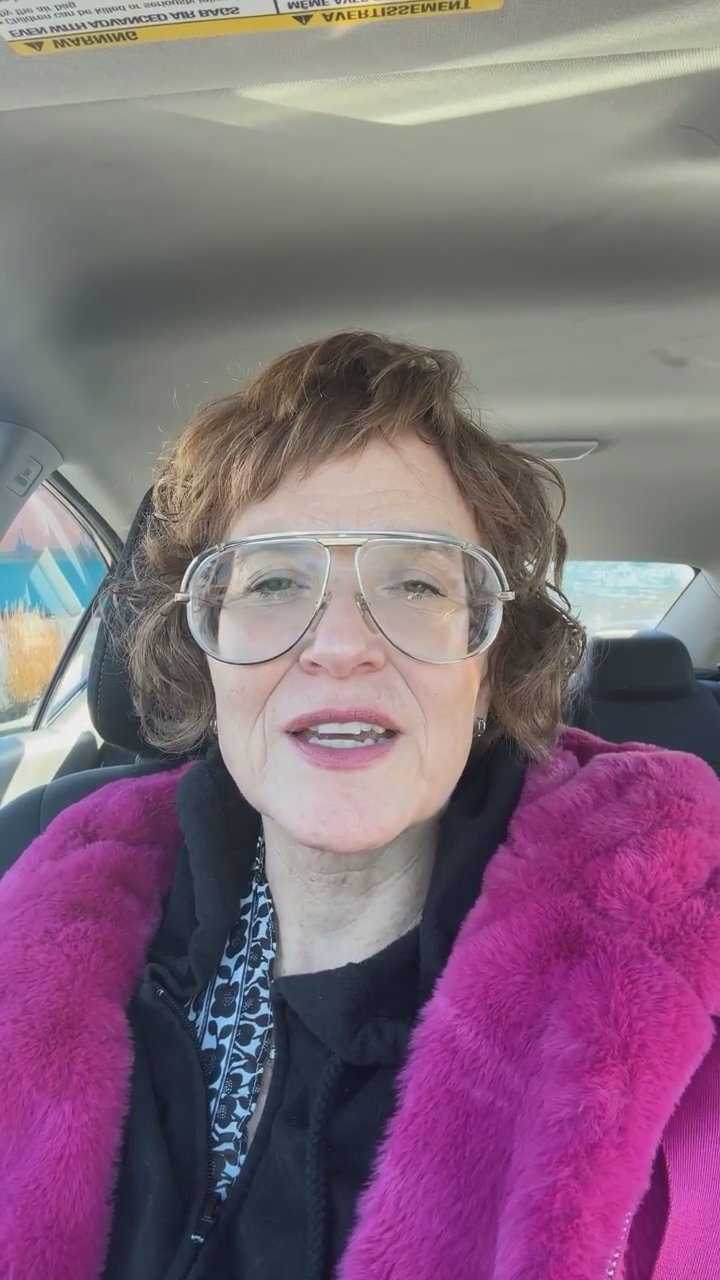
Good morning, Cadre. How are you? Let me know if you're there. It's always good to know. I am in Minnesota right now and I prepared for things to be chilly here, but it's a little even unseasonable for Minnesota, a little chilly. So I had to go to Marshall's and buy a pink fur coat. I mean, if you're going to emergency buy a warmer jacket, you might as well make it pink fur. So here I am. I just met with a coaching client and I'm in the parking lot after that meeting. And I've been here for other work and other play and family stuff, mostly family stuff as well as work.
And I've been thinking, I was looking over my rules of engagement. I, you know, as I said, I literally have a list. It's not over there because I'm in a car. I'm in a rental car. Um, but I've been thinking about one in particular that I'm going to share about today. But if you're out there, let me know. Put a word in the chat about how you're feeling. And if you want to put a random number between like 1 and 30 in the chat, then I will know for future reference which of the rules of engagement I should engage with.
And I was going to do 15 because today is the 15th, but I've decided to do 16, which is hurt people. Hurt people. And that one hits very, very close to home to me. And it's a very important one to me because it has given me so much freedom in my life and it's given me so much grace for myself in my life. This idea that people don't hurt other people unless they'd first been hurt themselves. That nothing that anybody ever did to me would have happened if that hadn't happened, something hadn't happened to them first.
Are there exceptions? Maybe. Maybe there are. I have found it's not useful for me to try and find those exceptions because even if there are exceptions, it makes my life better to act under the idea and the premise that hurt people, hurt people. It has opened up my life and my grace and my world way more than trying to think everyone is evil and bad and out to get me. Has ever done so. Hurt people, hurt people. Now it be controversial because it sounds like I'm trying to excuse behavior. So I'll tell you a little story so I won't go into detail.
I am going to mention the fact that I am a survivor of childhood sexual abuse. And I'm going to say that it had Some. I won't say it's unusual characteristics to it because I actually think what happened to me is more common than people want to know. But since we don't talk about it very much at all, there are aspects of what happened to me that are quite unusual and extra terrible. I only mention that to say I started grappling with that reality when I got sober at 19. And I was in. You know, I did some very intense therapy work in my early 20s.
And it was really a struggle for me to comprehend how is it that one person could treat another person that way, let alone a child. How is it that people can treat one another so badly? And I was mad. These people did such terrible things to me. I wasn't as mad as maybe you would think, because they had also convinced me that I deserved it. And so, you know, that took a while to work through. But something happened. When I was about 24 or 25, there was a movie that came out, and the movie is called Dead Man Walking.
It stars Sean Penn and Susan Sarandon. Susan Sarandon plays Sister Helen Prejean, who to this day is an activist against the death penalty. She's a nun and she works with. And she wrote a book or. I don't know the exact. All the history. But her story is out there and pretty clear. She was working with death row inmates, and she was treating them as fully human, and she fully believed that their full humanity was intact inside of them. This is my words, not hers, but this is what I took from it.
And they made a movie out of her experience where Sean Penn represented a number of the guys that she worked with on death row. And I saw this film, and I saw her completely value his humanity. She did not care what he had done. She knew what he had done. She knew it was wrong and bad, but she didn't think he was wrong and bad. And she treated him like that. And he has an enormous breakthrough in the film. And I have not been able to watch it since because I was sobbing and I left the theater sobbing.
And in the wake of that, that day, that afternoon, I had a. I had a burden lifted from me that has never, ever returned. In that I understood that my perpetrators had only done to me things that had been done to them and that we were fellow travelers. We were not separate. I was lucky enough not to have acted out my abuse on other people, but they weren't that lucky. They weren't lucky enough to escape having hurt someone else the way that they hurt me. And that burden was relieved from me. That burden of not seeing their humanity.
And I understood and can now say that not being able to see someone else's full humanity is such a moral, spiritual, emotional wound to me. And it doesn't mean that I'm like the queen of resentments. I'm so good at resenting people. It's not that. It's not that I forget. I forget other people's humanity routinely. But I do understand that the work in that instance is not to nurture the grievance. The work in that instance is to bring my piece of humanity back that I'm releasing to their care. And usually they're not going to take good care of that piece of my humanity that I am giving to them by refusing to acknowledge theirs.
And so I understood that day that hurt people, hurt people. And I don't feel like I am trying to make excuses for bad behavior. I bring that to my racial equity work. It is why I focus so much my work on white people, because I understand that not seeing the full array of human characteristics being held by people of color, which is one lens on racism, means that I am giving away pieces of my humanity to that social conditioning around race. And that's part of what white people are asked to do in exchange for whatever it is we think we get in return, which is a whole other story.
But in that context, I am not trying to make excuses for the negative impact white social conditioning has had on the world. I'm just saying it's also had a negative impact on me. And that the more I release the negative impact on me, the more I can take action against the systems that race has created in the world. Hurt people, hurt people. It is just as true for the guys. Let's say there's somebody who cut me off in traffic. A minor example. It doesn't matter that much. It still makes my day better.
If I can say maybe he's got someone in his life who is in deep distress and he has got to get there soon. The sooner he can get there, the better. I'm just gonna let him go with love, and I hope that everybody's okay. Now, how true is that story? I don't know. But I'm gonna tell myself a story one way or another. And I might as well tell myself a story that keeps my peace. That's actually another one of my rules of engagement is, you know, protect my peace. Understanding that about other people protects my peace.
Not understanding it doesn't actually do anything negative to them. It can shape how we interact with each other in community Though, speaking of the fact that it's Tuesday and we're talking about community, it can shape how we come together with each other in community. If I think you're behaving badly because you're an evil jerk, I am going to set up systems and policies that are very, very different than if I think you're behaving better because something has hurt you. You know, online, if somebody comes at me in the comments, for years I couldn't say anything because I'm an elected official.
And then for a little while, I could say something. And I did my best to say something slightly thoughtful, but also I got to vent my spleen. A. I remember there was. You know, there was. I won't even recount it. It's not worth recounting. But I just vented my spleen a little bit and I got kudos for it because it was funny and because people were like, oh, yeah, that racist woman had it coming, or whatever. And I wasn't terrible, but it wasn't who I wanted to be. And so I started asking this question.
What is hurting you so badly that you think trying to hurt me will heal it? And sometimes people would come back with, well, because you wrecked my city. That's what's hurting me so badly. And I would just leave it alone because having to ponder the question at all, I think is useful for me and for other people. What is hurting me so badly that I think hurting someone else is going to heal it? Spoiler alert. Hurting someone else never hurts the places I've been hurt. Setting a boundary can do that.
Setting a boundary can do that very well. Advocating for myself can do that. And sometimes advocacy is just a hard no or whatever. I'm not saying don't protect yourself. I'm just, you know. But a boundary is more. You can behave that way, but this is what I will do in return. It's not trying to control other people's behavior. Anyway, I'm getting off track there, but you get what I'm after. What's hurting that person so badly that they think trying to hurt me is going to heal it? Ooh, they are having a much worse day than I can even imagine.
If they think being mean to people on the Internet is going to solve their problems, what lack of resource must they have in their life that this is what they're turning to? I genuinely do think that. And that's really eased things up, and it's made it easier for me to come on Cadre and reveal myself. It's like, look, if you want to come at me for the vulnerability I show here. That tells me a lot about the lack of resource in your life. And it actually doesn't really harm me in any way or doesn't harm me more than shutting things up and not sharing what I've learned with other people was harming me.
So listen, Cadre, if you're there, maybe write a note in the chat or something. I will see you down the road. Maybe I'll even see some of you as I trudge the mean streets of Minneapolis here this next few hours that I'm still in town. But I really wish you well this week, and for my part, I hope it's easier for you to understand that the people who are behaving badly have been hurt and have not healed from it. And I really hope you have a great day and a great week and that if you're not having a great day or a great week, you have the resources available to you, including inside Cadre, to help you get to at least the next step of feeling better.
Have a good one, everybody.
Reactions and comments are for members. Joining is free and takes a minute.