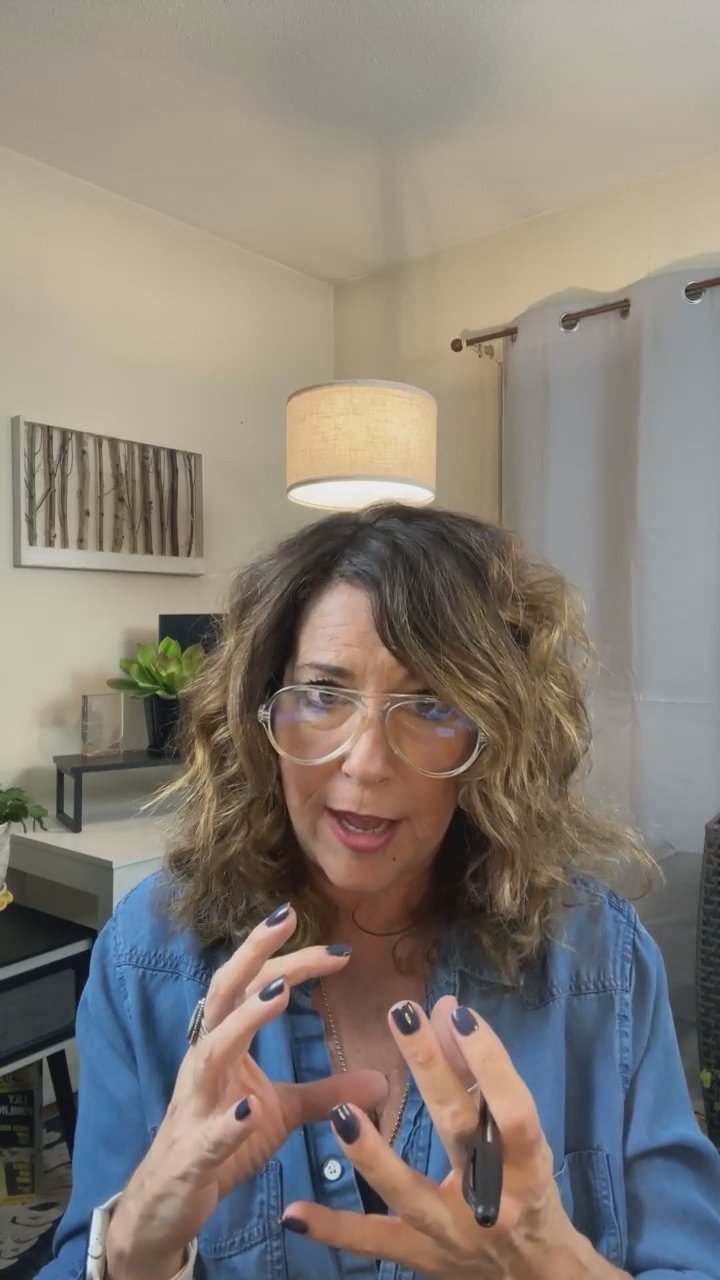
Tiffany Norton discusses her late diagnoses of ADHD and CPTSD, how PTSD can trigger paranoia and spirals around political events, and examines group dynamics, loyalty, and the tendency to silence dissent in cohesive groups.
Tiffany Norton returns to host Comedy Centered. Mel Robbins talks about her diagnosis of attention Deficit disorder and CPTSD complex post Traumatic stress disorder. Women have PTSD more frequently than men and they're often not diagnosed with it.
Tiffany is convinced the government is tailing her. How it manifests is she gets stuck in fight or flight. She appreciates the support she gets from her colleagues and bosses. She's always on the hunt for more ways to discuss psychology.
In groups with high cohesiveness, members express solidarity, right? And it looks like a party. These groups have a tendency to adopt stereotypes about anybody who's not in the group. And when, with these highly cohesive groups, there's a tendency that opinions get silenced.
The first group we have to figure out how to exist in is our family. Loyalty to a group is fine to a certain extent, but when that loyalty to the group gets confused or morphed into morality, not what the group does.
You guys, thank you so much for showing up. Everybody should name their disorder. Empathy is low for your problems. New week, New Monday, new Us. Keep it in perspective. Have a good night.
Hello everyone and welcome to Comedy Centered. Hey, it's been a few weeks. Yeah, sorry about that. Hi, welcome Cadre Sphere. I am Tiffany Norton, your host every Sunday at 6pm Central for Comedy Centered. A lot of things happened in the last couple of weeks. I took a little bit of a break, kind of a mental health break. Hey, welcome on in. Mel, how are you doing? I am trying to look and get some feedback. I did the thing you're not supposed to do when you're depressed and going through a thing. I cut some bangs.
I don't know if I like it. We'll figure it out. But welcome, welcome, welcome. It feels good to be back. I. Like I said, I took a couple of weeks off. I was on a little bit I've shared in the past. I am someone who is late to the party on my diagnosis of a couple things. Late diagnosis of attention Deficit disorder and CPTSD complex post Traumatic stress disorder. And I gotta say, like it was, it was jarring the last couple of weeks. Now I don't do political talk. I don't try to, you know, get into any of that stuff.
Oh, hey, Ms. Jules. I missed you. Sorry I've been gone so long, but the election had me feeling some kind of way and it doesn't really even have so much to do with the actual incumbent president as much as it that the future incumbent president and former president reminds me very much of my father and. Hey, thank you. Hey, good evening to you as well, Ms. Mel. And like my dad's got the comb over and the blue eyes and the strawberry blonde hair. Like it's, it's. And he's a lawyer and it's. Anyway, it's some.
It's too close for comfort in a lot of ways but. And I talked about this too as well. But when I get into my CPSD and so and PTSD and I'm not sure if anybody in the group or maybe watching this in the replay suspects that maybe this is something that they have. A couple things that I want women that are listening to know. Women are generally have PTSD more frequently than men and they're often not diagnosed with it. They're often diagnosed with depression or like in my case they kept telling me I had anxiety or perimodal.
What is it? Perimenopausal. Whatever. None of that was right. But anyway, so. But I have a nickname for my PTSD brain because when I'm in a PTS breakdown it. It's embarrassing to talk about but I think it needs to be shared. I. I Pride myself on being a logical person and a rational person. When I am in that state, I. I am more than likely acting rational and whatever, but I doubt anybody else sees it that way. But the day after America voted and the decision was made, I found myself. Hey, Miss Anna.
Good to see you. I found myself in a real. Like, a real, real spiral. And I live, you know, alone. I maybe shouldn't be saying that on the Internet, but I do. And when you live alone, there's no one to really talk you out of your paranoia. And for me, that's where it manifests. I get very, very paranoid. And I got so paranoid, honestly. There were things popping up on Facebook. There was. I. There was. There were, like, cues. And. And I. I've also shared, too. I was. I'm trained in law enforcement.
My background is. I studied to be a police officer. Never became one, but. So I was convinced that I was being surveilled by the government guys for real. Like, I was. I'm like, this is it. They're already surveilling us. It's happening. I kind of went nuts on some people on Facebook. I, like, had way too much of a reaction. I overreacted to pretty much everything, and that was because I was stuck in fight or flight, and I'm too broke to flight. So fight. Right? So Friday, we had the election. Tuesday.
Wednesday morning, I opened my one eye. I'm like, oh, God, it's still real. And I'm depressed. Thursday, I'm in a fit. Friday, I'm convinced the government is tailing me, and I destroyed my cell phone. I sunk my phone in water. I took the thing where the SIM card goes in even though it was an E sim, Took that out to make sure the water would go inside the phone and destroy it. That was an expensive PTSD meltdown. All my friends are like, did you have the insurance? And I'm like, no. But anyway, I bought a new phone.
Obviously, I'm here, but that's. That's a little bit of it. And I. It. What. But how it manifests in me is that when I'm really, really triggered and I'm really, really scared, I have what I call my lizard brain. Well, that's. What. That's. Oh, no. Right, man. Right, Anna. And. But I did it, you know, it was my choice to nuke the phone. And who knows? Maybe they were listening. Maybe. I'm just kidding. Let's not feed into my paranoia anymore. Also, don't watch as many crime shows. Maybe me getting paranoid.
But how it manifests is I get stuck in fight or flight. And so I've nicknamed it Patricia. You know, Patricia is my PTSD brain. Right? Oh, Hattie's right. Oh, heyday, Heyday Tom. Oh, I like that. Pretty sure you're not the only one who had that reaction. Yeah, yeah. It took a little while to make peace with it, but it, because I was trained in law enforcement, it, it, I'm like, well Tiffany, if you really are being surveilled, are you really taking the steps to avoid surveillance? So I like was for probably a week and I could talk about this now I couldn't talk about it at the time even to my friends that were calling me and like, are you okay?
I'm like, yeah, yeah, I'm fine, I'm fine. Because that's the other thing. I always pretend like everything's fine. Right. Especially when it's absolutely not fine. But I was leaving my house only once a day and I was leaving at 3 o'clock in the morning. I was setting an alarm because I was like, that's going to be the time I'm going to be least likely to be followed. Real talk. So I've talked myself down. I know that one of our co workers and one of the hosts online, I'm not going to call her out on this.
I sent her a very frantic email message. I'm like, I'm very nervous about being on the Internet. I can't see who's seeing me. I'm very paranoid. And she was very sweet about it. She's like, okay, well you don't have to if it doesn't feel okay. And I'm like, thank you, thank you. And that's what I love about Cadre. Even though we don't meet up all the time and we don't see each other in the same space. Like I can't imagine working with some other organization or some other boss where I was like, yeah, I'm pretty sure they're watching me and I have the panic right now and they're just like, okay, well do what you need to do.
That's all right. So I really appreciated that. I really appreciated that from the support staff and I've, and I've individually thanked the person who, who was, who was kind about that as well. But, but so taking a step back from that, taking a step back from the, the, the election, the decisions and all that stuff. But still I want, I always want to keep it within the framework of some light heartedness, obviously personal stories, but I'm always, I'm always on the hunt for more interest, more ways to discuss psychology, especially group psychology, because I think that's where a lot of us are having difficulty navigating and especially with the holidays upon us.
I mean, you know, this Thanksgiving, I was still in the middle of my ptsd. I basically said, I can't come. I didn't go. I didn't go to my family's Thanksgiving because I knew I was probably either gonna either freak out on someone or. Thank you, Anna. Anna said, so, glad you're in here. Yeah, I figured I was either going to freak out on someone or just burst into tears, which is what was happening a lot. And I just, you know, I'm embarrassed from that when I have. When I can't control my emotions.
Right. So. But during that time, the good thing about it, when I get that way, the good thing about it is that I get into hyper study mode. I start reading, I start absorbing. I'm like, we've got to solve this. We've got to look into stuff. And what was funny was I was looking for a different book that I had read in college, and when I was doing it in my pile of books, another book fell out in front of me that I'd forgotten about. And it's called Group Think. Okay. Now this is a book that I was required to study in law enforcement.
And it was written a while ago, I think, in the 70s, 60s, 70s. It's. It's not a new book, but it goes through the dynamics of what can happen when there's a highly cohesive group that you belong to. And what I mean by highly cohesive is that there is a strong. There's a strong pressure within the group to adhere to the group's norms. Okay, and this can come in a variety of. Of formats, right? I mean, it could be a church group, it could be work group, it could be, you know, political group and all.
Oh, hey, hey. Dayton saying he agrees. But group Think, when you, when you have a, like, let's talk about the word loyalty, what does loyalty really mean? Well, if you break down the term loyalty is that you're basically following someone, not yourself. And your belief in that other person is so great that it's actually greater than yourself that you have loyalty to them, that you defer some of your agency to them. You, you, you essentially turn your life over to them being the decision maker, the group leader or whatever, right?
And if that person's, you know, thoughts and feelings are, you know, if they're, if they're benevolent, that's fine, right? So, but group think. And so I'm going through. And it's funny because it's funny how you highlight stuff. I mean, I, I was studying this 30 years ago. I'm 52, so I was in my, you know, 30 years ago, I was in college and I highlighted stuff and I went back to the stuff I highlighted when I was in school and I was like, oh, okay, you know, some of this I have been percolating on for a while.
But so in groups with high cohesiveness, members express solidarity, right? And it looks like a party. It looks really fun to be in this group. There's mutual liking, there's a positive feeling, there's a lot of positive feelings about the groups. There's a lot of energy. When you go to those meetings, it's like, yeah, it's us. But part of that highly co. When you're very highly cohesive like that to a group or that group narrative, it, the, the, the flip side of that is that someone is not in the group, someone is othered.
And these groups with this high level of cohesiveness have a tendency to adopt stereotypes about anybody who's not in the group, anybody who's othered. And he makes this argument, this is a political book, right? And he goes through and analyzes a lot of American presidents and instances where mistakes were made, mostly military mistakes made because of these highly cohesive groups. And what's interesting is the example I remembered from school when I picked up this book, the one thing I remembered about it, I went back to that chapter, it was about jfk.
Now John F. Kennedy was the President before I was born, right? But of course we've spent a lot of time studying JFK over the years and all that stuff. And early in his career, early as a, as a president, there was this thing called the Bay of Pigs fiasco. Now, depending on the age of the people in the group or the replay, maybe you know a lot, maybe you don't know much, maybe you just remember them talking about it. It was a, you know, a test question at some point, right? So when JFK came into office, he found himself in a very highly cohesive group.
Everybody was very excited about the pull of this very magnanimous, charismatic, good looking young president. And they all wanted to suck up to him and you know, they wanted, they wanted him to like them, okay? So they weren't telling him no when he was wrong about things. And when, with these highly cohesive groups, there's also a tendency that opinions get silenced if they don't reinforce the narrative that everything the leader says is right. Okay, so one of the problems with the Bay of Pigs, they made six calculations.
The estimate in the book is they made six decisions that were wrong. But the six sixth one is the one that always stuck out to me when I was reading this. So in their effort, the people that were surrounding Kennedy, some of them had some military experience, but they did not necessarily have experience in Cuba, which is where the Bay of Pigs was. And at that time, it was under the regime of Fidel Castro. And the United States wanted to look like they were. They wanted to keep their hands clean, like they weren't interfering in Castro, but they didn't like Castro and they kind of wanted them out and they kind of wanted to help the rebels that were fighting Castro.
You know, they want to help him without looking like they were helping them. Right. So they couldn't put together this big plan, tons of money. The, the idea actually originated with Nixon and, and Jager. Hoover liked it and all this stuff. Right. And, but no one. And this is the part that's so funny to me, but this is what's dangerous about groups like this, where you're required to be loyal with and surrender your critical thinking skills to adhere to the group's policies. No one looked at a map when they were looking at these ideas.
So they looked at a map. Right? They looked at what Cuba was on a two dimensional map. Well, a two dimensional map is not a topographical map. So they thought that they had this area for the rebels that they were going to drop off to retreat if it didn't go the way that they wanted and they could run back into these mountains. But no one looked at a topographical map to realize that the area that they had selected had it like an impassable cliff. No one looked at a topographical map while they were planning a battlefield incursion, a surprise incursion with like, with like the, you know, the scuba diver, the swimmer guys, the whole bit.
No one thought of that. Obviously it didn't go out well. It didn't go well. You know, they vastly underestimated that cashier would notice that we had arrived. Well, the island's not that big. They noticed, you know, there was a lot of miscalculations. But. And he goes on in this book, and I believe the author's name is Janice, if you want to look it up. It might be hard to find because it's old, but he goes on to give many, many more explanations. But it really got me thinking about the pressure I've been feeling within my own family, I have a lot of.
I have a lot of family members that support the incumbent president. And that was part of why I couldn't go to Thanksgiving. Because it's not that they're. It's. It's almost like the adherence to the. This group dynamic, of this idea around this. Around this strong man is so thick that they. That you almost have to surrender critical thinking skills. If you want to have a relationship with people that are in this group you like, you have to adopt their rules. You have to adopt a position of not criticizing him.
You have to change it and adhere to that group tendency. And, you know, I'm neurodivergent. It's not going to happen. I'm not doing it. I don't agree with them. I'm not going to say I do. But I don't want to lose these relationships that are really more important. You know, people come and go, elections come and go, all that stuff. And I'm not saying that this isn't critical, and I'm not trying to minimize what the potential costs are of us getting this. This decision wrong. But, you know, my mother's 82 and my stepfather is 98.
And all they're seeing all the time on the news, they're being pumped full of fear and they're terrified. And so, like, from that perspective, some of their decisions make sense. And that's why someone being a strong leader can seem like, like, Like a good thing. Like, I'm just going to turn my agency over to him. He seems like he knows what he's talking about. He seems confident, more confident than I do. And, you know, he's just the topic. But the issue and what I'm really trying to get at with this is that these groups that we first encounter, the first group we have to figure out how to exist in is our family.
And how we exist in that really is going to set the framework of how. What groups we're attracted to and how we work out in other groups down the line. And as I've, you know, said before, as someone who's neurodivergent and doesn't necessarily understand group orders, a lot of times I. Hierarchy goes over my head. I've spent a lot of time as an outsider looking in, trying to understand these groups, and it just really resonated me with me that it's. It's that I think everybody's so tired of trying to think for themselves that they just want to hand it to someone and have Them, do it for them.
And I can certainly understand that desire. It would be nice if we could just hand the reins over to someone. But the consequences of that is that if you hand over the reins, they're going to take you where they want to go, not necessarily where you want to go. So loyalty is kind of where I was starting with. Loyalty to a group is fine to a certain extent, but when that loyalty to the group gets confused or morphed into morality, okay? Like, the loyalty to the group becomes the morality, not the adherence to the group is the morality, not what the group does.
And if you think about family dynamics and if you think about, you know, we've talked about, like, Bowen, Bowen's theory of family dynamics, like the scapegoat, the golden child, all of that stuff, how you had to show loyalty. Oftentimes when you ask people if they had a bad childhood, they will say, absolutely not. I had a wonderful childhood. My childhood was wonderful. My parents were wonderful. And then you ask them a different question. You say, have you ever had a traumatic experience? Oh, well, yeah.
I mean, you know, my father, you know, was violent and, you know, and my mother had, you know, addiction problems. And you're like, but I thought you said you had a great childhood. And he's like, well, yeah, they did. I had a great childhood. The loyalty to the family unit becomes the morality, even though you weren't treated well necessarily, you know, for whatever reasons, you know, it's not to blame the parents for everything. They did their best. You did your best. But we learn at a very young age that it is immoral to be disloyal to your family.
But those things are subjective. I feel like I'm actually being a loyal family member by staying in my truth and saying, I love you. I'm here for you, regardless. I do not agree with you at all. I feel like that is me being moral because I'm operating from what I believe is truth, my truth. So I know it's difficult, and especially with the holidays, with this rub, how do we navigate around it? You know, sometimes you can't navigate around it. If someone is basically questioning and accusing you of being unloyal to the family because you're not being loyal to this belief or this other person or this election or this idea.
I don't think that's true, and I don't really feel like that's a fair argument. But it's an argument that people really, really make a lot. Because what do we want as a group? We want harmony. We want cohesiveness we want everybody to just get along, you know, but if everybody just gets along and everybody keeps their mouth shut and, you know, someone knows how to read a topographical map and realizes that the battle plans are pretty flawed, that there's no place to retreat because there's a cliff and they don't have climbing gear.
But that person really wants to be loyal and really wants to adhere to the group. They're going to keep their mouth shut about that. And that's when really dangerous things can happen. So sometimes being loyal, I think, is by staying in your truth and being loyal to you first, then you can be loyal to others. Then you can be loyal to family members and friends and an appropriate measure, you know, I. When people say agree to disagree, well, there's. That's to a certain extent. But when you're talking about whether you believe someone is a more valuable human and someone is a less valuable human, then that is against my morality.
And I cannot have loyalty to a group that has different morality than I do. Honestly, I can't have loyalty to any group. I'm not a joiner. I have saved so much money in my lifetime because I've never had a gym membership that once I was like, I'll go on your free pass. I'll do the free week. That's it. No loyalty. No loyalty to myself that I'll work out either. But anyway. Well, anyway. Oh, man. The time always flies. Oh, my God. Go so fast. You guys, thank you so much for showing up. Thanks for, like, Anna and.
Is it Dayton? Hey, Dayton. And my Jules. Jules has been here since the onset. My Ms. Jules. Really appreciate it. And, yeah, I. Back on. I'll try not to destroy my phone anymore. I will. I'll see you guys next week. And, you know, we'll stay strong. We'll stay strong together. But you know, just remember. I don't know if anybody remembers the original. The. There's the movie Fargo, Right? But there's the television Fargo. And the very first season. The very first episode. I think the guy does something really bad.
There's a poster in his back. Oh, thank you so much. There's a poster in back of him when he's. When. When he does this terrible thing, right? He kids, he commits. But behind him, there's a. There's a picture of all these fishes going one direction. They're all yellow. And then one red fish going the other direction. And the poster says, maybe you're right and they're wrong. We'll find out. Oh, thank you so much. Thanks for writing in. Oh, you like this? Hey, Dane likes the Patricia story. Yeah, Everybody should name their disorder.
You should have a nickname for it. You really should. You should nickname it. Have fun with it. But, yeah, when, When. When people come around and Patricia's in charge and Tiffany's not in charge and Patricia's in charge. Empathy is low for your problems. That's how it rolls. Anyway, you guys have a good night. Stay centered as best you can. New week, New Monday, new Us, Right? We're all monkeys just flying through space on a big rock. Keep it in perspective. Have a good night.
Reactions and comments are for members. Joining is free and takes a minute.