Risks and benefits of services: What can providers do, is success guaranteed, and what if it doesn't work.
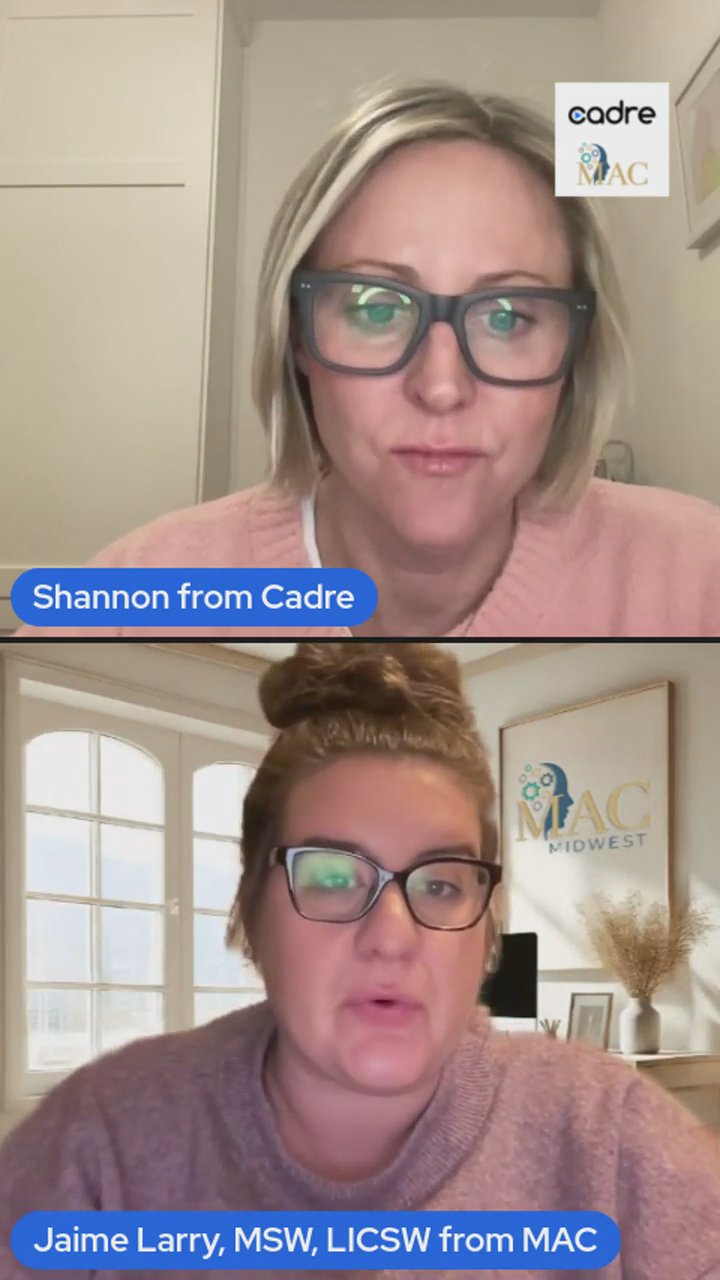
We are here tonight with our wonderful friends at Mac Midwest Minnesota Autism Center. Shannon is a peer who understands what it's like to take care of someone who actually has autism, ADHD, and anxiety diagnosis. Jamie Larry is the director of QSP services at Mac. We talk about topics that parents and caregivers have questions about.
Mac provides services of all kinds. The mission of Mac is to improve the lives of people living with autism. One of the realities of autism is there's also wait lists. Part of what we're doing with this series is we're trying to provide something in the interim.
ABA therapy can be 40 hours a week for someone as young as 3 or 4 years old. Always, whenever you're talking about benefits, you should always talk about the risks. Are people open to it typically or is it maybe painful?
This is a live Q A. If you are joining us live right now in the app, we want your questions. Please continue to ask us questions or we'd love to get them.
Even if you're at an outpatient therapy provider, you're still working with humans. Sometimes even talking about staffing, staff changes, changing what programs we're working on or what we're going to focus on can really provide that opportunity to hit back up into now.
Make sure that those people are giving you unbiased approaches and opinions. Many schools and now patients have. multiple clinician on your child's team. That should help offset some of those biased opinions. Feel free to ask questions, comment, pop in with anything.
Mac: How do you know if it's working? How would we define working? Mac: Working is a loose, subjective term. Results focused is what I want you to think about. If you visually or in your day to day life aren't seeing progress, your kids still struggling.
If the goal is functional communication, what does that look like for them? It doesn't always look like vocal language or approximation. But at the end of the day, we're working with humans and we also have to be accepting if you start to plateau.
When you have an individual in ABA who is not progressing as quickly as the family wants, how do you help them recognize the small victories? Mac: You can talk with families about video recording sessions. Mac: Being able to point to things that the parent might not see is a gift.
Some families don't hear enough wins and they don't like, they, they struggle to identify wins for themselves. This is also where community can come in again. Share your wins with, with your community and with your providers.
Tonight we're talking about what if you get services for autism and they don't work. Sometimes you just need different staff. People grow, people develop, people evolve. Be willing to have those conversations with your providers.
ABA can be used for different, it doesn't have to just be autism. My concern is ABA won't be enough as a standalone because your child has complex needs. One therapeutic model is not going to work for everybody. Don't take anything off the table.
All of this, like this topic tonight, I think it's very much about going in with an open mind. And, you know, be results focused. Number two, I have recognized small wins and ideally, do that together. And then, number three, show progress over time.
If someone wanted to get in contact with Minnesota Autism, Mac Midwest, how would they do that? No one knows your child better than you. Continue to advocate for your child. We love it when you're here.
Foreign Happy Thursday, December 5th. Nice to see you all here in the Cadre sphere. We are here tonight with our wonderful friends at Mac Midwest Minnesota Autism Center. And we're here tonight with one of our Q&As, live Q&As, where we talk about topics that we need to talk about, that are hard to talk about, that parents and caregivers and folks have questions about. And sometimes if you're on a wait list or if you are just wondering about something and you don't have someone to ask, ask, you don't have a clinician or you don't have someone in your life who knows and you wish you had a place to do it.
We like to be that place for you. So I am Shannon. Hello. I am part of the Cadre team and I am not a clinician. I am not a mental health professional. This is my Cadre intro. I'm a. I am a person who lives with anxiety, myself and cptsd. And I am a caregiver to a child with autism. And so I am here as a peer, as someone who understands what it's like to take care of someone who actually has autism, ADHD, and anxiety diagnosis. And then we are joined with our beautiful friend Jamie Larry, who has a lot of letters after her name, who is representing Mac tonight.
And so, Jamie, do you want to tell us about those letters and then just introduce yourself and tell us who you are? Yes. So I am a master. I have my master's in social work and I'm a licensed independent clinical social worker. So that's what my letters stand for. And I am a clinician. I am the director of QSP services at Mac, which just means I am the director of our mental health professionals and are overseeing licensed professionals currently. And we provide broad mental health services and more direct oversight and case consultation for all clients at Mac and the services that they're receiving under aba.
Awesome. So I'm going to put that maybe so your job is to oversee all the people who interact with the kids and with the folks directly who are receiving care and you're helping them figure out, okay, what do people need? What does each individual need? And then do you yourself also give direct care to people, or is that something you did in the past or. I do. So I have my own caseload for psychotherapy that I provide. I also do assessments and or reassessments at Macro, as well as my entire department.
My entire department is able to do psychotherapy and we all do assessments both for intake families as they're Joining us. And for families, as their reassessments come up, whether that be annually or every three years, dictated by their insurance, we're the ones that provide that over overarching diagnosis and the recommendation for services. Awesome. And so that means that you sit with a lot of parents and you sit with a lot of people. And so I think that's important to know because our topic tonight is such an interesting one, and I love.
I love it. I love when you guys came up with it. You came to us and I think you shared. And actually, if you want to share again, sort of the impetus for this conversation, again, as someone who sits with a lot of parents who come into Mac, and I do just want to really briefly. So Mac provides services of all kinds. The mission of Mac is to. Is to improve the lives of people living with autism and to. Actually, you say the mission is that right? I got that right. Tonight. You were close by those affected with autism.
So whether it is an individual with autism or for their families. As families. Right. As caregivers, you are impacted by autism. That's right. Yep. And Mac is continuing to grow and expand its reach. And so it's growing into the states around us. It's growing into Wisconsin and Iowa. And so as they're evolving, one of the things that's happening is there's also wait lists. Right. So one of the realities of autism and I had this experience as well, even though it was 13 years ago, and I know it's probably worse now, is that people have to wait.
And so part of what we're doing with this series is we're trying to provide something in the interim so that again, if you are a caregiver, if you're sitting out there and saying, like, I have questions or like, when I get to the care, what is it going to do for me? That's sort of where this topic came up is, you know, I think as parents or as caregivers, we're like, oh, my God, I cannot wait to get to that magic bullet of care. So if you want to just share a little bit about maybe what you hear from parents or how they come to you and again, how you sort of landed on this topic, that would be awesome.
Yeah. So oftentimes when I'm. When I'm meeting with families, we get a lot of questions. What, what is, you know, autism? What is ABA therapy? I see a lot. You know, I've heard from my pediatrician. Oh, you. You guys need to find an ABA provider. What does that mean? What. What. What does that entail a lot of families. When we tell them it, it can be 40 hours a week, they're like, that's a full time job. What is that? And that can be for someone as young as 3 or 4 years old, right? 40 hours a week for someone who's 4.
That, that's, that's a lot. What, what, you know, what does that mean for my child? What does that mean for my family? Which is how we got on the topic of talking about the risks and benefits. Right. What are the benefits to doing if Jamie, if you're recommending 40 or 30 hours a week, what are the benefits to signing my 4 year old up for that? Or what are the benefits to my child missing half days at school to do this therapy when school is really important? Why, why should we, you know, what are the, what are the benefits to doing that?
But always, whenever you're talking about benefits, you should always talk about the risks. Right? And what does that look like? Yeah, and I think, as, I think that's something that, you know, people don't talk about. Honestly, if I'm gonna, if I'm gonna be honest, I think, and I, and I'm again, I have my experience, right? So at Cadre, we're about lived experience is for us, it's my own lived experience. Someone else's might be totally different. But I think, you know, in that moment, I don't think we talk about the what if it doesn't work or what if?
And I think it's even just like defining what is working or what is the expectation. And so I think just even to ask the question initially is a gift. Even though it might not feel like one in the moment, does it feel, do you run into that, like, when you bring that up and to say like, hey, let's have this conversation. Are people open to it typically or is it maybe painful? I would say it honestly depends. So I've had some conversations where I've met with the family and I'm like, okay, so I think we could be beneficial, but I also think it might go really, really sour.
So let's talk about it. Let's talk about why I feel both ways and in your recommendation. And then there's other cases where you, you talk with the parents and they're like, yeah, that sounds great. And you're like, I did not think you were going to respond like that. Okay, let's also talk about on the other side, what does that mean? And again, really kind of using language that's really understandable. Right. I'M recommending you for 40 hours of therapy. Okay. So when I say that, that means you're going to come from 8:30 to 4:30, Monday through Friday.
Yep. Your child would not be attending school. Yep. Whoa. So you, like, pull it through to the implications. Pull it all the way through and say, like, also, this is what I recommend. Yeah. It may be beneficial for you, though. I recommend this to maybe also make a family decision as the, as the person who knows your child the best. If you think 20 of those 40 could work or you want to start there, that's okay, too. Let's talk about that and I'll make a note of it. Absolutely right. So really working with the family on, like, so this is what I'm saying.
I think could be beneficial. What that means. Do you understand that? How do you feel about that? And maybe, like, is there something in the middle that works for you, that doesn't work for you? Yeah. So it's not an. It's not always. It's. It's a. It is a spectrum of choices also. Okay. I do want to remind people briefly. So for those who are just joining the live stream, this is Jamie Larry from Minnesota Autism Center, Mac Midwest. So this is a live Q A. And what does that mean? Is that. That means that if you are joining us live right now in the app, we want your questions, we want to know what you want to know about this topic.
And it is, it is what. What do you do if it doesn't work? What do you say to a clinician when you're going in and you're finding out? Jamie's just gave us a fantastic example. And they say, you know, your child needs 40 hours a week. And you're like, oh, my gosh, how will I do that? Please continue to ask us questions or we'd love to get them. That's what we're here for. I just wanted to say that out loud again. Awesome, Jamie. That's a great beginning piece. I know. One of the other things was what can providers do?
That was another segment of the topic. So I don't know if you want to dig into that a little bit. Yeah. So before everyone jumped on, Shannon and I were kind of talking about, you know, if, if you're in therapy and things feel like it's starting to plateau a little bit. We're. We're doing really well. We're making some progress, but it seems like we're kind of like hitting a bit of a standstill. What can we do with our providers? Whether it's at Mac or it's a different provider to kind of see if we can figure out what's going on.
Right. Are we, are we hitting where it's. It's not working. Do we need to make some changes or modifications? Keep in mind, right, we're talking human behavior. So even if you're at an outpatient therapy provider, you're still working with humans. Your child or your teenager, your adult is working with humans and. Right. As people, sometimes we are like, I don't know if I really like this person anymore. This person's. I don't know if. I don't know if we're jiving anymore. Yeah. Sometimes even talking about staffing, staff changes, changing what programs we're working on or what we're going to focus on can really provide that opportunity to, to hit back up into now.
We're making progress again. Got it. We'll talk a little bit about what are some of those things again, if people have questions or what that looks like. But just some things that providers can think about, but things I also want to recommend caregivers think about as well. Because sometimes I think on both sides, both providers and caregivers, we, we think we've done everything and like the very like, blatant, bold thing in front of you, like, oh, we didn't try that. Yeah. It's so interesting that you're saying this.
I think I'm going to draw an analogy that is kind of strange, but I think everyone will understand. And it's like, it's like if you're trying to, like, lose weight or if you're trying to, like, eat healthier food. Right. And so you're like. Or just get stronger, like, go to the gym and you're like, I'm going to build muscles and get stronger. And it's like you start with one plan and it may be awesome and it, you actually might need. You might plateau, right? You're. You do it for 12 weeks and then you're plateauing.
And then you're like, okay, my body's evolving and it's changing. And I think it's. It is. And again, I'm putting on my parent hat here. I'll speak for my son at the time when he was in intensive therapy, particularly with his OT or, you know, his speech, he would hit plateaus and he'd hit his goals. And then we'd just sort of be stagnant. And it's like, well, what are we doing here? And I think it is, it is great to sort of sit back and say. And again, even with the provider, like, maybe you don't always jive and say, like, okay, that's okay.
Like, like, I think it's also great to acknowledge that the provider is a human and you're not. It's not always going to be a fantastic fit. And I think sometimes as parents, again, I'll speak for myself. We grasp tightly to the people we have because there's a fear that if we let it go, we're not going to have. We're not going to have anyone else or we're going to screw it up or we're going to like, oh, no, we fought so hard to get to the services that, like, if we let go of the services, we're never going to get them back again.
Is that, is that true? I definitely think, I think there is some, some truth to that. I also think, like, just understanding too, that like, once you've, like, I, I've had some families that I worked with them for seven years. Yeah. Whether I was their child's, you know, caretaker when they were at Mac versus I was the clinical manager of the caseload. So I would often have to like, phone one of my colleagues and be like, okay, this is what I'm thinking. Am I being biased about this client or am I reaching to.
Interesting. Like my, I'm. My boundaries are no longer good. Yeah. And I need to create better boundaries and do I need to ask to come off this case? And as a professional, that is part of our code of ethics is to make sure that we are bound to, you know, making sure we're providing neutral stance and we're following through. But, but again, we're also human. So the longer you've been working with, with your, your school district or your teachers in your school. Right. The, the longer you've been in therapy.
I know people that have had their same therapist for, for 15 years. Yeah. Right. Though you cling to those people. Yeah. But also making sure that those people are giving you unbiased approaches and opinions and feedback and sometimes collaborating with other people to be like, no, yeah, I totally agree. Or hey, Jamie, I, I don't disagree with you, but I think you're walking a little bit of a fine line. And I think having somebody additionally, you know, just help you keep an eye on it wouldn't be a bad idea.
And, and that's where I think just that multidisciplinary. Many schools and now patients have. That's where that becomes really important because you get to have multiple clinician on your child's team and that should help offset some of those biased opinions and to make it a little bit more. Yeah. More, more appropriate and kind of back. Yeah, yeah. But, but you're always going to have the people that like that's your person and that's okay too. Like I've, I've been many that person for many of my family.
Like, you know what? I'm, I'm calling Jamie and I'll have to be like, I 100 guarantee you've been that person because you're very easy. You're like, you're a very easy, warm person to like. And so I know I'm guarantee there's many people that are like, I'm calling Jamie. That's awesome. I just want to stop again and say please. If you're watching this live, feel free to ask questions, comment, pop in with anything. Jamie, I have another question too. I think part of it, part of this topic is how do you know if it's working?
How would we define working? So, yeah, great question. So working is a loose, subjective term. Okay. Results focused is what I want you to think about. Right. So when you come to therapy, similar to when you go to school or you're going to a doctor, you want to see progress. So I like to use visual things. I don't know about anybody else, but I'm a very like, I want to see it working. So if you go to a doctor for cut, okay. Over time, after you leave the doctor, whatever they're telling you to do, to work on, you know, you want to see the wound start to close.
Okay. Outpatient therapy, especially if we're talking autism, right. Is meant to be a, an opportunity for you to gain the skills and get back to your community or educational environment to not need to come out to go back in. Got it. Right. So if you think about it as a, we're just using it as a visual opportunity. A wound, the longer you're in therapy, the, the smaller your wound is going to get. You don't need as intensive wrapping and bandaging, you don't need stitches. You're, you're able to do what you can.
If you visually or in your day to day life aren't seeing progress, your kids still struggling severely with the same things week after week, month after month, year after year. I would encourage you to meet with your provider. Do you guys, what, what are you guys defining as progress? What does that look like? And that, that can also be subjective. I have some kids that the goal of them going to a group is not that they can listen to the one leader. It is that when they are in group, they can be there without being dysregulated or hurting themselves.
Yeah. And another kid in the same group. Their goal is to listen to the instructor, not need somebody to hover over them. They are in the same group, but they're pretty. Progress is subjective to them. It is individualized. Right. Whether you're in school, you have an iep, which is an individualized education plan, or outpatient and individualized treatment plan. You should be able to identify what does that specifically look like for my child in each of these places and where are we in that progress?
We talk a lot at Mac about road mapping. What are the most important things that my child or my. My teenager, my adult needs to get to the most least restrictive setting or community setting possible? Are we working on those things or are we working on other things? Because oftentimes those big things that are impeding our ability or stopping our forward progress to get there, those are the things. A lot of times the caregivers are like, I need to see that. We cannot share, we cannot regulate. Yes.
Right. So sometimes that shared meaning. Right. What are we measuring? What does that specifically look like for my child? And. And how are you approaching that can be where you should see it, but in theory you should be able to see, you know, in three, four months, in six months. It may not be day to day. It may be, but it may not be. Are you seeing forward movement? Got it. And do you think that that can be a hard realization for some parents? Meaning? Yeah, I feel like there's a tendency that you expect.
Well, a. Again, I only can speak to my own experience, but I think there's a tendency. I mean, autism is just confusing in general because you just don't know what even. You don't know what it is. And then you don't know what to expect that good is. And you don't know what to expect. Like, is it about someone getting better? Right. And so you're learning all the definitions of all those things. And I think often when someone comes in, it is, you know, sort of like. Like even what you're talking about, like small measures don't feel like anything.
And I think that can be almost like grief in seeing that. And it's like a slow walk to understanding that that is progress. Do you, do you think that parents need to sort of go through a grieving process for that or sort of like, is that a norm? Is there more of that than the other or. I know my question is really vague, obviously. No, no. Like, I think, I feel like it's a hard. Like it's a hard concept to grasp in the beginning. So I would say I see a lot of. Of parents maybe struggling in that realm when we are looking at more severely or profoundly affected individuals with autism.
Right. And it. They may have dual diagnosis. I know the last time we did a Q. Q and A, we talked about dual diagnosis. Right. So when we're talking about the brain or the individual having multiple things that are affecting their learning, sometimes that presents in certain models of therapy, maybe not being as beneficial as others or. Or slowing what that progress. And that's where it's super important. What is that individual goal? Okay. What is that supposed to look like for your child? Right.
We're not comparing apples and oranges. We're not comparing circles and squares. Because again, to your point, Shannon, we're talking about a whole spectrum. Like, you can't compare autism. It's impossible. Yeah. That's where we need to figure out for this individual, if the goal is functional communication, what does that look like for them? It doesn't always look like vocal language or approximation. It doesn't always look like, hey, get them a speech generating device. They'll catch on. It may mean they have modified signs or they shake their head and that's all they're willing to do.
Yep. But look at that. Look at. They want to use sign and they want to shake their head yes or no. Yeah. Majority of the community, you know, may understand what those signs are or being able to answer those with those gestures. But right when we start comparing. Well, no, they should. We. We want them to have this type of communication. We want them to have that. We can work towards those things. Yeah. But at the end of the day, we're working with humans and we also have to be accepting if, you know, you start to plateau.
Yeah. And as the individual, they also choose not to use those things. Yeah. Gravitate. They're not. They're not picking it up. They don't want. They push it away. They don't want it. That's where, like, we talk a lot at Mac about being compassionate. I. I see you don't want to use it. I see you like the gestures. I love it. Give me your gestures. I hear you. Here's another way to say it too. If you decide you want to use it this way. I hear you, though. Let's go do that. I love that you communicated so awesome.
I. I also would say on the, on the other end, I think it's also really hard, Shannon, when you come to Mac and you think you're gonna be here for. For a long time. We have a lot of parents, so you guys will keep us till you're. We're 21 or we'll be here until, like, for another five, 10 years. Yeah. And their kid makes so much progress in a year or two. And we're like, okay, we're preparing to send you back to school. And they're like, I'm not ready. I know. I'm not ready. Hold on. I don't want to leave.
Look at, look at everything they've done. Why do we want to leave? Yeah. And I think there's some of that, too, to consider when talking about this. Yes, it's hard when you don't see progress, but I also think it's really hard when you see a lot of progress. And now it's like, you've met a lot of the criteria. You can do this. Look at them. They can do this. And as parents, we're like, but wait, it didn't work last time. Or they're, you know, they're not going to understand my child like, you understand my child.
So, like, I think it goes both ways. Totally. It's making me emotional. I have a 15 year old who, he's a sophomore, and he asked me two nights ago, you know, what am I going to do after high school? And I am like, he's doing so great right now. And it's exactly what you said is, like, he's in a safe place. And I think that's what, as a parent, it can come down to, like, exactly what you said. You know, my child, you take care of my child. And once when you have your child in a safe place and he is understood or she is understood, it is hard to walk away from that safety.
And you're so thrilled that they've accomplished the things, but you're like, oh, gosh, now they're going to be in the next phase, and they have to do that all over again. And I think the lift feels heavy, so. It is. It's difficult. All right, we have a question from a Jensen. A Jensen says, when you have an individual in ABA who is not progressing as quickly as the family wants, how do you help them recognize the small victories, and how do you help them acknowledge the baby steps? I think that that's sometimes the hardest.
I, you know, with a lot of my families will break down for each treatment plan or goal. What do you want to see? What is the goal of this. And then when you meet with them or set up time for them to come watch the sessions, hey, look at what they're doing. They couldn't do this now. You know, out of 20 tasks, we're teaching them how to name. They're up to 10 now and they've learned 10 in a month. Let's show you what that looks like. Sometimes parents acknowledging it that, you know, this is a great step sometimes, well, they're only doing it there.
They only do it at school or they only do it at the center. And you have to really work with them on. Okay, yeah, what, what would we, what would need to happen for them to do it at home? But I think that's where you can talk with families about video recording sessions. So when you first start therapy, what does that visually look like? Let's take a video. Sometimes we forget, right? You're Shannon, you talk a lot. You're in the day to day trenches of life, right? But I bet you, Shannon, if you look back on videos of your son.
Oh my God. Right? Like I, I think about my own children. Exactly. It's like all kids in general, like just children, you know, or. Yeah, My, my son just started speech therapy. So even like sounds too. I'm like, they're gonna make all the cute sounds go away. It's pretty cool. Video it now, right? And then if you're, if your team or if your centers are able to like grab video recording or you yourself can grab that video recording, know what your children are working on, know what the goals are, and see if you can work with the family to provide like, hey, come look, come observe one of their sessions.
Yeah, hey, we're going to record part of this speech session that they're doing. Look at what they're working on. I think that sometimes is, you know, as much as you don't want to be like, here's your proof of your progress. Yeah, sometimes again, you're in the trenches. Well, and I think, you know, even again, just going back to what we were just speaking about, I think. And I find this at Mac from. I mean, honestly, everyone I talked to and I've actually seen this too. I know there's another organization in town called Fusion Academy.
It's not a non profit, but they serve kids. They work with kids who have neurodivergent needs and just different needs of all kind. And they're just incredibly empathetic. But when you see staff members, when you see clinicians who are genuinely excited about your child and like Jamie, I mean, that's you. Right. Like even just now when you talk the way you talk and the passion, enthusiasm. My son had Ms. Danny in kindergarten. And I'll never forget Ms. Danny because she genuinely loved my child.
And I could. And you can see so that. And she was like, to your point, she was with him to recognize his victories that she could point out to me and the way she articulated it, you know, and this was. He was in kindergarten, and she was a kindergarten teacher. And so she's very animated and sweet and like this beautiful. You know, Wyatt is so amazing. And she was. She was just this perfect, like this wonderful presence. But I think being able to point to things that the parent might not see, like exactly what you said and just bringing it with that energy is such a gift because as a parent, it also makes you proud.
And I think as a. As a parent of a child with autism or disability, it's not that you're not proud. You're always proud of your child, but you also have a lot of other feelings around it that you don't have as much with neurotypical kids. And so to have pride is like the best, I think too, like sharing the wins. Right. So whether it's. I've had families reach out to me or they'll send pictures like, look what we did. Totally. We were able to take a family field trip. That's a great point. Yeah. Send it.
Or vice versa. If you are a provider and you're joining us today. Like we. We contact family so much throughout the day with sometimes not the great greatest things. Your kid fell. Of course they're. They're having a rough day. But like, did you also reach out for the wins might be CBA today. One of one of our kids left a passy and was very not happy about like I need a pacifier just for the had marched back and rad rabbit like, yep, you can go look. Went back looked for. For it with his staff. They couldn't find it.
He was fine. When they're like, we'll keep looking. We'll see you tomorrow and we'll see if we can find it. And was just like, okay. Left without it. Yeah. That would have never happened six months ago. Oh, my gosh. Yes. So like and my. And mom was there but like messaging mom. Like I'm so proud of him. And like also calling it out for mom too. Look. That's such a win. That would never. First of all, he never would have gave it to us six months ago. So the fact he gave it to somebody is miracle.
In and of itself. Yeah. But like calling it out both ways and sharing your wins with, with your community, sharing your wins with your providers and opposite, asking your providers to also share the wins, whether it's the school, the paras. Because sometimes, you know, in, in whether it's IEP meetings. I've sat in. Yeah. Diagnostic meetings with families or just like, hey, I want, I want to hear, like, the strengths of your child. Yep. Some families don't hear enough wins and they don't like, they, they, they struggle to identify wins for themselves.
So, like, being able to provide those for families to see it, I think connects what a Jensen was saying. Like, how do you help them recognize. You call it out and you share it. Well, and I think to your point, this is also where community can come in again. Because if you think of neurotypical kids in autism being a social emotional disability or social emotional. I can't think of the word diagnosis at times. And again, I'll just speak for myself. Like, you know, kids can't. My, my son struggled to play sports.
He can't engage in a way socially, so he didn't go to a lot of birthday parties. So your network of people around you is much smaller. And so you don't have other people. Like, he doesn't belong to a team where he has a bunch of parents who know him. And so being able to build that network with teachers and I think as caregivers, then I'll raise my hand to say that's something that we can do, is say, what is he doing? Well, tell me his wins. And so if the teacher, the clinician isn't offering it, we can also take that on ourselves to say, like, awesome.
Tell me the things that are, Tell me things I can pay attention to that are going well. Tell me the things we can celebrate together. And those are, those are actions that I have control over. So that's a good, that's a good, like, notice for, for me as a caregiver and for other caregivers who are paying attention or watching. Yeah. So I do want to just say one more time. We're here with Jamie Larry from Minnesota Autism Center, Mac Midwest, and tonight we're talking about what if you get services for autism and they don't work?
What if it's not what you expected? What if you don't feel like it's going the way you want it to go? And so as we have the last 10 or 15 minutes here, please continue to put any questions you have in the chat. We're here especially for those of you who maybe don't have access to people like Jamie and want to know things about things you're wondering about. Is there anything else, Jamie, that, as you all were thinking about this topic in general, that rises to the top of your mind? Is it sort of a big area that you want to speak about or kind of like that sticks out in your head from a provider perspective?
I think one thing. And Shannon, I think we were talking about this backstage before we started too. Once you kind of, whether it's hit that plateau or realizing things that aren't working, what are kind of those steps to where do we start to fix it? I want to encourage everybody to also look at, like, combinations of people. And we might have talked about this a little bit earlier too. Like, do you need a different set of staff? Do you need a different set of goals in your treatment plan or your education plan of what you're working on?
Just different focus point. Kind of like a reset therapy is not going to always be the, the forever answer to everything. Right. People grow, people develop, people evolve. Even people with, with autism grow and evolve. And, and it may come a time. And, and, and I see it all the time. You've been in, in ABA for so long. You're done. Yeah, you are done. You're an outpatient. You may not even need outpatient anymore. You, you might be able to go to a school and get special education services that are maybe a little bit in, like, less intense in nature, and you are thriving.
Yeah. Right. And that's okay, too. Sometimes you just need different staff. It's like, okay, I think, I think, I think the staff are done with my child. I think my kids kid is done with the staff. Yep. At this point, he didn't even look excited or she doesn't look excited about coming in. And that's okay. Right. So as parents, you know, be willing to have those conversations with your providers. We talked a little bit earlier about biased, biased people that. That could still be your person and you still may need to get a different person.
Yeah. Or those staff may be good, but are they pushing your child, your teenager, your adult to improve? Or are we stagnant because we love each other and we are here for the fun and the vibes? Are we making progress? And so what, so what if. So. And so what if you're not in general and then you have a feeling like maybe it is the approach, like, maybe ABA isn't for me. What do you do then? Like, yeah, and I know, I know that that is Max Primary approach. And so I, you know, again, just, but just from a perspective of like if that's what they're worried about, what could they do or what should they do to explore that fear or worry?
So we, we were just having a conversation today. You know, you know what other therapies are out there and this, this is going to wrap back to some of that dual diagnosis we talked about. What is most impeding your, your day to day life if you have multi diagnoses? Okay. Is autism what's most affecting you? ABA can be used for different, you know, it doesn't have to just be autism. Mip, CBA is going to be so proud of me because they usually mess that up really, really bad. But it doesn't have to be at Mac, we use it as the primary.
Yes, it can be used for different things, but do you need a different overall therapeutic approach? Whether it's more of like cognitive behavior therapy approach, more of a trauma informed approach. And that different approach or that different therapeutic model is what's going to allow your child, your teenager to adult to learn this skills needed to show progress. Yep. Right. So it's not a one size fits all. It's not a. This is the diagnosis. This is what has to be beneficial. And that's where I also have gone back and forth with parents.
Oh, you. We are looking at a lot of diagnoses right now. Your, your child has identified four to five different diagnoses. We haven't tried it. Yay. And I would encourage you, in addition to ABA to explore these other therapeutic models. My concern is ABA won't be enough as a standalone because your child has complex needs. You need a complex model. Right. That's going to evolve and match with what your needs are. It's not a one size fits all. Yeah. So trying some different things. And that's where it gets really, really scary for a family.
That's where it gets to be like, I'm scared right now. I thought this was guaranteed. I thought if we did aba, it will work. Yeah. Nothing about mental health or ways to support mental health is guaranteed. It is a trial, an error similar to like medical needs. One way to treat something may not always work for, for an individual there you may need to try different things. One therapeutic model is not going to work for everybody. They may need a combination, they may need differenting approaches.
They may need, you know, someone who is way out of the box and non traditional or they may need someone who's much more traditional and will oversee it this way. It's never guaranteed though. There's nothing guaranteed about therapy. There's nothing guaranteed about, you know, what you can and can't do. That is where it's, it's a risk. But so many times the benefits of it will, will outweigh. So just kind of wrapping into like everything we've, we've talked about it can be. I see Hamza has said like, what do you think about art therapy?
I honestly, I work with a few colleagues that, that practice art therapy. I can, I think it can be extremely beneficial. I have clients that use art therapy as different ways, especially teaching coping skills and mechanisms. We also have used it a lot in play therapy. We, we tie in elements from art therapy into that as well as trauma Informed care uses a lot of art therapy topics and strategies to, to pull in the. The child and the adult. And again, I would say art therapy, music therapy is. And then they're not.
It's not going to be that for every individual. But I think if you are trying to support somebody with complex needs who is evolving, who's plateauing, don't take anything off the table. I think that's a great, fantastic point. Jamie is your child and like your child is always evolving. And again, I, I think it's just like we are always evolving. Like Jamie's always evolving, I'm always evolving. A Jensen is always evolving, that Hamza is always evolving. And so like. But 100% don't take anything off the table because you don't know what's going to work.
Like again, my, my son loves music. I didn't know that until a summer and a half ago. And, and then I learned when he wanted to play on a road trip, his Spotify playlist, which P S I didn't know he had Spotify. And his Spotify playlist was filled with like classical music. Like, I was shocked at his playlist. It was this mix of like sophisticated. And I was like, oh my gosh, are you serious? Like, I was like, how did that. And he, and then he told me he wanted to go to the orchestra. I love it. And I was like, oh my God.
And he was so calm and to your point, like, it's very calming for him. It's sensory. It's sensory if it fits some of his sensory needs. And he sought that and it was valuable for him. And I think to that point, I mean, overarchingly, I think it's this whole. All of this, like this topic tonight, I think it's very much about going in with an open mind. I Think it's really difficult. It's a difficult process, no matter what. But like you said, going in with an open mind. And then I just took a few.
A few notes here and tell me if I'm on the ball here or not, but kind of like three things that parents might want to do or caregivers might want to do. And, you know, when we're going into this is, number one, be results focused. And by that it means, like, what. What are we measuring? What are we, you know, what progress are we making? How are we measuring it over time? Is that right? Is that one of them? Okay. Number two, I have recognized small wins and ideally, do that together. So let's work together for clinician and family members, finding those great things together and celebrating the community.
And then, number three, show progress over time. So again, we're measuring stuff, and then let's continue to make sure that it is changing and evolving. And if it's not, then that is a time to stop and reevaluate, Reset, as you called it. Anything that I did, I miss anything, or is there, like, any other final takeaway that you throw in there? No one knows your child better than you, right? You. You know your child, whether you're assessing risks, you're assessing benefits, you're deciding if this model is correct, or you're deciding if.
If you're in a plateau, nobody knows your child better than you. Continue to advocate for your child. Even if you feel like you're being, you know, aggressive about it or you know that people use the term mama bear or papa bear, you get to be that. Your child needs you to be that. Don't. Don't back down. Love it. That's why we love you, Jamie. Larry. Okay, Jamie, if someone wanted to get in contact with Minnesota Autism, Mac Midwest, how would they do that? Yes, we can share our website. We have contact numbers and emails.
If you are looking to. To, you know, give us a call, you have questions about something, you're looking for an assessment, as well as what services we provide. Our website is a great starting place. You can also find us on most social media, Instagram, Facebook, someone who also. Yeah, Mac Midwest. If you're also on LinkedIn, you can find us. And we share a lot of content on LinkedIn just for, you know, our parent professionals. Sometimes that's the easiest route for you to go. So let us know how we can support you and if you have any questions.
Awesome. And we will put that contact info in the autism neurodiverse community on Cadre. Thank you. So much for being here. We love it when you're here. So I just appreciate you so much and thank you for everyone who came tonight for this live. Thank you for your questions. Thank you for being part of this Cadre community. We're grateful you're here, we're grateful you're in the Cadre sphere, and we're always here for you. So we'll see you next time at our live Q and A and have a fantastic evening.
Thank you. Bye, Jean.
Reactions and comments are for members. Joining is free and takes a minute.