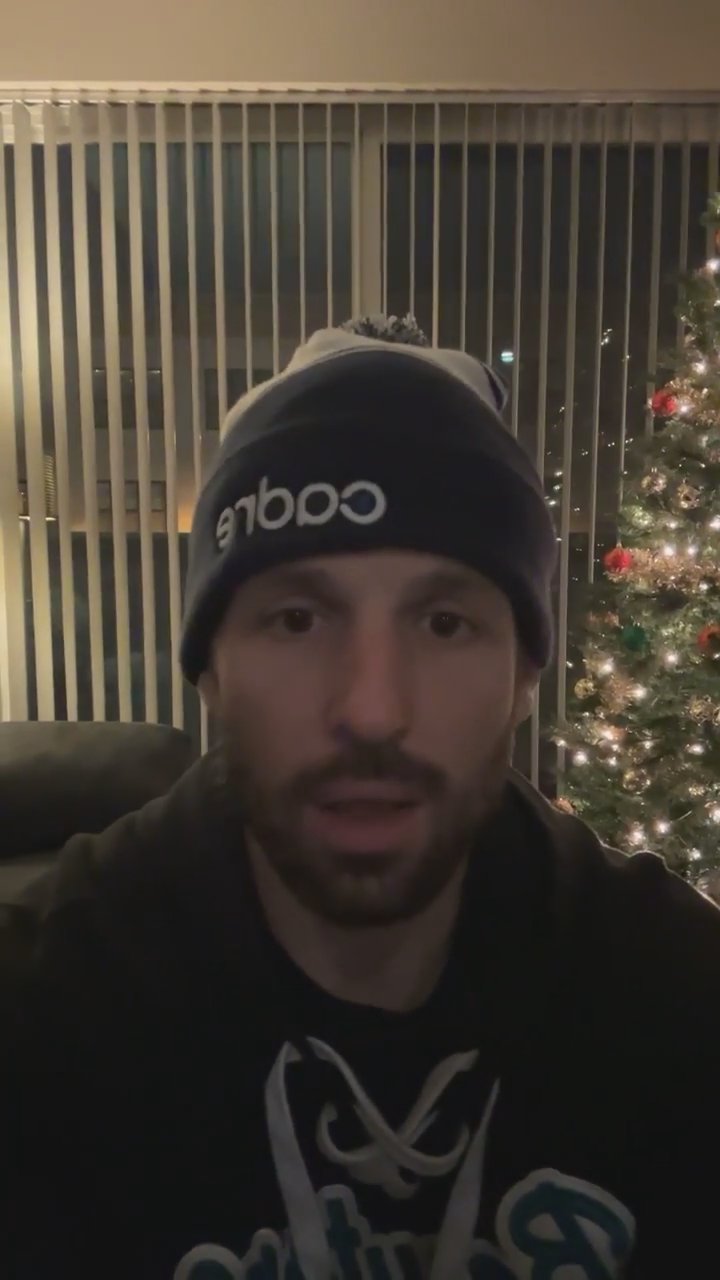
Jason Lennox leads a Sunday conversation on recovery, mental health and community, exploring how personal actions affect others. He shares amends stories and reflections prompted by community posts to illustrate impact.
Jason Lennox is your resident recovery champion. Here to talk about all things recovery, mental health and just general well being. Sunday Serenity titled because I believe there's no greater antidote to falling back into the life of addiction and serenity.
Tonight, thanks to Jules, I was posting in the community. There are new communities in the app now. And it brought me back to several different stories. We think we know what the impact we have on others is, but most of the time, unless we're willing to get into their world, we don't know.
Jace: I did my amends, I tried to make things right with all the people. I opened a recovery housing business in 2018, it's still open. A business partner told him to go back to past relationships and get into their worlds. It was very enlightening.
Jules: I overdosed on December 16th, my grandma's birthday. He says he tried to make some amends in a Christmas card he gave her. 12 years later, he wrote a memoir about the impact he had on others. Jules: We have to take responsibility for how we impacted others.
It's so incredibly important to consider the impact we have on others. We do a lot of damage and sometimes we don't even know that we're doing it. I appreciate everybody hanging in here. Look forward to continuing to build this recovery and substance use community.
Good Sunday evening to everybody here on the Cadre platform in the Cadre sphere, I am Jason Lennox and happy to be here with you once again on a Sunday evening. I am your resident recovery champion. And what that means is I'm here to talk about all things recovery, mental health and just general well being and how that plays into and Sunday Serenity is titled Sunday Serenity because I believe that there's no greater antidote to falling back into the life of addiction and serenity. I think when we have serenity, we aren't looking for all the other things that we're looking for, including the drugs, alcohol.
So again, here to talk about all things recovery. Good evening, Sherry and Jules. Good to see you. And actually tonight, thanks to Jules, I was posting in the community. So there are new communities in the app now. And if you've paid attention at all on the left side, as you look through, you can see communities and hopefully you're involved in some of them. But you can see community posts as well now. And so they're kind of segmented a little more. So I'll be posting more as kind of a person who's leading the substance use community.
But I posted something today and I just asked about certain things that might be fun to talk about and Jules jumped in and shared a little bit about a story, a story about a conversation she had with an old friend who really was talking about the impact and the impact that Jules had, both before addiction, alcohol really took over, but then as well as after. So really enlightening, she said. And it brought me back to several different stories. I'll just share a few quick things because I think again, the impact on others is such a huge part of our lives.
And frankly, we think we know what the impact we have on others is, but most of the time, unless we're willing to get into their world, we don't know. So a few things came up for me. One, I maybe shared this before, but bear with me, I think it's just such an illustration of how we just don't have an idea sometimes about the impact. So story goes like this, and I heard it at a recovery meeting probably four or five months ago. There's a guy, kids are playing baseball. They hit a ball across the road and busts out the neighbor's window.
So the kids go across and they're gonna make amends. The whole point was about how to make amends. So he goes over and he goes up to the door and he says, look, sorry, that was us. I'm terribly sorry. That we did that. I hope everything is all right. Okay, so it's like, yeah, part of the way you acknowledged it. Second scenario, the kid goes and he says, you know, I'm sorry that this happened and I'd like to actually help you fix it. Is there something I can do to help you fix it? Okay, good. We've acknowledged it.
Now we're trying to do a little bit to put them back where they were. Great. The third scenario, the kid goes over and says, hey, I'm sorry that I did this. I'd like to help you fix it. But also we're going to turn and we're going to play baseball a little bit in a different direction so that this doesn't happen again. Great. Acknowledge, help put them back and then potentially prevent it from happening in the future. The fourth scenario, which was very powerful, the kid goes across and said, hey, this was me, I'm sorry, I would like to help you fix it.
Also, we change direction so we're going to hit this ball in a different direction so that this doesn't happen again. By the way, is there anything else that that happened here or that is worth knowing or that we can do or that I should know? And the guy goes, you know, actually my 85 year old mother was upstairs in that room where the window broke. And so she's absolutely terrified. I think, you know, if you went up there and you just had a little conversation with her, I think that make her feel a lot better.
So anyway, the point being we just don't really know unless we get into someone else's world and we ask those questions what the impact was. And so, Jules, thank you for that inspiration. The second story, I want to share and possibly have shared this as well, but it's relevant here and that's that I did my amends, I went out and I tried to make things right with all the people, including past relationships, things like that. I opened a recovery housing business in 2018, it's still open. And my business partner, who happens to be a woman, we were talking and it was actually before this that we had this conversation, but we were in a seminar and we were doing some work together.
And what she said was, you know, how are your relationships? And I shared. And she said, how about your past relationships? Did you clean that up? And I said, yeah, you know, I did the, you know, I did my amends. I went to them, you know, well, what did that look like? Well, I went to them and I told them I was sorry and I didn't want to do this. I didn't want to be that kind of person. And she said, oh, no, no, no, no. We got a little ways to go here. We got some work to do. She said, I want you to go back to these women and.
And I want you to actually get into their worlds, meaning ask them what the impact that you had on them was versus just going and assuming, you know, what the impact was. So the funny thing was, I had two of them that I wanted to go back to, and they both happened completely opposite the way that would. There was one that was. I felt like it did so much more damage, and there was one where I felt like it was a little more mutual and we were both kind of doing damage. The one that I thought I did more damage, she essentially said, there's nothing to talk about.
I mean, it's over, it's done, it's fine, Jace, I promise. Second one, on the other hand, where I didn't think it was going to be that bad. We had the conversation, and she kind of let me have it from a. You know, this is how this impacted me. And it just kind of opened my eyes to, oh, my gosh. I had no clue that that's what was happening. So, again, it was important for me to go back and do that and actually get into someone else's world and understand what kind of impact I had. So last thing I want to share.
The third one is very personal to me. So Jules is talking about, again, this person saw me at my best, and then they saw me at my worst, and they were able to kind of articulate what that was like, watching that progression. And it was very enlightening. Right? And I think, like, deep down we know when we're kind of going downhill and when things are going on, but it's really different to hear from someone else, and it's hard to hear from someone else. So I'm going to take you back in the. In the sake of my grandma, who is not with us anymore and has a birthday tomorrow.
It's a very special day, actually. I. 20 2008, maybe, I don't know, two year and a half before I went to treatment. It was a summer day, and my brother convinced me to go with him to pick up some drugs or something like that. He knew he could get me. He knew how to get me. And so he got me in the car and we went out and we were driving past my grandma's, and so he said, let's pop in there and see who's there. And so we did. And I went in and realized quickly we weren't stopping to say hi. They were coming to do an intervention on me.
And I was at my grandma's house. And by the way, we spent a lot of time at Grammy's house growing up. It was out on the farm, especially in the summer, but anytime we could, that was kind of the place to be. We loved it there. I had two uncles who happened to be our age, my older brother and mine. So we all kind of shared similar ages. And, you know, the four of us would hang out. And my grandma was a stay at home mom for much of that time, so she would cook us breakfast, lunch, dinner. Anyway, she was like the grandma that you would picture.
If you picture grandma, she was an angel. She had the perm, she had the. And back then, you know, she'd smoke those dang cigarettes and, you know, drink her beers and do all the things. But she was so loving. And we used to raise h*** with her. And she'd threaten us, I'm gonna tell your grandfather when he gets home. And he worked concrete. And of course, she was too sweet to ever do that. So we always kind of found our way out of trouble, even though we gave her such a hard time. So this intervention happens.
And I remember she was the last one that sat there. Because when I walked in and I realized it was an intervention, I turned to run out the other side, run right back out that door. My brother and his friends stood there, and though they were terrified because they didn't know what was going to happen, they stood their ground. And when I went to get out the other door, I had a couple uncles standing there. So I sat in the living room and, you know, pouted and was mad and angry and all the things, and said, I'm not talking to any of you.
You let me out that door or you call the cops and have them come pick me up. That's one of two ways I'm leaving and I'm not talking to any of you. My grandma was one of the last ones, and she sat there on that couch next to me. And I remember when she kind of put her hand on my shoulder and she started talking about some of the things Jules was talking about. This is what life used to be. This is who you were. You know, I was 23 at the time. This is what it used to be like. And you've got this boy, and you haven't been there.
And your son, he really needs his father. And by the way, I really, really, really want my grandson back. And so she's just letting it all flow. And all I could do because I was so mad was just, you know, say words to her I would never say again. So anyway, she gets up, she walks away. I mean, just like, droopy as can be. You could just tell she was so defeated because it did nothing. And it was a very important moment in my life. They ended up letting me go. And a year and a half later, when I overdosed, went to jail and I knew I wasn't going anywhere anytime soon, I decided to call those people.
I called my mom and said, how do I get in touch with those people? I'm willing to talk. I was in so much pain. I just wanted something to take that pain away. And I thought, if this treatment place is a little less painful, fine. It's not going to work for me. But if it's less painful, then I need to be there. I get to treatment. It happened to be on December 16th, my grandma's birthday. Probably the best birthday gift I could have ever given her. They take me from jail to treatment, and I get down there, and as I'm trying to think about writing Christmas cards and things like that, I wrote a special one for my grandma.
And I tried to make some amends in that writing. And I hadn't seen her in a year and a half. And again, the last things I said to her were not good, and she was not doing the greatest. She was in a rehab center, and I had actually taken days off work to go see her because she was sick and I'd never made it. Anyway, all that happens, and then December 25, she ends up passing away. I get visitors and my mom, and they come to tell me she's gone. And it just crushed me because I never had that chance to see her again.
I said, did she get to read the Christmas card I gave her? And they said she couldn't read Jace. But we read it to her, and she understood it and she comprehended it. And then it was just a matter of hours, maybe like the next day or something, that she passed away. It was like she knew there was something in her hanging on to do that. But again, my point in all that is the impact that I had on that woman. I couldn't even see it because I was in the middle of anger and addiction and all the things that come with it.
And so I was so mad that I couldn't see that. I look back, and when I wrote my memoir, one of my editors said, you have got to go into these stories more you have some powerful stories there, but you're just kind of surface level. So get into them. And somehow I mentally, emotionally, like, physically brought myself back to those times. And I could remember hearing my grandma and going through that. And all of a sudden I perceived that the impact that I had on her much differently. And it crushed me when I was in treatment to find that out.
But I knew from that moment on that I had to do this, if nothing else, to continue living that amend. Because that was the one that I knew I was never going to be able to make again. She was gone. It was too late. I wrote the card, they buried her with it all fine and dandy, but I never got to see her again. And I didn't leave her in the best place. It was very important for me to understand. And then again, writing the memoir, 12 years later, I get to go back to that and say, this is how it felt, and this was the impact.
And it was very hard. It was very, very hard. And much like this work that we do when we do get in other people's shoes, when we are willing to have the conversations like Jules is talking about, we are willing to listen to others. That's a huge part of it, by the way. We don't just get to show up and say, I'm sorry, this is what I did, and I'll try to do something differently. No, no, no, no, no, no. What was this actually like for you? That's an important element of trying to make things right and listening to how we impacted others, because we impacted them in very, very powerful ways.
And guess what? Addiction is a disease. And I don't think we take responsibility for some of those. How do I say this? That's not the people that we were doing the things that we did. That's not tied to me as a core person. I don't have to own that, as this is my characteristic. No, that was addict running the show. But I also have to take accountability for it. I have to take responsibility for it, and I have to make sure that I understand how it impacted people. And then I do everything I can to try to reverse that impact, to try to put that person back to where they were before I decided and kind of got in the way and did whatever I did.
And then how do I stop myself from doing it again? Back to the analogy about the baseball thing. It's one thing to say sorry. It's another thing to put them back where they were. It's another thing to. To act differently and do something so that it doesn't happen that way. And then the last level is, how do I actually ask the question that tells me what? Otherwise I wouldn't know. I wouldn't have known the experience that those women had when I went back and did that exercise. So all that to say, I think it's so incredibly important to really put ourselves in other people's shoes and consider the impact we have on others.
It's not easy. That's a tough pill to swallow sometimes. But I promise there's some healing in that, both for me and for them. And by the way, it clears up the kind of what's under there and what's underneath everything that is going to be there. If we don't talk about it, it doesn't mean that it's not there. And if we don't talk about it and it's there, it just becomes this awkward thing. So I've been able to clear up a lot of relationships with that kind of methodology. So, again, thank you, Jules, for.
For sparking that. We do a lot of damage and sometimes we don't even know that we're doing it. So, again, we've got to be in regular conversation with people who can help us see how we impacted them and people in regular conversations with people in our lives who can help us see how we impacted others before we even get to that conversation. So, yes, it was an eye opener. Had some very valid points, like we see things the way we see them and without a little outside perspective, that's how we'll always see them.
And by the way, when we're in the middle of those times, our minds are pretty twisted. So it's important that we listen to others. So really appreciate everybody hanging in here. Look forward to continuing to build this recovery and substance use community. There's a lot here. There's a lot that we do to really clean up our lives and, and try to restore relationships. But I'm telling you, when that happens, life can be so dang beautiful. It can be so dang beautiful. Look forward to doing this again next week.
We're getting close to holiday season, so, you know, if this is a tough time of year for you, I'll be thinking about you. Send you some good vibes. Do what you can to take care of that special place inside our minds and in our hearts. And yeah, if it's a good time of year for you, great. I mean, this is. I love November, December, all the holidays, being with people, these birthdays, all the things. But it can also be hard. It can be very hard. So I acknowledge that. I appreciate everybody hanging in here.
Hope you all have wonderful weeks, and we'll see you back here to do it again next week, Sunday.
Reactions and comments are for members. Joining is free and takes a minute.