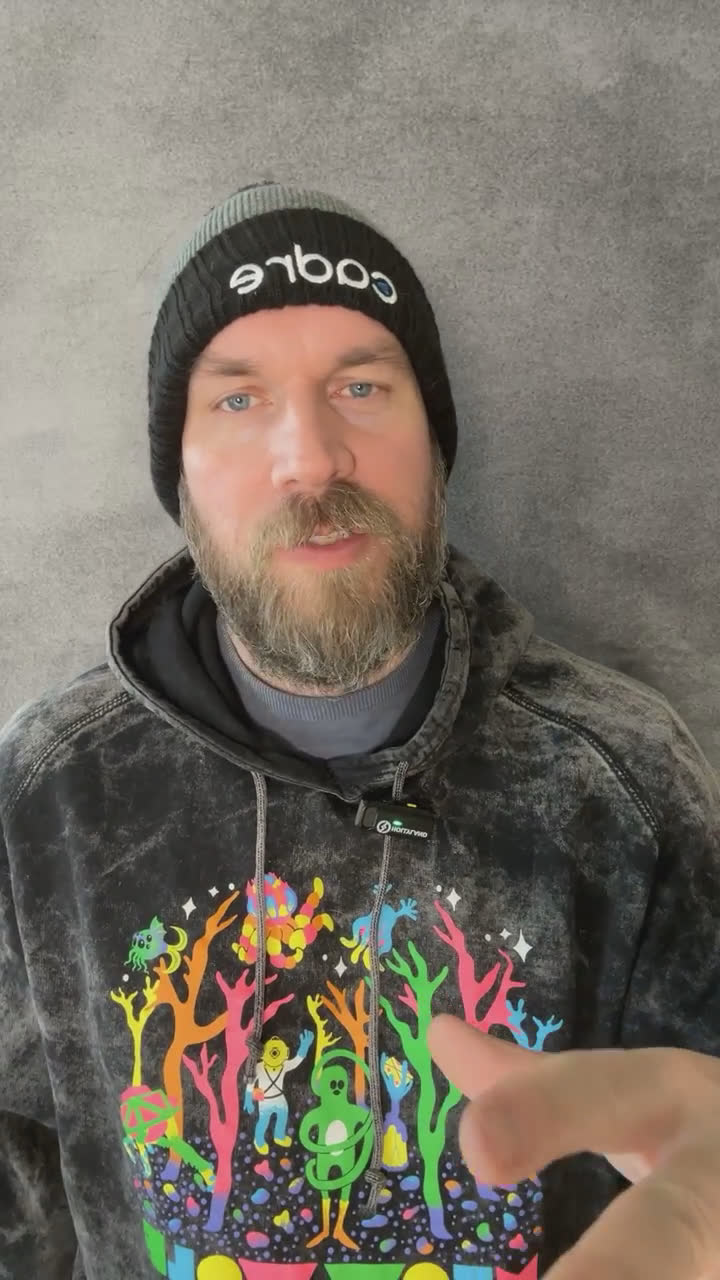
Seth Perry explores how openly grieving can reveal personal strengths and challenges the stigma around vulnerability in faith and cultural communities, sharing audience reflections on cautious public grieving and cultural discomfort with grief.
How is showing grief displaying our strengths? That is the question that I'm going to throw out there today. I think that openly grieving can show us how we have some strengths. And I want to look at that and explore that today.
Shannon said the stigma of grief in her life is seen in the cautiousness that she grieves publicly. She says there's some fear with some people about vulnerability. For Shannon, it is strength to be overwhelmed and for life to just be too much at times.
Luke: Maybe culturally, we've got some discomfort around grief because people don't know what to do. Grief will stick with us for a long time, too. We need to be okay with that culturally. The best response to grief is one-on-one discussion.
So those are my thoughts on the stigma of grief today. I'm looking forward to more discussion in the. In the Post page. I'll be posting for next Sunday, so if I haven't told you today, you are a great part of my recovery.
How is showing grief displaying our strengths? That is the question that I'm going to throw out there today. If you're watching it live, if you're watching this replayed or whatever we call it. Welcome, welcome. My name is Seth Perry. I'm a pastor, and I live well with bipolar disorder. I am a recovering addict, and I want to say hello and happy Sunday to you all. And this is Talk Stigma, my Sunday afternoon livestream. After I've already done church, I talk about the stigma of mental health and addiction in faith communities and in cultures where people embrace spirituality.
Good afternoon, Jules. And I'm glad you're here. And I'm asking the question, how is showing our grief displaying it to everybody? How is it displaying our strengths? I think that openly grieving can show us how we have some strengths. It can show other people the strengths that we have. And I want to look at that and explore that today. So I asked the question about the stigma of grieving, like, where is the stigma of grieving in your life? I asked that to everyone in the Cadre sphere, and I got some answers, and I'm going to start off with that.
Shannon said the stigma of grief in her life is seen in the cautiousness that she grieves publicly. You know, a little emotion is okay, but too much is too much, right? So we see that in our families. We see that in the workplace. We see. We see that when we go to church, when we go to the mosque, when we go to the synagogue, when we go to indigenous ceremonies. I think that I've talked to many leaders from all different types of faith communities, and that's what I'm really passionate and interested in, is talking about the stigma of mental health and addiction in faith communities specifically.
I think that there's a little bit of a fear with some, with some. Some embrace it, but there's some fear with some people about vulnerability, about being vulnerable. Sometimes being vulnerable means crying. Sometimes being vulnerable means breaking down and needing help and needing the support of others. But in pop Christian theology that you would see in the Christian bookstore section for self help, I see this a lot where people want to lean into strong strengths, right? Where it's just, God gives me strength, and I can endure and be strong through this grief.
But you know what? For me, it is strength to be overwhelmed and for life to just be too much at times. If we're showing that, I think that's a strength. Jules, I'm glad you're here because you had a comment that I want to bring up right now. Jules says when that surprise grief hits you out of nowhere and the people around you don't understand your loss and what just happened, you try to explain it, but it makes them more confused. Yeah. And that is stigma. Absolutely. I think that the disconnect where people are just not getting it, and maybe culturally, we've got some discomfort around grief because people don't know what to do, really.
Right, right. Thanks, Luke. Thanks for the hat. I appreciate it. And I see this a lot. Right. I work with grieving people all the time. And what Jules says, you know, the surprise of grief and, you know, the surprise of grief maybe takes you over and you try to explain it. Maybe this is a cultural thing that I think we should all be working on and we continue to work on here in the Cadre sphere, that culturally we just gotta be okay with balling. Right. We got to be okay with expressing that grief has made a physical impact in my life.
Right. Because that's an aspect, too. So, you know, the. The visible. The visible ugly crying that we do when we grieve, I think definitely that needs to be normalized. And also, you know, another thing about grief is that we need to understand that grief will stick with us for a long time, too. Right. So, you know, it can be a decade, 15 years. I know that in my mom grieving, my stepfather, it's still there. It is still there for her, and we need to be okay with that culturally. We need to kind of normalize that and talk about it more, which is why this is called tox stigma.
Really. We need to continue to have these conversations and support each other, especially here in the Cadre sphere. So how does this relate back to me? Well, I am someone who cares for a huge group of people in a congregation, and so I slowly see the stories of people's lives as two people sitting together. Often two married folks that come to church regularly, two eventually becomes one because it's often, and it's very frequent that one spouse passes away before the other. And I have noticed that people seem to approach a situation of new grief with kid gloves and maybe almost like there's one of those slippery, wet, wet signs set up around this person.
And what I see is that person is isolated because of the stigma of grief. I see that people want to offer help, but there's not the vocabulary of how to help the grieving person. And that is something I'm really curious about. Why is it that people just seem to not necessarily know what to do when two people in a household become only one person? In a household. Yeah, I wish that I had the answer. And really the answer, I believe, is found in discussion. Talking about it, just being straight up blunt and asking people what they need.
The best response to grief that I have seen is when people, one on one, have been like, hey, what are you going through? What do you need from me? And really, I'm going to keep asking you this until I can really help you, but I'll give you space. But what do you need? Right. And that's, you know, goes for, you know, six days after they pass, six weeks after they pass, six months after they pass. That's something that we need to respond to, understand and continue to talk about here on Cadre and out there in the world.
So those are my thoughts on the stigma of grief today. And I want to say I'm looking forward to this coming week here in Cadre. I'm looking forward to seeing some of JC's wonderful morning live streams. They always are good when I have a chance to tune in. I'm looking forward to more discussion in the. In the Post page. Look for me there. I'll be posting for next Sunday, so if I haven't told you today, you are a great part of my recovery.
Reactions and comments are for members. Joining is free and takes a minute.