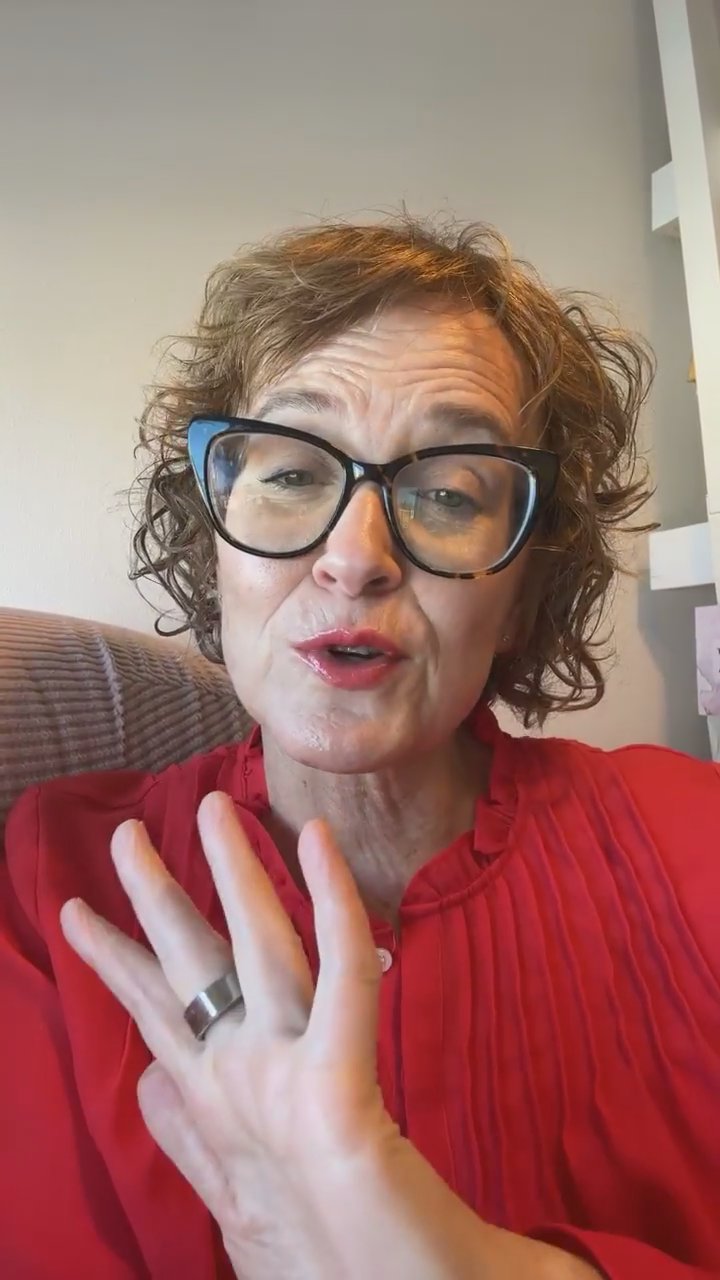
Jocelyn shares Rule of Engagement 20, Take yes for an answer, and explores how to accept others’ agreement—especially in close relationships—rather than continuing to argue when someone has already agreed to change.
Good morning, Cadre. It is a delight to be here with you. You may be able to hear the sound of our garbage men in the back. Happy New Year.
D.C. is piloting a curbside organics recycling program. It's a bright, sunny day here in D.C., but it's still cold. We're going to talk about rule of engagement number 20 today.
Jocelyn Jocelyn: Rule of engagement number 20 is. Take yes for an answer. This is especially hard, she says, in personal relationships. When she was mayor of Minneapolis, she saw this most when voting on the budget.
When you need a particular answer from somebody, ask the question in such a way that you get that answer. Take yes for an answer for crying out loud. My word of the year is allow. Not just to allow the world to be exactly as it is, but also to let the universe say yes.
I'm a pretty open book. If you ever have questions for me, I'll see on the Cadre app. Rules of engagement, we'll keep them going. Oh, and if you have any number requests, I'm also going to start talking a little bit more about the things I've learned.
Good morning, Cadre. Good morning. It is a delight to be here with you. You may be able to hear the sound of our garbage men in the back. Once again. Happy New Year. Although we are almost halfway through January, which is mystifying to me, and we're going to talk about my rule of engagement number 20 today. Good morning, Jules. Welcome. And I'm just gonna give it a moment in case anybody else is showing up. C. it's still cold. My organics recycling bin here, they just give you a little bucket with a screw top.
It is not a good design for frozen weather. It's just frozen to the ground. And it's also not big enough. But I didn't implement the organic. Curbside organics here. I'm just glad that they're doing it. I was part of the pilot program. Still part of this pilot program. I don't know if they're bringing it citywide or not. That's beside the point. So rule of engagement number 20 is. Drumroll. Take yes for an answer. I am shocked in life at how difficult it is sometimes for me to take yes for an answer.
And as I obs other people how difficult it is for other people to take yes for an answer. I really. And I'm talking about from other people, from the universe, from yourself, from whomever. If you have asked for something and someone is giving it to you, just take yes for an answer. This is especially hard, I think, in personal relationships, very intimate, close relationships, often with spouse or partner, where, especially if you've built up a head of steam, if communication is a challenge, which it is, I think in most relationships, I don't know, relationships where communication isn't a challenge because you're two different people, where you've built up a little head of steam about something, and you finally, you're like, I'm gonna.
I'm gonna speak my mind. I'm gonna set. I'm gonna take these off. I'm gonna set this boundary. I'm gonna speak my mind. I'm go, I want. And then you're like, ah, here's the deal. And da, da, da, da. And this is what I. I want from you. And the other person says, if, you know, you've built up this head of steam, if they don't match that head of steam, if they don't get defensive, this is especially true if the other person does not get defensive or argue back and just says, you know what? You're right.
I'm so sorry. It's Been, you know, this hard on you. I'm so sorry my behavior was. I'm so sorry I behaved that way and that it had this impact on you. I agree. I will change. I will do my best to do X, y, and Z that you're asking me to do. And then you're there with your full head of steam, and you still want to argue about it, and the other person has just said yes. Listen, next time that happens to you, have my voice in your head saying, take yes for an answer. Bring yourself back down. Allow the universe to provide to you what it is you have asked for from this other person or whoever it is.
Right. It's personal relationships where you can really see take yes for an answer is important. But the place I saw this most is when I was governing, when I was mayor of Minneapolis especially. I mean, I was sworn in early as council member in December of 2005. I had just won. And my predecessor on the city council, a guy named Barrett Lane, who was head of emergency management at the city for a long time, was council member at the time, from my ward. He and I got along really well. And he was done.
His wife is a minister. He wanted to have his Christmas. He did not want to vote on the budget. He just did not want to do. And you had to vote on the budget in December. That is one of the things in Minneapolis. And so he was like, I'm gonna leave. They're gonna swear you in. And so my first day was in December of 2005. So I was the only new kid on the block in January. They swore in a whole bunch of other new kids on the block on the council. But I was the first new one. And I was about to vote on the budget, and I remember walking down the hall, I didn't even have an office yet.
Walking down the hall outside of council chambers. You know, people stand there a lot, and then you have to get into, you know, council offices. There's this door, or you can take a left into council chambers, or you can go straight into the council. And I walked through this gauntlet of people, and I, you know, they were representatives of organizations. There were a lot of lobbyists. There was the budget. There were a lot of people there. And they all looked at me like I could give them something.
And good morning, Jocelyn. 1971. And they all looked at me like I could give them something. And it was notable. It was palpable. It was like a presence in that hallway. And I've never forgotten it, right, because that was my first Observation of what it meant to have positional power, right? There were people there who did not care for me, who never would care for me a million years later, you know, to this day probably don't care for me that much. But they were right there. And that was sort of set the tone and tenor that helped me understand, like I made decisions that people cared about a lot.
And sometimes people had trouble taking yes for an answer. I remember people would come to my office to talk to me about something and they'd start giving their spiel and it immediately became clear to me I wanted to support what they were doing. They didn't have to give me a huge spiel like it was a no brainer. And I would say, you know, they were all ready to go and I would just say, you know what, I support this. What are the next steps moving forward? But then they would continue with their spiel and they were nervous or whatever.
This isn't even a criticism as much as it is they struggled to take yes for an answer. Sometimes it was because they were nervous, they kept going. And other times they kept going because they didn't believe me, which I suppose is understandable because I'm not. I wasn't much for lying as a elected official and I wasn't much for, you know, just saying stuff I didn't mean. But a lot of elected officials for their own reasons do. And so maybe they didn't believe me, right? And maybe their experience showed them that they shouldn't.
But Rule 20, Rule of Engagement number 20, take yes for an answer. But where I really saw it when I was governing was with activists who really I was a very safe person to have be a bad guy because for the most part I agreed with them and they knew it. Right. I was governing to a set of principles they agreed with. And, and so there was that dynamic. I was a safe person to be mad at all the time. But the flip side of it was they had a vested interest in building up their own platform and showing with their colleagues that they, you know, were fighting the power.
However you want to say that. I'm not trying to be insulting, it's just the dynamic on the activist left. And one of the ways to do that is to, you know, speak truth to power. And if I was power and they were going to speak truth to me. And so they asked for a lot of things that I provided and then that didn't go well. Right? You can't fight power. Who isn't fighting back? Well, that was a mouthful. You can't fight power that isn't fighting back, meaning agreeing with you, working with you, trying to find middle ground.
But they were more interested in fighting than in winning for their own identity reasons, their own political reasons. They're more invested in fighting than winning. So they could not take yes for an answer. They couldn't and they didn't. And I kept saying yes, though, because any things I was asked for that I thought would be valuable, reasonable to give, find a good middle ground, save a lot of heartache later. Whatever it was, I did my best to say yes. There were some places I said no, or there were places I said, we don't have the votes on the council for that.
And until we do, I can't say yes. But if you create the votes on the council, then we can move forward together. All of that, all of those yeses. All of those are forms of yeses, right? Some of them were yes and. But they were yeses and they just couldn't be taken. Rule of engagement number 20. Take yes for an answer. Unless you're not asking the right question or unless you're asking disingenuously yourself, I guess is what I mean to say by that, right? If you can't take the yes for an answer, perhaps you're asking disingenuously for something.
If you're hoping for the no. So you can keep your head of anger going, or you can build up your base or whatever it is, you're not asking for a yes, you're asking for a no. Set it up better for yourself, then. Do better work, right? Don't ask somebody that. Don't ask somebody for a yes, hoping they give a no. If you don't understand that they will give the no. If they actually give the yes, you're. You're stuck. We veered off into politics there. But it's true. It's a. It's a true thing, right? If you need a particular answer from somebody, ask the question in such a way that you get that answer, for crying out loud.
It's like politics 101. And so that was not the only source of tension between me and activists left in Minneapolis as I governed. But it was a source of tension, was that I kept working with them and being me and not giving them the no's they wanted. When I did give them, there was one no. I didn't release the video after Jamar Clark was killed by Minneapolis police officer. When I gave that no, that was really useful for everybody, everybody involved in that world. But take yes for an answer for crying out loud.
And the last category, and this is a very, very, very important one for me, is when the universe says yes. Take yes for an answer. If you are not a spiritual person, if you don't have a belief in a higher power, that's great. You can still let the world say yes to you, right? You can still let the world provide to you without believing in a higher power. I have a deep and long belief in a power greater than myself in large measure because I am still sober 35 years later. And the only way that happens when you're an alco is if something in my world is if something bigger than you helps make that happen.
But I struggle to let the universe say yes to me. It's why my word of the year is allow. Not just to allow the world to be exactly as it is, including things I don't like or don't care for or find challenging, but also to let the universe, you know, to let the world be exactly how it is in the ways that I like and appreciate. I love being here with Cadre. I allow Cadre to be an awesome part of my life, but I struggle. One of the things I realized when I started working very intensively on my trauma background, another round of intensive work, I should say, almost three years ago now, it was 2022, and I chose the word fun as my word of the year.
And I started pursuing all this great fun stuff. And immediately my anxiety went through the roof. I was getting migraines. I was freaked out all the time. And I realized that it's very difficult for me to let my life be really good. It felt. My body thought it was dangerous because it felt like a lapse in vigilance. And I'm not going to go into great detail about my childhood here, but there were a number of years as a kid where the only thing that saved me was dissociation, absolute silence about what was going on with me.
And I could. I had to play my cards very close to my chest about the good things in my life because the people who were abusing me were very clear that those were all up for grabs if they were useful in what they wanted from me. None of this was inside my family. I want to be really clear about that just because I have really good relationships with my family and I love them very much. And I don't want people thinking they were monsters. We were dysfunctional. Absolutely monsters. No. So that's how I found out.
And so then I read the Body Keeps the Score, which I could only read three pages At a time. And then I would shut the book and throw it, and I would yell curses at Bessel van der Kolk, who wrote it. And then the next day, I would read three pages again. And that led me on a whole journey about my anxiety, about trauma, about somatic healing, etc. But it's one of the ways I really found out how difficult it is for me to let the world and the universe and my higher power say yes. It's very difficult for me to accept that yes.
Take that yes for an answer. Take. And I'm working on it, right? It's one of the reasons my word for the year is allow. I'm just gonna allow the good things in my life. I'm gonna allow the fruits of my labor in a way that I sometimes struggle to do. I'm gonna allow things to go. I'm gonna take yes for an answer. Rule of engagement number 20. In my life, take yes for an answer from a leader, from. From the universe, from an organization, from yourself. I'm gonna take a yes from myself this year, too.
That's part of what allow means for me. So I'm gonna take yes for an answer from myself, right? To take on these challenges I've chosen for myself, I'm gonna take yes for an answer, and I'm gonna do them. I'm gonna do them thoughtfully. I've spoken elsewhere. I need a lot of bumpers in the gutters of my bowling lane for that ball to keep moving toward the pins every day, right? I have to exercise regularly. I have to go to meetings regularly. I have to eat, sleep. You eat well, sleep well. All these things, you know, I need.
I have therapists. I get body work. I mean, all these things help keep me centered and moving forward, right? Those are ways I say yes to myself, and I take that yes for an answer. But. So I'll do it thoughtfully and carefully. But, yes, I am continuing to take on challenges for myself, and one of them is to be so open in the world and just let that be, okay? So I'm a pretty open book. If you ever have questions for me, I'll see on the Cadre app. I'm, you know, I'm there excited to be with everybody there, excited to have been with you today.
Rules of engagement, we'll keep them going. Oh, and if you have any number requests, I'm also going to start talking a little bit more about the things I've learned. The other list, which I'm coming up with a better name for, they're not quite rules of engagement, but they're what I've learned along the way. So if you give me a random number between 1 and, like, 36, I'll talk about it. Okay? Thanks, Cadre. See you in the app. Have a great, great week.
Reactions and comments are for members. Joining is free and takes a minute.