First, while I live in LA this is not directly my tragedy. However, we have still been impacted daily and the question as a parent is what do I want my daughter to see? How do I need to show up for her?
This week's episode focuses on conscious fatherhood. What does it mean in the middle of a crisis? He says his job is to be calm for his daughter. He says we don't have to live in fear.
How do we help our kids in times of crisis? I think my daughter has a fairly regulated nervous system. Be sad for them and see how you can help. Love your loved ones and maybe even be kind to the ones you don't love.
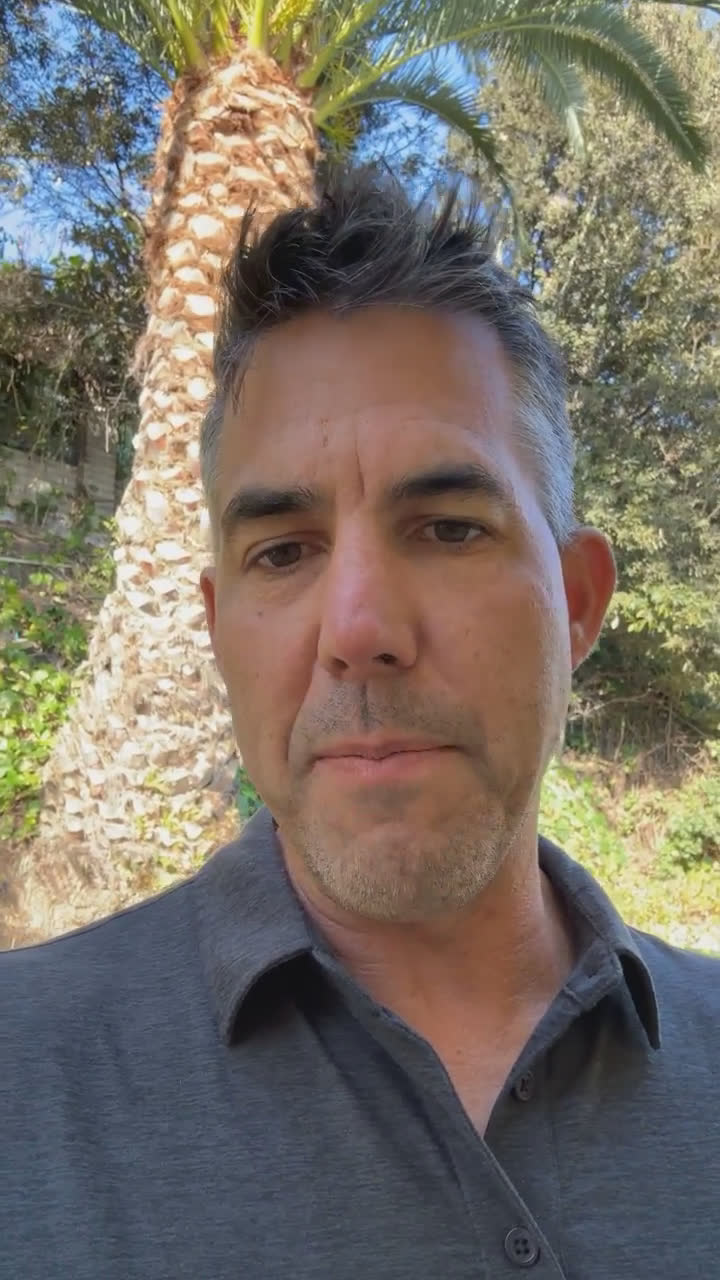
All right. Wow. What a difference a week can make, huh? So I'm here in Los Angeles. It's beautiful here where I am, right? But if I were to drive for less than 20 minutes, it would look like the freaking apocalypse. So there's something about that that is just very interesting to me, that that much kind of chaos and destruction is happening literally 20 minutes from me. And yet I've got beautiful blue skies and fairly breathable air. And, you know, today is week two. And again, I try to do the same topics, well, the same kind of focus every week.
So the second week is always on fatherhood. And so I was thinking about it. I was thinking about, like, well, what, you know, conscious fatherhood. What does conscious fatherhood mean in the middle of a crisis? And, you know, I think there's that line from Al Anon that says, you know, put your oxygen mask on first, right? You can't help anybody if you're not in a position to help. Of course, most people don't abide by that, and they help other people to death. Those people that they're trying to help in themselves as well.
Well, you know, because it's just. There's no. There's no boundaries. There's no focus. There's no clarity. There's a lot of, you know, a lack of self care, right? So I'm like, I'm going to the gym, I'm hanging out with people. And, you know, in Culver City, which is where I am, we. We're not, for the most part, directly affected by the fires, right? But our kids are off school, and our kids are wondering, like, what am I supposed to do? Am I going to have to evacuate? Do I have to have a go bag?
Do I have to have this stuff together? And it's like, I've got friends who evacuated. I've got friends who lost their homes, right? But one of the things that I keep trying to remind myself, but also share with others is this is not my tragedy, right? I'm not going to impose myself on this particular situation and try to make this about me, because, frankly, it's not happening to me, right? That said, that's one of the messages that I get to give my daughter. I get to be calm. I get to show her, like, one, we have empathy and compassion for the people who are having, like, these horrible experiences, very challenging experiences.
And then, two, like, we get to live our lives, and we don't have to feel bad about that, but we can also figure out, how can we help? But then we also get to be calm, right? We don't have to live in fear. Because the fear. What I see is there's a lot of people who are spinning out, spinning out, because they don't necessarily know how to handle the anxiety and the fear that they feel. If I take a deep breath, maybe another one and maybe even another one. But if I stay grounded and I step back, I look at a map and I look at the possibility, what's the possibility that the Palisades fire or the Eaton fire or the Kenneth fire are going to reach Culver City?
Very, very small. Very small. Now, the other night, right, because we. This is what we've been saying to our daughter, right? This is, I believe, my job. My. My job. If I. If we were in evacuation, it would be a slightly different job, right? But in this situation, my job is to just be calm for my daughter, to show our daughter how to pay attention to this, to be concerned, to. To notice what's happening while at the same time living our life. And that's what my daughter's doing. She's living her life.
She's hanging out with friends. She went to downtown Culver City last night, and that's what we want for her now. We want her to wear a mask if she needs to. But the coolest thing is she's got the app and she's monitoring the air quality at age 15, and she is actually advising us even a little bit around the. The air quality. But the other night, 3:57am okay, we get one of those alerts, and the alert said, you are in an evacuation zone. Okay? Now, if you're dead asleep and you wake up to that, that is not cool.
Like, that's not fun. But again, I have learned I can feed my anxiety if I want. I can let my anxiety run the show. And there's no question that was like a adrenaline spike to the heart. When I got that, I took a deep breath, and I was able to stay in this old prefrontal cortex, which is really, really important. And I was able to say, what's the likelihood that this is true? I looked at my wife, she was looking at her. She was looking stuff up, and I was like, this is. This is not accurate. This is a mistake.
Now, we never even got the follow up saying, hey, that was a mistake, which is kind of a bummer, because I'd like them to really be on top of that. But on a quick aside, I just also happen to be one of the few, really relatively few people on the island of Hawaii visiting for my wife's 50th birthday when the text went out saying that there were nuclear missiles on their way. So. So I know how to respond to texts like that. And so when we got this one, what I feel most proud of, and I think it's because of how we've been interacting with our daughter.
The next day we asked her about the text, she was like, yeah, I pretty much knew that it wasn't. Thank you very much, my family is safe. So many families are safe and so many families are not. And it's. But when I saw her the next day and she was like, no, I figured that wasn't applied to us. Now why did she figure that? Because we had already been having a lot of conversation about evacuation and about us and about that, but not in a fear based way, but just in a thoughtful way. Right. So, like this question of, like, how do we help our kids in times of crisis?
It doesn't have to be a fire, doesn't have to be an earthquake. You know, a lot of are dealing with the kind of crises that unfortunately a lot of homes deal with. Addiction, right. Violence, mental health, those are crises as well. But how do we take care of our kids? Because if we're not taking care of ourselves, we can't take care of our kids. And that's the problem. Right. So what is like, so conscious fatherhood in my mind, right? Because that's, that's what we're focused on this week is like, hey, I could just completely dismiss any concerns my daughter has, but I don't think that's the answer.
And I could feed into them because they touch my own anxiety and fear. And I don't think that's the answer. I can be mindful of any fears or anxieties that I have, which I really don't have any right now. And I'm pretty sure it's not naive or just Pollyannish. I think it's like pretty rooted and solid. But I don't have those fears or anxiety, so I don't have to worry about putting that on my daughter. And then if she has any, then I can listen to her and then I can also respond. And I think that's a wonderful thing.
I think that's what helps our kids have. Wait for it. Right, Grounded nervous systems. Right. Regulated nervous systems. Raise your hand if you grew up with a regulated nervous system. I did not still working on it, but it's gotten much, much better. But hey, I think my daughter has a fairly regulated nervous system. And so in situations like this she's able to think more clearly, and that's awesome. And I think, you know, in this situation, that's a blessing, right? It's a blessing to be able to show up as a father and be like, I hear what you're saying.
This can be scary. Like, she has friends. She has friends who lost their homes or grandparents lost their homes. So it's real for her in that regard. And then I've also kind of talked with her about that idea, and, you know, be sad for them and see how you can help. And at the same time, be, like, really grateful. Like, there's nothing wrong with feeling grateful for the fact that we're safe and we're okay. And I think that's a wonderful thing, too. Right? So, you know, it'd be cool if we could, like, take questions or interact with you all, like, have you zoom in or something.
But I know we're still working on the different technology of this and Speak Wonder in particular. I always appreciate when you log on, and I saw some other folks log on as well. And, you know, it's a beautiful day. Love your loved ones and maybe even be kind to the ones you don't love. Because what I've learned in this week is there are a lot of people who don't have the tools that I have for getting through this kind of stuff. And I could judge them or I could react to them, but I just don't think you can ever hurt somebody with kindness and compassion.
And so that's really been what I've been trying to do as much as possible. So I hope everybody else stays safe. And, you know, I wish you all a wonderful weekend and take care.
Reactions and comments are for members. Joining is free and takes a minute.