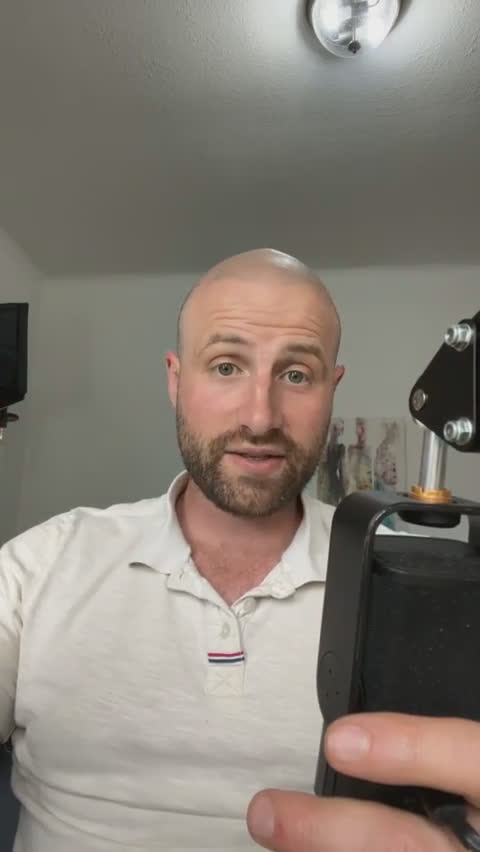
I am excited to announce a new series I will be releasing on the Cadre. Wanna learn what it's about? Join me!
Evan: I've been putting out some videos about communication because that's one of the topics I'm most passionate about. The model of communication I teach is what I call mindful communication. But also more practical tips, like you could see in the couple videos I put out on relationship blocking behaviors. I think I'm just going to make this ongoing.
What's up, Cadre fam? Evan here, your local resident mental health and addiction therapist, that I'm popping on. So I want to make an announcement, and I'm hoping y'all are going to be excited about this, but I'm trying to do more series for you all. So not as many one off videos. And so some of you may have seen this already, but I've been putting out some videos about communication because. Because that's one of the topics I'm most passionate about, is effective communication. And that kind of all started in working with families with addiction, right.
Because when you're dealing with folks who are in the midst of addiction, that can be really difficult, especially if they're not willing to get help. So over the years, I developed more and more skills for dealing with these difficult situations, not to mention a lot of other situations that require more effective communication just by being a therapist in general. So I posted some videos, but I thought, hey, why not just make this a series? And I kind of already had that in mind because I do call it the communication series.
So I guess this is what I always wanted to do, but I think I want to make it even more of a formal series and perhaps just focus on it more. So, we have a couple videos out right now. I mean, we have at least two, but I just want to let you all know that I'm going to continue to make videos on this. And unlike other series, I think I'm just going to make this ongoing because I think there's so much information around it. So maybe hitting some of the basic principles. So, just to give you a little sneak peek, some of the things that we're going to talk about are, for one, just general principles, like, how do I know, like, what is a witness test, for example, of should I say something or not?
So, what are some questions to ask yourself before you're gonna say something? Right. Because the model of communication I teach is what I call mindful communication. Right. Which is basically putting thought into what you're gonna say. Cause otherwise, we're just reacting. And when we do that, especially when we're in a heightened state of emotion, which we're going to be in conf. When we're in conflict, we're more likely to say things that we're going to regret. And you know the old saying, there's just some things spoken that cannot be taken back.
And that is very true. Or at the very least, it's going to take you a long time to dig yourself out of the doghouse. You know, if you say something that really is offensive to somebody else or it really cuts deep, that's when it really happens, is when you cut deep. So we're going to talk about some of those types of principles. I'm going to talk about various communicators, people that you can learn from, people in pop culture, maybe even some politicians. So people that I admire solely based on the way that they're able to communicate whether I agree with everything they say or not.
So there's going to be that. But then also more practical tips, like you could see in the couple videos I put out on relationship blocking behaviors. That is a very integral part of what I will call the communication formula. So I put this together and essentially it is five steps. And those steps are you try this. If that doesn't work, you go to this. If that doesn't work, you go to this. If that doesn't work, you go to this. If that doesn't work, you go to this. And each one of those is a skill and some of those you can use along the way, but it is a formulaic approach.
So as we go through the series, I'm going to hit on all of those topics, and I'll probably hit on the formula first, get those main principles out of the way, but then just do continuing education on that. So we talk about relationship blocking behaviors. You can go watch that video. So those are basically eight things to look out for, eight things that you want to try to avoid. Right. I call that addition by subtraction, because a lot of times it's what you don't do in a situation versus what you do do.
Right. Because again, those are some of the landmines that you could step on. Because at the end of the day, the goal is to lower somebody's walls so that you're able to have a healthy, positive exchange with them. And so you'll learn that that'll be one of the principles that we talk about, like the role of walls, relationships. So these are all going to be videos that I'm going to come out with. So I hope that you follow that series. I will also be talking about, like, skills, so very specific skills on speaking with somebody, things like reflections, active listening.
So some of the underlying principles to go when you're going into mindful communication, how to get a healthy mindset going in. What else? I mean, a whole bunch of other things. Oh, boundaries. That's a huge one. So I have a certain formula, I have a certain theory. I have an approach that may differ from a lot of people about setting boundaries, right? So that goes towards the end of the formula of setting boundaries. So, yeah, I think, I think you'll find you'll get a lot of value out of it. Anyways, I'm excited to take this journey with you all.
I hope you keep your eyes out for those videos. I hope you follow in any way that you can. If you have any questions, reach out comment. And I look forward to seeing you. Well, I guess I won't be seeing you. You'll be seeing me. But anyways, I'm also doing some coaching, so maybe you will be seeing me. Anyways, folks, it is good to check in with you as always, and we will see you soon in 5432.
Reactions and comments are for members. Joining is free and takes a minute.