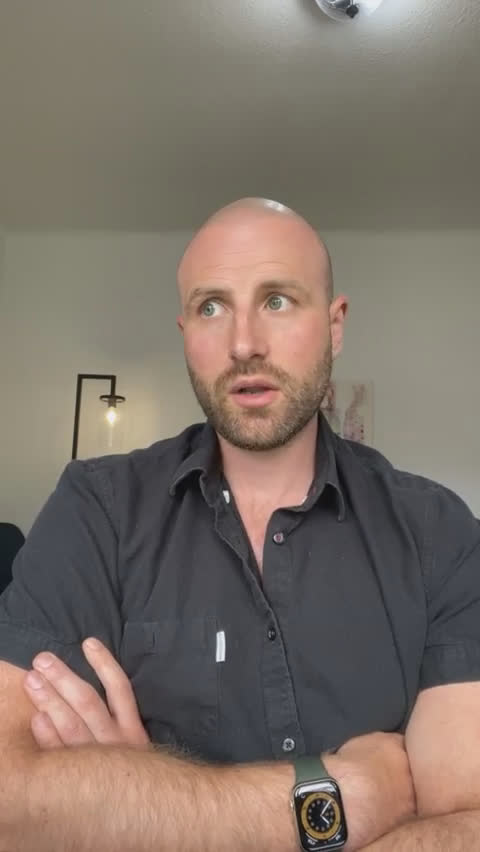
In today's Livestream I am going to share my experience and research into the addiction recovery process and how sometimes there are differences in the struggles faced by men, women, or the LGBTQ+ population. Of course, these aren't hard and fast rules in these cases. Everyone struggles with different things, but these are some common patterns we therapists benefit from being aware of and clients as well.
Evan: Through my history of working in the addiction and mental health field, I noticed certain patterns that come up. These patterns are in regards to gender and how we. get pushed into different stereotypes. What I want to talk about is some of the struggles that are more unique to men, to women, and to members of the LGBTQ population.
Women tend to have higher levels of trauma. Men are sometimes typically able to mask something like borderline personality much more than women. A lot of these differences are just in what we look for and how they tend to be expressed. When working with men in therapy, it's very interesting.
There's a lot of, you know, the alternative sexuality, the homosexuality piece. Someone could be bi, but there's still that homosexual behavior, which is attraction to the same sex gender. And it doesn't even have to be religious. We got a long way to go.
A significantly higher percentage of Gen Z are identifying in the LGBTQ community. There's still some internalized homophobia from the messages you get. It's also then important for them in general to find community. Finding pride in who you are and finding pride in a community.
What up, Cadre fam? This is Evan, your local mental health and addiction therapist. Here live again with some thoughts from the office. Did a few sessions today, and as always, these sessions inspire me and remind me of certain lessons that I've learned over time. And hopefully, you will find this topic interesting, helpful. All the above, maybe none of the above, but that's okay, too. Not everything's for everyone, but I'm confident this will be at least pretty good. So, through my history of working in the addiction and mental health field, I noticed that there are just certain patterns that come up.
Right. Excuse me. And these patterns are in regards to gender and some of the. Because of society and how we. How important gender is. You know, we get pushed into different stereotypes. Right. And gender roles, and that's just how society is. And obviously, we know that not everybody aligns with that societal expectations, but still, because there is. There are just certain experiences. Again, these are all generalizations. It's different for every individual, but these are just patterns that emerge.
And basically what I want to talk about is some of the struggles that are more unique to men, to women, and to members of the LGBTQ population, you know? And so when I'm working with these folks in therapy, these just tend to be issues that are more common, and it's pretty. Gonna be pretty obvious as to why. So this isn't about, like, gender differences. Who's better? This is more about the things that people go through because of the expectations of society. Look, some of it may be biological in some way.
You know, there's hormonal differences. I don't know. Get a little trouble for that. But, you know, people have different experiences of biology, you know, as far as women or female identifying or mal identifying who are born biologically female. All right, so there's just different experiences that we're going to have. And so let's get started. Now that I've given all my disclaimers, let's start with women. So, one of the things I've noticed, right? So women tend to have higher levels of trauma.
Yeah. So, like, in the addiction world, I've found that women have higher levels of certain types of trauma. Right. Sexual assault, emotional, physical abuse, domestic and relationships, just at a higher level. And that can make things trickier, especially in an addiction treatment environment. So we want to keep an eye on that and try to see things often through a trauma lens, if that's applicable. Right. I had someone earlier who had been through every one of those possible experiences, maybe ones that men would not be as inclined to have certain elements of containment because when you have more trauma sometimes, again, there's going to be that stereotype of difficulty with emotional control.
And here I am stepping on some tricky ground, but again, not necessarily related to biology, but related to sociology and experience. And so what's interesting, though, with men is even though there's that stereotype, any stereotype, any generalization would also apply to the other gender or group, except it's more common than we think in the other group because we're only looking here, we're not looking here for it. And it's going to show up differently. You know, where something like borderline personality disorder, which is, you know, attachment trauma, impulsive, reckless, you know, behavior, like coping behavior.
Right. Happens with men all the time, but it looks different and we don't look for it. Just like autism is more common in men and because of that, we don't look for it as much in women and it's not as easily identifiable because they're able to mask those symptoms typically better than men. And men are sometimes typically able to mask something like borderline personality much more than women. Right. So a lot of these differences are just in what we look for and how they tend to be expressed and why certain people may be more inclined to suppress them, like a man trying to suppress an outward emotional expression, or it comes out as anger, a little bit more aggression in a different way.
So that is, I'm sure some other things I'll think about as well in that category. But looking at it through that lens with men, it's very interesting because men in therapy can have a very difficult time. Now let's talk about the socialization there. Think about it. A very high percentage of men grew up in households or grow up in a society that says, what are the messages? You have to be strong. You can't show weakness, you can't be gay. And we're going to talk about that in the other one. You need to be with women.
You need to, you know, you can't be emotionally expressive, be stoic, be dominant, be tough. You know, all those stereotypes. So men have that built in. And actually I'm going to go back to women in a sec with that one, but that, you know, so that gets built in. So then when you're looking at working with them in therapy, we're asking them in therapy or treatment to do what's completely counterintuitive to them. Be vulnerable, express your emotions. It's safe, right. Because that actually for men, asking them to do that is an affront.
It's a threat to their safety, and they're not used to it. And so, you know, I find in working with men, I got to find a way to convince them otherwise. I have to make a case for why that's important, and I'm pretty decent at that. Right. One of the things I say is, like, well, what's the, what's the most difficult? You know? So this is a. Or this is a really difficult thing for you to do to express your emotions. Right. Well, what did you learn about being a man, right. That, you know, often being a man is doing what's most difficult, what's more manly than that, right.
That usually gets them. So that's, you know, one of the, those are some of the issues we're trying to disseminate, you know, of society. Right. So a lot of these, again, are societal issues. And so, like, going back to women, I forgot to say, a big issue that comes up a lot outside of just, like, the generalized trauma is looks, right, because society says you have to look good. You need to, you know, be perfect, pretty to attract a man so that you can be safe and have a safe protector. Right. So these are all very traditional.
So a lot of times, actually, I notice that women, there's that stereotype of women and their fathers. And of course, there's going to be certain issues that come up if you have that fraught relationship. But a. Oftentimes, I find it's with the mother, because, again, like, the father teaches the son, the mother teaches the daughter. And if there's those toxic messages being transported, it's not the right word, but you know what I mean? Being delivered. Messages being delivered that you have to be perfect.
Pretty, skinny, beautiful, wear makeup. Da da da da da, shave your armpits, you know, like, all those things, you know, also be, you know, women are taught to be obedient. Right? It's like boys are told, like, yeah, you know, it's okay to be rambunctious and. But, like, you know, women, it's like, you have to be proper, be well behaved. And so a lot of times, women struggle with body image issues, and again, men can, too, but we don't see it as much because of the stereotype. Right, right. So women often come in and just, same thing that happened today.
You know, mothers, you don't need to eat that or, like, literally, blatantly saying, you're fat, you shouldn't. I mean, and as a kid, g******, does that f people up, you know, and their views on, you know, in relationship with food and their bodies. That's really hard because the messages you get as a kid become more ingrained than the ones you get when you're older. Right? So that's. That's another big one, right? And a lot of these messages we get from society. You know, when I say this, you're probably, oh, yeah, but you don't think about that, right?
You don't always think like, it's. Like it becomes second nature. You're not sitting there thinking like, oh, society tells me I have to do this. You just do it. You just kind of know. I mean, no one would even have to tell you. You would just know, right? It's in our movies, it's in our parents, it's in our school, it's in our peers. Right. That gets passed down. Let's move on to LGBTQ now. Again, we can't always put it all under one umbrella, but I'll try the best I can because there may be some different experiences from someone who identifies as the lesbian or a gay man.
Everything in between trans. There's going to be some differences, but in general, there's a lot of, you know, the alternative sexuality, the homosexuality piece. Someone could be bi, but there's still that homosexual behavior, which is attraction to the same sex gender. Right. And that's a problem because in society, the default is not that. And most of the time, a very big percentage of the population is religious, and it's getting better, but religious and gives those messages. So, so many people, so many kids are hearing that this is a sin, that you are going to go to h*** if you do this, this and this.
And, you know, when a kid starts having a lot of times, it's pretty early, like, before they're any kind of sexual maturity. They know. They may not know. They're maybe confused, but sometimes in a deep sense, they know, you know, because they're more. Some. They're more interested in the Disney prince than the princess. Right. There's something like more attractive. There is also that gender role difference. They often, you know, say a guy, they're going to be more interested in female things hanging out, and they don't know why.
They're just more drawn to that. Some of those folks, maybe it. They have gender dysphoria as well later on, some pretty early on where it's kind of a difference, where it's like, I'm not, like, literally, I am not who I'm supposed to be versus. I'm interested in these things that women are typically. Or if you're a girl, I'm not interested in girl, you know, like, what we call a tomboy. Not all tomboys are gonna become attracted to the same sex. But often, if they were identifying as a lesbian, then more often than not, that would be, you know, something of greater interest.
Right. So you're getting those messages from a really young age. You're being told that what you're doing is wrong. And it doesn't even have to be religious. It's just be societal in general. And I did a live stream on this as well, talking about some of the statistics on how that is changing. But, man, we got a long way to go. So whether it's gay, lesbian, trans, any of the letters, you know, that really feel ingrained and part of who you are, the name of the game in therapy, the one thing that personally, I have seen everyone have is what we call internalized homophobia.
And you could have had the most supportive parents you could be. I'm out. I'm proud. I'm f. Everyone, if they don't care, you know, like, but there's still, there's still some internalized homophobia from the messages you get. Maybe it was from your peers, from society. And most folks have to grapple with that to various degrees, even though as adults they know, okay, this is who I am. And, you know, and usually when people come out, what's very helpful about that, you know, is not only not having to carry that burden, being able to be yourself around, you know, being able to be your true self around those that you love.
And hopefully they're accepting. And sometimes parents are like, awesome, great, we're supportive. Sometimes they're like, oh, they need to do a little grieving and they need some time, and they come around. It's like the rule of thirds. I don't know if the statistics are actually like, 33, 33, you know, whatever, and then maybe a third are like, no, I'm not okay. I'm never going to be okay. All the way up to, like, disown, we're never talking to you again. Right. And so being your true self. But it's also then important for them in general to find community.
Right. And that's kind of like pride, right. Finding pride in who you are. That's why I think they use the term, term pride. Finding pride in who you are and finding pride in a community. But that doesn't usually happen until you get older and until you become an adult, because most people don't come out until later, teens. But that is really changing in the Gen Z. So we'll see what happens there. But a significantly higher percentage of Gen Z are identifying in the LGBTQ community. Community. And, you know, so I guess the point there is that even though, you know, because you're coming out later, right, you still got all those messages as a kid.
So it's like you have to unlearn those and you have to change some of those core beliefs and challenge them, continue and continue to work towards that sense of pride, whether you're gay, lesbian transfer. Right. And especially now, like, if you're trans where, you know, society, it's kind of like, all right, I mean, I guess you could be gay, but I don't want to hear about it. Okay, you're gay. Fine, we'll give you some rights, but don't take our words. And then it's like, all right, fine, you can be married and whatever.
And that's cool. I get it. You know, it doesn't hurt me. You know, in a big society, part of society is there, but then with trans, like, all right, now we're just like. It was for being gay lesbian back in the day, you know, now hopefully that same thing happens, but, you know, so there's a lot of current trauma going on because it's so widely talked about and debated. So it's like, I can't imagine what that's like, consistently having that or having laws that are actively being written, you know, against you.
So that makes it even more complicated because it's like you're being re traumatized consistently at a greater level. Not that it doesn't happen with, again, we still have a ways to go. And again, like, going back to those societal messages such as for women or, I'm sorry, for men to not be a feminine, it's like the worst sin, actually, for a man is to be feminized. Probably more so than a. I don't want to compare, but you're probably much more likely to get your a** kicked if you're a feminized guy.
Right. There's just something extremely taboo about that. That's why you see a lot with trans women, especially, who get assaulted at the higher rate, you know, and that's what's more feminized than that, right. Than actually living as a woman. So that's why it's really dangerous. Right? So, you know, so these are some of the things that I think, as a therapist, I need to keep in the back of my mind or the front of my mind. These are things that I always have to remember of how are we socialized?
What are some of the differences in experience that people have, which is the most important more than any biological differences, because you can't really change that unless, again, we're talking about trans. And, I mean, that's a different story there. So, yeah, these are things to be aware of, and I think it's helpful for clients to be aware of. It takes away some of the shame, guilt, all that good stuff. So I hope you got something out of that. You know, these are, you know, these are some sensitive topics.
Anytime you're talking about groups or generalizations, and again, they don't always apply. So hopefully, we could take this in good faith. And if you have, you know, dissenting opinions or if there were certain things that, you know, may have pushed a line of discomfort, feel free to put it down. We could continue that dialogue because a lot of this is based on research experience, and, you know, it's not about any grouping, better or worse. It's just differences and experiences because of society, not because of biology, mostly, anyways.
Well, actually, I'll say, too, that the biology is important in the regards that many people have the mistaken belief that you could control your sexuality. Right. That is biological, right? You have. You're biologically attracting. When I talk to someone who thinks maybe, I don't know how many people these are that I come across, but, you know, people think that, oh, you could change your sexuality, your conversion therapy and blah, blah, blah. And I asked them, like, could you change your sexuality?
Like, on the drop of a dime? Like, if you wanted to, would you be homosexual? Would you, even if it's, like, your type, could you change that? No. Well, how, you know, why do you expect them? And they have much more incentive than you to change. Like, would you want to be treated in that way? Would you want to be shunned in some ways by society? No. No. So why would they, you know, another thing in those cultures, especially LGBT, that I totally forgot to bring up, I don't know why is one of the most important ones is higher rates of mental health, just in general trauma, just like females, and substance abuse is big that I work with and need to consider as well, that you see quite a bit of, again, in the research that folks with LGBTQ who are.
Have those higher rates. So, anyways, I've gone on long enough and talked in circles, but again, hopefully you got something out of that and put in the comments, anything that was interesting, surprising, something maybe you disagree with or have questions about, and hopefully we can have some good, healthy dialogue here. Anyways, take care. Cadre fam. And until next time, I bet.
Reactions and comments are for members. Joining is free and takes a minute.