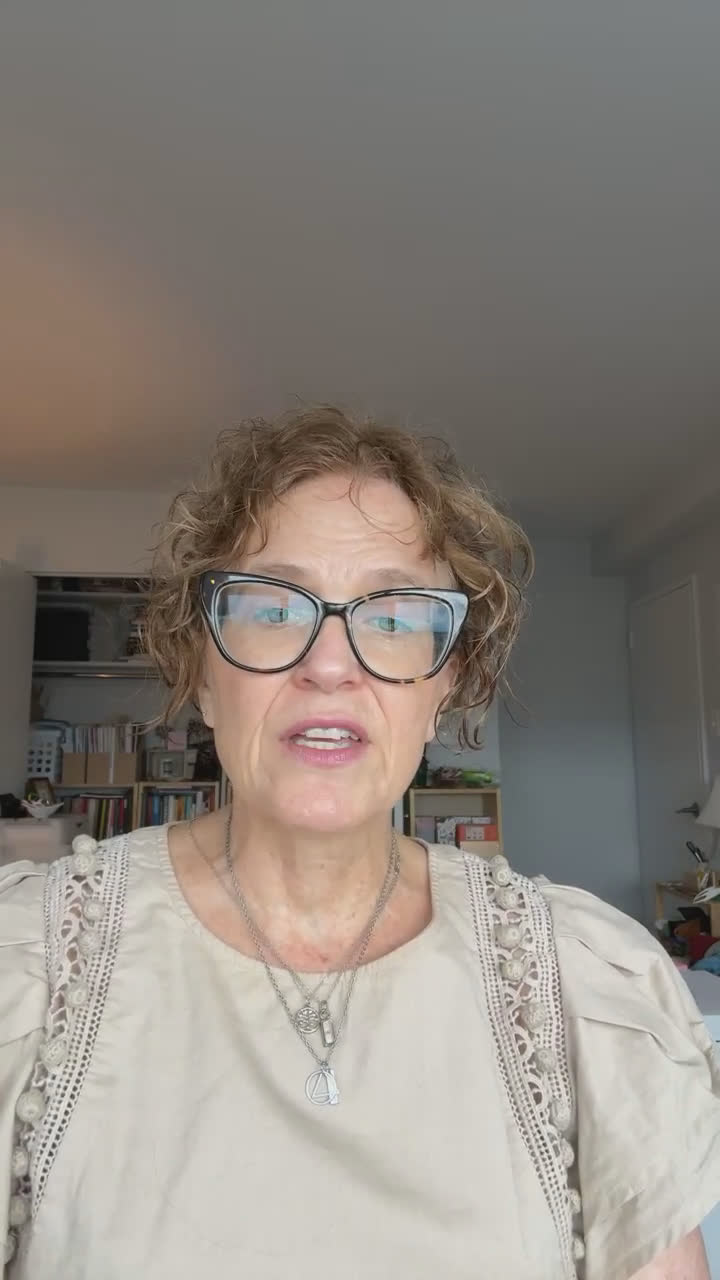
I share how you can benefit from lessons I learned the hard way: the sayings/soundtracks/aphorisms/life guidelines that I use to help me live the fullest life and support you to do the same!
If I don't drink today and Tomorrow, I'll have 36 years of sobriety on Thursday. Number 15 says, enjoy the intrinsic reward of staying sober. Freedom is the theme of the month.
"I picked up addictions in a row. Sugar. Then smoking and then caffeine and then drinking when it all all all got way too much " He hasn't had a cigarette in 35 years and his first drink 35 years ago. Underneath all the bad things, there were also good things that happened.
Bob Greene: Thinking about my recovery is very, very different than thinking about drinking. He says he has the freedom to reclaim his own brain. Greene: Enjoy the intrinsic reward of choosing to think new thoughts and make new choices.
35 years, 363 days and counting. The intrinsic reward from that is the capacity to have the life of my dreams. And it starts with the ability to think the thoughts of my choosing. A lot of mental health work is about creating more and more freedom of thought in my brain.
Good morning, Cadre. Good morning. Good morning. How are you? Welcome to your live stream Rules of engagement with Betsy Hodges. I put on the post on Cadre that if I don't drink today and I don't drink tomorrow, when I wake up on Thursday, Thursday I'll have 36 years of continuous sobriety. And that's a big deal in many ways. People like to say congratulations, like I've done something, and I suppose I have, and hello, Nikki, and welcome, Michael. Welcome, everybody. I suppose I have done something.
I have continued to show up and I have continued to do what I've been told. Hello. Speak, Wonder. Welcome. So glad you're here. You know, 36. I'm talking about the fact that if I don't drink today and Tomorrow, I'll have 36 years of sobriety on Thursday. So I have 35 years and 363 days of sobriety today. And any day is a great day. And any day is a huge deal. I got sober in recovery meetings. I got sober in aa as people know. And that just has a particular mindset. If that doesn't work for you, it doesn't work for you.
It doesn't work for everybody. If you found something else that works great. Me left to my own devices, I would be drunk right now. We're dead. Once I have one drink, I cannot stop. I don't even want to. So the whole thing is don't have that first drink. And I am incapable of doing anything else after I have the first drink than drinking until I'm dead basically is where it will land me. Now, what does that have to do with freedom? Because freedom is the theme of the month. And since I am two weeks ahead of the themes, because I've been talking about them ahead of time, I've been previewing them, I kind of have a little bit of a free week on freedom.
So I. Considering that I have this milestone coming up or this milestone today of 35 years, 363 days, because I have that milestone, I didn't think that I had a rule of engagement. That was about it. And then I looked right there and number 15 says, enjoy the intrinsic reward. And that's what I'm doing. The intrinsic reward, meaning it's not like I stay sober and then somebody gives me a check for $100 every day I stay sober or something. That's an extrinsic reward. The intrinsic rewards of staying sober are so, so many at this point.
And all of them would go away if I drank. They might not go away right away, but they would over time go away. Because even if some of the material things that I have in my life that I can have because I can function in the world and such, even if I had still had the material things, I would be so preoccupied and so obsessed with alcohol that I could not enjoy those material things even if I still had them. And by material things, I don't just mean stuff. I mean my relationship with my husband. I assume that would go away relatively quickly.
He's a health guy. And staying with an alcoholic who isn't getting sober is not often. You know, al Anon, your mileage may vary. I don't think it would last long. You know, it would be hard for me to work, not impossible. You know, I have alcoholics in my lives, my life, who have worked their entire career as functional alcoholics and had great success. Their family life wasn't great since I was in the family, I can tell you that. But the intrinsic reward and what I wanted to talk about was I increasingly have the capacity to think about what I choose rather than what I feel compelled to think about.
That is the freedom of recovery. For me now, initially, it's just alcohol and for me, sugar. Food in general, but sugar in specific. Consumed with, am I eating it? When do I get to eat it? When will I. Even when I would start eating the food or drinking the booze, when is this going to be over and when can I start again? Like, when can I have that four minute sweet spot where it feels good and not terrible? It really is like a four minute sweet spot. There's not a lot going on there. Instead of thinking about drinking all the time, because even when I am drinking, even when I'm not drinking, I'm thinking about all sorts of stuff, you know, I am thinking about drinking, not all sorts of stuff.
I'm thinking about drinking all the time, right? Low key, low grade, all the time. And for me, that was part of the point. It was good to have an obsession other than my pain. It was good to have an obsession that wasn't the fear I had of the abuse I suffered as a young person. Content warning. I survived a lot of terrible things as a young person. I won't go into them here right now, but I did. And trust me when I say, like horror movie bad. So it was good. It was the best I could figure out as a young person.
I picked up addictions in a row. Sugar. First and greatest love about fifth grade is when I really start. Like, I would come home from school, my mother would be at work. And I would bake entire cakes and homemade frosting from scratch. Not mixes from scratch, just using the flour, the sugar, the butter, the eggs, the chalk, the cocoa powder, the whatever I would make from scratch, entire cakes. I would eat the cake. It would be like a 9 by 9 pan. I would eat the cake sometimes, all of sometimes as much as I could.
And then I would get rid of the evidence. I would clean the kitchen completely. And my mother didn't know until I told her years later. I mean, come on. I mean, father didn't know because he was busy with other obsessions of his own. That's what I'm talking about. I picked up sugar and then I picked up smoking. Probably my second and you know, I hope never to smoke again in my life. But I cannot guarantee that if you said a meteor was going to hit my apartment building in the next 20 minutes, that I would not want just like one drag of a cigarette.
That's how powerful nicotine addiction is. Because I haven't had a cigarette in 35 years for sure. This was last February that I gave it up, and 35 years ago, February, and then I had my first drink. I wasn't really addicted to it, but then I. And then smoking and then caffeine and then drinking when it just all got way too much. So obsessed all the time with something else. And school, like doing well in school, anxious, just all the time. And that was numbed somewhat by all these substances, but it was sort of a rolling caravan of anxiety, numbness, anxiety, numbness, terror, numbness, you know, moments of joy, laughter, etc.
I mean, underneath every terrible thing that happened, there was a lot of good that happened at these periods in my life. I just wasn't particularly present for them. And that's been one of the freedoms of recovery, is the freedom to enjoy the good things that happened 40 years ago or whatever. Yes, cigarettes hard, not as bad as it used to be. It is why I drink my coffee the way I drink it, my decaf, the way that I drink it. I love coffee, but I only drink decaf. I say to people, I like my coffee to taste like liquid cigarette smoke.
I like very dark roast, straight espresso, decaf, espresso shots, very dark roast. I like to smell the steam and feel like I'm hitting a cigarette. That's how bad it is. Okay, so the first thing that happens in recovery, eventually, the first way that my freedom of thought comes to me, oh, I'm getting emotional just talking about it is I could just think about Something else that I chose, and that happens to be my recovery. But thinking about my recovery is very, very different than thinking about drinking.
I thought about my recovery, I threw myself into it. But I was choosing it. I was choosing it. I got my thinking back. And my best thought was, do what they tell me to do. Which is different than having to do what the people in my young life told me to do. I had to do what they told me. Let's just trust that's true. I did not have to do what people in recovery told me. I chose to do what they told me. They had something I wanted, I wanted it. I did what they told me to do about how they got it. I worked the steps, I got a sponsor, I went to meetings, I did service.
I showed up a lot. I reached out to other people who are suffering. And that is freedom. The freedom to reclaim my own brain. But it didn't stop there. And it has never stopped there. It has never stopped there. Because then for me, it's through doing the steps, I got a sense of what my material was. I got a sense of where my brain and my choices were, still captured by decisions I'd made as a very young person. And I could decide not to put a 10 year old, an 11 year old, a 12 year old, an 8 year old in charge of my adult life.
Because if I am still making life decisions based on things that happened to me when I was 10 and the conclusions I drew from it, I am putting a 10 year old in charge of my life. I could take all those things that happened and I could heal from them. I could get critical distance from them and like, look all the way around. I could look all the way around them and I could say I drew a conclusion that people are not trustworthy and that I can't show myself. Is that true? Is that accurate? My brain has been captured by this idea.
I feel compelled to act like that is true. Is it actually true? No. All right. I'm gonna have to behave a different way. Of course, then you make this decision to behave a different way. And every feeling that is attached to that young decision rears its pained crying out, distressed, sad, angry head it reared. They all rear. I was going to say they're ugly heads. Not ugly, just painful heads. And they say, feel me now because I'm still in your body. And I've had to learn, spend 35 years by choice learning how to heal that enough so I could think fresh thoughts and behave a new way and send my life in the directions of my Choosing.
There is no way, none, that I was becoming mayor of Minneapolis without having made a whole set of fresh decisions about how the world worked and my place in it. Talk about freedom of thinking. I could think of myself as a mayor now. I had a whole spiritual experience around that as well, which we can talk about some other time. It was felt more like calling than anything else. But even with calling and my higher power, I get to choose. I absolutely get to choose. So there is. There is one of my rules of engagement that has to do with this.
There is one of my rules of engagement. High five back. High five me, as Liz Lemon would do. High five me again. Number 15. Enjoy the intrinsic reward. And the intrinsic reward is my own brain and my relationship to it and my capacity to think new thoughts and make new choices and not do the ones, think the thoughts or behave in the ways I feel compelled to, no matter how strong that compulsion is. As long as I can get just a critical distance between me and the thought, as long as my experience of it and my thinking about it have a little crack.
That's what happened a few years ago around my anxiety. I knew I was anxious and I'd done some work around it. But probably four or five years ago now, I realized that I was experiencing my thoughts as though they were true, and I was experiencing my anxiety as though it were accurate and the truth. And I had no distance between the experience of it and the living of it. And that thought alone was enough to create the slightest crack in the doorway. And I just pried at it a little bit, and I pried at it a little bit.
And I started doing some reading, and I started doing some counseling, and I. I started making some different choices, doing experiments. Some of them worked, some of them didn't. But here I am understanding that I couldn't observe. That's the word I'm looking for. I couldn't observe my anxiety. I could only experience it as real. And the second I can observe it, even the teeny, tiniest bit, is the second I can get enough of a foothold in that I can start healing from it and making new choices. And it is a work in progress still.
But I have come such a long way. I have come such a long way. My antidote for anxiety, and we can talk about this another time, because we're almost at time. But my antidote for that anxiety, I finally understood, was zest, was zestiness. Zest is like the opposite of anxiety. It is being present and pleased. That is my definition of anxiety, is being present in my life and being pleased with my life. And anything I can do to foster that kind of presence and pleasure is an antidote to anxiety. So I'm having a high anxiety day today.
In my meditation, in my writing, all that's been coming up is I need to add some fun in, not that I need to work harder. So I'm going to have some more fun today. I'm going to pick out a muffin recipe that has some unusual ingredients in it to cook bake this weekend, and I will probably take a adventure walk and notice fun things in this new neighborhood I'm in, etc. Let's wind it back to the beginning. I don't think I'm going to drink today. I don't think I'm going to drink tomorrow. But I don't know.
And I can't claim that time until I've lived it. I don't claim because alcoholism is cunning, baffling and powerful, as we say, and it can sneak up on you. And if I don't do the things I need to do, it can sneak up on you. But all that said, 35 years, 363 days and counting, and the intrinsic reward from that is the capacity to have the life of my dreams. And it starts with the ability to think the thoughts of my choosing and not just the things I feel compelled to think about. Yeah, that's what I got for you today.
That's what I got for you today. Cadre. Thank you, Nikki. Thank you all for coming. It is delightful to be here with you all. It is delightful to be sober today. It is delightful to be part of the Cadre community. I'll see you on the app and until next week when we'll be talking about freedom some more. But I think there are lessons. You don't have to be an alcoholic to understand that there are places in your brain that aren't free. And a lot for me, a lot of mental health work is about creating more and more freedom of thought in my brain.
So thank you both. I'm excited for you in the replay speak, wonder and have great weeks. Everybody means a lot to me that I get to be here with you.
Reactions and comments are for members. Joining is free and takes a minute.