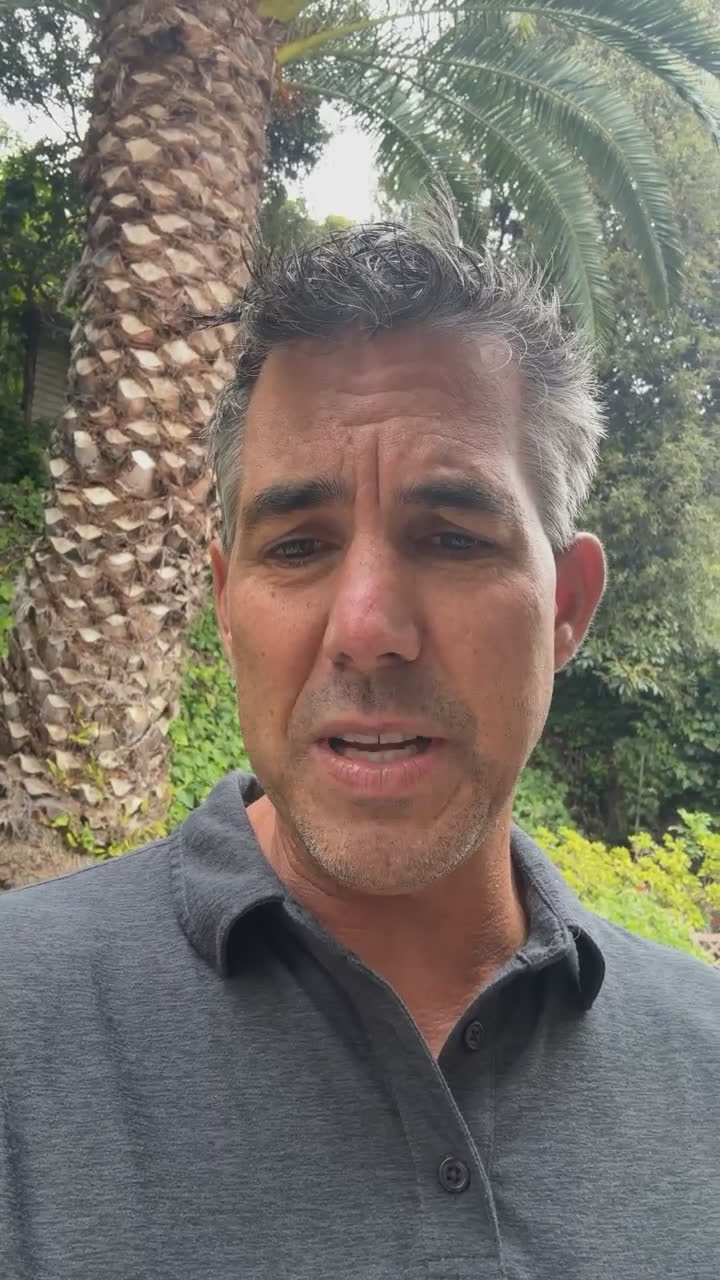
If you have trauma, chances are your attachment to your partner has been challenging. Maybe you’re aware of it; maybe you’re not. Maybe you talk about it; maybe you don’t. Let’s talk about it!
A friend of mine died a month or so ago. I'm headed to a celebration of life for him. I want to get to that in a right, right amount of time.
There's something very powerful when we can embrace the insecurity of love. It's honoring and respecting the fact that love is almost inherently insecure. Sometimes people feel so much pressure for their relationship to be awesome. But guess what, it's inherently flawed.
All right, well, let's see. I'm an hour earlier than I normally am. And that's because I'm headed to a celebration of life for a friend who was a wonderful man who died a month or so ago. And I want to be able to get to that in a right, right amount of time. I. So I'm like, was thinking about today and this whole idea of savor. And this is the third week, and so what I normally do is I talk about conscious coupling. So I was thinking, like, what. What do I savor as far as, like, my relationship, you know, as far as, like, conscious coupling?
And then I thought, you know what? There's something very powerful when we can embrace the insecurity of love. And what I mean by that, at least kind of this has been my experience. I mean, one, like the idea that you're going to be in love and you're always going to feel in love and you're always going to feel confident in that love, and you're always going to feel secure in that love. I mean, maybe that happens with people who have really secure attachment, but it has that. That I am not one of those people.
And I guess this is really for, like, those people who don't have super secure attachment because there is an insecurity to the love, right? There is an insecurity. And it's kind of like, how do you, like, not just accept it, but, like, savor it being like, oh, there it is. There's that insecurity. Am I going to make that about my partner? Am I going to pay attention to it? Am I going to give it too much attention? Like, what am I going to do with this? Like, what does it mean to really savor the insecurity of love?
I mean, one, I think it's honoring and respecting the fact that love is almost inherently insecure, right? Because we're human beings attempting to love. We're human beings attempting to do these things when we don't have a playbook. I mean, there's. I guess there are playbooks, but I mean, we haven't necessarily really been given the guidance that we need to do this. And then there's like, there's the conflict. There's a conflict you don't address. There's a conflict you don't speak about. There's the stuff you don't share, the stuff you should share, you shouldn't share, the stuff that you share that you shouldn't, and the stuff that you don't share that you should.
I mean, that's Just part of it. All of that is in the realm of the insecurity of love, right? And so, like, for me, I've wanted. I'm almost married 22 years. How many times have I thought about divorce? How many times have I been like, okay, that's it. That is it. Okay, no more. I'm dying. I'm dying. I'm sure married people can't identify with that. And so it's like, how do you get to the point where you're just like, oh, right, I'm married. This is inherently insecure. You know, this has its own kind of element of, like, I want it to be more than it can be.
I want it to be. I mean, love is amazing. And the connection that happens is amazing, as is the disconnection and the reconnection. All of that is part of it. And guess what? Inside of that, there's insecurity. And I think that's the thing for me, right, as I think about conscious coupling, you know, my wife has her own experience. I have my experience, got friends, and they're in their relationships, and they have their experiences. But I think the thing is, is, like, can you tell the truth? See, if you.
If I can really savor the insecurity of love, then I can tell the truth about it. And I don't have to pretend that it's something that it's not, whether it's in that moment or whether it's an ongoing issue. I think sometimes people feel so much pressure for their relationship to be awesome and so amazing that they lose sight of the fact that, guess what, it's inherently imperfect. It's inherently flawed. So that's all good. And I would say that a lot of our relationships are inherently insecure, you know, and so it's like embracing that, being okay with that and not letting it, like, mean something negative about the relationship.
It's really. How do I explore this insecurity? And I would say, you know, the other thing. Oh, there's tons of love. There's tons of love. Absolutely right. And I'm thinking more of, like, the deep kind of intimate love that we experience with our partners. But, I mean, you can even experience it with your children as well, close friends. But it's just this idea that, you know, really, you know, really being able to say, oh, yeah, yeah. Like, this is okay. This. This is okay. And the thing that I've learned over the years is it's like, oh, this isn't the relationship.
And maybe this is the key, right? This isn't the relationship. This is my old stuff. This is the old wounds coming up to be healed. What am I going to do, project it onto my partner? Then they don't get healed? Right. And then it creates problems in that relationship. But if I can just notice it, I can share it with my partner. That's very different than taking it out on my partner. But then I can notice it. I can notice that insecurity. I can notice that attachment, whatever it is. But I can notice like, oh, that's, that's the past.
That's the past coming back to be freed, to be healed and, and that's a pretty wonderful thing. So nice to see some friends here speak. Wonder is always so nice to come and say hi. And junk food Junkie. I love that name. So thank you all and happy Saturday and I wish you the very best for the rest of this weekend. Bye.
Reactions and comments are for members. Joining is free and takes a minute.