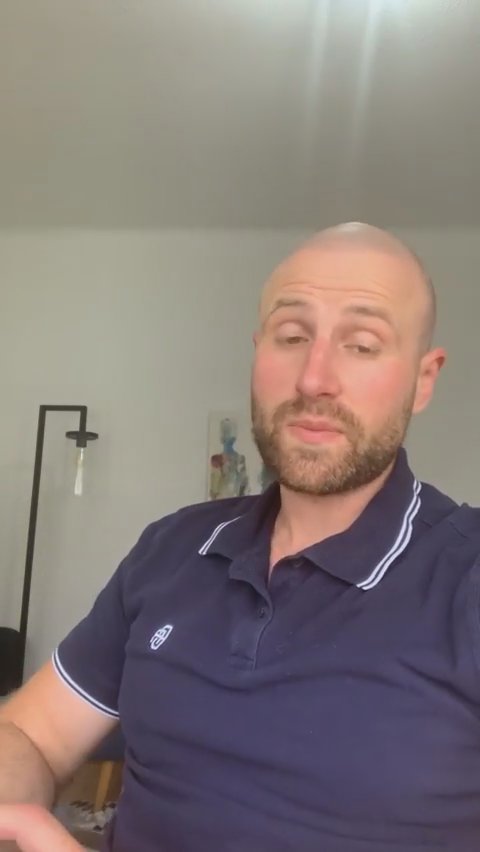
In this live we discuss some of the complicated questions people in recovery have to ask themselves when in situations they never thought they would have to be in, Often, medical issues happen and sometimes the pain is to the point where opioids are the best option. Yet, if you have an addiction history the reward part of your brain doesn't care about your motives, and experiences the neurochemical reaction in the same way. So how do we square this circle? Tune in to hear my experience.
40 minutes, 325 calories burned, average heart rate 137, just in case you cared. Evan is your resident mental health and addiction therapist.
When folks get surgery, especially major surgeries, pain management is a big part of that. It's especially tough for folks who have histories of addiction. Always consult your doctor, but always remember, it is okay to get a second opinion.
You know, some of the other things people can experience with opiates long term, right? Things like severe constipation. There are a lot of things that you want to consider. If you're even worried about this, that's a good sign that you're taking recovery seriously.
What's up, Cadre fam? Evan here, your resident mental health and addiction therapist. Sorry, I'm a little out of breath. I was just working out. 40 minutes, 325 calories burned, average heart rate 137, just in case you cared. Anyways, today I want to talk about an interesting topic, and it's something that comes up quite a bit. And, you know, it's for folks who are in recovery. Now, maybe you have a friend or family member in recovery. Maybe you're in recovery, or maybe you have a surgery coming up.
Had a surgery. So I'm trying to include as many people as possible, but when folks get surgery, especially major surgeries, pain management is a big part of that. It's a big consideration, and it's especially tough for folks who have histories of addiction, right? Because a lot of people, whether they were addicted to painkillers themselves or have other addictions, right, where other substances of abuse can be an issue, because a lot of times there's cross addiction. You may have been addicted to alcohol, but then you're still vulnerable for addictions to other things that are mind and mood altering.
So that's a big consideration because pain medications are very potent, and they have a lot of addictive potential. However, you know, they have a lot of practical functionality because, like, for example, my story, I was someone who was addicted to heavy painkillers, and I wasn't using them to treat pain. I mean, it was just something I was addicted to. And then, you know, many years later in sobriety, twice I've had to take opiate medications. And the first time it happened, you know, I d*** near freaked out because I'm like, oh, my God, like, I would.
I literally plan to never. Sorry, there's a bee flying in. Never take the meds again because of what they did to my life. But now I'm in a place where I had to, because the pain of the surgery was going to be so intense that, you know, I had to do it. And in my case, the second time was like six weeks long. That's a lot of time to be on. It's one thing. It's like a couple days, right? So, you know, with pain management, you know, there are obviously some benefits to being on the pain meds, and whether you have an addiction or not, you know that there are some considerations to be made there, right.
And so anyways, you want to always get that. Could you? No one was talking to you, Siri. So even if you don't have an addiction, right, or whatever that is, it's still no matter what important to consult with your doctor on this, right? And because I'm not a doctor, I'm not a pain manager, but I am a person who has personally had a lot of experience with this, experience with addiction and worked with a lot of people who have had addiction pain management issues and folks who've had to get surgery.
Right? So always consult your doctor, but always remember, and I'm confident in saying this, always is, it is okay to get a second opinion. It is also impingent or whatever it is. Basically, why am I blanking on this word? It is the duty of your doctor, in my opinion, to adequately explain the risks and benefits of anything they're recommending. And then it should have to make sense to you. For example, one of my surgeries is like, well, I don't want to take pain meds. The doctor's like, look like you're really going to need them.
And there's also a purpose for when you get the surgery, you know, needing your body to be calm and okay, that makes sense. So I took the meds, and, you know, he was right. At the same time at that surgery, he was like, look, I'm going to give you all these morphine pills for after. I'm like, are there any other options? And he's kind of like, no, not really. I'm like, really nothing else. Like, he's like, well, here, I'll give you this combo, the lesser opiate or pseudo opiate, and you could take it with these other meds and try that.
If not, I'm still giving you a whole bunch of morphine because I don't want to be the one to go down if you're in horrible pain. So he's like, I'm going to get it. If you want to fill it, you go ahead. So he's kind of covering his a** on it. And on that one, I was right in the fact that I didn't really need those, and I was able to do the other option. I didn't have to take the opiates after just the partial for a few days when I could have had a 60 day supply of morphine. Right? So you have to be very careful, especially if you're someone who's in recovery, because doctors don't always understand addiction.
That is not always their specialty. And it has, you know, always been on them for adequate pain management. You know, they, for a long time, could have gotten in a lot of trouble for under prescribing for pain, you're seeing the pendulum swing the other way, because if you even, you know, have a device or any type of news outlet. I'm sure you've been hearing a lot about this opioid crisis and the makers of oxycodone getting sued for bajillions of dollars because of a lot of these sketchy practices.
So, you know, there has to be a balance struck there. You know, some of the other things people can experience with opiates long term, right? Things like severe constipation. They don't talk about that very often. Maybe we've seen a commercial for opioid induced. Like, it is like, really horrible. On some chat forums, on some of the, you know, orthopedic groups of people who've had to get the survey, certain surgery I did, half the conversation is like, what the h*** do I do with this constipation?
Nothing is working because it could be that intense. So there are a lot of things that you want to consider. But, you know, I will say that when I was laying there in the hospital bed and I had gotten out of surgery and I was there for like five days, I was sitting there. I remember the thought, like, oh, my God, if I don't have these opiates, like, what the h*** would I do? Like, I was in so much pain, even with them, and sometimes I'm just looking at the clock, when can I get this next one? And I wasn't even, like, enjoying, I wasn't getting my jollies on it like I normally would.
And that's something to think about as well. When I work with people who have addictions, who then go on to have to take these pain medications, I say, look, when it's a little different, when you need med because you don't get that same level of dopamine hit, you know, what a rush, you know? Of course you do feel it. You do get a little loopy. It may get high, okay, but it's just not the same. Your body is reacting differently because they need it, right? And so there's a few, like, mitigating factors that I always tell folks who are in recovery.
And I say, look, first of all, if you're even worried about this, that's a good sign because you're taking your recovery seriously. Usually a big factor is if you value your recovery, your sobriety, if you've worked really hard to gain to be in this place, you're going to be less likely to just, like, throw it away or kind of push the line, you know, kind of like, do I need this? Should I take more? Maybe I could take one more. So it is. It is a mental game, as anyone with an addiction knows that you.
That your addiction, you know, will play on you to try to convince you that it's okay to take more, that you need them when you don't. So there's a strong mental component there that you really have to be careful of. And one of the big factors then, as well, is that you have to be honest with yourself and honest with other people. We'll talk about that in a second, because you be honest with yourself. Do I really need this medication or am I just taking this for, you know, my own, you know? Cause I'm liking getting a buzz off of it.
And the other part of that is then having accountability with other people, often having others hold the medication for you, dispensing the medication as needed. And so I had my mom staying with me for about four weeks, and she was super helpful. And she would dole out the meds. She sit there, count them out. And we had some funny moments where we were trying to keep track of these, like, six meds. And we're just let, like, wait, you got the oxy at this time and you got this at this and this. And we're like, going back, you know, I had a whole chart.
Right. But she really helped out. And, you know, and eventually, you know, when she left it for. I still had a couple more weeks. I had to be on it. But at that point, I actually felt comfortable enough and I was honest with myself that I knew I wasn't going to abuse it. And so I took it from there and I had it on my own. Could I have abused it? Yeah. But I felt really confident in myself after that four weeks that I was going to be okay. And I was, because I have another thing, too. I just. I set a date.
Here's the cutoff. I'm going to wean down because you have to be careful. The withdrawal symptoms, if you're on it for a very long time. Again, everybody's different. And everybody is different. Everybody. Everybody. If you get the joke there, right? So everyone's body is different in the way it handles. So some people could go into withdrawal, other people where others may not. And for that, I was a little worried, actually, because I was, you know, at the beginning on a significant amount. But I really was mindful to slowly wean down.
And I had that cutoff date when I knew that I would be okay. And I just wanted to avoid going into withdrawal, because then that kind of puts you in a loopy place where you're like, you know where you can start having cravings for it whether you're addicted or not because your body is feeling sick. But luckily, in my case, even after six weeks, I didn't have it right. So I went in with a good plan. So that's a big part of it. Of that accountability is having a plan going in and not just winging it.
That's where people get in trouble. I'm just going to take them at its home. Not really going to talk to anyone about it. I'm just going to take it as needed. I'm kind of going to wing it. They're sitting right there, and the temptation is just too, too much, especially when you're in early recovery. So the longer you're in recovery, you're not immune, but your chances are probably better than those in early recovery. Now, I've heard of a ton of people, a ton of people is this is how they relapse, right?
Maybe they were an alcoholic, maybe drug. They had a lot of time, and they got cocky and they were in a good place in the recovery, but, you know, they had to get a surgery and they had to get this medication in their system that's a mind and mood altering addictive substance, and they didn't play their cards right, and, yeah, and it didn't work out for them quite well. But anyway, so I just thought that was something that you all should consider, you know, when getting a surgery, talk to your doctor, get an opinion, get a second opinion.
And with that, folks, I gotta go. Y'all take care of yourself. Cadre fam. And with that,
Reactions and comments are for members. Joining is free and takes a minute.