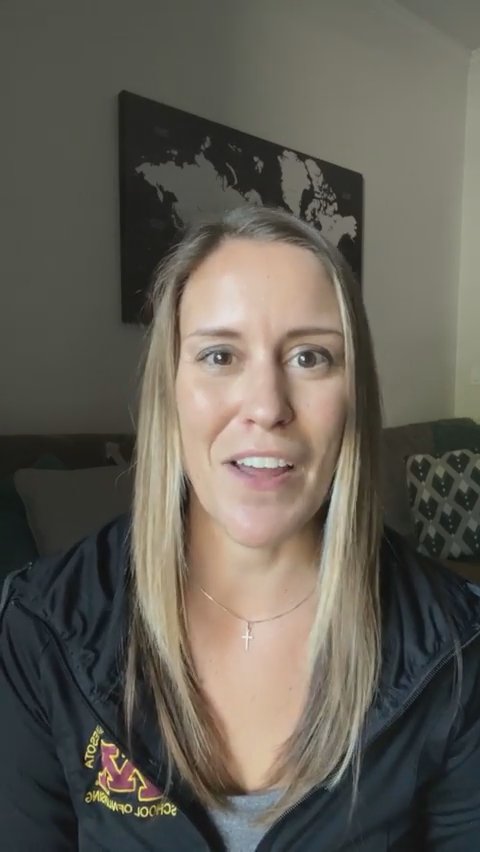
Dr. Carrie will share some relationship red flags, signs that you might be in an unhealthy relationship, and when to have the “talk” to end it.
Today we're going to be talking about relationships. The biggest question I get asked as a relationship and trauma life coach is when do I have the talk. When do I know it's time for my relationship to end? There is a time and a place for it.
A lot of times people are in abusive situations and they don't even realize it. It can look like physical abuse, but can also look like emotional abuse and cutting you down. Here are some warning signs of maybe when you're in an unhealthy relationship.
Sometimes we end up with an unhealthy dynamic in our relationship. I find that it's really helpful to write it down and, like, write down my feelings. And then when you have that conversation, you both have to have an agreement that there's going to be an end.
What does a healthy relationship look like for you? Some people have a very different picture of this. It might be time to do the inner work and look inside yourself. If not, what am I going to do about it?
And I would love to know, like, if there's a dying question you have about relationships, healthy relationships. Every situation is unique, every relationship is unique. You get to define what that looks like to you, and you get to go after that and get it.
Hey, Cadre family doctor Kerry here. Going live. Love for you guys to jump on and join me for this live stream. And today we're going to be talking about relationships and the biggest question I get asked as a relationship and trauma life coach is when do I have the talk? Like when do I know it's time for my relationship to end? And if you've been on the receiving end of that conversation, you know what that phrase means? We need to have a talk. Like your heart like jumps 3ft lower. It sits in like the pit of your stomach and you're like, oh, my gosh, what is coming when somebody says that to you?
Women are notorious for this, but I think there's a reason we say it like that. And I literally have said this phrase to my current partner, but it doesn't always mean that. But it's like, let me prepare you for this conversation. That's going to be horrible. But anyway, we're going to talk about, like when do you need to have that conversation? Because there is a time and a place for it. But first I want to talk about some signs of an unhealthy relationship because that's the question that most people ask me when they reach out by DM or we have calls.
It's like how do I know if this relationship needs to end? And I want to talk specifically about relationships and not marriage. I am not promoting divorce. I am not saying that I am for divorce. That is between you and your spouse if that's the conversation you need to have. But I just want to point out some warning signs of maybe when you're in an unhealthy relationship and whether that means it's the we need to have a talk conversation or where this needs to end or we need to go see a counselor.
Like, there's different avenues when you get to that point. But I just want to talk about some of the warning signs or the red flags of an unhealthy relationship. Number one, I think is really easy. It's abuse, right? Like that is the sign of an unhealthy relationship. But I want to point out that a lot of times people are in abusive situations and they don't even realize it. This was actually the case for me. I was in an abusive marriage and I didn't even realize it until years later because I just thought I deserved to be treated like that.
And when you're in a relationship with someone who's abusive, there's a lot of, like grooming and mental, like almost like twisting of your mind and you don't even realize that all of a sudden you're in an abusive relationship. Abusers don't start out abusing you from day one like this. This is a buildup usually, but abuse can look like so many different things. It can look like physical abuse, but can also look like emotional abuse and cutting you down. There's a distinct difference between somebody saying, I can't stand you.
You're driving me crazy. Oh, my gosh, you are. You're an awful person to somebody who's, like, truly hitting you below the belt. Like, those are really hurtful things to say to someone, but when they start using your insecurities against you, that's when it becomes emotional abuse. That's when things are really getting bad, when they're doing anything to cut you down, they are literally trying to hurt you on purpose at that point. And a lot of times abusers will say, oh, my gosh, no, I'm not. There's something that flips in their mind, I think, and they will literally go for the jugular to hurt you.
So that's just the first thing I want to mention, is obviously an abusive relationship. But how your partner talks to you, like, if there's a lot of just control and manipulation happening, whether you are that person or someone else, it could also be you. I think sometimes we struggle to self identify. I know that I have struggled from being a controlling person in relationships before. And especially if I was dating somebody who was passive because ironically, I went from dating somebody or married to someone who was really controlling and abusive to dating, like, passive men because they couldn't scare me as much.
But then I would end up being the controlling, manipulative one. So I was the unhealthy one in the relationship, but unhealthy dynamic all around. But anyway, there's just also that to consider. Like, do you have control over your finances? Do you have control over where you go because you might be with someone who's controlling your every move and not even realize it, or are you controlling someone else's behavior? Katie, that's a great question. How do you respond to someone who does that? How does someone that's controlling you?
That's when you need to have that conversation of, okay, so I maybe need to take a step back and say, is this controlling and manipulative? Yes. What am I doing in this dynamic to contribute to it? And when is a good time to talk to them about it? Because that's where I want to go to. Katie, we're talking about, like, when we are in these unhealthy relationships, it doesn't always just mean bail. It doesn't always just mean leave. Because sometimes we end up with an unhealthy dynamic in our relationship.
And it started out healthy and fine, but we have lost the attention putting on our relationship. We've lost, you know, putting effort into our relationship. So we suddenly find ourselves in this unhealthy dynamic where both of us are probably acting in an unhealthy way. And so that looks like sitting down and having a conversation. When you're both calm and saying, you know what? I want to talk about some things that I'm feeling. I find that it's really helpful to write it down and, like, write down my feelings.
And it might look really silly to the other person when you come with a note card to your conversation, but it helps because you can then start to articulate how you feel. Because I know that when I'm in a place, when I shut down, I don't articulate things very well. I sound very blaming, and that's not even, like, what I'm trying to do, but it's like, coming from a place of hurt. So it comes out as, like, accusing and blaming, and that's not even what I'm trying to do. But when I, like, can take a step back and, like, go take a walk, write my thoughts down and find some feeling words to write down, then I can do that.
And then when you have that conversation, you both have to have an agreement that there's going to be an end. If one of you starts to get defensive and say, okay, so if we recognize we're getting defensive, one of us needs to have, like, a way we, maybe we say the word butterfinger. I don't know. Maybe you raise your hand and be like, yep, it's me. I'm defensive now. And maybe you need to have, like, a set thing that's going to happen. It's like we need a five minute timeout when that happens. We both need to take a deep breath and recenter ourselves to have this tough conversation about our feelings and get back to, okay, let's talk about how each of us is feeling right now instead of just attacking the other person.
Because oftentimes when you've ended up in this, we sometimes end up with the inability to even have this conversation because we are so, we've. We've lost the ability to communicate with each other. And so there's just such defensiveness and resentment that rises up so easily that you need to have, like, those breaking points of, like, okay, so I'm gonna. I'm gonna say timeout. I need a break now. Excuse me. So I hope that's helpful. Katie. Yes? Yell, pineapple, whatever you want to yell. People have a word.
But going back to some of those other warning signs of an unhealthy relationship, I also want you to think about, what does a healthy relationship look like for you? Because some people have a very different picture of this. I have this dog sitter that comes to my house that, like, literally, she. This is what she does for her fun, right? She comes and stays at people's houses. She's gone about 80% of the time from her husband, and her husband is retired. And I'm like, don't you want to hang out with him and, like, do life with him now that he's retired?
He worked this long career, and she's like, this is what I'm having, my fun girl. Like, this is what I do. And I'm like, huh? That's not the kind of marriage I would want, but, like, that works for them, okay? That, like, this is now her gig, where she goes and stays at people's houses, and she sits on my couch and reads her books and, like, has her alone time from him and watches my dog. And that's how their marriage works. And they've been married for 50 some years, and it works. And then there's, like, my fiance's parents, who spend every single waking minute together, which is the most adorable thing in the world, but they just, like, our best buds, and that works for them.
So, like, you also have to paint a picture of what does a healthy relationship look like for me. I was talking to a client a few days ago who said, I kind of want separate houses or, like, a duplex when I get married. And that's just what she wants. Like, that's what a healthy relationship looks like to her. To have two days a week worries, that's your healthy relationship. So in order for me to answer this question, what does a healthy relationship look like or unhealthy relationship? You honestly have to think about, what does your version look like?
Excuse me? Is that being met? If not, what am I going to do about it? Because it might be to the point where you have experienced so much abuse, so much control, manipulation, whatever it may be, that it is time to exit and it's time to have that talk. It might be time to do the inner work and look inside yourself and say, oh, crap, I think I might be bringing some of the unhealthiness to my relationships. There seems to be a pattern here, and I need to talk to a coach on Cadre about it because I need some help in this area.
So I just want to invite you to think about those things. I appreciate you guys chiming in, tuning in on this topic. There's just so much more we could talk about on this, too. And I would love to know, like, if there's a dying question you have about relationships, healthy relationships, I just wanted to touch on this one because I get this one a lot, and it's just so hard to answer in a DM back to someone or even on, like, a five minute call, because every situation is unique, every relationship is unique, every person is unique.
And we, fortunately, really get to define the constructs of what we want for our relationships in life, whether that's our friendships with significant others. Like, you get to define what that looks like to you, and you get to go after that and get it and, you know, cultivate that relationship when you have it. So thanks for tuning in with me. Take care, guys.
Reactions and comments are for members. Joining is free and takes a minute.