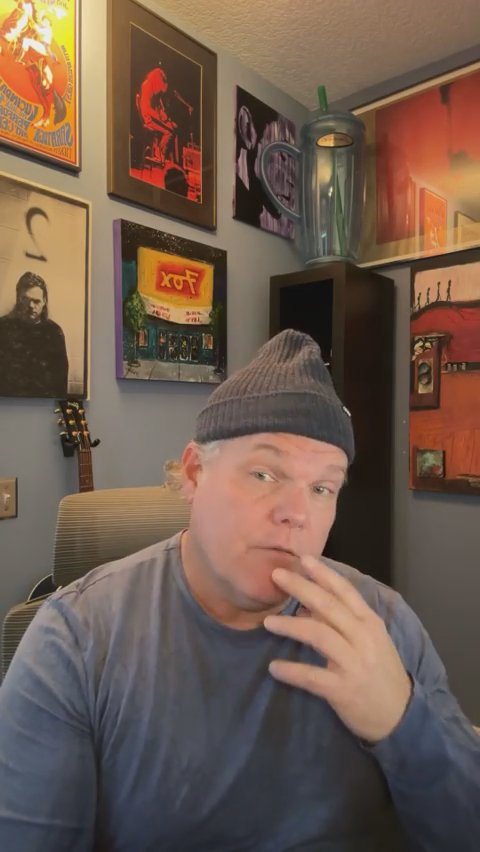
Chris explains medication-assisted treatment such as suboxone, outlining pros and cons and how these meds can help people enter early recovery. He emphasizes context and that recovery involves broader life changes beyond medication.
In our world today, in early recovery, that's largely suboxone. There's other stuff that's been around for a lot longer. Chris: Anything that helps anybody not get dead from fentanyl or from opioids to win. But there's context to it, and you have to understand that recovery is recovery.
Okay. Hey, Cadre people. Chris here. We're going to talk a little bit about mat medication assisted therapy treatment. Some people use both words. In our world today, in early recovery, that's largely suboxone. There's other stuff that's been around for a lot longer. There's lots of opinions. This is not. Well, it is my opinion to a degree, but I just wanted to make a couple of things clear. That from my perspective, let's just take suboxone, for example. What I see with suboxone is there are some good, there's a little bit of bad.
But by and large, if you weigh those things together, if you weigh the differences in the negative and the positive, anything that helps anybody not get dead from fentanyl or from opioids to win, let's just start there. Okay? So if I'm struggling to get somebody even in the door to treatment or just in the beginning of recovery, and that fear and anxiety about withdrawal, which I know very, very well from being addicted to heroin for most of the nineties and being in withdrawal more than I was high, which is sort of a paradox and really annoying that there you spend an awful lot of time in some level of physical withdrawal when you're an addict because it's difficult to stay medicated or high the entire time.
I don't want to get too far in the weeds with that, because I think what I'm looking at here is trying to give some people some information so they don't get the wrong idea that suboxone is going to save your kid's life. To a degree, it can and it will, but there's context to it, and you have to understand that recovery is recovery. And people who radically change their lives and become sober and have a new life and have friends and have jobs and have paychecks and have relationships and have all the stuff in their life that they didn't have in their using life.
And let's be honest, there's a big difference in the quality, quantity, whatever you want, however you want to qualify it, of your life, when you're using and when you're clean and when you're sober. And that's the reason to get sober, is to go get a life. Go get a much bigger life. Right? And if suboxone or some other version of that, there's a sublocade and a bunch of other stuff out there, vivitrol, that. And they have different, like I said, different contexts. Some have the blocker in it, some don't.
Some have opioid in it. Some don't. I'm not a big believer in saying you're not sober. If you take x, y, or z, I think that's a hard line. And I don't know that hard lines belong in our world. I think the world is gray, and when you try to make it black and white, you just bullshit yourself. So, especially in recovery, because early recovery is messy, and it can get really, really stupid, and we really don't have the time to make judgments about how people got in the door. And I believe that there are people out there whose fear and anxiety about withdrawal is so intense that some of these drugs will get you calmed down enough.
It'll get you in the door. Right? It gets you. It could get you in front of someone like me. Otherwise, you don't get in front of someone like me. And the reality of it is, if you really want to be sober and you do a few things right, and you end up sitting in front of someone like me, you are way ahead of the game, because this is difficult to do this alone. And the most effective thing we have is the experience of somebody else guiding you along. There's nothing more powerful than the experienced addict or alcoholic talking to the inexperienced one.
Think about, if you want to be a mechanic, you got to go hang out with mechanics who know how to fix a carburetor, right? I don't. And I don't care that I don't. So the, uh, the suboxone and mat can get into complicated context once you've gotten sober for a while. And how long are you going to stay on it? I think that's a different discussion. I think for parents who are terrified of their children dying from a fentanyl overdose, if that's what gets them in the door, then get them in the door. And the long term view, the long view is just keep them in the room, so to speak, in the conversation.
Right. My overall, always sort of standard advice to anybody starting in recovery is go find a giant, thick, populated, sober community and jump into the middle of it. And if you can't get yourself there without a little bit of help from something like suboxone, then why not, right? I don't love it. I don't love everything about it, let's say that. But I don't love everything about a lot of things. So we'll save that for another video. I want parents to understand that, that there are all kinds of context to getting sober and ideas, and there aren't a whole lot of silver bullets, but there is an endgame.
And there is an ultimate plan, and that has to do with the perspective of, I want my kid or my husband or my wife or me. I want a different life. This life sucks, this using life, drinking red wine, or shooting fentanyl in the alley. You know, not every junkie is sitting in the alley. Some of them are sitting in their law offices. You know, so there's a whole bunch of different perspectives on this. And I think for parents who are struggling with that concept about treatment centers who don't accept it or do accept it, it's a stupid argument.
I mean, it's like the house is on fire, and we're talking about the couch. You know, it's got. The couch needs to be recovered, but the house is on fire. I mean, it isn't the thing we should be talking about in terms of generalized recovery. It has its place, it has its downsides. Like everything else. I'm not usually a sort of down the middle person. I'm usually. I'm like, I believe this, and I don't believe that. But in this one, I think it's really important to understand all the different perspectives.
So read about it, learn about it, but don't make it the thing that drives the decision about getting into treatment or getting into recovery. I told the people who send people to my sober houses 15 years ago that I would never deny somebody the opportunity to come to my program for that reason alone, that they were on suboxone. I think that's ridiculous. And I. And I, to this day, haven't done that. So there's my opinion over the top of some decent advice. I will do another video soon, and I'll get deeper into some of the other mattress, because once we get into that stuff where it gets complicated, that's when people start getting opinions.
But I wanted to make it clear that it should not be something that gets in the way of the starting the process. That's a mistake. Okay. Okay. See you next time.
Reactions and comments are for members. Joining is free and takes a minute.