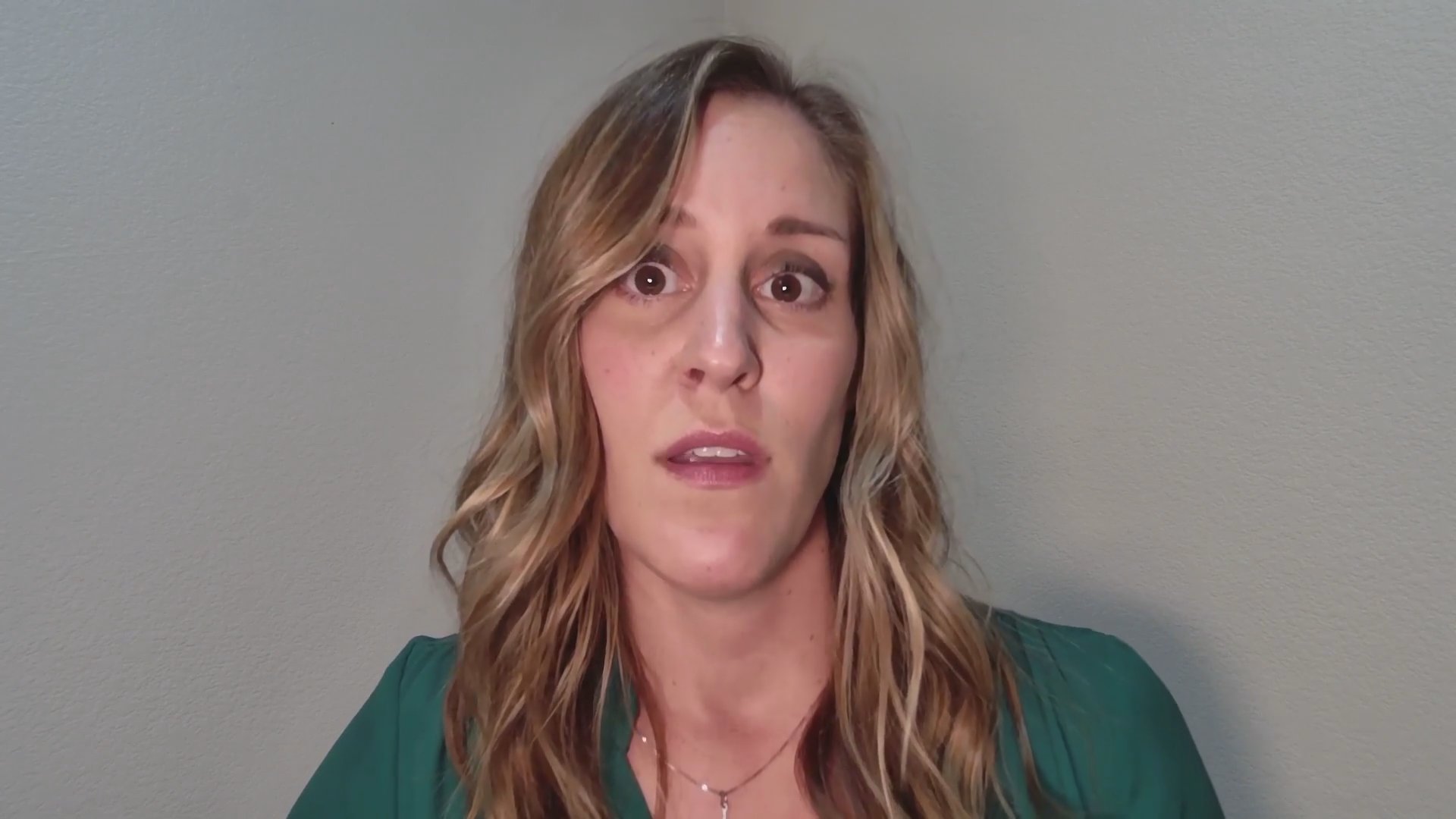
Dr. Carrie was a victim of domestic violence yet also recognizes the role she played in the cycle of violence. If someone is unhealthy, then their relationships will be unhealthy. They will likely keep entering into abusive relationships until they stop the cycle.
Cadre family doctor Carey says she played a role in her abusive marriage. She says she didn't know how to be emotionally intimate in a relationship. Carey: I don't want to stay a victim. I want to be a survivor.
Hey, Cadre family doctor Carey here. Today I'm going to continue the discussion about my abusive marriage. And again, this might be a triggering message for some people. So I just want to put that out there, that this might evoke some emotions in you. And I hopefully can help walk you through that a little bit. But just want to make sure that you're aware of what I'm going to talk about. So as I've reflected on why I married him, why I stayed married to him for four years, I've done a lot of work on this, and it took a while to come to this realization that.
So are you familiar with the cycle of abuse of, you know, basically, person gets triggered, says something, does something abusive, you know, then the couple makes up, they have that honeymoon phase where things are great. But I realized that I actually played a part in that cycle of abuse. And this was not easy for me to say out loud or admit because as somebody who's been in an abusive relationship, I wanted to play the victim because I was a victim. And that's okay to call yourself a victim, but I've really been intentional through all of my trauma in life that I don't want to stay a victim.
I want to be a survivor. And so what does a survivor look like? Well, it looks like analyzing the situation and recognizing that you might have played a role in being a victim. And again, I apologize if this triggers some people because this is definitely not easy to hear. And it was really difficult for me to come to this realization, but I played a definite role in the cycle of abuse. I had very little connection with my ex husband. We had no emotional intimacy. A lot of that actually was my fault because I didn't know how to be emotionally intimate in a relationship.
I was recovering from the trauma of my sexual assault and just other issues, and I really just didn't know how to be vulnerable. He would say to me often, you know, you have way more compassion for the patients that you care for at the hospital than you do for me. You definitely care about people, but you don't care about me. And that was true because I showed up very cold. And some of that was self preservation, because when you're in an abusive relationship, you need to have self preservation tactics in order to survive.
But I definitely played a role in the fact that we didn't have a lot of emotional intimacy. He really couldn't count on me for emotional support. And when things got tough when we moved across the country, I wasn't there for him emotionally because I didn't really even know how to be. So step one, recognizing that, obviously, but then just the other piece of it. So we didn't have any emotional intimacy, we didn't have any physical intimacy. And the only time I could actually get him to connect with me because he kind of wanted nothing to do with me, was when we had fights.
I learned through my marriage that by fighting with him, I actually got to see a different side of him. He actually opened up. And then, of course, the honeymoon phase after a fight is just like the best time ever in an abusive relationship. It's the time you live for, essentially. So as I look back on, you know, the first year or two of my marriage, as things started to get really bad and the abuse started to really escalate, there was a shift where I actually started instigating fights so that I could have a connection with my husband at the time.
And it's taken me to be, honestly, to, like, drop a lot of pride and figure out how to be humble, to recognize that I played a role in that. And thankfully, I'm having the opportunity in a new relationship to recognize that I don't want to trigger my current partner. I don't want to trigger them in order to have that connection. So I need to figure out other ways to have a connection with them, which means being emotionally intimate and vulnerable. And that's another topic for another day. But I just want to point out that it takes two to be in an abusive relationship.
And that's not to say that how an abusive relationship starts off is both people. You know, oftentimes one person definitely is the abuser, the instigator, but after a while, this dynamic continues, and you end up in this, like, pain peace cycle, pain versus peace, of where are we at right now and our connection. And my ex husband and I, the only way we actually knew how to connect was through conflict, because we didn't lay any of that groundwork in the beginning of our relationship of how to have healthy connection.
And a lot of that had to do with me. Obviously, he came from a lot of hurt in his past as well. But I really had to recognize that in an abusive relationship, I played a role in that cycle of abuse. And if I want a healthy relationship, I need to recognize that I did that and then not do that in a new relationship. A lot of that means I have to do a lot of work on me. Sure, I can seek somebody out who's going to treat me better and who's not going to deliberately hurt me on a regular basis but a lot of that has to do with some inner healing of the work I had to do to really understand who I am, learn how to be vulnerable, learn how to be emotionally intimate with someone and let somebody into my heart.
And a lot of times in an abusive relationship or an unhealthy relationship, two people come together that have a lot of hurt in their past and they see that in the other person, they have empathy for the other person. But it's not necessarily a healthy combination because we seek people that have similar experiences as we do, because they can understand what you've been through on a different level. That's actually something my current partner and I talk about all the time, is we fully appreciate what the other person has been through because we've both been through some pretty severe traumas in our life.
But we've also both done the work individually so that we can come together and have a healthy relationship. And I share more videos on these topics, but I just wanted to share this with you and just be really vulnerable. Because when I realized that I played a part in the cycle of abuse, it really made me start to work on myself because I recognized that I needed to do the work. If I want to have a healthy relationship, I bring something to a relationship. And if I'm unhealthy, my relationship's gonna be unhealthy.
So again, I know this might be triggering for some people. I might, you might have never even thought of it this way. And I'm not. I'm not here to, like, say that being in an abusive relationship is all your fault or you deserve any of it. That is not at all what I'm trying to say, because nobody deserves to be hurt. But recognize the cycle, the abusive cycle. And where can you stop that cycle? Because if you are the, quote, victim in an abusive relationship, you also have the power to stop that cycle of abuse.
And it might mean leaving, it might mean doing some work on yourself. But you definitely play a part because that relationship takes two people and figure out where you can stop that cycle. I hope this was encouraging. Hope it was a little bit insightful. And again, I'm going to share a lot more on these topics. So thanks for tuning in with me today, guys. God bless.
Reactions and comments are for members. Joining is free and takes a minute.