With cannabis becoming legal in more and more states in the US, it has been more accepted as a substance of recreation like alcohol and for medicinal reasons. It is clear that having cannabis as a schedule one substance such as heroin is overkill so the pendulum has swung to people thinking cannabis is non-addictive or problematic. But is that really the case? Is weed addictive and does it cause similar problems to other substances? Tune in to hear my take!
Evan is your resident mental health and addiction therapist. Let me take this out. Should probably close this window. There we go. Much better.
Is weed addictive? What's up, Chris? It'd be interesting to get your perspective on this as well, Chris. Right now, at least in the United States, weed is becoming legal just about everywhere, and if not fully legal, medicinal. But I have some interesting stats that will paint a different story.
Can weed users have it where it affects their ability to perform their duties at work, school, or home? Whenever we use a substance to serve a particular purpose, that's when we become more susceptible to addiction. In some rare cases, cannabis would actually be the best substance available for that individual.
With weed, there's actually significant withdrawal. Anything that weed does for you in a positive time type effect, you're going to have the equal opposite reaction when you stop. It becomes a deep, physical, emotional dependence on the substance.
The faster a substance hits you, the more addictive it is. Smoking actually hits you faster than all of them. If something like sex, gambling, food at shopping could be addictive, why can't something like cannabis?
In the US, it's a foggy day. Foggy couple days in Australia. So I was spoiled for like a good month where we had sun every single day. So, anyways, folks, take care. We'll see you next time.
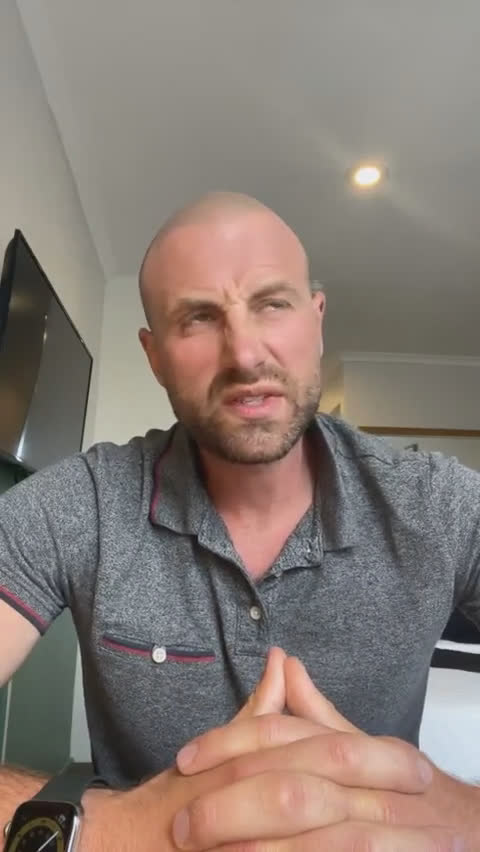
What up, folks? Evan here, your resident mental health and addiction therapist. Let me take this out. Oh, now we're at it. Should probably close this window. There we go. Much better. Anyways, here we are. We have another live stream. The beacon has gone out. Hopefully, people are getting notification to. Hopefully we could have some people join in on the conversation. But either way, this is a fun one. This is one I love to talk about. This is a topic there is a lot of confusion about, a lot of controversy, and we are talking about is cannabis the active compound in marijuana and any other product.
What up, Kelsey? Is basically. Is weed addictive? What's up, Chris? It'd be interesting to get your perspective on this as well, Chris. But, you know, right now, at least in the United States, weed is becoming legal just about everywhere, and if not fully legal, medicinal. Right. And this brings up a lot of controversy, because if something is legal, right, that folks feel inherently, that that's almost like a green light. What's happened was weed was so demonized for such a long time. It's only weed, dude.
Makes me think of the movie half baked with Bob Saget. When they're in the twelve step rehab, they're in the twelve step meeting, and he talks about being addicted to weed. And I won't say the line, but let's just say they castigate him in a funny way, and that's part of it, right? So there's this perception that it's only weed. But I have some interesting stats that will paint a little bit of a different story than what we. First, I'm gonna get. I'll give both sides here. I'm gonna try to be as balanced as I can and explain my rationale for my theory or views on this.
So, basically, if you look at how the government schedules marijuana as a substance of abuse, there's different schedules, and the lower the number, the more controlled it is, so the more illegal. So, for example, the government has cannabis as a schedule one substance, and this is similar to something like heroin or methamphetamines, right? So, basically, saying this substance has no medicinal purpose whatsoever. It's highly damaging. No ecstasy they have on there. And a lot of it is political.
It's not. I mean, if you were to gather a bunch of scientists together. So there's a lot of criticism on that, that this is a schedule one substance, and probably for good reason, because the research does not back up the fact that cannabis would be as damaging. And then there's. I'm just gonna type this in. What are schedule two and three substances in the US. So let's see, because, okay, yeah, you could say, sure, you know, cannabis is bad, maybe it should be highly regulated. Okay? But even if so, let's at least by comparison see how it ranks, because it is, like I said, with heroin and all those others.
So we'll go ahead and see what chat GPT gives me on that one. Okay, so, okay, so schedule two substances, cocaine, meth, fentanyl, oxycodone, hydrocodone, and morphine. Substance three, you would have ketamine, anabolic steroids, barbiturates, which are like sedative, kind of like a Xanax, but they don't even, they barely prescribe those anymore because they're dangerous. So, you know, so they put cannabis all the way up there, right? So they've been like demonized for quite a while. You know, if you think like Reefer madness back in the forties or fifties, I don't know when that was sixties, but.
So it's clear that that's not, that's not probably right. So what's happened though is the pendulum has seemed to swing and I think it's kind of gone the other way where it's now by some just viewed as, you know, this is medicine, it's natural, it's applying all these things that you hear. It's not addictive. I mean, these are some of the things I see on social media where people believe that. Now let's see, let's talk about what addiction is. So essentially, addiction or substance use disorder is continuing to use a substance or even a behavior, continuing a behavior despite the negative consequences, right?
And the negative consequences come in the form of frequency, duration and intensity. How often are you experiencing the consequences, you know, and how intense, how long do they last? Right? Essentially. Right. So there's a list of twelve different consequences that are currently identified in the substance use disorder category. And just to name some off my head, there's eleven. I always like, I'm going to miss a couple. I'm not going to name all eleven, but just kind of to encapsulate it, right?
Problems at work, school, at home, so fulfilling your duties, your emotional regulation, so how the substance impacts you emotionally, your relationships, are you building a tolerance to it? Do you need, are you continuing to increase the dose because you're getting essentially used to it? The big one is withdrawal. When you get off the substance, do you have physical symptoms of withdrawal? And that is a huge one there. To me, that is the number one sign of a severe addiction. When you have withdrawal symptoms from it.
When you have withdrawal, it makes you that much more inclined to use the substance to feel better. Those are some of the main symptoms. We also have ones like trying to cut back or quit unsuccessfully. So these are all just measures to the best of our ability of what we see in substance users who become addicted or have a use disorder. And you see this with behaviors, too, like gambling, eating, sex. And what do all these things have in common? Well, there's one chemical that is most broadly associated with it, and that is dopamine, this reward chemical.
But not just a simple reward chemical, like, I do something and then I feel good, although that is part of it. But it's like this anticipation of doing something that is pro survival, and that's how addiction works. It kind of hijacks the brain, as some may say, where it becomes this thing, our brain starts to associate it with survival. Now, we all logically know that I don't need to do heroin to live. I don't need to do meth. I don't need to drink alcohol to live. In fact, there's probably almost never a circumstance.
The only circumstance you need alcohol to live is if you were having withdrawals so deadly, which happens with alcohol, that you would need to have alcohol or a sedative so you don't die from over. So basically, we logically know that's not true. Ah, g'day, Garonia. What's going on? Cauldre. So, yeah, so that. So that's what addiction is. So, okay, so let's take weed and put that to the test. Cannabis. Can weed users have it where it affects their ability to perform their duties at work, school, or home?
Are there folks who try to quit or cut back and find it to be extremely difficult and do not succeed? Do people build a tolerance? Do they increase their amount of use to get the same effect? When they stop, do they have, what, withdrawal symptoms? So when you place it to the test, just like you would any other behavior or substance, the answer is yes. And so some of the arguments I would make is people say it's not addictive. And usually, I mean, when people just say that they're not really providing a lick of evidence, they're just like, it's a plan.
I think it's a lot of times just people justifying their own use. But, I mean, I have heard some people who are credible have larger voices who will kind of fight the other side. Right. Because, again, the pendulum swinging. So I think there needs to be some voices to say that. Okay, look, despite the fact that it may have some consequences for some people. For the vast majority, it doesn't. And to have it as a schedule one drug or even illegal is insane. And I think there's some truth to that, too.
Now, when we think of addiction, it's kind of interesting, because when you. When you level it out over time and you look at almost any substance, any behavior, whether it be p***, weed, whatever, alcohol, you'll find that, I don't know, somewhere 510, up to 15% of people will either get addicted or have a problem managing it, right? So that does mean the vast majority of people who will use it will not become addicted. But there's a certain percentage of the population, and that often aligns with the percentage of the population that struggles greatly with their mental health.
So what I find is the folks who do become more addicted or dependent on it are ones that are using it for serving a purpose, right? Whenever we use a substance to serve a particular purpose, that's when we become more susceptible to addiction. For example, if I'm using a substance to help with pain, pain, that becomes my primary tool. Therefore, when I have pain, I have the urge to use it. Now, one of my favorite lines that I've kind of created, right, is we all have different relationships with substances, but what I find to be a healthy relationship with substances is simply answering this question, right?
Is this something I do once in a while for fun? People who use substances once in a while for fun almost never have a problem with it whatsoever. It's when you start to use it for a specific purpose. Now, that doesn't also mean that you cannot use a substance for a purpose, and then it automatically means you're addicted. Some people do use cannabis medicinally and often. It's bullshit. You know, they just go to some, like, random hippie doctor on Venice beach that has a sign in the door, and they say, oh, what do you want?
Here's a list of things. Oh, anxiety there. You know, that is just, you know, malpractice. You know, at the very least, just be responsible again, maybe just should be legal anyway. And you don't have to do that B's. But, you know, it does help for certain things. And maybe in some rare cases, cannabis would actually be the best substance available for that individual. And so people can use cannabis in a means, even if they do, let's say, use it every day where maybe they're not addicted, right?
Because there's a difference. I mean, we could go down so many rabbit holes here, I could go for, like, 2 hours. And maybe some of you would like that. Some of you would want to throw your phone against the wall, but you have the two categories of abuse and dependence. And that's how we used to define a use disorder, a substance use disorder. It was dependence or abuse, dependence being the higher version. Now we just have substance use disorder in levels. So before we call it alcohol abuse, alcohol dependence, just two different levels.
And in many ways, I actually like that better than just doing the level system, because I think there is a big difference between someone who abuses substances. We've all maybe been through a period, like in college where we drank too much or we rely too much. Maybe during the pandemic, I had just a ton of referrals for people abusing alcohol. Often that looks a lot like addiction, but it's really not quite the same. Right? Dependents having a more severe addiction are the folks that take it extremely far, ones that they develop this strong emotional attachment to the substance, because not only are they using it for some fun, physical, whatever, it becomes a psychological coping tool, and that is when you fall into the trap big time.
Right? So with that being said, what I find with cannabis users is there's usually generally two groups of people. Most people, probably, like 80% of people who use cannabis, use it once in a while for fun. They take an edible, they do whatever, right? Those folks almost never have a problem, because the one thing you can say about cannabis versus alcohol is it's not going to have those same high levels of consequences. However, more people end up getting addicted to weed than to other substances.
Actually, I think for weed, it's upwards of, like 20%. It's actually more addictive in many ways. There is research showing that it does increase the dopamine levels to a degree similar to alcohol, which is the number one reason people would admit to inpatient treatment. When you look at the state of Minnesota and you look at treatment admissions, cannabis is pretty high up there, especially among adolescents. And a lot of people say, well, it's just because their parents are, you know, freaking out.
And that's not. Maybe I've seen that before, but that's really not the case. Usually these are troubled teens who have mental health issues and find weed, and it's this new, really cool thing, but it really does exacerbate their issues, and maybe you'll see that more on an outpatient basis than someone inpatient wheat. Otherwise, why does you end up like Dave Chappelle in half baked with Bob Saget, yelling, you know, have you ever blankety blank blank for coke. Therefore, you should not be here because you're just a weed addict.
Right? So I have seen so many clients, it kind of annoys me or makes me mad when I hear people, oh, it's not addictive. It's like, first of all, I was addicted to it. I smoked every, sometimes 17 to 2020 years old, 21. I literally smoked, like, every. I could not go a day without it. And if I did, it was a d*** miracle for, like, four years. Like, what that's done to my brain development, I don't even want to know. So, first of all, I was highly addicted to it, so. But I can't just look at things from my own months.
I've worked with a lot of clients in the same place. I'm working with two clients right now who just are, cannot quit. Like, they know they need to. They know it affects these different areas of their life, their emotional health, all these other things. They're dependent on it, but they can't stop. And one of the other things I see about cannabis, even compared to many of these other substances, even like meth, the withdrawal symptoms are horrible. With weed, there's actually significant withdrawal.
You know, for example, what goes up must come down. Anything that weed does for you in a positive time type effect, you're going to have the equal opposite reaction when you stop. You know, weed is. It's an interesting substance because it's like, it's not an upper, it's not a downer. It's kind of, like, in its own category. So it's easy to say, like, oh, well, if cocaine makes you feel up, well, when you withdraw, you're going to feel more down than when you started, right? You don't go back to baseline.
You go further. But we just look at some of the different things. Like, if it helps you sleep, guess what? When you stop, you're not gonna be able to sleep, most likely. All right? So it's gonna really hamper your ability to sleep. So we have sleep eating right. Cannabis is an appetite accelerator. I don't know if that's the right word, but it increases your appetite. Therefore, a lot of times, people have trouble eating, right. It helps maybe calm someone's nervous system, their anxiety. Well, then they stop and they have more anxiety.
They're more ear. That's a big one. Irritability. My client really struggles with that, where that's what kind of brings him back, because it really affects his marriage. Even though he knows he needs to get off of it, he will stop. And then his irritability, anger, shoots up out the window and it affects his marriage. So then he gets back on. So there's always these traps for him to fall back into again. It becomes a deep, physical, emotional dependence on the substance. So again, no, weed is not going to maybe bring you to the same place as a heroin would.
Because if you look at something like heroin, like, if I were to just take a thousand people and make each and every one of them do heroin every day for like a week, you know, like a good percentage are going to be addicted to it after that. You know, there will be some people who just walk away. But if you do the same thing with weed, it's going to be much less. Right? It's not, it doesn't have that same potential for immediate, but it's, it's a slow burn. It's kind of like alcohol in many ways.
And the thing with weed is, like, most people try it at some point in their life, so most people are going to try it, but most people do not get addicted to it, just like alcohol. Like with alcohol, alcohol is extremely genetic compared to others. So with alcohol, maybe 10%, 5712 percent, I was just like five to seven gets like, you know, are the ones that we see in like residential, you know, inpatient treatment. And for them, alcohol is like the equivalent of heroin. It's just as bad. It usually just takes decades, you know, of casual.
And it just kind of goes like, I call it like alcohol. I call it like a boa constrictor type addiction because it just, you don't even notice. It just slowly wraps around you, and then all of a sudden you find yourself unable to move and you're just trapped. And that usually happens to people, like in their late thirties, forties, you know, where it really catches up with them over time, and then they try to stop and realize they can't. And it, you know, you start having the withdrawal symptoms.
So again, that's one of the biggest things, is having those withdrawals. So let's see, I got some stats, or I guess I lost some stats, but basically talking about how dopamine does increase the dopamine threshold in your brain. We talked about how it is a higher percentage of people who do get addicted than other substances. It does affect all these different areas of your life. So, yeah, my opinion, it is, you know, so in conclusion, though cannabis has been demonized and it is a schedule one substance, it probably should not be.
If we look from an ethical, moral perspective, should it be illegal? Probably not. It's typically not helpful, you know, but at the same time, you know, the more supply you have around, the more people do get, the more use goes up, the more people who would get addicted will get addicted and have those consequences. It's like putting it. You know, it's like, should casinos be illegal? I don't know, but if you put a casino in a town, you'll start to see the rates of gambling addiction go up. So it's a double edged sword.
So sometimes it's not just like, is this great for all of our health? Probably not, no. Thanks, Kelsey. So should we have gambling? You know, is it good for our health? Maybe not. But from a moral, ethical standpoint, you know, that's kind of almost like a political issue. Should I, you know, should I be allowed to do something that is bad for me? You know, should soda be legal? I have my opinions on that, but, yeah, so those are just things. But now that's chimpanzee and the Bobby. All right, mates, well, live from Australia, Stra Stralia.
You get rid of the a. Chris says if your life goes into the ditch, who cares what got you there? Yeah, absolutely. I think that's the main argument too, is like, you know, weed, it's natural. First of all, weed is not natural. We genetically modified the s*** out of it, like what you would find on like, the prairies in the Americas. And like, 1500 is not going to be what we have now. That's genetically modified. And that's another thing I forgot to mention, which is the levels of THC are through the roof.
So the compound, THC is the psychoactive compound that makes it addictive. And the levels of THC and cannabis now are just super. Like my teenage self, if I was. If I was alive now, I'm alive now. But if I still use, if, like, my teenage self was around now, I would be in frickin heaven with how good the weed is in the US, especially where it's legal. Walk into a dispensary and you get this high powered cannabis. Now you have all these edibles, which that's a whole other story. And then you also have, you know, things like dabs or wax that, like, are 90% THC versus like a high 30.
And so that just makes it that much more addictive. Now, the other thing that makes it extremely addictive is the route of administration. Sorry, I thought I said I was going to be done. But for example, the faster a substance hits you, the more addictive it is. So by taking something orally, drinking a pill, it takes 2030 minutes to kick in. Therefore, your brain does not associate it in the same way, in that same quick manner as far as a dopamine release. So the quicker you get a reward, the more rewarding it is still addictive, but.
Right. So you're better off, let's say, taking a pill versus, let's say, snorting it, because that hits you in like two to 3 seconds. That's very fast. Now, even fat. And here's what surprises people. So even faster makes sense. Shooting something up, extremely addictive because that hits your brain in like 1 second. I don't know, I'm just kind of. I think like, snoring is like three to 5 seconds, shooting one to 3 seconds, one to 2 seconds. But guess what? You want to know what even hits you faster?
And this is surprising. I don't even realize this until someone told me. I guess you don't realize anything until someone tells you, but it kind of defies common sense, is smoking actually hits you faster than all of them. The cilia in your lungs takes that to your brain immediately, just like you breathe oxygen, immediately you get the oxygen nitrogen mix that you need. Well, when you smoke, that's why cigarettes are so addictive, because they're so immediately reinforcing. And cannabis. What are you doing?
You're smoking it. So not only is it just the dopamine levels, it's how fast you get it, which makes it extremely addictive. So, like Chris says, doesn't matter what the substance is, if it has those effects, if it has the same effect, that brings you to substance use disorder, symptoms that would be considered addictive. If something like sex, gambling, food at shopping could be addictive, why can't something like cannabis, that is a direct physical substance that you ingest that gives you the same brain rewards?
So anyways, I hope you got something out of that. I'll see you all next week. Enjoy your evening. In the US, it's a foggy day. Foggy couple days in Australia. So I was spoiled for like a good month there where we had sun every single day, and I was just being on the beach like a bum. So, anyways, folks, take care. We'll see you next time.
Reactions and comments are for members. Joining is free and takes a minute.