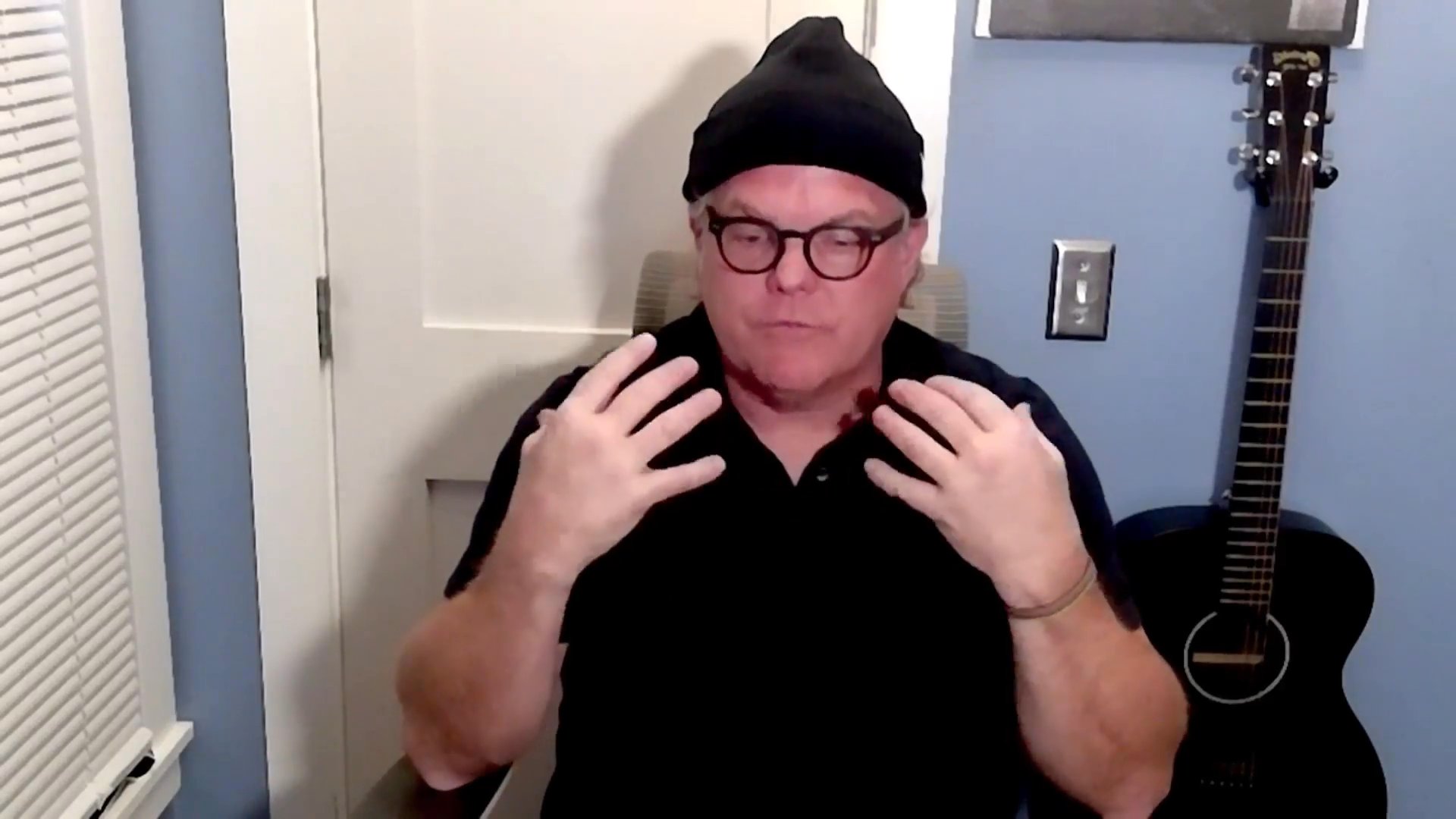
Chris Eddrington guides building a simple post-treatment routine, finding AA meetings that fit, and committing to a consistent schedule. He emphasizes connection and inclusion with peers in recovery.
Chris Eddrington: The first thing that I would suggest is to build, set up and build a routine after leaving treatment. He says find the meetings you like and the different things that you're going to do in your recovery community. Over time, that comfort level that builds is powerful, he says.
Chris: Recovery lives in the community. Treatment is great, but you will build your recovery in thecommunity, among others, in sobriety. He says it's easier to get started in that routine if you do it with somebody else. This inclusion piece is way more nourishing and way more fulfilling.
Hi, guys. Chris Eddrington here today. I thought we would talk about the structure and the setup and the routine that I think you should build after leaving treatment. So when you first get out of treatment, whether you're going to a structured environment, like a sober house or you're going home, live in your parents basement or back to your wife and kids or your husband and kids, depending on the scenario, there are certain things everybody can do. And I think if we keep it simple, the first thing that I would suggest is to build, set up and build a routine and then keep it, play with it, maybe for the first few weeks, until you find the meetings you like and the different things that you're going to do in your recovery community.
And once you've landed on those, then hold on to them. And if you don't like some of the meetings, then pick new ones, because we've got to get to a point where this routine doesn't change. Like those meetings, you make them, and they're hard. They're hard elements, permanent marker things written on your schedule, so to speak. So from a sort of 500 foot view, if you talk to a bunch of people who have achieved, you know, three or four or five years of sobriety, and you ask them what mattered the most, most of them would say the relationship with other people in recovery.
So if that's the goal, then we want to bring in as many people as we can, and we want to expose ourselves to as many people as we can. And right now, in this world, that's aa. That's a built in. That's what aa is. That's what it offers you, is where the people are. And so go to the meetings. There's millions of them. Go to. Go to lots of them and pick the ones you like. What's important in going is, and after you've chosen the ones you like, is you go consistently. Because over time, showing up the same routine, you see the greeter at the door, you see the same people, you sit next to your friend, that comfort level that builds and people saying hello to you and recognizing you when you walk in the door and that feeling of inclusion and being invited in is just rocket fuel.
And you won't might. You might not realize that at first, but as you progress in your early sobriety, you're going to find that, wow, being part of this thing and having people excited to see me and I walk in the door and everyone's like, hey, Chris. Hey, what's up? How are you? That's some powerful stuff. And if you think about it. In our using lifestyle, there wasn't a whole lot of that going on, right? It's not like our dealer greeted us at the door and said, hey, man, nice new jacket you got.
How the kids, how's your life going? So it's the opposite of what we used to have. And there are a lot of things in this sort of context of what I'm talking about in this first few months of sobriety that are crucial, because if you do these things, let's just say you're living in your house with your friends or your parents or a sober house, and every week you do similar things. So on Tuesdays I go to that meeting, on Wednesdays I go to that meeting, and I go to the coffee before or I go to the dinner after, what they refer to as fellowship in AA.
And I see the same people. Let's say there's a Saturday morning meeting, and a bunch of the people that you go to the meeting with go out to breakfast, after, join in, go to the breakfast. Even, you know, the first time you go might be uncomfortable. You don't know anybody. You're sitting around. Go every week anyway, because very quickly you will assimilate into the group, and people are looking for that. People who have been around in recovery are watching for the new people, and they are intentionally going to invite you in and tell you about activities, help you with stuff that you don't know about.
And just being someone who's a model for you in early recovery. So you meet people that have a couple of years, and you see there's something going on with them or the way they carry themselves or some level of, you know, contentment that I think a lot of us are seeking in early recovery. And you'll see that. And it's very attractive. Opportunities come from these network, you know, this becomes a network where jobs and opportunities come, you know, in the, in the truckloads. And so the parts of the schedule that, and I do this whenever I get a brand new.
If I sponsor someone in AA, the first thing I do is I ask them to put one of those little whiteboards on the wall with a seven day schedule and fill it all out and then send me a picture of it, because I want to see things on that schedule. And if you don't have things on the schedule that you can easily create them. You can ask somebody you know from a meeting and say, hey, will you meet me on Thursdays at 04:00 when I get off for coffee every Thursday? Will you meet me on Sundays for breakfast after the meeting, I'll pick you up.
You drive this time, I'll drive that time. You create these things. You put them in your schedule, and you don't change them when other things come up in your life. You move things around only when you have to. So certain meetings and certain events you always show up at. So what we're looking for here is to increase the likelihood that you're going to stay sober. And what increases that is 20% of 5% of 20 different things, to put it sort of in a math situation. But what I'm really talking about here is there are multiple things you can do every week, day in, day out, week in, week out, that doesn't become monotonous.
There's a lot of different meetings, there's a lot of different activities, a lot of different people. The sober community is vibrant and amazing and super, super, super inviting. So you should never feel like, you know, it's too hard to enter. So if you just raise your hand or stick your hand out, people are going to help you. So what I'm looking for here is to create a consistent routine, because once you do that and you set those things in motion and you have those things on your schedule and you just do them week in, week out.
I go to these meetings, I go to these coffees, I show up at my job, I show up at my aunt's house for dinner. I go to my parents house on every other Sunday. And you just keep hitting these things. What's happening is you're building recovery capital. A lot of the thought leaders in our industry like to use this term recovery capital, where you're really investing in your recovery by building things into it that influence you, that make you feel safe, that make you feel protected, that make you feel part of something and make you feel good about yourself.
You show up at an AA meeting and you're the coffee person, and you make coffee and everybody gets to have coffee. Or you're the leader of the meeting and somebody comes up and taps you on the shoulder because they've seen you the last three weeks at this meeting and they think you know something and they're. And they're new and they're scared and they're going to ask you, you know, what's going on? Who do I need to meet? I'm new here. The sober community folds over on itself like that, right? We show up, we participate, and it comes back to us in spades, man.
It comes back to us in this recovery capital increased likelihood. You build a lifestyle that has elements in it that are the antithesis of the using lifestyle where you're hiding, you're lying. You tell people you're on that side of the street when you're really on that side of the street and it has absolutely no influence whatsoever. It doesn't matter what side of the street you're on, but you can't tell the truth because we live in this world of. I don't, I'm not transparent about anything. And I think living in that transparent sort of lifestyle is fostered by this structure.
So we don't immediately become people who are constantly telling the truth. And all of a sudden, you know, we're super, you know, different people right off the bat. I think it's, it's a slow slog sometimes. Sometimes quickly, sometimes slowly. It says in the big book. But I think that we have such an opportunity in most recovery communities or any community in the United States. I think in any town, you can find sober people and you can immerse yourself in the routine and in the community and get such benefit back from that.
And I think what I didn't realize in my own recovery was, you know, it was a year or two in, and I started to realize that, man, I have, like, a purpose or a place, or at least I have my own grocery store, right? I remember I was standing in the parking lot of the grocery store, and I was like, man, the people in the grocery store recognize me. I mean, I'm a person living on this planet. And when I was using, I remember in Boulder in those last years, I felt like I was an underground person, right?
I walked in the alleyways, not on the streets. I hid in the shadows, so to speak. And, you know, I didn't have conversations with people, you know, acquaintances that I saw. And I'm a big proponent of this mechanism because I think it really isn't taught in treatment. I think treatment is great, and treatment does wonderful things. And it's like triage. It stops the bleeding and gets you ready to walk out the door and take a shot at recovery. But let me tell you something. Recovery lives in the community.
Treatment is great, but you will build your recovery in the community, among others, in sobriety. And this idea of modeling after each other is super powerful. But in order to avail yourself of that, you got to show up. So this routine idea of literally taking a calendar and saying, I'm going to go to this meeting on Monday and this one on Tuesday and this one on Friday, and I'm going to have coffee with so and so. And I'm going to ask people that I meet to have coffee with me, and I'm going to put that on my schedule, and I'm going to just keep doing these things.
And you don't just do them once in a while. You keep doing them regularly, and you invest in this return that I was talking about earlier. And that is where the rocket fuel is. That's where you start to internalize this feeling of, I'm not such a loser or a s***** person, or whatever thoughts we were having about ourselves when we were using. And you turn that around to where you start to really appreciate who you are and you actually like yourself, man. There is nothing more powerful than that that can propel you into years of sobriety.
But you have to show up and you have to continually do it. It's not something like, you know, you can just do once in a while. And I also want to reiterate this, that early on in recovery, it's a lot easier to get started in that routine if you do it with somebody else. So living with other people in recovery early on is a lot easier. So think about it like this. If you're sitting in your apartment and you're looking at your phone and you're like, oh, the meeting starts in a half an hour, I should get ready to go.
And you're by yourself versus you're sitting on the couch in your apartment or your sober house, and three people walk by and say, hey, man. Hey, Chris, get in the car, man. Let's go. We're going to the meeting. You're a thousand times more likely to go. And I think that that is true about all of us, and I think you should give yourself those advantages and be honest with yourself about, you know what, I'm more likely to do these things I need to do if I invite others into the process, and you'd be surprised how many people will say, yeah, man, I want in on that.
All you got to do is ask. I mean, if you go meet somebody at a meeting and you listen to them talk and you think you like the way they said something, and you go up to them and talk to them after a meeting, you might make the best friend of your life in that moment. We're all looking for that inclusion piece, and we're all looking for some sort of context that just actually makes sense and is fulfilling because we were living this life of just being so emptied out all the time, like every 20 minutes.
For me, as a heroin addict in the nineties, it was like I just emptied out every half hour. I was completely empty, and I constantly have to fill myself back up. And this is a very different sort of sustenance concept. This inclusion piece is way more nourishing and way more fulfilling. And you begin to feel like you matter, that you're part of something, that people want you around. And, man, let me tell you how powerful that is. That sense of self stops being this constant rewind in your head about what a loser you are or how you've hurt people or caused problems to where you're part of the world and you're part of society, and you get to have the sun, too.
The sun's for everybody, and the whole world opens up from building a simple routine. And what will happen over time is your perspective on yourself, and your recovery will build, and you will start to have these moments where you're like, oh, wow, I see how that person made that decision in recovery, and that's really serving them. And I saw that person make that decision, and it's not really working. I heard a story about this person I used to go, I went to treatment with, and this is what happened to them, and I'm not going to do that.
I think I might do this. Somebody in your small circle might say, hey, man, haven't seen you lately. Where have you been? That kind of stuff can feel a little big brother like, but it's really important to have an attitude about, I'm in this process of early recovery, and I'm going to have some openness and some awareness and some transparency about the way that I do things and let people in and let them ask you questions and let them, you know, let people talk to you about what's going on with them.
And it really, really, really is a strong. This is the medicine of recovery. This is, I think, the most effective medicine of recovery. And you can take it in little bits and little pieces all over the community, and it really will serve you. So the initial months in recovery can get difficult. It's easy to get bogged down. It's easy to get depressed about what happened in the past. And there's nothing more effective to keep your head out of that. Like, your head's in a bad neighborhood than to stay in the other neighborhood with the people who are doing this stuff and who are really doing the work of early recovery.
So my recommendation is get into the middle of the sober community and stand right in the middle. Raise your hand and say, I just got out of treatment and I need help. And the people in that community are going to, and they're going to go around, they're going to, they're going to encompass you and they're going to say, we're here, man, let us help you. I wish you all the best.
Reactions and comments are for members. Joining is free and takes a minute.